




Resource Recycling
  • The Latest
  • Podcast
  • Analysis
    • All
    • Certification Scorecard
    • Industry Announcements
    • Opinion
    IT asset disposition and electronics recycling: Now and then

    Data center moratoriums cast development shadow

    Recycling tracking data is already on your truck

    Recycling tracking data is already on your truck

    A five star ranking with one under a microscope

    Certification scorecard — week of Nov. 9

    Data centers and AI combine to create ITAD ‘growth engine’

    Component shortages drive demand for data center hardware

    Ingram Micro again files to take company public

    Ingram Micro sees lifecycle services rise 35%

    Inside the Circle: Will we lose our shirts over CA textile EPR?

    Inside the Circle: Will we lose our shirts over CA textile EPR?

  • Conferences
    • Resource Recycling Conference
    • Plastics Recycling Conference
    • E-Scrap: The Longevity Conference
    • Textiles Recovery Summit
  • Publications
    • E-Scrap News
    • Plastics Recycling Update
    • Policy Now
    • Resource Recycling
    • Other Topics
      • All Topics
      • Brand Owners
      • Critical Minerals
      • Glass
      • Grant Watch / RFPs
      • Markets
      • Organics
      • Packaging
      • Research
      • Technology
      • Textiles
Subscribe
No Result
View All Result
Resource Recycling
No Result
View All Result
Home Analysis Opinion

Notes from the Curb: Showing how communication can solve contamination

byJason Hale, Communications Director, The Recycling Partnership
May 10, 2016
in Opinion

For those of us working in the recycling industry, improving quality has become a priority. The question is: How do we clean up the recycling stream and do it cost-effectively and quickly?

National nonprofit organization The Recycling Partnership is teaming up with Massachusetts Department of Environmental Protection (MassDEP) and communities across the state to answer that very question.

Working hand in hand with Recycling Partnership staff and MassDEP, the Massachusetts municipalities of West Springfield, Lowell, Needham and Holden will implement a set of best management practices this spring and summer. The goal of the pilot initiatives is to lead each community toward reduced contamination and high levels of program participation and to vet this approach for use across Massachusetts and, ultimately, across the U.S.

Each community was carefully selected to help create a collection of programs that would represent the U.S. municipal recycling landscape across the country, and both curbside and drop-off systems were included. Each will assist in measuring key quality and quantity metrics before and after the pilot projects. In each case, the local hauler and materials recovery facility (MRF) are fully on board and engaged.

Far beyond a marketing campaign, this anti-contamination effort, which we’ve affectionately called the MoreBetter Program, is geared toward changing resident behavior in a stepwise, targeted, efficient and operationally sound fashion. Ultimately, the initiative will be supported with data and stories from the Massachusetts pilot projects and others to showcase replicable best practices in action.

The approach

To address contamination, material-quality concerns must first be defined. To that end, Recycling Partnership staff surveyed the MRFs servicing the pilot communities to pinpoint items that were causing the most issues.

The organization also hired DSM Environmental Services to conduct recovery- and contamination-rate studies in each town to quantify the types and amounts of misplaced items in the recycling stream and the types and amounts of recyclables in the trash stream. Those studies will be repeated by DSM at the end of the pilot periods to quantify effectiveness.

Combined, that data pointed to a short list of misplaced materials that warranted specific targeting. Bagged recyclables topped the list, with film, food and textiles also posing significant processing challenges.

The Recycling Partnership incorporated those materials into its list of best management practices, which combine operational and communications tactics to change resident behavior through a tiered approach.

The first tier is the use of targeted information. That means providing specific feedback at the curb through “oops” and “thank you” tags on carts, plus in-home behavioral triggers such as magnets and information cards. In addition, mini outreach campaigns will focus on the top contaminant noted in each area.

The second tier is awareness building. Here, general recycling promotions are employed to keep diversion of proper materials top of mind and build the practice as a normal part of daily life.

Finally, the efforts include use of standing resources. For example, websites and apps will be updated regularly to answer common questions clearly and to reflect the brand of the community and campaign.

Coordination of stakeholders

To hammer out the finer details for each individual community, all of the key players convened and worked out specifics. City and hauler representatives finalized curbside procedures, including how to reject a cart and track data from routes. They also reached consensus on making marketing decisions and staffing approaches.Promotions and crew on route in Lowell, Mass.

With the planning and development work complete, the pilot programs were launched. The first days were productive (and soggy), and valuable information and lessons are already being noted.

When the pilots conclude later this summer and the final data is tabulated, The Recycling Partnership and MassDEP will release a robust toolkit aimed at helping communities fine-tune the quality of their recycling streams.

At the core of the toolkit will be a proven, adaptable messaging platform that provides a common language for communicating with residents about recycling the right way. The resources and best practices will be made available to communities across the country via The Recycling Partnership website in late 2016.

Poor quality is a pressing concern for the recycling industry, but with the right approach and smart partnerships, we can move beyond the issue and into a stronger, better-connected system.

Jason Hale is communications director at The Recycling Partnership. He can be contacted at jhale@recyclingpartnership.org.


The views and opinions expressed are those of the author and do not imply endorsement by Resource Recycling, Inc. If you have a subject you wish to cover in a future op-ed, please send a short proposal to news@resource-recycling.com for consideration.


Tags: ContaminationEducation & Outreach
TweetShare
Jason Hale, Communications Director, The Recycling Partnership

Jason Hale, Communications Director, The Recycling Partnership

Related Stories

Teen takes e-scrap education beyond the classroom

Teen takes e-scrap education beyond the classroom

byKeith Loria
November 13, 2026

Minjun Gim uses device teardowns to explain recovery while exploring how access and repair can keep electronics out of the...

Europe’s recyclers miss most of the critical materials

Researchers look for participants in e-scrap study

byPaul Lane
November 6, 2026

Federal researchers are looking at how to bolster e-recycling rates in states without collection laws.

Facility fires down in September, year to date over 2025

byPaul Lane
October 23, 2026

Despite this downturn, the number of fire-related incidents remains elevated as compared to historical averages.

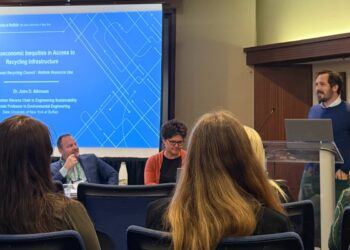
University at Buffalo Professor John Atkinson (right) speaks at the NERC conference in New Jersey.

Improving recycling access for underserved communities

byBrian Clark Howard
October 7, 2026

Panelists at the NERC conference in New Jersey talked about solutions to recycling access, from grants to research to technology...

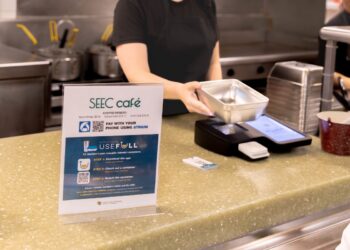
Usefull reusable dining container at SEEC cafe at the University of Colorado Boulder.

CU Boulder launches dining reuse program

byBrian Clark Howard
October 5, 2026

A partnership with Usefull brings reusable, stainless steel containers to university dining spots.

Bin to Better gets students involved in reuse, recycling

Bin to Better gets students involved in reuse, recycling

byPaul Lane
September 24, 2026

E-scrap among three focus areas for student-run, California-based environmental advocacy group.

Load More
Next Post
Wide world of plastics recycling: Jan. 12, 2016

Wide world of plastics recycling: May 10, 2016

2026 Buyers’ Guide

Equipment, services and technology suppliers serving the recycling industry.

Browse the Guide

More Posts

NexPoint Materials to shutter Alabama plastics plant

NexPoint Materials to shutter Alabama plastics plant

November 4, 2026
PureCycle sees easing headwinds to R-PP adoption

PureCycle shifts focus, secures feedstock

November 5, 2026
Inside the Circle: Will we lose our shirts over CA textile EPR?

Inside the Circle: Will we lose our shirts over CA textile EPR?

November 9, 2026
Artificial intelligence is altering the marketplace for ITAD providers in numerous ways. | Shutterstock

AI alters ITAD economics

November 3, 2026
Textile EPR needs end markets, not just collection

Textile EPR needs end markets, not just collection

November 10, 2026
PET bottles for recycling

PET imports reshape US markets as demand grows

November 11, 2026
The missing link in e-plastic recycling

The missing link in e-plastic recycling

October 28, 2026
UC Riverside expands reusable takeout program

UC Riverside expands reusable takeout program

November 6, 2026
New CAA chief talks markets, industry support

New CAA chief talks markets, industry support

November 4, 2026
Partnership targets mixed nylon waste

Partnership targets mixed nylon waste

November 4, 2026
Load More

About & Publications

About Us

Staff
Job Listings

Archive

Magazines

Work With Us

Advertise
Contact
Terms and Privacy

Newsletters

Get the latest recycling news and analysis delivered to your inbox every week. Stay ahead on industry trends, policy updates, and insights from programs, processors, and innovators.

Subscribe

Welcome Back!

Login to your account below

Forgotten Password?

Retrieve your password

Please enter your username or email address to reset your password.

Log In

Add New Playlist

No Result
View All Result
  • The Latest
  • Podcast
  • Analysis
  • Recycling
  • E-Scrap
  • Plastics
  • Policy Now
  • Conferences
    • E-Scrap Conference
    • Plastics Recycling Conference
    • Resource Recycling Conference
    • Textiles Recovery Summit
  • Magazines – Old
  • About Us
  • Advertise
  • Archive
  • Job Listings
  • Staff
Subscribe
This website uses cookies. By continuing to use this website you are giving consent to cookies being used. Visit our Privacy and Cookie Policy.