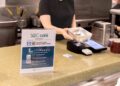




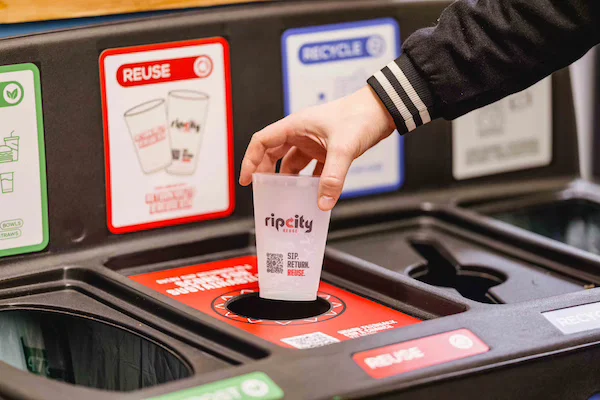
The solution to the nation’s reuse dilemma might just be sitting on the tray of a food cart patron in central Oregon.
The Dish program will look to put a “wash hub” into service at food cart lots and other dining events in Bend, replacing single-use serviceware with reusable items that can be cleaned and put back into service.
The program calls upon customers in participating lots to return reusable plates, bowls and serviceware to collection stations. The items would then be picked up and sent to a central washing facility, cleaned and returned to use. A parallel program would do the same for to-go containers, allowing customers to borrow or purchase reusable items when taking their meals home.
The nonprofit Central Oregon Environmental Center is leading the project with support from Bold Reuse, a Portland-based group that provides commercial dishwashing services. Organizers say the program could be the first step toward building a strong, sustainable reuse program in the Bend area.
“There are 31 food cart lots in Deschutes County. One of the unique challenges is that most of them serve everything in single-use containers,” said Kavi Chokshi, manager of the Environmental Center’s Rethink Waste program. “People may have heard about reduce, reuse, recycle, but they may not realize that it has to be in that order to have the most impact.”
Funding was secured earlier this year through three grants:
- $125,000 from the Oregon Department of Environmental Quality
- $100,000 from Visit Bend
- $15,000 from the City of Bend
Plans were to have the program running this summer, but logistical issues postponed the launch until October; Chokshi said the tourist season around Bend remains strong enough in winter to retain the program’s impact. The initial goal will be to eliminate 250,000 single-use items from the waste stream per year, with long-term projections calling for that number to increase into the millions.
Some of the funds will go toward diner education and bolstering the program to maximize the return rate. The program will avoid more expensive items such as stainless-steel serviceware, he said, while also not branding items or otherwise making them attractive as potential souvenirs.
Even factoring in potential losses due to items not being returned, Chokshi feels the program could end up being as cost-effective as current methods, if not more so.
“The cost can be comparable to single use,” he said. “People don’t see the hidden costs of single use, materials costs and trash collection.”
Those costs total $24 billion per year just to supply the materials, according to Upstream; another $6 billion is spent on waste management. About 840 billion single-use products are bought and then disposed of each year in the US, which Upstream said is equal to about 9 million tons.
The grants are one-year funding sources the Environmental Center is looking to replicate going forward, Chokshi said. Getting more government support can help make it sustainable, he said, as can possible user fees and other methods to make it self-funded.
But the intention is to build and expand the wash hub concept, he said. Municipal leaders in Eugene and Portland have reached out about how to establish similar programming in those cities. Chokshi also envisions launching programming into schools and otherwise educating the community about the value of reuse.
The idea isn’t entirely unique. Upstream’s wash hub map counts 36 projects in North America that incorporate some sort of washing and recirculation infrastructure. ReusePass is a track-and-trace platform from developer Topanga that’s used across dozens of dining partners, including Grubhub, and maintains a 98% average return rate.
But Chokshi said Bend’s program would take elements that exist in other areas and create a more comprehensive system that could grow from the several dozen carts that have committed to taking part into something that could reshape how food service operates.
“This is scalable. We can model this,” he said. “It is innovative, groundbreaking. But we’re doing a lot of learning.
“Two-thirds of litter found in the environment is single-use foodware. This is our first big reuse endeavor. We want it to be a success for everyone.”