Wisconsin’s Department of Natural Resources (DNR) has opened the application process for electronic recycling programs to receive state grants to help fund their efforts. Leaders hope those funds will further bolster a recycling program that saw year-over-year growth in 2025.
The grants are part of the E-Cycle Wisconsin program and would cover permanent or temporary collection sites/events set up between October 2026 and December 2027. Applications are due Aug. 31, and priority will be given to projects in counties without permanent collection sites.
Up to $150,000 in total will be given to businesses, nonprofits and other eligible organizations. The funds come from money the state collects as part of its electronics recycling law, which took effect in 2010.
E-Cycle Wisconsin is a manufacturer-funded program that recycles electronics collected from homes and schools. The DNR has given a total of $590,000 in grants to nine permanent collection sites and 107 single-day drives since 2022; the amount in the annual grant fund depends on the fees collected from manufacturers through the program the year prior.
“The grant program has helped to provide unprecedented access to electronics recycling throughout Wisconsin,” said Sarah Murray, Wisconsin DNR recycling and solid waste section manager. “Our goal is to make it even more convenient and affordable to recycle electronics statewide.”
Grant recipients must be registered with E-Cycle Wisconsin, meet program requirements and pay for at least 20% of the program for which they are applying.
Collection higher in the Badger State
Wisconsin’s electronics recycling law bans computers, monitors, TVs and cell phones from landfills. According to DNR’s 2026 annual report, E-Cycle Wisconsin collected 20.5 million pounds of electronics in 2025, 10% more than the year prior but still less than any of the program’s previous 14 years; leaders attribute that to the lower weight of modern devices.
The state saw two more counties establish permanent collection sites last year, bringing the total to 10. All but one of the state’s 72 counties hosted at least one site or single-day event.
Program leaders credited an increased focus on education and outreach for this growth, as well as a change in how manufacturers’ annual recycling targets were calculated, from purely a weight-based metric to a market share-based number that also includes smaller battery-operated devices that were previously excluded. This allowed 81% of the companies that didn’t meet their 2024 goals to do so in 2025.
But that’s also among the areas that DNR said could still be improved upon. The report authors said legislators should further update device definitions to include portable DVD players, smaller video-display devices and photo printers.
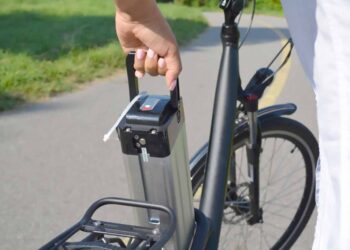
Legislators can also help mitigate the growing risk of collection facility fires caused by batteries that enter the waste stream. Putting devices with embedded lithium-ion batteries on the list of covered products “would require manufacturers of these devices to help fund recycling of these devices,” the report said. Lawmakers could also create a funding mechanism to help facilities install or upgrade fire detection and protection equipment, the authors said.
Some help could soon be coming in regards to safety. A separate law will require portable battery producers in Wisconsin to join a stewardship organization and submit a collection/recycling program by Jan. 1, and a disposal ban will take effect in 2028; DNR plans to work with the stewardship group on potential joint collection efforts.
Since the electronic recycling law took effect, the state has recycled nearly 440 million pounds of electronics.
DNR is also accepting nominations for its 2026 Recycling Excellence Awards through Sept. 14.