





Resource Recycling
  • The Latest
  • Analysis
    • All
    • Certification Scorecard
    • Industry Announcements
    • Opinion
    SK Tes on track to meet 2030 ITAD goal

    SK tes’ sustainability report offers window into ITAD

    Our top stories from February 2023

    ADS flexes new recycling capacity against resin spikes

    SCS launches chem recycling standard

    Certification scorecard — week of Sept. 28

    NJ’s PCR delay risks making its own excuse permanently true

    NJ’s PCR delay risks making its own excuse permanently true

    E-scrap magnet recycling company scales up

    Why only some rare-earth sources are economically viable

    e-Stewards to develop an ITAD-specific standard

    Certification scorecard — week of Sept. 21

  • Conferences
    • Resource Recycling Conference
    • Plastics Recycling Conference
    • E-Scrap: The Longevity Conference
    • Textiles Recovery Summit
  • Publications
    • E-Scrap News
    • Plastics Recycling Update
    • Policy Now
    • Resource Recycling
    • Other Topics
      • All Topics
      • Brand Owners
      • Critical Minerals
      • Glass
      • Grant Watch / RFPs
      • Markets
      • Organics
      • Packaging
      • Research
      • Technology
      • Textiles
Subscribe
No Result
View All Result
Resource Recycling
  • The Latest
  • Analysis
    • All
    • Certification Scorecard
    • Industry Announcements
    • Opinion
    SK Tes on track to meet 2030 ITAD goal

    SK tes’ sustainability report offers window into ITAD

    Our top stories from February 2023

    ADS flexes new recycling capacity against resin spikes

    SCS launches chem recycling standard

    Certification scorecard — week of Sept. 28

    NJ’s PCR delay risks making its own excuse permanently true

    NJ’s PCR delay risks making its own excuse permanently true

    E-scrap magnet recycling company scales up

    Why only some rare-earth sources are economically viable

    e-Stewards to develop an ITAD-specific standard

    Certification scorecard — week of Sept. 21

  • Conferences
    • Resource Recycling Conference
    • Plastics Recycling Conference
    • E-Scrap: The Longevity Conference
    • Textiles Recovery Summit
  • Publications
    • E-Scrap News
    • Plastics Recycling Update
    • Policy Now
    • Resource Recycling
    • Other Topics
      • All Topics
      • Brand Owners
      • Critical Minerals
      • Glass
      • Grant Watch / RFPs
      • Markets
      • Organics
      • Packaging
      • Research
      • Technology
      • Textiles
Subscribe
No Result
View All Result
Resource Recycling
No Result
View All Result
Home Analysis Opinion

The most important decision in tire recycling happens before the shredder

Paul Downey of PliteqbyPaul Downey, Pliteq
August 3, 2026
in Analysis, Opinion, Recycling
tires

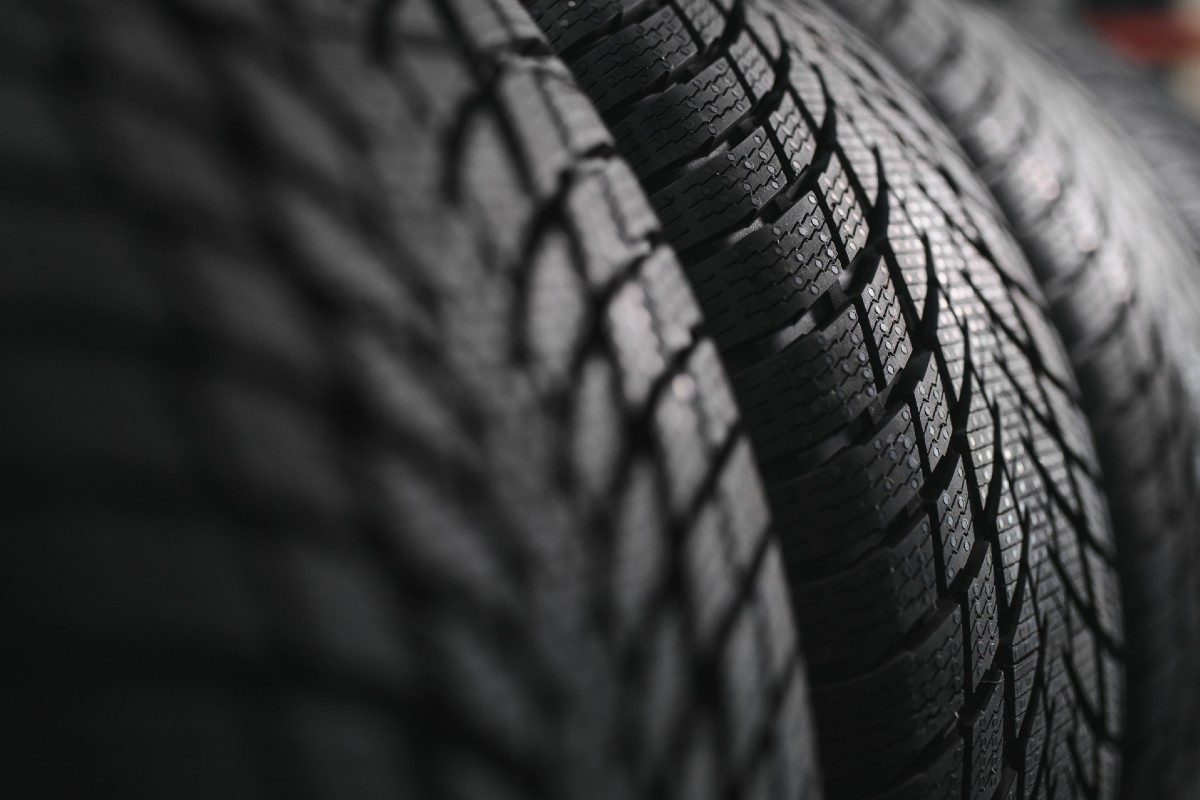
Hryshchyshen Serhii / Shutterstock

For decades, tire recycling was measured by volume. The goal was simple: keep tires out of landfills and find productive uses for the material. Today, manufacturers are asking recycled rubber to perform like an engineered input rather than a waste byproduct, with consistency, traceability, and predictable properties built in.

Processors unable to keep pace will find themselves locked out of the markets paying the highest margins, no matter how many tires they move.

Ask most people in this industry what separates a good recycler from a mediocre one, and they will talk about contamination: stones, glass, the occasional bit of debris in a baled load of scrap tires. Contamination is real, and it costs money to fix. 

But the bigger issue happens earlier, before contamination is even relevant: classification.

A truck shows up with a load of a thousand tires, passenger, truck, and off-road, all mixed together the way they were collected and dropped at the gate. A tire is not a tire is not a tire, and that difference is worth real money to the right buyer. Almost nobody asks which is which before it goes into the machine.

Most facilities run one line, meaning everything goes through the same shredder into the same stream, regardless of what kind of tire it started as. The output is a single, undifferentiated black product sold by the pound.

You can remove steel later with a magnet. You can remove glass later with the right equipment. You can remove stones later, too, with screens or air separation.

What you can’t do is separate rubber types once they’ve been ground together; you can’t unbake the egg.

In most commodity markets, value rises as materials become more defined and more predictable. Scrap steel is sorted by grade. Plastics are sorted by resin type. Paper is sorted by fiber quality. Tire recycling has historically done the opposite, focusing on recovering material volume rather than preserving material identity.

This has not historically cost the industry much: Half of the roughly 340 million scrap tires generated in the United States each year, about one per person, go to fuel or landfill cover, where nobody is paying a premium for known composition. 

Much of the rest becomes crumb rubber for athletic fields, a market that has never rewarded a processor for knowing what went into the grinder. A field full of artificial turf doesn’t care whether the rubber underneath came from a passenger tire or a delivery truck.

Today, that’s changing. Flooring, acoustic products, and other engineered uses pay more, and a buyer needs to know what is in the material before committing it to a product with defined performance requirements. A flooring manufacturer cutting sheets a millimeter thick will see a problem that a thick speed bump would hide for years.

OEMs are facing similar pressure from customers, regulators, and auditors, with recycled-content commitments and Scope 3 reporting that only mean something if the material can be traced to a known source. Buyers who have to defend recycled-content claims in front of auditors and regulators treat recycled rubber very differently from buyers who only needed a sustainability talking point on a slide.

Plastics went through this first. Recyclers learned to separate streams and deliver consistent feedstock, and clean material started commanding real prices while mixed material stayed cheap. Nothing changed until packaging manufacturers started demanding cleaner streams and paying for them. Rubber is on the same path, just earlier in the stages.

Crumb rubber sells for ten to twenty cents a pound. Classified, engineered material can sell for a dollar or two. That gap is the entire business case for running separate lines instead of one, and it only exists because somebody downstream is willing to pay for it.

The processors best positioned for this shift are not necessarily the ones running the most tonnage. They are already separating the handful of passenger, truck, and off-road streams and pricing each differently, because they have a customer who will pay for the difference. Large collection networks and scale will always matter in a business where transportation is a major cost. But scale alone becomes less valuable when buyers begin paying premiums for specification-grade material.

Everyone else, the single-line operations taking whatever shows up on the truck and grinding it into one sack of product, is competing on price alone, the worst position to be in once a market has higher-paying alternatives.

Manufacturers have leverage here that most are not using. The right question to ask a supplier is not whether the material has been cleaned. It is whether it was classified before it was shredded, because that’s the decision nobody downstream can fix.

Processors serious about moving up the value chain should be separating tire categories at intake before they spend another dollar on contamination removal. Manufacturers should be writing classification into their specifications now and paying accordingly, because demand is what justifies the investment, every time.

Commodity processing is not going away. There will always be tonnage that goes to fuel and landfill cover, and that is fine. But once different rubber streams are blended, no downstream process can restore what was lost.

The processors who understand that first will help shape the next generation of material specifications. Everyone else will keep competing in the same price-driven markets they have always served, no matter how many tires they grind.


Tags: ContaminationConverters
TweetShare
Paul Downey, Pliteq

Paul Downey, Pliteq

Paul Downey is the founder and CEO of Pliteq, headquartered in Canada. The company is a global leader in recycled tire products with operations in 50 countries.

Related Posts

CommanderAI launches searchable hauler database

Inside the Circle: Put AI to work for the people who do the work

byBill Shireman
September 14, 2026

There is more than one way to use AI, and some ways are more valuable than others.

Study links tagging tactics to lower contamination rates

byStefanie Valentic
October 14, 2025

A new report from the Solid Waste Association of North America (SWANA) examines the role penalties and education play in...

Community Spotlight: Atlanta’s recycling still improving

byAndrew Hawthorne
July 8, 2025

The recycling program in Atlanta, Georgia, is a work in progress that has seen significant successes, including doubling its recycling...

California will fund mixed plastics facility, other projects

byColin Staub
May 14, 2025

California's state recycling agency will provide $10 million toward a facility sorting plastics with resin codes 2-7, additional multimillion dollar...

Effective resident education requires careful messaging

byAntoinette Smith
January 28, 2025

Effective recycling programs rely heavily on human behavior, which can be very hard to change. But developing a targeted strategy...

Amcor triples goal for use of recycled resin

Amcor to acquire Berry Global in $8.4B all-stock deal

byAntoinette Smith
November 19, 2024

Switzerland-headquartered packaging giant Amcor will acquire Indiana-based Berry Global in a $8.4 billion all-stock deal that's expected to close in...

Load More
Next Post
Industry announcements for January 2026

Industry announcements for August 2026

2026 Buyers’ Guide

Equipment, services and technology suppliers serving the recycling industry.

Browse the Guide

More Posts

Newsom nixes recycled content claims bill

Newsom nixes recycled content claims bill

September 28, 2026
Analysis: Undersupply of PCR is ‘stifling’ brand goals

US lawmakers urge protection of domestic RPET

September 25, 2026
trash bags

Sorted: Should we use recycled trash bags?

September 28, 2026
Recyclers reeling from NJ PCR extension

Recyclers reeling from NJ PCR extension

September 23, 2026
Oregon state capitol building with state flag and blue sky.

NAW appeals Oregon EPR ruling

September 25, 2026
Domestic e-plastics recovery picks up pace 

Domestic e-plastics recovery picks up pace 

September 30, 2026
Diversion Dynamics: Policy needed to reach full charge for vape recycling

Disposable vapes banned in California

September 28, 2026
USFFI signs first film offtake deals

USFFI signs first film offtake deals

September 29, 2026
NJ’s PCR delay risks making its own excuse permanently true

NJ’s PCR delay risks making its own excuse permanently true

September 28, 2026
Cyclic launches commercial test of rare earth recycling tech

ERI investment to help fund Cyclic Materials expansion

September 29, 2026
Load More

About & Publications

About Us

Staff

Archive

Magazines

Work With Us

Advertise
Jobs
Contact
Terms and Privacy

Newsletters

Get the latest recycling news and analysis delivered to your inbox every week. Stay ahead on industry trends, policy updates, and insights from programs, processors, and innovators.

Subscribe

Welcome Back!

Login to your account below

Forgotten Password?

Retrieve your password

Please enter your username or email address to reset your password.

Log In

Add New Playlist

No Result
View All Result
  • The Latest
  • Analysis
  • Recycling
  • E-Scrap
  • Plastics
  • Policy Now
  • Conferences
    • E-Scrap Conference
    • Plastics Recycling Conference
    • Resource Recycling Conference
    • Textiles Recovery Summit
  • Magazines
  • About Us
  • Advertise
  • Archive
  • Jobs
  • Staff
Subscribe
This website uses cookies. By continuing to use this website you are giving consent to cookies being used. Visit our Privacy and Cookie Policy.