


Getting unused electronics into reuse and recycling programs takes more than telling people their devices contain valuable materials. It also means helping them understand what is inside those products and how to find a collection option they can use.
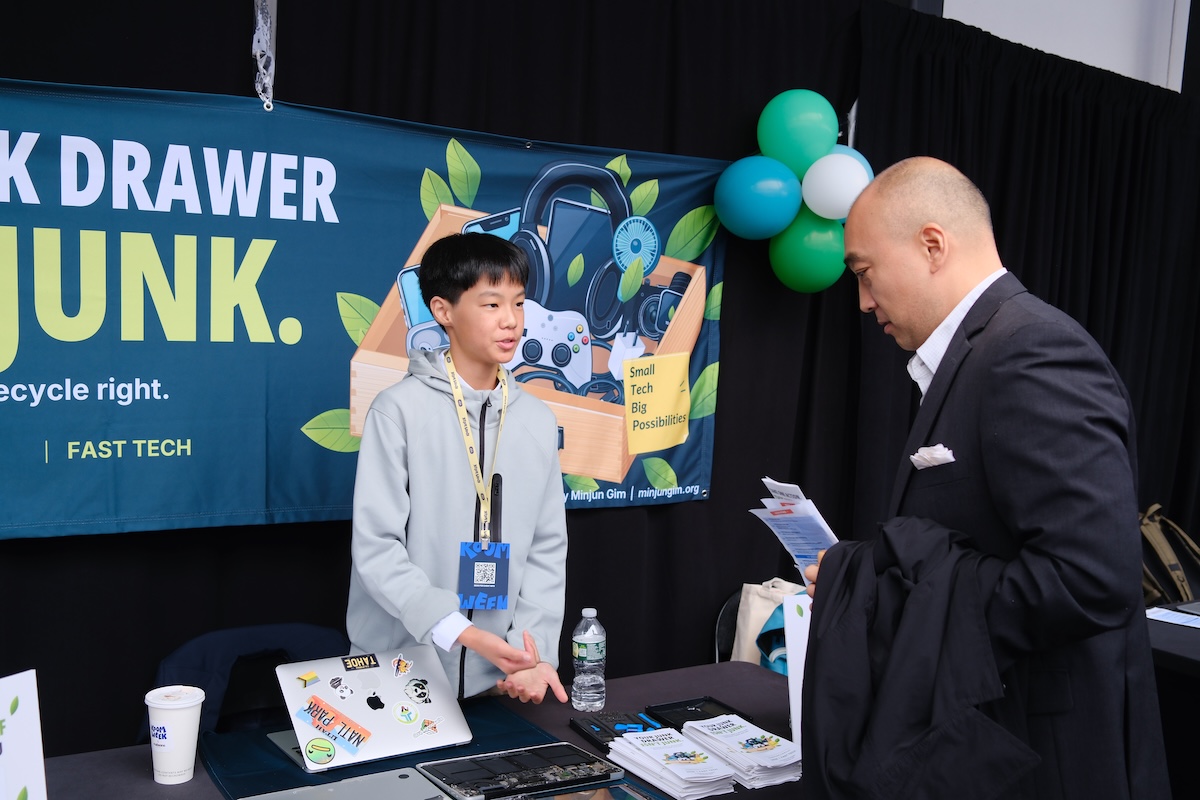
That is the challenge 13-year-old Minjun Gim has taken on through a school project that brought him cross-country to New York City, where he used an old iPad and MacBook to explain electronics recovery to visitors at KOOM Week.
The eighth-grader from Los Altos, California, began researching e-scrap with a friend during a science project at Tessellations School in Cupertino about ways to benefit society.
“We wanted a way to have a positive impact on the environment while also doing something we’re passionate about,” Gim said. “We both found that we love computers and devices.”
An electronics unit gave them a starting point, and their research led to urban mining, including the recovery of gold and other metals from discarded equipment. The idea connected their interest in technology with a practical environmental question: What happens to the materials inside a computer once someone stops using it?
In conversations about the project, Gim found familiarity with the idea of electronics recycling, but less evidence that people were participating.
“People did know these electronics should be recycled,” he said. “But it was hard to find a lot of people that actually partake in e-waste recycling.”
Opening up old devices
The scale of the material stream surprised him. Gim recalled encountering an annual global e- waste figure of roughly 60 million tons and wondering why more equipment was being discarded than he had expected.
“I was shocked at how big of a number it was,” Gim said. “I thought there would be a lot more people who would recycle it.”
The Global E-waste Monitor 2024 puts that challenge in context. The report, prepared by the International Telecommunication Union and the United Nations Institute for Training and Research, found that the world generated 62 million metric tons of e-scrap in 2022. Only 22.3% was documented as formally collected and recycled in an environmentally sound manner.
The report projects global generation reaching 82 million metric tons in 2030. It also found that e-scrap generation grew almost five times as fast as documented formal collection and recycling between 2010 and 2022.
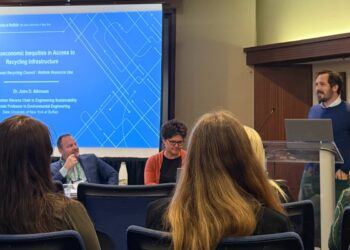
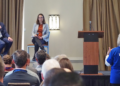
At KOOM Week, a festival to bring together Korean and Korean-American entrepreneurs, investors and creatives, Gim brought the project beyond school. He paired brochures visitors could take with demonstrations showing what is inside some of the electronics they use in everyday life. Opening the iPad and MacBook gave him a way to talk about the materials inside devices that people generally encounter as finished products. He wanted visitors to consider what could happen to an old device after its first owner was finished with it, including refurbishment or recovery of its constituent materials.
“There are all of these different valuable metals,” Gim said. “I wanted to show that it could all be collected and reused again.”
Visitors asked how the project started and what he was trying to accomplish. Those conversations gave him a chance to discuss both the reasons to recover electronics and the options people might already have nearby.
Gim also wanted visitors to understand the potential for refurbishment, giving equipment another useful life. His demonstrations used products familiar to visitors.
Making collection convenient
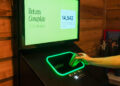
Gim sees access as a major part of that next step. He pointed to battery collection points in apartment buildings in South Korea as an example of a system that can fit into residents’ routines.
Having a place to leave accepted materials close to home can make participation easier, he said. The experience can be different when a resident has to travel a substantial distance to find an appropriate collection site.
“It depends on the district,” Gim said. “It might take an hour-long drive just to be able to recycle these devices.”
That variation shapes his advice to classmates with an unused tablet or other electronics at home. He encourages them to investigate local options first and find out how their equipment can be properly recycled.
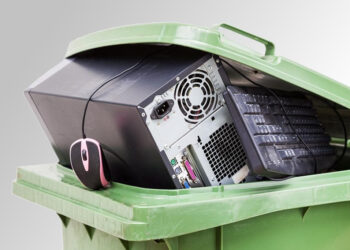
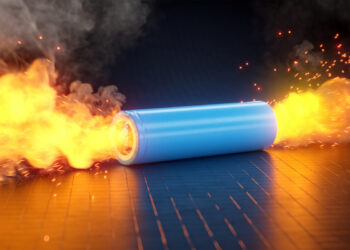
The starting point is specific to their community. A place that accepts one type of material may have different instructions from another program, making local information part of the task. Battery handling also requires care. The US Environmental Protection Agency advises consumers to keep lithium-ion batteries out of household garbage and municipal recycling bins. Electronics with batteries that cannot be removed by the user can go to certified electronics recyclers, participating retailers or local electronics and household hazardous waste collection programs.
The project has prompted Gim to examine his own household’s habits. His family had accumulated a large container of batteries without deciding where they should go. Researching recovery options turned that stored material into something they were actively trying to address.
“Now we’ve been actively trying to figure out, ‘How can I recycle this?’” he said.
Keeping equipment in use
Gim’s interest extends to decisions made before a device reaches a collection point. Asked what manufacturers could change, he emphasized designs that allow individual components to be replaced.
He cited Framework, which makes modular computers and provides replacement parts and repair guides, as an example of the approach he would like to see more widely adopted.
“It allows easier repairs,” Gim said. “There’s actually less waste because you can just replace each part individually rather than having to replace the whole computer.”
He is applying that thinking to his own equipment, too. The project has made him more deliberate about when to replace his computer.
“For my computer, I’m trying to use it longer without switching to a new computer,” Gim said. “Just to be able to reduce waste in the best I can.”
His robotics activities offer another connection to extending the life of hardware. Gim enjoys math, video games and building robots, and serves as the coder on his robotics team. He said the team reached a world championship last year.
What he enjoys is the process of testing a robot, identifying a problem and changing the code before another run.
“I think it’s just something that I really enjoy, being able to solve problems and keep testing,” he said.
The team also continues using its motors and metal components across projects. Sometimes, he said, members bend metal back into shape so it can be used again the following year.
“All of the motors can keep on being used,” Gim said.
He is still considering where his interest in science might lead, with engineering and social outreach among the possibilities. For now, he wants to expand the electronics project’s reach and give people beyond his school community opportunities to bring in devices.
The effort remains primarily a school project, he said, even as he has begun raising awareness elsewhere. His ambition is to make electronics recovery an ordinary part of people’s lives, supported by collection options they can readily use.
“E-waste is something that should just be a part of normal life,” Gim said.
He also wants people to understand the connection between reuse and access to technology. An unwanted computer can still have value for someone who needs one.
“It’s something that can actually affect other people’s lives,” Gim said. “It can make it so that other people can have a computer to use, and I think it’s something that is important for the environment.”