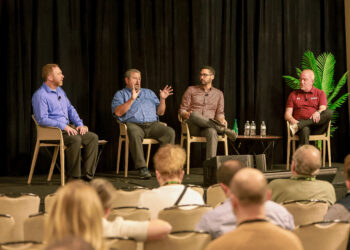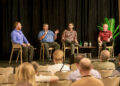





Lithium-ion battery fires are a growing danger at waste and recycling facilities. At E-Scrap: The Longevity Conference in New Orleans, Uriah Kiser talks with Ryan Fogelman of Fire Rover about how thermal cameras, smoke analytics and human “virtual firefighters” catch and respond to fires early.
Ryan explains why skip-the-bin education matters, why vapes are a special problem, and how Fire Rover works with fire departments when a fire is too dangerous to fight directly.
He also introduces Supercharged! Batty and the Battery Rescue Team, the children’s battery-safety book he co-wrote with Dalan Zartman of the Energy Security Agency.
Like, comment, subscribe, and turn on notifications so you don’t miss the next conversation on the Resource Recycling Podcast.
Transcript of episode 9: The Resource Recycling Podcast
Host: Uriah Kiser, Resource Recycling | Guest: Ryan Fogelman, Fire Rover
Uriah: Welcome back to the Resource Recycling Podcast. Fires in battery facilities are a big deal, but you are trying to do something about that, Ryan. And you have a new book aimed at children to educate them, in addition to the firefighters you work to protect every day.
Ryan: Here’s a copy for you.
Uriah: Thank you. It’s called Supercharged! It’s right on my reading level too, trust me.
Ryan: It is. It’s for third to sixth graders, so it’s perfect for you.
Uriah: Perfect for me. It’s awesome. Ryan, thanks for coming on the Resource Recycling Podcast.
Ryan: My pleasure.
Uriah: Before we get into the book, tell me more about Fire Rover.
Ryan: Fire Rover basically replaces the frontline operators putting fires out. We use thermal cameras, we trend heat, and we also use smoke analytics. We’re the only FM-approved system in the world. We protect over 1,000 facilities in eight countries now, and we’re in 10 of the top 10 waste and recycling companies.
What’s different with ours is that we use a human operator. We call them virtual firefighters. When you think human these days, you think dinosaur. In our case, it’s the exact opposite. We’re the only FM-approved system because of the brains of the human. Not only can we catch fires early, but we can respond to them in the right and appropriate way on the front lines. When the fire department comes, we work with them. We work with your employees. We work with all the different people to make sure there’s a good outcome.
Uriah: And it’s not just one or two that you’ve put out. It’s hundreds.
Ryan: Oh, thousands. Just this year alone, we put out over 450 fires on the front lines in eight different countries. And in the last four and a half years, we’ve responded to 15,000 confirmed hotspots or fires.
Uriah: Wow. Talk to me about the misconceptions about battery recycling and where batteries end up, because so many people just toss them in the trash when they’re done. And when they catch fire, it’s our bravest, the heroes if you will, and the waste operators on the front line who are dealing with these fires everywhere. They’re in harm’s way.
Ryan: 100 percent. The waste and recycling operators in this equation are the victims. I don’t mean victims in a negative sense, but they’re the ones having these fires. And it’s not just batteries. They’ve been dealing with what I call traditional hazards forever.
To solve the problem, you need three things: education, operational best practices and technology. With a system like ours, we mitigate the risk of catastrophic loss by 99.99 percent. That’s why we started on the education side. We’ve trained people for basically the last 40 years to recycle. It’s not that we haven’t done a good job, but it’s very local. Every jurisdiction and every company does things differently, so it’s not standard across the board. For batteries, it’s different. We can all agree: skip the bin, turn your batteries in. We work with NWRA, SWANA, ReMA, CDRA and EREF on this, and we have them all on board.
The big issue I see is not just the collection of batteries. It’s the ones that don’t have a place to be collected. Take vapes. The problem is there’s nowhere to bring them. There are very few places, because they’re a biohazard, a hazmat, and they have an embedded battery. So we’re telling the public, “Hey, skip the bin,” but then we need more hyperlocal drop-off locations for them.
Uriah: And when you help fight those fires, you’re not sending people in to do it. Talk about the technology you’re using.
Ryan: We use top-grade thermal cameras, which are now UL-approved. We use optical flame detection, so we’re looking for symptoms of an abnormality. When we see that, we have nozzles, cameras, gas detection, all these different things that let us catch a fire early and hopefully respond in the right way. With VSS systems, we can actually fog spray and keep the plume of smoke in, and we can help the fire department. When it’s too dangerous for them to fight a fire, we can help them evacuate certain areas. We really are frontline operators, and the fire departments love this.
Uriah: That was my next question. What response are you getting from fire departments across the country? I’m sure a call like this is one of the last calls they want.
Ryan: They don’t want it. There are 1.2 million firefighters in the United States, and 700,000 of them are volunteers. They don’t want to fight dangerous industrial fires unless they’re prepared for it. There are very few people in the world who are truly trained to fight these types of fires. And the issue is that nothing puts this out. Nothing stops thermal runaway except water, and letting it burn itself out.
We do a ton of electronics recyclers, scrap metal, all the different types. But with batteries specifically, what we’re trying to do is soak it and make sure the damage stops. There are a ton of videos on our YouTube page, if you want to share them, of us putting out drums of batteries. We do this all the time, on top of a ton of tipping floors and others. They’re everywhere.
Uriah: The book is called Supercharged! Batty and the Battery Rescue Team. We’re going to drop a link where you can find more information and get a copy for your kids. Why did you do this book for children?
Ryan: I’m gearing it toward kids so that adults read it to the kids and learn too. People aren’t reading physical books like they used to, but kids still do. There are two main messages in the book. One is skip the bin, turn your batteries in. Woodsy Owl is in the book.
Uriah: Oh, great. You licensed that character. Good for you.
Ryan: The NWRA allowed us to use him, which was amazing. And Dalan Zartman is a 30-year firefighter. He’s also the CEO of a company called Energy Security Agency. They do the frontline response for a ton of battery fires across the country, with cleanup, fire watch and all these different things. His side of it was: know when to tell an adult. Know when not to fight it yourself. These aren’t toys. Make sure your pets don’t eat them. There are so many different things that can happen, so you’ve got to let kids know: if you see something, say something, and call the fire department when you can’t handle it any other way. And we have to make sure we fund fire departments so they have the right tools.
Uriah: Absolutely. That’s very important. Batteries are ubiquitous. They’re in just about everything we touch on a regular basis. This may not be something you or I were reading when we were kids, but it’s definitely something children today should be reading.
Ryan: They need to.
Uriah: So again, Supercharged! Batty and the Battery Rescue Team. Tell us where we can follow you and get more information about the book. We’ll make sure all the links go in the description of the podcast.
Ryan: I’ve been writing the annual report on waste and recycling facility fires for the past decade. You can follow me on LinkedIn, Ryan J. Fogelman. You can also follow my newsletter, the Fire Safety Report. If you’re interested in Supercharged, go to superchargedbook.org. We also have a SWANA partnership Fire Rover page where you can find locations to drop batteries off, and when you have these events, you can anonymously report them through our reporting tool. And on Instagram, you can follow us at Supercharged Safety Foundation. That’s the big one. That’s where the kids want to be.
Uriah: All the places. I love it. Ryan, this has been a lot of fun. Thanks for coming on.
Ryan: Uriah, I love this. This is great.
Uriah: If you want more conversations like this, make sure you give us a follow on the Resource Recycling Podcast. Like the video, share it, and hit that bell notification and subscribe button so you know when we’re having conversations about circularity, ITAD and everything else, right here from New Orleans at E-Scrap: The Longevity Conference. I’m Uriah Kiser. We’ll see you on the next Resource Recycling Podcast.