


Resource Recycling
  • The Latest
  • Analysis
    • All
    • Certification Scorecard
    • Industry Announcements
    • Opinion

    Southeast grows into US’ critical mineral hub

    Sundry Photography / Shutterstock

    Iron Mountain adds ViaTeK Solutions to ITAD business

    ABTC gets black mass export exemption

    ABTC gets black mass export exemption

    smart glasses

    ITAD’s big wearables challenge

    Partnership ups quality control on device-sales platform

    Certification scorecard — week of Oct. 5

    Industry announcements for January 2026

    Industry announcements for October 2026

  • Conferences
    • Resource Recycling Conference
    • Plastics Recycling Conference
    • E-Scrap: The Longevity Conference
    • Textiles Recovery Summit
  • Publications
    • E-Scrap News
    • Plastics Recycling Update
    • Policy Now
    • Resource Recycling
    • Other Topics
      • All Topics
      • Brand Owners
      • Critical Minerals
      • Glass
      • Grant Watch / RFPs
      • Markets
      • Organics
      • Packaging
      • Research
      • Technology
      • Textiles
Subscribe
No Result
View All Result
Resource Recycling
  • The Latest
  • Analysis
    • All
    • Certification Scorecard
    • Industry Announcements
    • Opinion

    Southeast grows into US’ critical mineral hub

    Sundry Photography / Shutterstock

    Iron Mountain adds ViaTeK Solutions to ITAD business

    ABTC gets black mass export exemption

    ABTC gets black mass export exemption

    smart glasses

    ITAD’s big wearables challenge

    Partnership ups quality control on device-sales platform

    Certification scorecard — week of Oct. 5

    Industry announcements for January 2026

    Industry announcements for October 2026

  • Conferences
    • Resource Recycling Conference
    • Plastics Recycling Conference
    • E-Scrap: The Longevity Conference
    • Textiles Recovery Summit
  • Publications
    • E-Scrap News
    • Plastics Recycling Update
    • Policy Now
    • Resource Recycling
    • Other Topics
      • All Topics
      • Brand Owners
      • Critical Minerals
      • Glass
      • Grant Watch / RFPs
      • Markets
      • Organics
      • Packaging
      • Research
      • Technology
      • Textiles
Subscribe
No Result
View All Result
Resource Recycling
No Result
View All Result
Home Recycling

Inside the Circle: The bottle bill’s unfinished business

Bill ShiremanbyBill Shireman
October 13, 2026
in Recycling
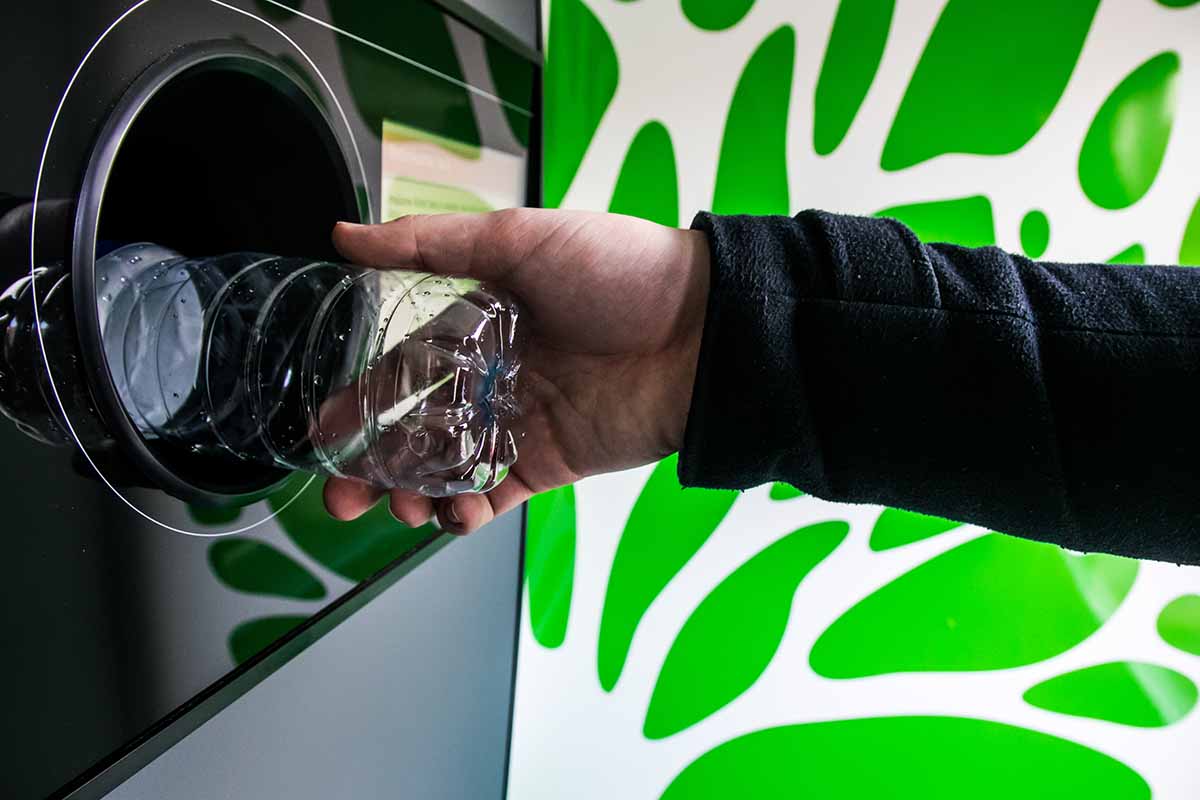
Study explores  reusable containers in California DRS

Rokas Tenys / Shutterstock

California’s bottle bill turned 40 on September 29. I’m proud of the role I played in making it happen, bringing together the unlikely coalition that made it possible.

Already a veteran of roughly ten years of losses to an industry alliance that had mastered the science of defeating deposit laws, I was pretty sure the traditional approach of waging an even bigger war against industry wouldn’t work for us. So before we launched a new campaign in 1986, I did something unusual.

I spoke with our opponents. Sat down with them in any office I could get myself into. And asked a pretty simple question: How can we make you want to beat us less?

When I showed up at Bill Coors’ office in Golden, Colorado, he led me to a back room, opened a file drawer, and pulled out a folder marked “Closed Loop System.” It was a model for a bottle bill that would cost much less than the traditional approach by replacing some command-and-control mandates with market-based mechanisms. The most significant would spare retailers from having to take back every container directly. Instead, a network of independent recycling centers could emerge to provide that service.

Chuck Collings, the president of Raley’s Supermarkets, turned out to be my next hero. A conservative, he was precisely the kind of executive my allies would think least likely to help us. But when I spoke with him, he told me he was ashamed of his own side. He thought they had been untruthful in their last campaigns against us. Retailers were eager to avoid another public battle. They valued their reputations. Being opposed to a sensible environmental law was not something they looked forward to. He told me: “If you solve my problem, I’ll solve yours. I’ll get the rest of the grocers aboard.”

He kept his promise. The brewers joined the retailers, and soon the soft-drink bottlers and the unions that served them all.

We had a deal. Republican and Democratic lawmakers voted for the measure, authored by Democratic Assemblyman Burt Margolin. Republican Governor George Deukmejian signed it into law.

Since then, Californians have recycled more than half a trillion bottles and cans—nearly 550 billion, according to CalRecycle. All that astonishes me. I’m grateful beyond measure.

Three things made the deal possible. We asked before we designed. We found the one cost our opponents most wanted to avoid, managing the logistics of redemption, and we removed it. And we learned who could bring the rest along. It was the grocers, not the bottlers.

The law worked because the water flowed downhill. The incentives made sense for everyone.

California needs that method again. Environmental organizations have challenged the regulations implementing SB 54, the state’s packaging law, arguing they weaken it. Industry groups are pursuing delay, amendment, repeal or litigation. The state’s producer responsibility organization, Circular Action Alliance (CAA), sends its final plan to CalRecycle this month.

SB 54 also asks for what we never delivered in 1986, and that I am still eager to accomplish. When I first set out to pass the bottle bill, refillable containers still had a substantial presence in the marketplace. By the time we passed it, they had largely disappeared. The beverage industry consolidated around linear systems that reward scale: produce centrally, ship long distances, sell, discard. So we have a system that recycles, but does not refill.

By January 1, 2027, CAA must cut the plastic packaging and food serviceware its members sell in California by 10 percent. At least a fifth of that cut has to come from shifting to reusable or refillable packaging.

This matters beyond packaging. Many circular activities reward proximity: repair, maintain, refill, restore, resell, collect, compost and remanufacture. They are the key to a future economy that complements global institutions with abundant local enterprises. We can be global where scale creates value and local where proximity creates value.

Nobody has yet found the design that makes source reduction pay, yet source reduction is where we get the biggest environmental benefits. I don’t have the answer. In 1986, I didn’t either, until I asked. So here are the two questions I would ask now.

To producers: What is the one cost you most want to avoid? Under SB 54 you pay fees on the packaging you sell, and the law’s fee system is intended to recognize source-reduction performance. Could those fees be built around the cost you fear most, so that every pound of material you eliminate reduces your future compliance cost? This is the test: a packaging engineer should be able to walk into the CFO’s office and say, give me the money to redesign this product.

To retailers: Would you play the role the grocers played in 1986? They brought the brewers along. Today you can use supplier scorecards, purchasing commitments, shelf preference and shared standards to make lower-material designs commercially valuable. That matters most for refill, because a new system needs early volume before its infrastructure becomes economical.

Forty years ago, we made progress by asking our opponents what would make it easier for them to do what was right. Nobody has yet asked that question about source reduction under SB 54.

It is time once again for the parties at each other’s throats—battling to reduce SB 54’s costs or raise its environmental benefits—to sit down at a table and work out how to do both.

We’ve done it before.

We can do it again.

Let’s start now.

Tags: Beverage ContainersCaliforniaContainer DepositsEPRRepair & Reuse
TweetShare
Bill Shireman

Bill Shireman

Bill Shireman is a longtime environmental entrepreneur and policy innovator. He helped write California’s original bottle recycling law, which has helped recover hundreds of billions of containers. As CEO of Solution Citizen, he works at the intersection of circular economy policy, democratic renewal, and cultural transformation—and occasionally wanders rainforests looking for better ideas than the ones we currently have. He recently launched Circle America, a new affinity group and campaign for advancing a circular economy and culture. Learn more and join the community at CircleAmerica.us

Related Posts

Panelists discuss construction waste reuse at the NERC conference in New Jersey October 7, 2026.

Ramping up reuse of construction materials

byBrian Clark Howard
October 8, 2026

Construction and demolition produces a lot of waste, but reuse can make a big dent in that, panelists at the...

University at Buffalo Professor John Atkinson (right) speaks at the NERC conference in New Jersey.

Improving recycling access for underserved communities

byBrian Clark Howard
October 7, 2026

Panelists at the NERC conference in New Jersey talked about solutions to recycling access, from grants to research to technology...

Trade-in firm reports higher values for used phones

Device trade-ins increase amid newest iPhone release

byPaul Lane
October 7, 2026

Some in the second-hand marketplace won’t see the full impact until well after the Duo foldable phone releases later this...

How AI imaging is helping MRFs and a reclaimer

EPR demands push AI vision systems toward MRFs

byStefanie Valentic
October 6, 2026

AI audit systems could become a compliance tool under EPR, but who pays for them is still being worked out.

Top stories from March 2025

Study finds e-scrap reuse dismissed in UK

byPaul Lane
October 6, 2026

Researchers say many more devices can be put back into users’ hands than is happening now.

Usefull reusable dining container at SEEC cafe at the University of Colorado Boulder.

CU Boulder launches dining reuse program

byBrian Clark Howard
October 5, 2026

A partnership with Usefull brings reusable, stainless steel containers to university dining spots.

Load More

2026 Buyers’ Guide

Equipment, services and technology suppliers serving the recycling industry.

Browse the Guide

More Posts

APR, PROs appeal to Ottawa for help

APR, PROs appeal to Ottawa for help

October 6, 2026
Sundry Photography / Shutterstock

Iron Mountain adds ViaTeK Solutions to ITAD business

October 9, 2026

Southeast grows into US’ critical mineral hub

October 12, 2026
smart glasses

ITAD’s big wearables challenge

October 8, 2026
How to perform chip harvesting

How to perform chip harvesting

October 1, 2026
GM launches recycled EV battery line

GM launches recycled EV battery line

October 5, 2026
Our top stories from February 2023

ADS flexes new recycling capacity against resin spikes

October 1, 2026

SC Johnson CEO: Recycling needs policy fix

October 5, 2026
plastic bale

Underreported sales may cost bottle bill states up to 40%

October 5, 2026
EU flags in front of the European Commission's building.

Europe’s electronics recovery market is moving upstream

August 5, 2026
Load More

About & Publications

About Us

Staff

Archive

Magazines

Work With Us

Advertise
Jobs
Contact
Terms and Privacy

Newsletters

Get the latest recycling news and analysis delivered to your inbox every week. Stay ahead on industry trends, policy updates, and insights from programs, processors, and innovators.

Subscribe

Welcome Back!

Login to your account below

Forgotten Password?

Retrieve your password

Please enter your username or email address to reset your password.

Log In

Add New Playlist

No Result
View All Result
  • The Latest
  • Analysis
  • Recycling
  • E-Scrap
  • Plastics
  • Policy Now
  • Conferences
    • E-Scrap Conference
    • Plastics Recycling Conference
    • Resource Recycling Conference
    • Textiles Recovery Summit
  • Magazines
  • About Us
  • Advertise
  • Archive
  • Jobs
  • Staff
Subscribe
This website uses cookies. By continuing to use this website you are giving consent to cookies being used. Visit our Privacy and Cookie Policy.