





Announced and rumored changes from Apple could create a wave impacting the entire secondhand mobile device marketplace through the rest of the year.
Late last month, the company announced price increases that could end up with buyers paying 20%-30% more for new items; used items can cost up to 15% more from Apple. The company cited soaring costs for memory components as the reason for the move.
Simon Bryant, vice president of research at consultancy CCS Insight, said the price increase has come sooner than most industry insiders expected. Speaking during the Mobile Disrupt conference in Miami July 7-8, he said the price increase may cause some buyers to delay a purchase, trade down or consider alternative brands or devices.
But Apple has long been among the mobile device brands with the most loyal users, with customer retention remaining around 92%. And investors have remained bullish on Apple, with the company’s stock price increasing about 21% in the month to July 10.
Even for customers who might want a change, Apple is dangling a carrot that may convince them not to stray far. Indications are that Apple will introduce a foldable phone before the end of this year that, even with a price point exceeding $2,000, is expected to draw high demand.
“The foldable iPhone is something a lot of customers have been waiting for for a long time,” said Brad Akyuz, a mobile industry analyst with Circana, during the session.
Re-emergence of foldable phones shifts mineral demand
Most core minerals like copper, silicon and gold are used across phone types. But the re-introduction of foldable phones in the smartphone age has increased demand for certain minerals specific to those phone types.
More touchscreen space on each device requires more indium and gallium. The hinges require more tungsten for wear resistance and neodymium for the magnets that hold the separating segments together.
Moving parts also detract from dust resistance and increase wear and tear. Google, as one example, countered this by using more multi-alloy steel and aerospace-grade aluminum in the phone body, as opposed to the single-piece aluminum or titanium used in many standard phones.
The battery technology that Apple adopts on its presumed foldable phone may also create a shift in demand for those minerals. Most brands still use lithium-ion batteries in their US models because of their stability and reliability, but Motorola introduced silicon-carbon batteries into its Razr Ultra 2026 and Razr Fold models this year. The company said they deliver more power in the same compact space that foldable phones require, and allow Motorola foldable phones to hold larger batteries than competing devices like the Samsung Galaxy Z Fold 7 and Google Pixel 10 Pro Fold.
Given Apple’s popularity, that could put an immediate constraint on the minerals specific to its foldable phone. Apple is among the global leaders in smartphone shipments and dominates the US market, accounting for more than half of all shipments, according to Counterpoint Research. And when Apple introduces a new phone, people buy it. The latest model, iPhone 17, accounted for 6% of global new phone sales soon after its introduction in early 2026, according to Counterpoint.
Given the Pavlovian nature of some Apple brand enthusiasts, combined with the novelty of a foldable iPhone, demand will likely be high. But the trickle-down to the secondhand marketplace could be just as impactful as the new device.
“That could create an interesting upcycle we haven’t seen before,” Akyuz said.
Secondhand market changes
Typically, he said, customers upgrade their phones every three to four years (iPhone 13s are the most-exchanged, according to Assurant), although ongoing price concerns across brands have led some users to hold onto devices longer.
Apple users who have been waiting for a foldable phone may be ready to trade in sooner, though.
“Consumers may upgrade faster than their typical upgrade cycle,” Akyuz said. “If the deal is good, we might see them. We may then see more newer-generation iPhones coming into the supply side.”
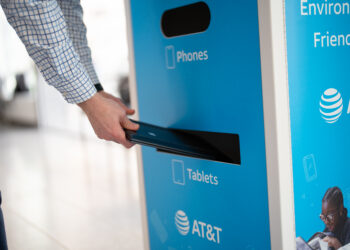
David Arredondo, CEO of Stone Group Technologies, said his repair and refurbishment business has seen a shortage of iPhones in recent months. Any potential influx of secondhand devices, therefore, could free up more devices for restoration or mineral extraction.
What all of this does to prices remains to be seen. Research from SellCell found that traditional phones lose about 55% of their value after one year; newer iPhones tend to retain about half their value. A higher volume of newer iPhones, therefore, may elevate the industry’s overall retention value slightly.
Recent trends indicate that, once those new Apple foldable phone owners opt to trade in, they could expect to see less money back. Foldable phones from Google, Samsung and Motorola lost nearly two-thirds of their value after a year.
Apple’s tendency across the brand to retain more value may bring the number up, but buyers who are wary about value retention could think twice about buying the Apple foldable option. And with prices going up across the iPhone spectrum, retaining more value after an owner is done with the device may be a differentiator when it comes time to choose.
“The challenge for Apple won’t simply be building a great foldable phone,” SellCell’s report said. “It will be proving that foldables can hold their value in a way that existing devices have failed to achieve.”
Apple hasn’t yet confirmed any details about a potential foldable phone.