A nondescript farm in southern Ontario might just hold the key to greener energy production and storage in Canada.
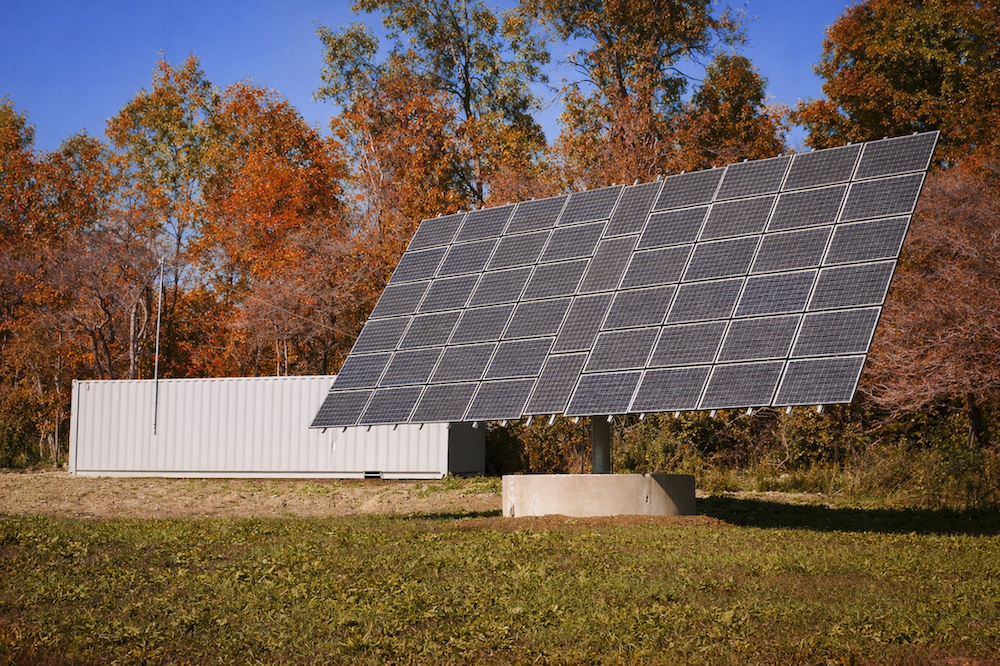
Castellan Farm in Fergus, northwest of Toronto, is hosting Mapleview Energy’s 600 kWh trial and pilot project. The work will involve using repurposed EV batteries to store solar energy gathered on the farm, feeding energy from panels to batteries to enhance storage capabilities. Its modular design will allow for system expansion should the farm need more power.
The project, which launches later this month, is the next step toward the two-year-old company’s goal of full-scale deployment for farms and small to mid-sized businesses that may deal with grid instability in rural areas. Founder and CEO Nick Nesbitt said his work over the next few months may help Mapleview become the go-to company for batteries with remaining life.
“The problem coming down the pipeline with second-life batteries demands a quick scale-up,” he said. “There’s tremendous investment in the value chain, so it makes sense to have an infrastructure buildup. These companies don’t have huge balance sheets for storage systems, and this provides a more affordable option.”
Nesbitt, who’s looked into EV reuse since his university days — he wrote his master’s thesis on the EV battery circular economy — launched the company in 2024 and since then has worked on using old batteries as stationary storage. The minerals in used EV batteries are still viable, he said, so he wanted to extend their life spans before sending them for recycling — “second life does not replace recycling, it complements it,” he said.
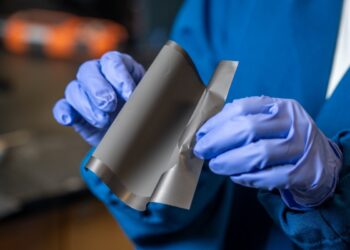
He and his team have spent the past couple years conducting lab work on how to best use EV batteries, which can have up to a decade of life in them after they’re no longer viable to power vehicles, for power storage. Mapleview found that many batteries that are not usable in vehicles still retained 70%-80% of their original capacity.
A working prototype was developed in conjunction with Dr. Sheldon Williamson and Ontario Tech University, and included safety testing. Lab work showed the system worked at about 50 kWh, so this next step represents a twelvefold buildout. The Castellan project is one of a few paid pilots Mapleview is taking part in this year to test the technology.
The farm pilot will focus on load shifting, peak-hour generation and backup power storage capacity, Nesbitt said. Data gathered during the pilot will guide future actions in terms of how large the storage capacity can be scaled and to what extent the technology can meet expected need, especially during colder months when there’d be less sun and more need to dip into reserves.
“What everybody’s seeing is that the electricity demand is rising, and so is the price,” he said. “If there’s any power issues, they want to have critical equipment running during an outage.”
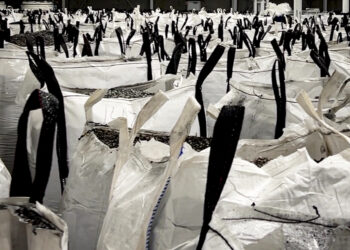
Along with perfecting the technology, Mapleview is also finalizing logistical plans. The company has one feedstock supplier, MacLean Engineering in Ontario, and is working with car makers and recyclers to secure more used batteries.
Nesbitt said he’s also building out the company’s maintenance and monitoring capacities, as well as connecting across the value chain to build relationships to secure circularity. Last week, Mapleview joined the Ontario Clean Technology Industry Association, from which Mapleview received a grant to build the battery technology.
Along with the farm pilot, Mapleview is working on a pilot involving a greenhouse in Ontario. After that, Nesbitt hopes to build an EV battery repurposing gigafactory in the province by 2032, which would be another step toward a secure, self-sustaining energy supply.
“No matter what, there’s no point where people are going to need less power,” he said. “We want to build tech that can be repeated across platforms. This is a chance to create jobs and strengthen the battery supply chain. This is a major opportunity for Ontario.”