



It all starts with a humble yogurt cup.
“This was my breakfast this morning,” said Stephanie Baker, director of advocacy and marketing for KW Plastics. She held up an empty, rinsed container.
“Today we’re going to be following the story of this yogurt cup,” Baker said during a rare “glimpse behind the gates” at KW Plastics headquarters and recycling division in Troy, Alabama, on May 7. The public tour was part of the second annual Association of Plastic Recycler’s (APR) Recycle in Action event, a series of experiences at recycling facilities around the country in May that are designed to “pull back the curtain on what we do,” in Baker’s words.
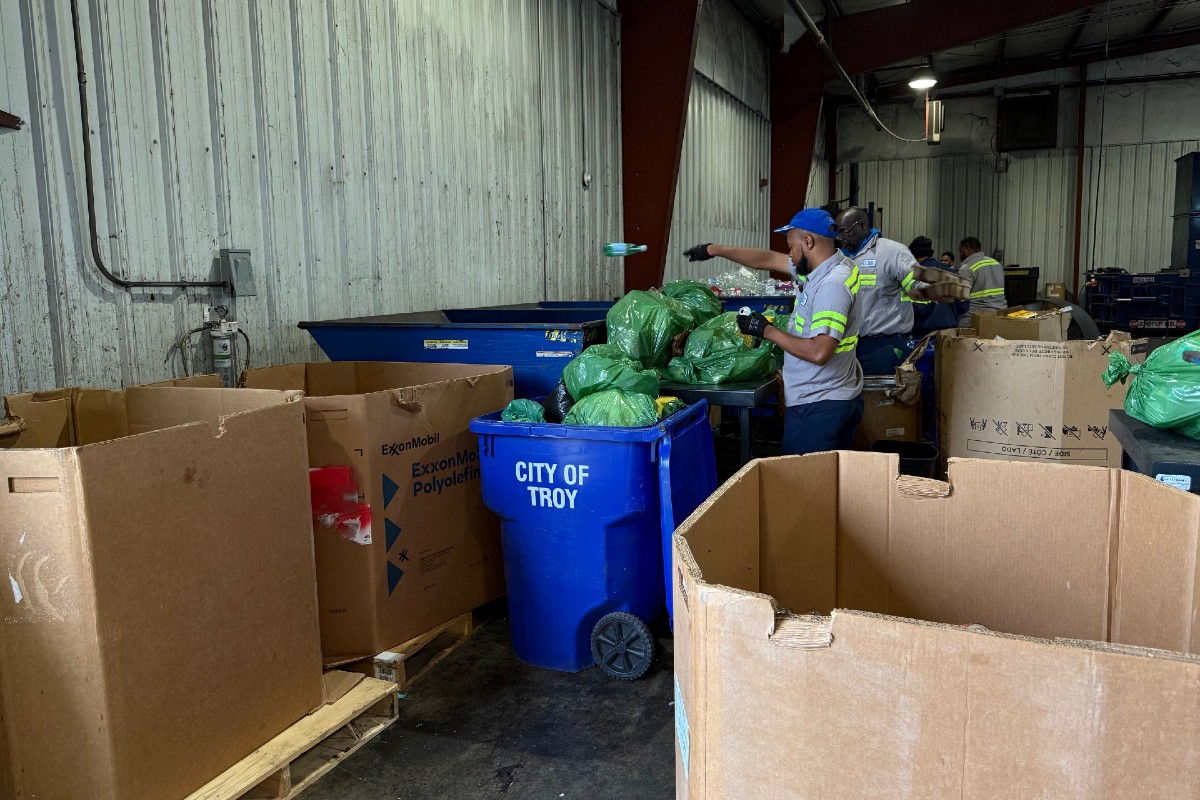
Our first stop on the tour was the City of Troy Recycling Center, where yogurt cups like Baker’s are sorted and baled, along with other household items. Shane Griffin, director of recycling for Troy, explained that the city of about 20,000 has a successful curbside recycling program.
Residents pay $10 a month for combined recycling and trash pickup services. The material comes into the recycling center, where a line of workers can be seen tearing open the green plastic bags and sorting the items by hand into bins: cans, milk jugs, containerboard and so on.
“This style of sorting I call five-finger sorting,” said Baker.
Once the materials are compacted into bales they are shipped off to buyers. “It raises revenue for the city,” said Griffin. “Recycling does work.”
A major buyer of material from Troy is KW Plastics, the world’s largest plastics recycler, which is right down the street in a nearby industrial park. Specifically, KW buys HDPE and PP materials, like yogurt cups. The company recycles approximately 7.5 million plastic containers every single day.
Baker said the small community of Troy supplies more material to KW than the entire rest of the state of Alabama, because the city’s recycling system is so robust compared with the remainder of the state. (Alabama’s residential recycling rate is only 9%, among the lowest in the nation, according to The Recycling Partnership.) KW Plastics buys recycled material from all over North America. Large cities like Chicago are hotspots for collection, as is Florida, with its high water table that makes landfills more difficult.
APR owns Resource Recycling, Inc., publisher of Resource Recycling.


Battery beginnings
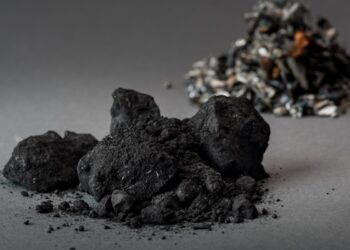
As the tour group piled into a van and rode the short distance to KW, Baker said the privately held company was founded in 1981. One of the first successful products was recycled automotive battery casings. That recycling of PP became a closed loop for the industry, and the company is the reason why so many car batteries are black today (that was the only color KW could produce from the recyclate), Baker said.
A few years later, company founders Kenny Campbell and Wiley Sanders looked to expand. Curbside recycling programs were starting up around the country, and KW saw an opportunity to expand on PP recycling and eventually add HDPE recycling. Neither resin was getting as much attention from the industry as PET. The core of the company’s current recycling facility in Troy opened in 1993. It is ISO registered and today supports 500 to 550 full-time employees.
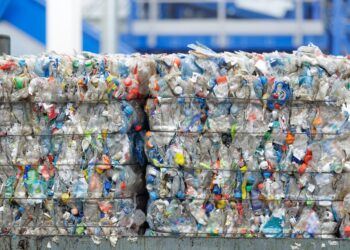
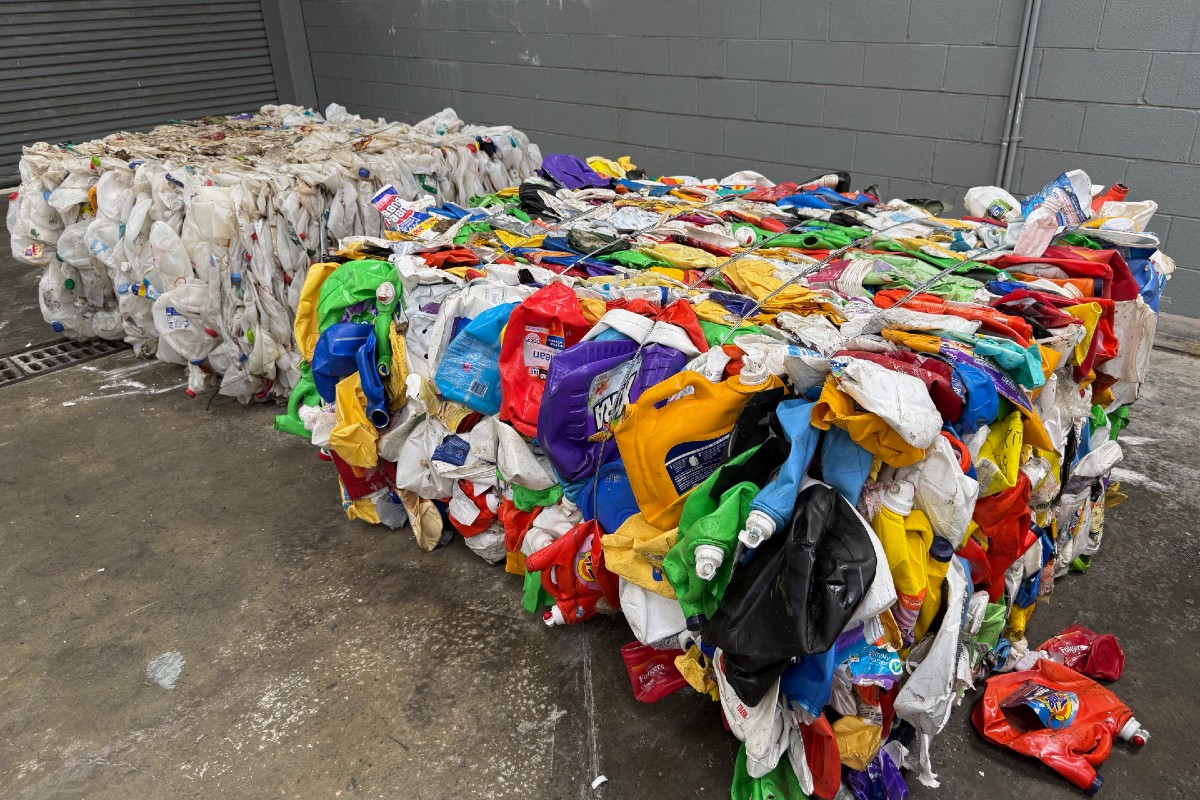
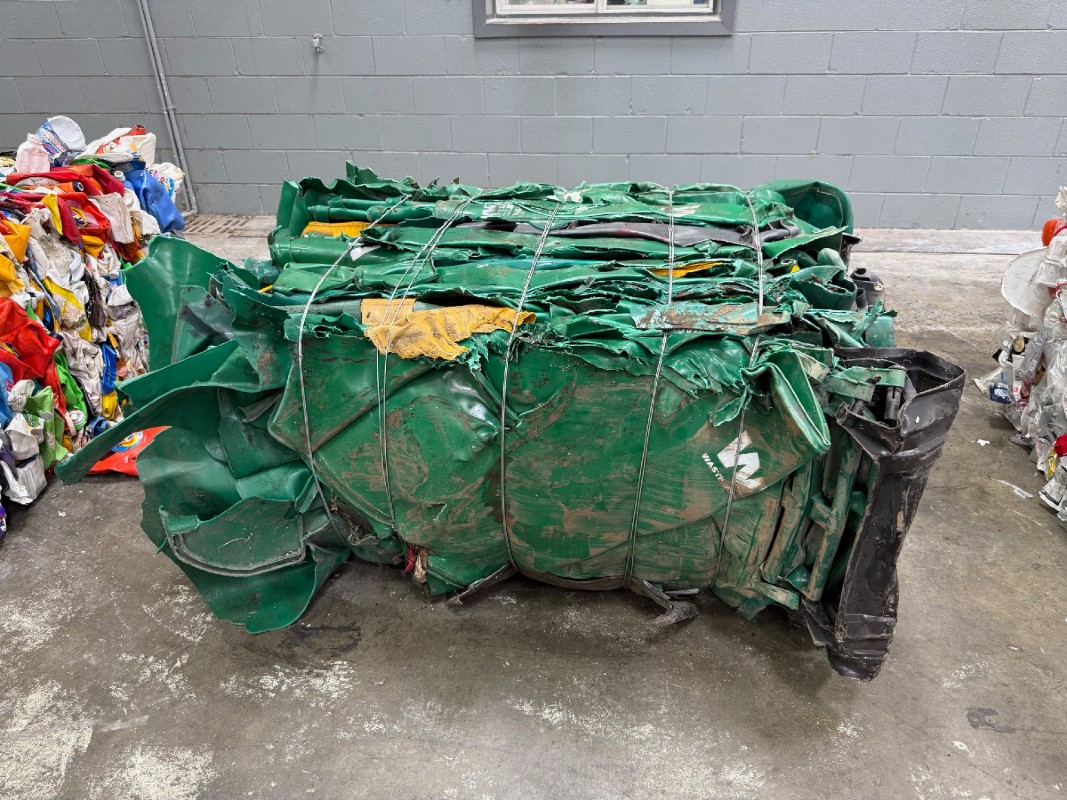
At KW’s loading dock, a line of trucks waited to unload various plastic bales. The big blocks were also stacked up outside, many brightly colored and packed with recognizable products. There was one bale made up of old green recycling carts. Another looked like it was made up of smashed detergent bottles, with their caps still on.
“They may look like trash to the everyday person, but they have value,” said Baker about the bales. In fact, each truck contained a little less than $10,000 worth of material at today’s prices, said Will Drinkard, a buyer for KW Plastics. “We unload 35 to 40 trucks a day,” he added.
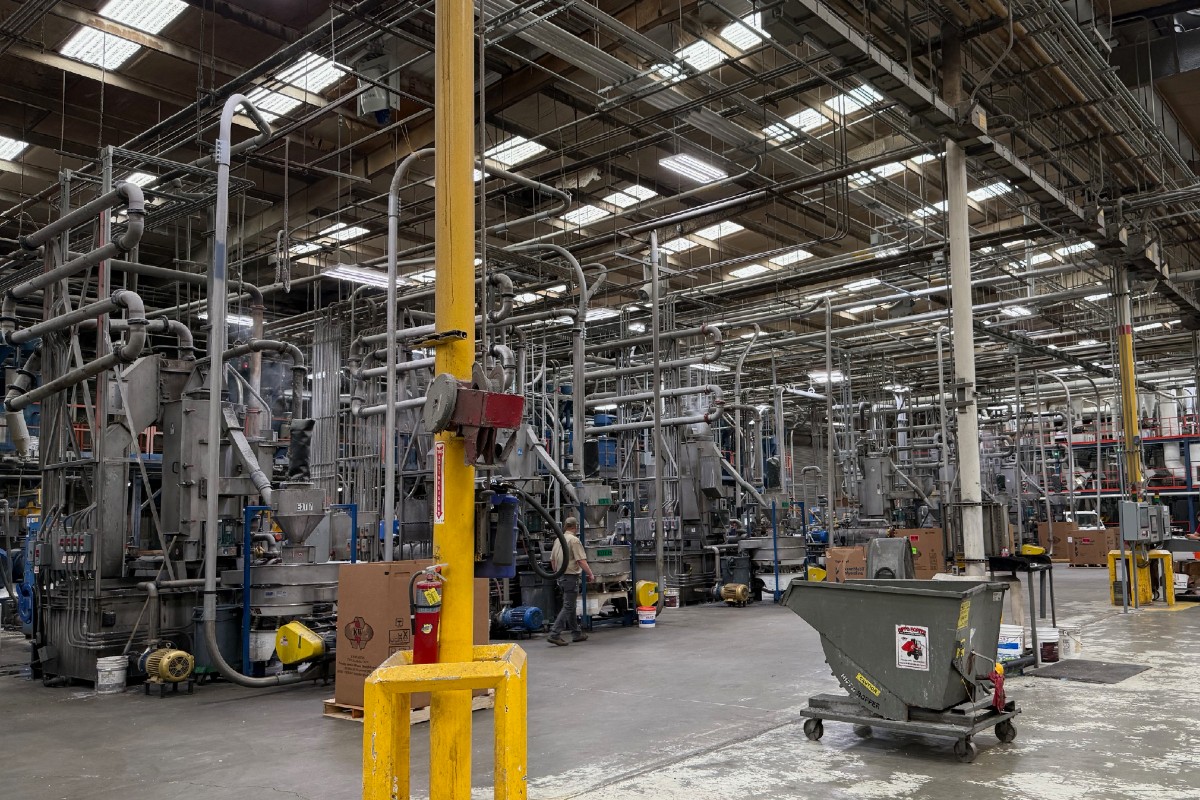
As we drove through the heart of a cavernous building, past two of the company’s seven wash lines, we saw proprietary technology at work. Large trommels rotated like giant cement mixers, removing dirt, glass and other impurities from the PP source material, explained Dax Pugh, wash plant manager for KW. The plastics then sped along a conveyor belt until they dropped into a shredder. The material then passed over ferrous drums that remove metal. Next was a float-sink process that separates other resins that might be present, like PET. After that was a washing process with heat, agitation and detergent, “like a big washing machine,” said Pugh.
‘Confetti’ and pellets
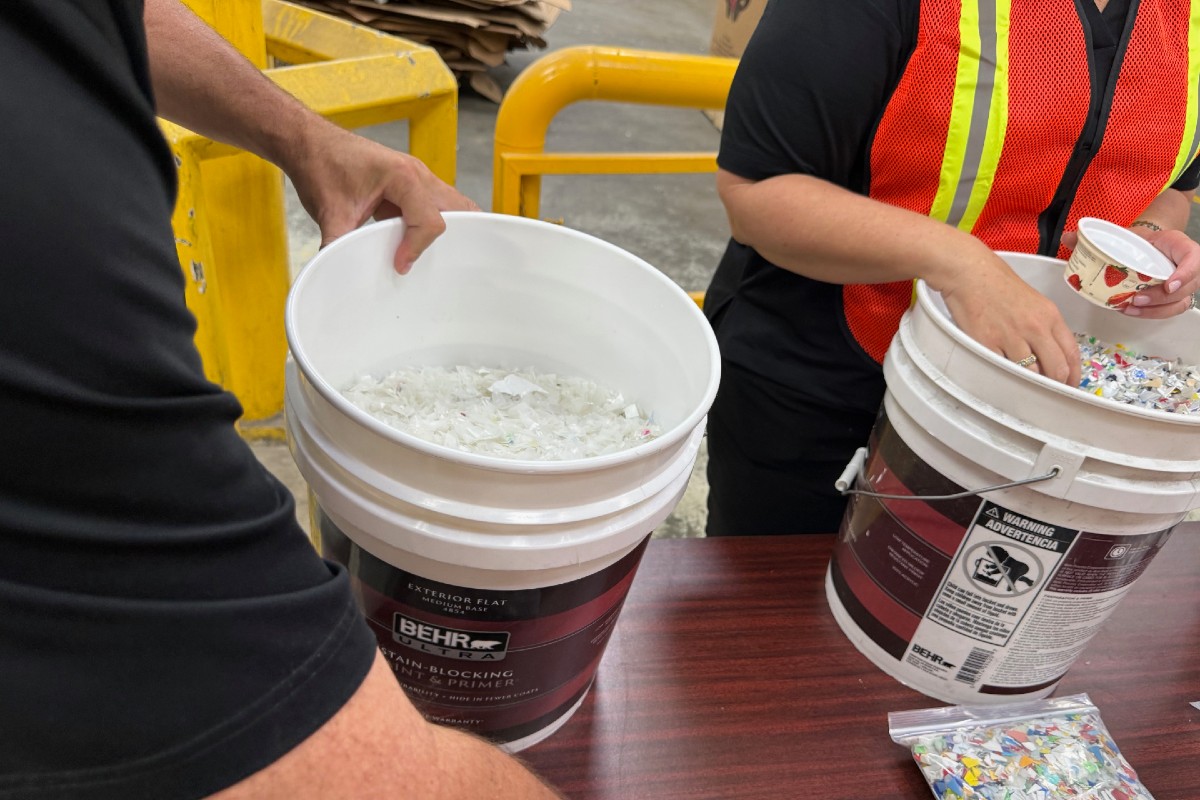
The final product of the washing process is a plastic flake that Baker says reminds her of confetti. Today’s run on the line was largely used political signs, creating a multicolored flake. Someone on the tour joked that you should be able to tell the political leanings of the source communities based on the color of the flake.
Baker noted that the process is highly effective at cleaning the plastics. “I had a friend who was putting all her recycling in the dishwasher. You do not need to do that, that’s counterproductive on energy,” said Baker. “You do not need to worry about residual foods because of the washing process.”
“Recycling does work.”
Shane Griffin
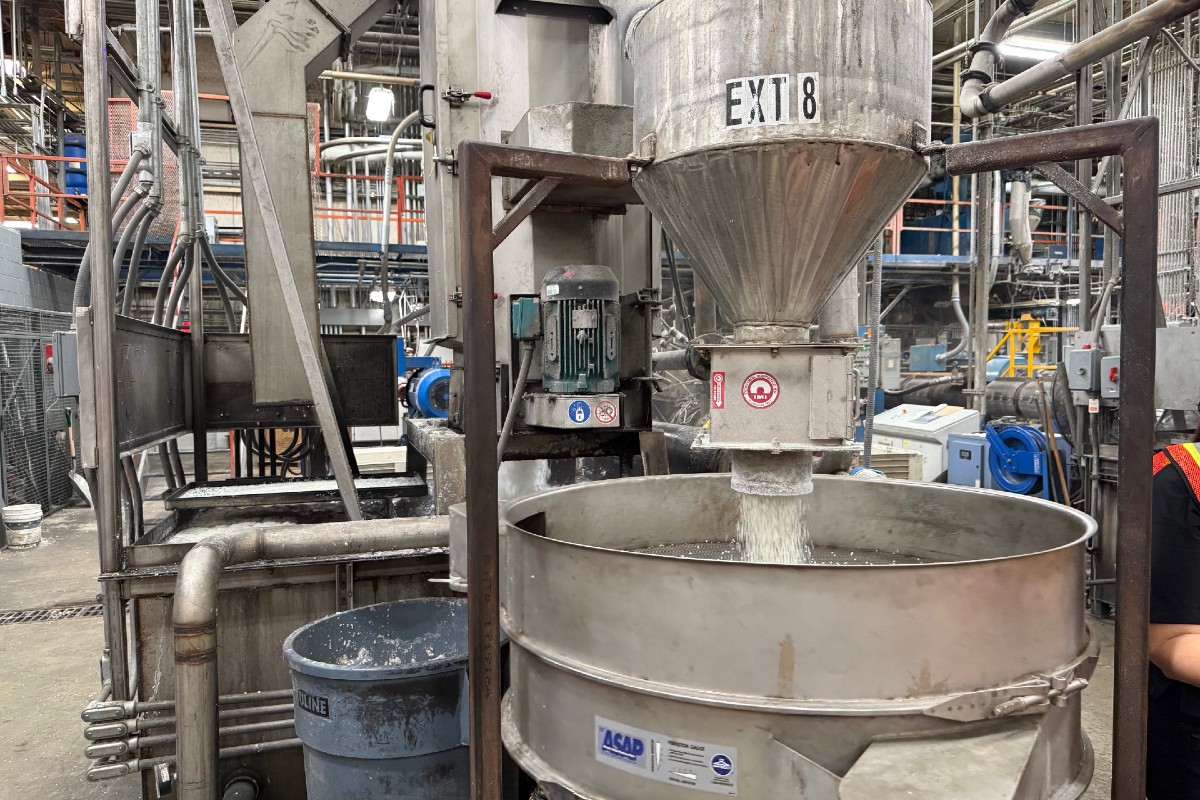
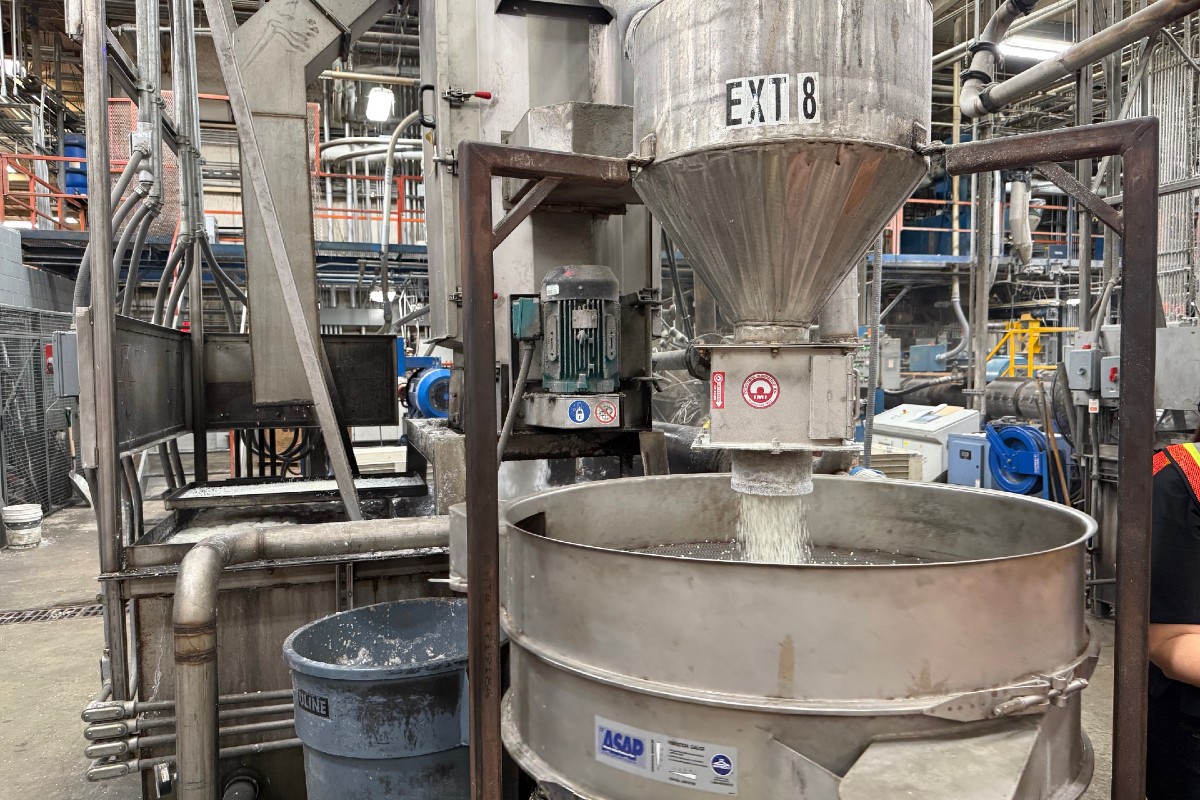
Pipes then carry the flake, some of it under the highway, to other parts of the operation. Some of it gets stored in the plant’s towering silos—the facility has more than 100 million pounds of capacity. Much of the flake ends up in a nearby building fitted with nine extruders (the company has another 10 extruders elsewhere at the complex). The big machines push out the plastic pellets that are the core products sold by KW, and which buyers then turn into a host of new products, from car parts to shampoo bottles. The company has an extrusion capacity of 750 million pounds per year.
Christopher Campbell, director of operations for KW, reached into a machine and pulled out a handful of translucent pellets roughly the size of rice grains.
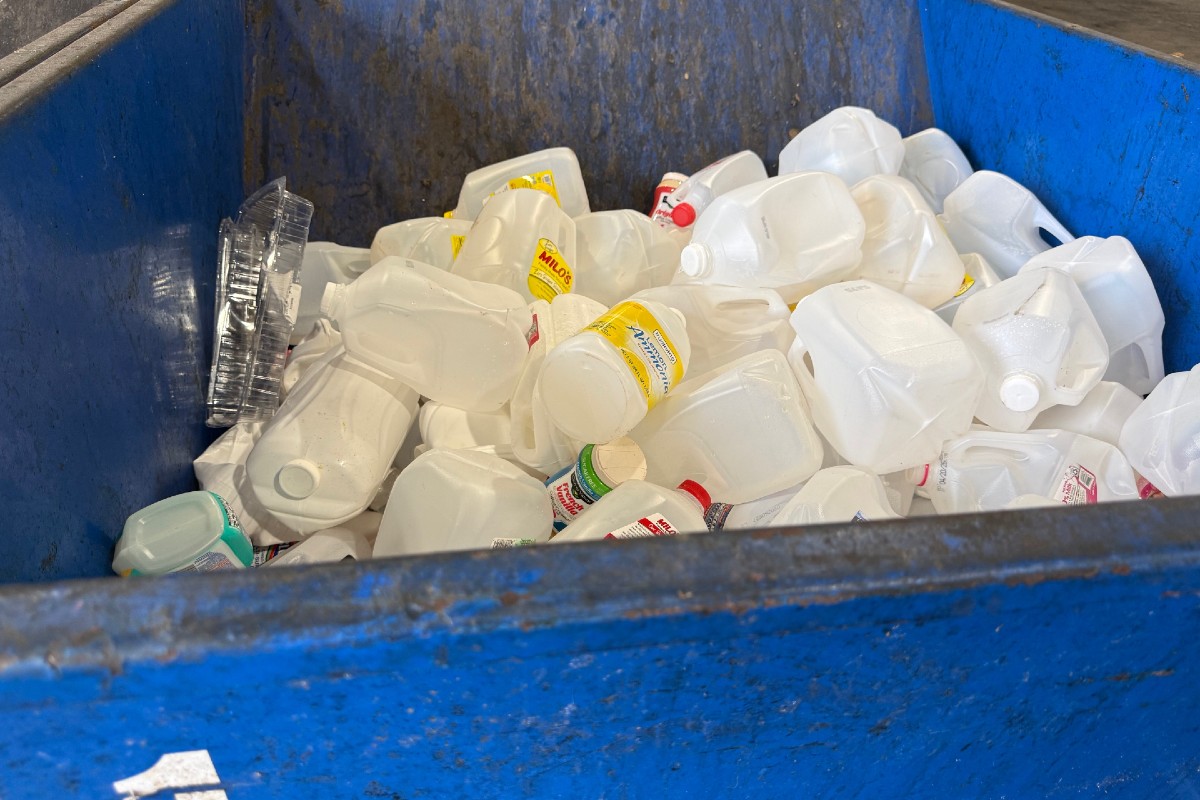
“This is a natural pellet,” he said, meaning uncolored. “It used to be a milk jug.”
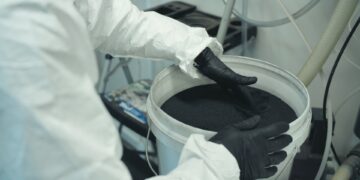
In November 2024 the company released a white HDPE pellet, which is attractive to buyers of recycled plastic in part because it can be easily dyed any color. That product took around 18 months to develop, said Rahul Kher, director of quality assurance for KW. The company also sells pellets in shades of gray (which take their color solely from their constituent recycled materials) and black (which include dye).
In one of the company’s five on-site labs, Kher explained that technicians work around the clock, throughout the year on testing the quality of the plant’s inputs and outputs. When we visited, techs were busy running samples and charting data on computer screens.
The ISO 17025 accredited lab also works with brands to help them design packaging that is more readily recyclable and that has more recycled content. A recent example is Keurig, which sent representatives to the lab to work on a better K-cup in collaboration.
On the road again, we passed by KW’s own water treatment facility. That unit was put in place because the company’s washing operations use a lot of water, Baker explained. “On average we discharge approximately 430,000 gallons of treated water each day to our local municipal treatment facility,” she said.
New paint cans
The next stop on the tour was a short drive down the road, to KW Plastics’ sister company KW Container, founded in 1998. KW Container is an injection molder that makes 100% plastic and hybrid (with some metal parts) paint cans out of recycled PP, selling to major brands like Sherwin Williams and Behr. In the brightly lit factory, black paint cans whizzed overhead on conveyors. Forklifts eased past, carrying pallets of parts.
Plant Manager Jonathon Blair pointed out robots that attach labels to lids. A flash of light meant the machine snapped a picture of the lid; if anything was amiss, the lid would be quickly discarded out the bottom. Leak detector machines filled the paint cans with air, to ensure a tight seal.
All the resin KW Container uses at the facility comes from the Troy recycling operations, Blair said, to the tune of 100 million pounds a year. And the plastic products made by KW Container—including the TruSnap resealable paint can introduced in 2016—can contain up to 100% PCR.
“Right now we are wide open,” Blair said of production. Spring is typically the company’s busiest time, responding to consumer demand for home projects.
Troy resident Susan Pierce said the tour was enlightening. “I had no idea the scope and breadth of this place,” she said. Pierce said she and her husband, Ron Pierce, who was also on the tour, are “dedicated recyclers.” She added, “so it’s nice to see what happens to what we put on the curb.”
Michael Duffy, regional sales manager for separation technologies supplier Eriez in Erie, Pennsylvania, said he enjoyed learning more about KW on the tour. “I’m a mechanical engineer myself and I like to see how things are made,” he said.
Harkening back to the yogurt cup, Baker said one key message is to remember that there is a price tag associated with every container. “Yes, there are costs too, in terms of labor and equipment,” she said, but everything has value.
Recycled plastics find themselves into a wide range of products, she added, beyond paint cans to packaging for personal care products, to toothbrushes, to razors to cars to construction materials.
“This all starts with someone making the choice to recycle,” said Baker. “We’re all recyclers and we all have a role to play.”
Correction: Ron Pierce’s title has been corrected.