





Republic Services reported Q1 2026 net income of $525 million, up from $495 million the same period last year.
Recycled commodity prices averaged $120 per ton in the first quarter, a $35-per-ton decline from the prior year. The Phoenix-based hauler told investors that increased volumes across its polymer center network offset the revenue impact.
Q1 2026 highlights (year over year):
Revenue: $4.11 billion (+2.6% YOY), including 2.8% organic growth from recycling and waste and 1.1% from acquisitions
Net income: $525 million, margin of 12.8% (+50 basis points)
Adjusted EBITDA: $1.32 billion, margin of 32.1% (+50 basis points)
Cash provided by operating activities: $1.23 billion
Adjusted free cash flow: $984 million (+35% YOY)
CEO Jon Vander Ark credited pricing discipline and cost management for holding the line despite headwinds.
“Disciplined pricing and effective cost management drove solid earnings growth and 50 basis points of adjusted EBITDA margin expansion in the first quarter,” he said. “We remain focused on executing our strategy and investing for growth to deliver long-term value for our customers and shareholders.”
Recycled commodities
Lower recycled commodity prices cut adjusted EBITDA margin by 20 basis points in the quarter. CFO Brian DelGhiaccio said increased polymer center volumes offset the revenue impact.
“Commodity prices were $120 per ton during the first quarter, compared to $155 per ton in the prior year,” DelGhiaccio said. “Increased volumes at our polymer centers offset the revenue impact of lower recycled commodity prices.”
Prices have since recovered to approximately $125 per ton.
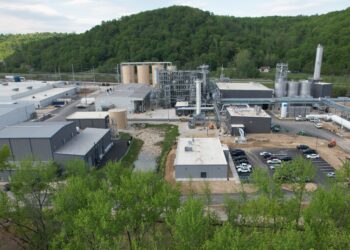
Production volume increased across Republic’s polymer center network during the quarter as the company continued to optimize processing operations. Vander Ark said customer demand for domestic post-consumer plastic remains strong.
Vander Ark also flagged a longer-running market threat: virgin PET from Asia has been entering the US market, some of it labeled as rPET, undercutting domestic recyclers. He said Republic is working with industry stakeholders and the government to address the issue.
Reduced oil production has shifted supply away from secondary uses like plastics manufacturing, compressing the spread between virgin and recycled material, Republic indicated.
“The war itself has been helpful in that because we are starting to see that production go down as they have had to ration oil supply and get it to primary use versus secondary use, like plastics,” he said. “The net impact is we are seeing our spreads increase, both in the polymer centers and the Blue Polymer JV.”
M&A
Republic has invested more than $700 million in acquisitions year-to-date and now expects to exceed $1 billion for the full year.
More than 90% of closed and signed deals have been in recycling and waste, with Environmental Solutions activity expected to pick up in the back half, Vander Ark said, adding the increased target reflects deal flow, not a change in financial capacity.
“We are rarely financially constrained; it is always opportunity constrained,” he said. “We are having a really positive year in terms of what we have already locked up and closed and what we see coming forward in the next six to nine months.”
New and upgraded facilities
The company opened an expanded recycling center in Peabody, Massachusetts during the quarter.
The upgraded 54,000-square-foot facility, which serves communities throughout greater Boston, is equipped with AI-powered sorting technology, automated equipment and ballistic sorters, with the capacity to process 35 to 40 tons of recyclables per hour. The upgrade is designed to deliver cleaner material to end markets.
“The enhancements at the Peabody Recycling Center enable us to process more recyclables, divert more material from landfills and deliver cleaner commodities to end-users,” said Kurt Lavery, Republic Services market vice president, in a statement.
On the renewable natural gas front, Republic brought nine RNG projects online throughout 2025 and expects four more to begin operations in 2026. That brings its total landfill gas-to-energy portfolio to 82 active projects.
DelGhiaccio said the portfolio is expected to contribute $10 million in incremental revenue and $10 million in EBITDA this year, ramping to $100 million in annual revenue by 2030.
Fleet electrification
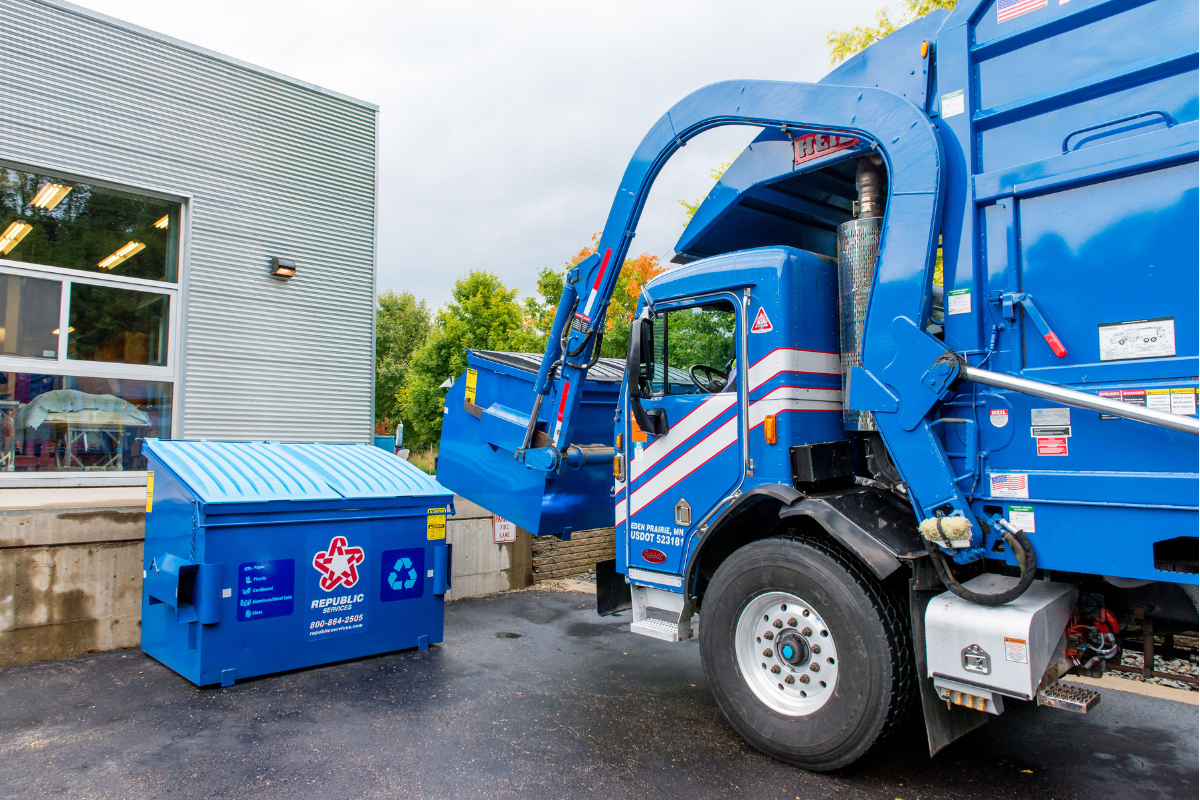
Republic hit an EV fleet milestone, with more than 200 electric collection vehicles in operation at the end of Q1 and an exit target of 300 trucks by year-end. The timing comes as March diesel price spike cut $8 million from quarterly EBITDA.
“The truck is going to be more expensive, but then cheaper to operate,” Vander Ark said. “We are beating our assumptions in the pro forma so far. We will learn more every year that we drive those trucks, but we feel good about the operational performance.”
The company also partnered with San Pablo, California to operate what it described as the first all-electric residential recycling and waste collection fleet in the state, and one of the first in the nation. The five-truck fleet, comprised of McNeilus Volterra EVs, supports San Pablo’s Climate Action Plan goal of cutting greenhouse gas emissions 30% below 2005 levels by 2035.
“These innovative EV trucks are cost-competitive for our ratepayers and will literally drive sustainability by providing cleaner and quieter service throughout our community,” said San Pablo City Manager Matt Rodriguez, in a statement.