





Resource Recycling
  • The Latest
  • Analysis
    • All
    • Certification Scorecard
    • Industry Announcements
    • Opinion
    SCS launches chem recycling standard

    Certification scorecard — week of Sept. 28

    NJ’s PCR delay risks making its own excuse permanently true

    NJ’s PCR delay risks making its own excuse permanently true

    E-scrap magnet recycling company scales up

    Why only some rare-earth sources are economically viable

    e-Stewards to develop an ITAD-specific standard

    Certification scorecard — week of Sept. 21

    Who should pay for lithium-ion battery fire damage?

    America’s critical-materials buildout has a feedstock problem

  • Conferences
    • Resource Recycling Conference
    • Plastics Recycling Conference
    • E-Scrap: The Longevity Conference
    • Textiles Recovery Summit
  • Publications
    • E-Scrap News
    • Plastics Recycling Update
    • Policy Now
    • Resource Recycling
    • Other Topics
      • All Topics
      • Brand Owners
      • Critical Minerals
      • Glass
      • Grant Watch / RFPs
      • Markets
      • Organics
      • Packaging
      • Research
      • Technology
      • Textiles
Subscribe
No Result
View All Result
Resource Recycling
  • The Latest
  • Analysis
    • All
    • Certification Scorecard
    • Industry Announcements
    • Opinion
    SCS launches chem recycling standard

    Certification scorecard — week of Sept. 28

    NJ’s PCR delay risks making its own excuse permanently true

    NJ’s PCR delay risks making its own excuse permanently true

    E-scrap magnet recycling company scales up

    Why only some rare-earth sources are economically viable

    e-Stewards to develop an ITAD-specific standard

    Certification scorecard — week of Sept. 21

    Who should pay for lithium-ion battery fire damage?

    America’s critical-materials buildout has a feedstock problem

  • Conferences
    • Resource Recycling Conference
    • Plastics Recycling Conference
    • E-Scrap: The Longevity Conference
    • Textiles Recovery Summit
  • Publications
    • E-Scrap News
    • Plastics Recycling Update
    • Policy Now
    • Resource Recycling
    • Other Topics
      • All Topics
      • Brand Owners
      • Critical Minerals
      • Glass
      • Grant Watch / RFPs
      • Markets
      • Organics
      • Packaging
      • Research
      • Technology
      • Textiles
Subscribe
No Result
View All Result
Resource Recycling
No Result
View All Result
Home Plastics

APR, industry groups testify on overcapacity

Antoinette SmithbyAntoinette Smith
May 8, 2026
in Plastics, Recycling
APR, industry groups testify on overcapacity

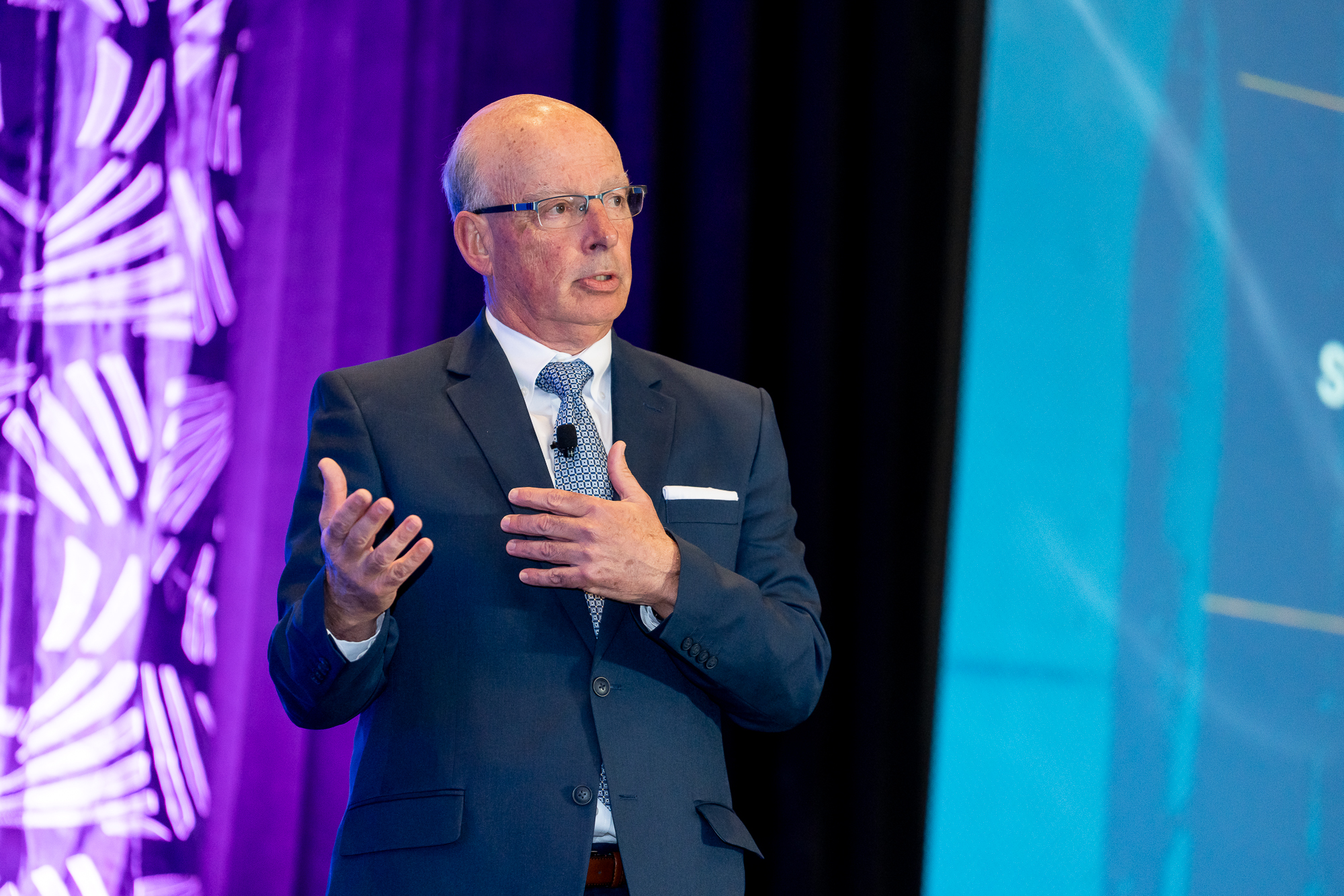
Steve Alexander, president and CEO of APR | Broken Banjo Photography

The Association of Plastic Recyclers (APR), the American Forest & Paper Association (AF&PA) and other industry groups testified this week on the damaging effects of foreign overcapacity and argued for a “level playing field” for US industry.

In March, the US Trade Representative (USTR) initiated an investigation under Section 301 of the Trade Act of 1974, to determine whether foreign policies or practices hinder US trade. In particular, the action looks at structural excess capacity and production in manufacturing sectors.  

In testimony May 7, APR CEO Steve Alexander urged the USTR to act quickly and decisively to protect the domestic recycling industry. “The US PET recycling industry is at a breaking point,” he said. “Without timely intervention, we will continue to see plant closures, job losses, and the permanent loss of domestic recycling capacity.” 

In his testimony, Alexander pointed to the closure of seven US PET recycling facilities in the past 15 months, including Alpek, rPlanet Earth, Evergreen and Phoenix Technologies – for a total loss of 600 million pounds or 25% of domestic PET washing, processing and recycling capacity. 

“They closed not because of inefficiency, but because the market was distorted by a wave of low-priced imports that these facilities could not withstand,” he told the USTR. 

Alexander called out a surge of imported PET from countries including Indonesia, Malaysia, Thailand, Korea, Vietnam, Taiwan, India and China. “These countries are not simply competing. They are flooding the US market with rapidly increasing volumes at sharply declining prices.” 

Although Alexander acknowledged that Chinese PET shipments directly to the US have fluctuated, the country “continues to drive global overcapacity in virgin plastics at a scale that no market actor can absorb.” He added that China’s “role in generating global oversupply is well-documented and exerts downward pressure on prices worldwide.”

Between 2021 and 2025 – while China was starting up vast PET plants in part to increase self-reliance – PET imports from India to the US increased by more than 1,200%, he said, while prices fell by more than 60%. Over the same period, Indonesian imports rose by more than 1,125%, also at falling prices, and imports from Thailand increased by more than 2,278%. Volumes from Malaysia, Korea, Vietnam and Taiwan “all paint a similar picture.”

He continued, “When imports are artificially low-priced, domestic recyclers cannot compete on a level playing field, no matter how efficient they are.” 

Additionally, Alexander pointed out that APR has requested to exclude PET imports from Mexico and Canada from any measure adopted to address oversupply. “The PET supply chain is integrated across North America, and trade barriers on these imports would needlessly disrupt established and productive supply chains.” 

APR owns Resource Recycling, Inc., publisher of Resource Recycling.

Chemistry, forestry groups occupy middle ground

Representatives from the American Chemistry Council (ACC) and AF&PA took a more nuanced approach in addressing the USTR, recognizing the need for action to combat overcapacity while preserving access to raw materials, machinery and other value-chain essentials US industry relies on.

In May 5 testimony, Jason Bernstein, director of international trade and supply chain at the American Chemistry Council (ACC), urged adoption of a value‑chain approach that addresses the root causes of excess capacity and challenges US chemical and plastics producers face. 

“Free and fair trade is fundamental to the competitiveness of the US chemical industry,” the ACC said in a statement. “American chemical manufacturers operate in highly integrated global value chains, exporting a significant share of their production while relying on imported raw materials, intermediates, and specialized equipment not produced domestically. Competitive access to international markets enables US producers to achieve scale, support continued investment, and supply downstream industries ranging from automotive and construction to pharmaceuticals, agriculture, and national defense.” 

In May 7 testimony, David Ross, director of government affairs for the AF&PA, noted that stark trade remedies also could result in higher costs for necessary machinery. Such cost increases could delay mill modernization, reduce investment and weaken global competitiveness for US manufacturers.

“Trade policy shapes manufacturing decisions,” Ross said. “We support a fact‑based review of excess capacity, while avoiding measures that could put US jobs, investment or operations at risk.”

Additionally, he encouraged examining the potential for evading trade remedies via transshipment or downstream conversion.

Ross presented data showing large capacity expansions and rising exports that may not match market demand, including in China. 

Among the dozens of stakeholders testifying during the first three days was PET producer Nan Ya Plastics USA, owned by the Taiwanese Formosa Corporation. Nan Ya operates PET and polyester fiber assets in Texas, Louisiana and South Carolina. 

Other groups represented included the Can Manufacturers Institute and the Aluminum Association. 

What’s next

In launching the probe, the USTR said countries or regions subject to investigation are China, the EU, Singapore, Switzerland, Norway, Indonesia, Malaysia, Cambodia, Thailand, Korea, Vietnam, Taiwan, Bangladesh, Mexico, Japan and India.    

“The United States will no longer sacrifice its industrial base to other countries that may be exporting their problems with excess capacity and production to us,” said USTR Jamieson Greer in a March 11 announcement.  

The office opened public comment March 17-April 15, and is holding public hearings May 5-8. 

In the final panel on May 8, representatives from foreign governments will testify in their own defense, including Indonesia, India, Vietnam and Mexico.  

Additional groups scheduled to testify May 8 include: International Bottled Water Association, National Waste & Recycling Association, Global Electronics Association and United Auto Workers. 

If the USTR finds violations, the US president can authorize retaliatory measures such as tariffs on imports. The USTR intends to conduct the probe on an accelerated schedule, with a goal of being prepared to impose potential tariffs around July 24. 

Tags: Industry GroupsPaper FiberPETTrade & Tariffs
TweetShare
Antoinette Smith

Antoinette Smith

Antoinette Smith has covered commodity plastics and supply chains for more than a decade, with a special focus on economic impacts and consumer behavior. She brings a balanced, thoughtful view to recycling stories, and isn't afraid to ask "why?" Contact Antoinette at antoinette@resource-recycling.com.

Related Posts

Basel Convention could ‘destabilize textile circularity,’ panelists warn

byBrian Clark Howard
September 30, 2026

The international convention may change the way second-hand clothing is regulated, with potentially big impacts.

USFFI signs first film offtake deals

USFFI signs first film offtake deals

byAntoinette Smith
September 29, 2026

The brand-led group has moved more than 3 million pounds of flexible packaging from two California MRFs to reclaimers and...

Analysis: Undersupply of PCR is ‘stifling’ brand goals

US lawmakers urge protection of domestic RPET

byAntoinette Smith
September 25, 2026

In a letter to the US Trade Representative, five representatives asked the USTR to consider trade remedies and support verification...

Oregon state capitol building with state flag and blue sky.

NAW appeals Oregon EPR ruling

byStefanie Valentic
September 25, 2026

NAW is challenging an Oregon judge's ruling in favor of the state's extended producer responsibility law.

APR reports success for 2026 recycling tours 

APR reports success for 2026 recycling tours 

byAntoinette Smith
September 23, 2026

In May, more than 2,500 visitors toured 41 facilities in the US and Mexico, during APR's second annual Recycling in...

Recyclers reeling from NJ PCR extension

Recyclers reeling from NJ PCR extension

byAntoinette Smith
September 23, 2026

The recent three-year extension for exemptions to the state's PCR mandates elicited frustration and confusion among recyclers.

Load More
Next Post
Film end user boasts greater sales

Trex points to strength from recycled film feedstock

2026 Buyers’ Guide

Equipment, services and technology suppliers serving the recycling industry.

Browse the Guide

More Posts

Oregon state capitol building with state flag and blue sky.

NAW appeals Oregon EPR ruling

September 25, 2026
Recyclers reeling from NJ PCR extension

Recyclers reeling from NJ PCR extension

September 23, 2026
Newsom nixes recycled content claims bill

Newsom nixes recycled content claims bill

September 28, 2026
Analysis: Undersupply of PCR is ‘stifling’ brand goals

US lawmakers urge protection of domestic RPET

September 25, 2026
Bin to Better gets students involved in reuse, recycling

Bin to Better gets students involved in reuse, recycling

September 24, 2026
Bipartisan reps introduce bill on recycling claims

House passes bill to ease lithium-ion battery storage rules

September 24, 2026
trash bags

Sorted: Should we use recycled trash bags?

September 28, 2026
Calif. Governor Gavin Newsom at podium.

Newsom signs battery EPR expansion, vetoes SB 54 fund bill

September 24, 2026

Who should pay for lithium-ion battery fire damage?

September 21, 2026
Diversion Dynamics: Policy needed to reach full charge for vape recycling

Disposable vapes banned in California

September 28, 2026
Load More

About & Publications

About Us

Staff

Archive

Magazines

Work With Us

Advertise
Jobs
Contact
Terms and Privacy

Newsletters

Get the latest recycling news and analysis delivered to your inbox every week. Stay ahead on industry trends, policy updates, and insights from programs, processors, and innovators.

Subscribe

Welcome Back!

Login to your account below

Forgotten Password?

Retrieve your password

Please enter your username or email address to reset your password.

Log In

Add New Playlist

No Result
View All Result
  • The Latest
  • Analysis
  • Recycling
  • E-Scrap
  • Plastics
  • Policy Now
  • Conferences
    • E-Scrap Conference
    • Plastics Recycling Conference
    • Resource Recycling Conference
    • Textiles Recovery Summit
  • Magazines
  • About Us
  • Advertise
  • Archive
  • Jobs
  • Staff
Subscribe
This website uses cookies. By continuing to use this website you are giving consent to cookies being used. Visit our Privacy and Cookie Policy.