Resource Recycling
  • The Latest
  • Analysis
    • All
    • Certification Scorecard
    • Industry Announcements
    • Opinion
    Apple store

    Apple leads on inputs, faces questions on ITAD

    Unlocking the power of source reduction in US EPR

    Unlocking the power of source reduction in US EPR

    Following petition, Microsoft extends Windows 10 support

    Windows AI Recall is pushing data destruction upstream

    Certification Scorecard — Week of April 27, 2026

    Five trends shaping PCR packaging to 2031

    Intel sign on company building with blue sky and trees.

    Intel boosts margins by selling what it used to scrap

  • Conferences
    • Resource Recycling Conference
    • Plastics Recycling Conference
    • E-Scrap: The Longevity Conference
    • Textiles Recovery Summit
  • Publications
    • E-Scrap News
    • Plastics Recycling Update
    • Policy Now
    • Resource Recycling
    • Other Topics
      • Brand Owners
      • Critical Minerals
      • Glass
      • Grant Watch
      • Markets
      • Organics
      • Packaging
      • Research
      • Technology
      • Textiles
      • All Topics
Subscribe
No Result
View All Result
Resource Recycling
  • The Latest
  • Analysis
    • All
    • Certification Scorecard
    • Industry Announcements
    • Opinion
    Apple store

    Apple leads on inputs, faces questions on ITAD

    Unlocking the power of source reduction in US EPR

    Unlocking the power of source reduction in US EPR

    Following petition, Microsoft extends Windows 10 support

    Windows AI Recall is pushing data destruction upstream

    Certification Scorecard — Week of April 27, 2026

    Five trends shaping PCR packaging to 2031

    Intel sign on company building with blue sky and trees.

    Intel boosts margins by selling what it used to scrap

  • Conferences
    • Resource Recycling Conference
    • Plastics Recycling Conference
    • E-Scrap: The Longevity Conference
    • Textiles Recovery Summit
  • Publications
    • E-Scrap News
    • Plastics Recycling Update
    • Policy Now
    • Resource Recycling
    • Other Topics
      • Brand Owners
      • Critical Minerals
      • Glass
      • Grant Watch
      • Markets
      • Organics
      • Packaging
      • Research
      • Technology
      • Textiles
      • All Topics
Subscribe
No Result
View All Result
Resource Recycling
No Result
View All Result
Home E-Scrap News Magazine

First Person Perspective: Let’s protect workers from an overlooked toxin in the stream

byDiana Ceballos and Marty Alvarez
October 18, 2022
in E-Scrap News Magazine
First Person Perspective: Let’s protect workers from an overlooked toxin in the stream

This article originally appeared in the Fall 2021 issue of E-Scrap News. Subscribe today for access to all print content.

 

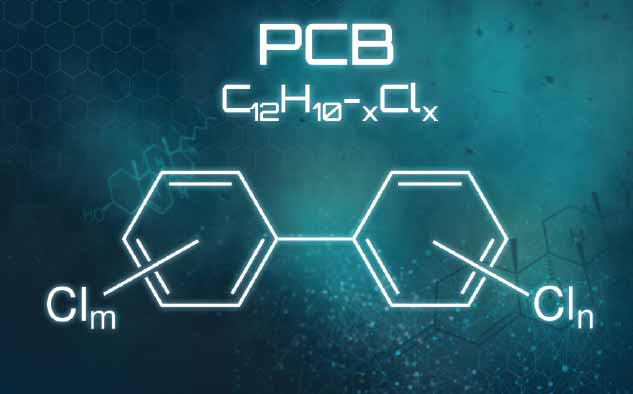
Electronic recycling facilities handle waste that contains a variety of toxic chemicals such as polychlorinated biphenyls (PCBs) (not to be confused with printed circuit boards), but no comprehensive PCB exposure assessment for workers in the U.S. electronics recycling industry has been published.

As researchers with a specialty in this area, we recently developed best practice guidelines to help e-recycling facility employees safely identify and handle scrap equipment containing these legacy chemicals. But we need the help of operators to allow us to better understand risks and exposure realities.

The basics on PCBs

PCBs are a group of man-made organic chemicals consisting of carbon, hydrogen, and chlorine atoms that contain 209 individual compounds or congeners. PCBs were domestically manufactured from 1929 until manufacturing was banned in 1979. Many commercial PCB mixtures are known in the U.S. by the trade name Arochlor. They have a range of toxicity and vary in consistency from thin, light-colored liquids to yellow or black waxy solids.

The health effects of PCB exposure have been widely studied and this evidence is one of the reasons that manufacturing was banned in 1979. The most commonly observed health effects in people exposed to large amounts of PCBs are skin conditions such as acne and rashes, although high exposure may result in coma and death.

PCB-related health effects may vary based on length of exposure but range from irritation, respiratory tract symptoms, developmental effects, liver and gastrointestinal effects, neurobehavioral and immunological changes to cancer.

Where are PCBs found in electronics?

Because they don’t burn easily and are good insulating materials, PCBs were used widely as coolants, sealants, and lubricants in transformers, capacitors, and other electrical equipment, showing up in hundreds of industrial and commercial applications.

PCBs were used in electrical equipment because of performance and safety attributes such as fire resistance and flame retardancy. Today, PCBs are found mainly in transformers and capacitors manufactured before 1977. PCBs are often found in the following e-waste:

  • Old industrial equipment (e.g., welding equipment).
  • Medical equipment (e.g., X-ray).
  • Household appliances and electronics (e.g., refrigerators, microwaves, televisions, old computers).
  • Electrical equipment components in transformers, voltage regulators, capacitors, switches, and lamp ballasts, among others.

Occupational exposure to PCBs typically occurs mainly via the inhalation and dermal routes. Inhalation occurs when a worker breathes air that is contaminated with PCBs.

Dermal absorption or even ingestion occurs when workers’ skin comes into contact with PCB-containing materials. A study in China documented PCBs migrating from work to the homes of electronics recycling workers, so children and families can also be exposed to these hazardous chemicals.

Not all facilities process e-waste that contains PCBs. However, research has shown it is possible and common for a facility to encounter e-scrap that contains PCBs even if only during transit, storage, or sorting before it goes to another facility or for hazardous waste disposal. PCBs are not easy-to-handle materials and follow different regulations that are complicated to navigate.

A need for education

As part of a National Institutes of Health-funded study at Harvard T.H. Chan School of Public Health in collaboration with Boston University School of Public Health, we performed a review of the literature and of the existing educational materials on PCBs in electronics recycling. We concluded that currently there are no safe-handling recommendations tailored for how to recycle e-waste containing PCBs.

Thus, we developed best practice guidelines for how to do it safely. The guidelines were used to create educational materials to help inform electronics recycling workers and facility owners of PCB electronic waste, and how to identify PCB waste, hazards, and safety measures.

These materials were informed by a review of current research and guidance from the U.S. EPA, Occupational Safety and Health Administration (OSHA), the National Institute for Occupational Safety and Health (NIOSH), and other Centers for Disease Control and Prevention (CDC) information. The materials were also developed under guidance from PCB and electronics recycling experts.

Although PCBs are banned, there is still much old PCB e-waste yet to be treated. Until no more PCBs are found on e-waste, we hope these tailored guidelines help the industry to protect workers and the environment against PCBs.

How you can help

We are asking industry experts, facility owners, managers, and administrators to review any of the materials we developed, including:

  • Safe E-Recycling Informational Trifold Brochure.
  • Safe E-Recycling Summary Poster-Large Size.
  • Safe E-Recycling Summary Poster-Letter Size.
  • Safe E-Recycling Training
  • Presentation-PowerPoint.
  • Safe E-Recycling Training Presentation-PDF.

You can email us using the contact information in the author bio to receive these materials.

We also ask that you share feedback through participating in an anonymous online survey. Survey answers will offer us information about the accuracy and usability of the content, help us get the word out via outreach and education to all within the electronics recycling industry including workers, and help us evaluate how effective the materials are across the electronics recycling industry. Completing the online survey will take five to 10 minutes, and the survey can be accessed at tinyurl.com/PCB-safety-survey.

We truly appreciate any feedback on these materials as we all work together to help make electronics recycling a safer and more efficient industry.


Diana Ceballos is from the Boston University School of Public Health and Marty Alvarez is from the Harvard T.H. Chan School of Public Health. Contact them at [email protected].

This article originally appeared in the Fall 2021 issue of E-Scrap News. Subscribe today for access to all print content.
TweetShare
Diana Ceballos and Marty Alvarez

Diana Ceballos and Marty Alvarez

Related Posts

New version of California EPR regulations released

CalRecycle approves SB 54 regulations

byStefanie Valentic
May 2, 2026

CalRecycle approved permanent regulations under SB 54, the state's landmark packaging EPR law. The rules took effect immediately upon filing...

Recycling analysis pinpoints gaps in New York data

New York packaging EPR bill gets nearly 150 amendments

byStefanie Valentic
May 1, 2026

State lawmakers backing New York's Packaging Reduction and Recycling Infrastructure Act introduced nearly 150 amendments, aligning the bill's definitions and...

Minnesota launches first boat wrap recycling program

byAntoinette Smith
May 1, 2026

The organization administering the first US EPR law for plastic boat wrap provides an interactive map of collection sites and...

TechCycle program blends e-scrap processing with workforce training

TechCycle program blends e-scrap processing with workforce training

byKeith Loria
May 1, 2026

CompuCycle has partnered with a school district to launch a program that provides students with disabilities hands-on experience dismantling electronics...

Study quantifies lithium battery threat to infrastructure

Battery fires remain elevated in early 2026: report

byPaul Lane
May 1, 2026

Ryan Fogelman has released his latest data on fires in January and February across the United States and Canada.

Apple store

Apple leads on inputs, faces questions on ITAD

byDavid Daoud
May 1, 2026

The tech giant is being lauded for environmental performance, but some ITAD operators have questions about the end of life...

Load More
Next Post
Know your E-Scrap Processor: Technology Recyclers

Know your E-Scrap Processor: Technology Recyclers

More Posts

What Netflix’s ‘Plastic Detox’ gets wrong – and right

April 23, 2026
EPR fees are a market signal. Here’s what they’re telling you.

Oregon DEQ flags 250 producers for RMA noncompliance

April 21, 2026
Intel sign on company building with blue sky and trees.

Intel boosts margins by selling what it used to scrap

April 29, 2026
Plastic Ingenuity to use PureCycle PP for coffee lids

Plastic Ingenuity to use PureCycle PP for coffee lids

April 30, 2026

PCA keeping focus on virgin fiber products

April 27, 2026
Birch Plastics gets FDA green-light for post-industrial PP

LyondellBasell upgrade to PreZero assets on hold

April 23, 2026
Intel sign outside of company building.

What Intel’s blockbuster quarter means for ITAD

April 27, 2026
Float-sink technology at the Quantum Lifecycle Partners facility in Toronto, Canada enables the processing of e-plastics.

E-plastics recovery line opens in Canada

April 28, 2026
Our top stories from April 2022

Peters-Michaud named CEO, Houghton chair of Sage Sustainable Electronics

April 28, 2026
Unlocking the power of source reduction in US EPR

Unlocking the power of source reduction in US EPR

May 1, 2026
Load More

About & Publications

About Us

Staff

Archive

Magazine

Work With Us

Advertise
Jobs
Contact
Terms and Privacy

Newsletter

Get the latest recycling news and analysis delivered to your inbox every week. Stay ahead on industry trends, policy updates, and insights from programs, processors, and innovators.

Subscribe

Welcome Back!

Login to your account below

Forgotten Password?

Retrieve your password

Please enter your username or email address to reset your password.

Log In

Add New Playlist

No Result
View All Result
  • The Latest
  • Analysis
  • Recycling
  • E-Scrap
  • Plastics
  • Policy Now
  • Conferences
    • E-Scrap Conference
    • Plastics Recycling Conference
    • Resource Recycling Conference
    • Textiles Recovery Summit
  • Magazine
  • About Us
  • Advertise
  • Archive
  • Jobs
  • Staff
Subscribe
This website uses cookies. By continuing to use this website you are giving consent to cookies being used. Visit our Privacy and Cookie Policy.