





Electronics recycling is one tough business. Industry companies are encountering high operating costs, low profit margins and the “C word” (commodities). What if technology could make the process more profitable?
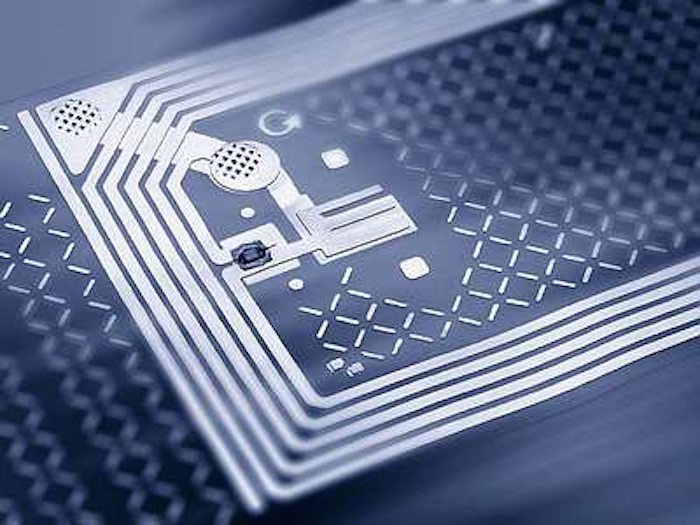
Imagine end-of-life electronics that were manufactured with radio frequency identification (RFID) tags. Detailed, accurate inventories could be automatically captured as items are received at a recycling facility. Information on materials and parts would be uploaded instantly to maximize recovery and returns. Hazardous components, once hard to locate, can be readily identified. Processing for resale or recycling would become much more efficient, with flows timed and monitored and nothing ever getting lost.
Perhaps most tantalizing of all is the fact this could be done with cloud-based software and simple cellphone accessories.
RFID enabled products present new business opportunities for recycling entities seeking to diversify services and maximize material recovery.
Boosting efficiency through the IT chain
RFID for enterprise IT asset tracking is one of the RFID industry’s fastest growing sectors. When managers know where assets are and what condition they are in, they can most effectively maintain inventory, locate items and recover assets for recalls, disposition or end-of-lease management. With so many benefits, IT purchasing managers are now asking vendors to supply equipment pre-tagged and ready to go. Soon, vendors will likely be demanding equipment manufactured with RFID.
The next logical beneficiary of this trend is e-scrap recyclers that will soon see tagged items coming into their facilities.
A prime example of the growth of RFID in electronics can be seen at Flex (formerly Flextronics) in Brazil, where HP products are manufactured. RFID tags are integrated into the design of printers and laptops, and provide benefits throughout product life cycles. The return on investment for RFID is fully realized in the manufacturing stage during which tracking enables process and product improvements. Tagged products also allow HP to monitor performance during use for continuous product improvement and even add value at end of life.
In 2012, Flex launched the Sinctronics Green IT Innovation Center to apply the concept of circular economy in the electronics market in Brazil. In a circular economy, products are designed and manufactured to minimize waste, and manufacturers in such systems maintain contact with a product throughout its life cycle so it can efficiently recovered at the end of its useful life.
When RFID-enabled HP products are returned to the Sinctronics facility for recycling, all the critical material handling and recovery information for each product comes with it on the RFID tag. And the OEM knows exactly where its products are being recycled.
IT asset management case study
Here in the U.S., the U.S. Patent and Trademark Office (USPTO) recently completed an extensive RFID deployment to track over 110,000 IT assets in 19 buildings in Washington, D.C. and around the country. As a result, the government entity is now reducing IT asset management man hours from 7,700 hours per year to 800 hours per year.
According to Tom King, USPTO chief program manager responsible for property and asset management, the $2.8 million project is projected to pay for itself through cost savings within 18 months of completion.
USPTO tagged all existing IT assets and now asks vendors to supply pre-tagged equipment. The office selected TrackX’s AssetTrack system, a highly flexible cloud-based solution that readily integrated with USPTO’s existing management information system. The effort has not yet leveraged the benefits of RFID at the end-of-life stage, but disposition, risk and security managers now have the option to ask electronics recycling vendors to scan for receipt confirmation at the recycling facility. They could also request confirmation of data erasure, resale and more.
USPTO is but one of many federal agencies using RFID for asset tracking: NASA, FDA, FDIC, the U.S. House of Representatives and the Air Force, to name a few, have also implemented auto-ID asset tracking systems. Growth in private enterprise adaptation is at least as robust.
An ITAD firm deploys system
On the materials processing side, some recycling operations aren’t waiting for pre-tagged products. S2S, a U.K.-based IT asset management company, deployed an RFID system in 2013 to increase efficiencies in refurbishment and customer service. IT assets and mobile phones are tagged upon receipt and followed through processing to resale.
The system, branded Trakk-IT provides “live” information to users and customers through a database and web portal, displaying exactly where products sit in the process – from safety testing and functional testing to data erasure to repair. Process maps dictate the route an item must follow to ensure stages are not overlooked.
“It’s not possible to lose items and the speed of processing has dramatically increased,” said Alan Dukinfield, managing director at S2S. “The staff likes the simple touch screens and customers appreciate the transparency. Any IT asset management company should explore RFID for their own efficiencies and added value for their customers.”
Recently, S2S began tagging at client sites to give complete asset visibility from the client to receipt and then to either resale or recycling. Dukinfield expects that soon the company will see retired assets that were fitted with RFID either in the manufacturing process or for enterprise IT asset management purposes. This will eliminate the extra steps of tagging at the client site or upon receipt.
Use of RFID in electronics enables true product stewardship. Currently, the industry has at its disposal “green” electronics certification programs such as EPEAT and TCO Certified. Adding RFID as a required attribute for production of truly sustainable electronics could provide better verification and accountability of certified products.
Starting points for success
So how can recycling companies and organization get ahead of the curve in this emerging space?
First, ask your clients if they are using or plan on using RFID for managing IT assets. If they are, find out what software and tags they are using and explore reader and software options.
From there, you’ll want to find out whether verifying receipt, data erasure, resale and other options will provide additional value at end of life. And as you do in all other areas of business, think about how this use of technology can differentiate your company from competitors.
Lauren Roman, founder of consultancy TransparentPlanet, has over 20 years of experience in the North American electronics recycling industry, working on market and business development and strategy. She creates new market opportunities for RFID companies by leveraging the technology to reduce waste and increase efficiencies in supply chain, manufacturing, distribution and recovery of products and materials.
The views and opinions expressed are those of the author and do not imply endorsement by Resource Recycling, Inc. If you have a subject you wish to cover in an op-ed, please send a short proposal to news@resource-recycling.com for consideration.