





States with extended producer responsibility programs are starting to grapple with a tricky question: How do we establish a list of materials covered by the system?
The process is requiring regulators and other stakeholders to draw a line in the industry sand, essentially putting into black and white what they deem recyclable. Not surprisingly, there’s been much debate around the process, which is rife with nuance and considerations for fluid market conditions and urban-rural differences.
In many ways, in fact, the hard work of developing statewide material lists is emblematic of the complexities underlying implementation of the first paper and packaging EPR laws in the U.S.
“The minimum recyclable list is that statewide baseline, but it doesn’t prohibit MRFs or haulers from taking additional material on top of that,” said Wolf Kray, materials management unit leader at the Colorado Department of Public Health and Environment, which is in the early stages of implementing packaging EPR in the Centennial State.
“At the same time,” he added, “as we go through this, the cost of the program will factor into that. … It will be really interesting to see how it plays out.”
Oregon makes first move
Setting the accepted material list has been one of the first major pieces of implementation of Oregon’s Recycling Modernization Act, which passed in 2021 and includes packaging EPR.
Oregon is on track to very soon become the first EPR state to provide a glimpse of which materials make the list – or, more precisely, lists.
David Allaway, senior policy analyst with the Oregon Department of Environmental Quality (DEQ), said there will actually be several separate material delineations in the program’s draft rules.
The local government acceptance list will detail what communities are required to collect for recycling, and this list will itself have two subsets: a uniform statewide collection list outlining which items can be collected in a commingled format and a separate rundown of items, such as motor oil and appliances, that must be dealt with through collection opportunities at depots.
“Ultimately I think setting the floor – not the ceiling – is the approach.” –Anja Brandon, associate director of U.S. plastics policy at Ocean Conservancy
In addition, Oregon’s program will include a producer responsibility organization (PRO) recycling acceptance list consisting of items that PROs in the state must manage separately.
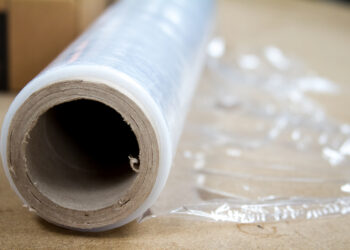
“These are materials that are appropriate for statewide recycling but not appropriate for a local government collection obligation or commingled, like film plastic,” Allaway said.
Another important consideration is that Oregon’s law requires PROs to achieve progressively increasing plastic packaging recycling rates. Allaway said his department’s assessments thus far suggest that the materials on the local government and PRO lists will not entirely meet these goals.
This means producers will likely need to determine yet another list of materials they’ll need to collect to meet the targets.
It should also be noted that the current wave of EPR proposals is not the first time U.S. recycling stakeholders have reckoned with the concept of determining a statewide materials list. Connecticut established a statewide list in 2017 outside any EPR framework. However, the development of these lists within the context of packaging EPR – where producers are required to fund and manage recycling systems – adds new levels of pressure (and opportunity) to the process.
The case for a narrow list
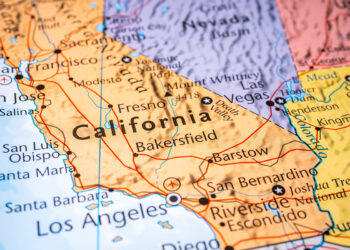
As program implementation moves ahead in Oregon and the three other states with packaging EPR on the books (California, Colorado and Maine), various industry voices are advocating for various approaches in setting the material lists.
Anja Brandon, associate director of U.S. plastics policy at Ocean Conservancy, said her organization believes the items deemed acceptable should only be those “we know we can recycle mechanically.”
Materials that don’t fit that criterion “need to be phased out,” she said, adding that she’d like to see a system built “to really nail the three types of polymers we know how to recycle.”
Learn more in person
Join us at the 2023 Resource Recycling Conference (August 14-16 in Orlando, Fla.) for an EPR-focused session called “Plastic Tensions Within Extended Producer Responsibility.” It will feature Dylan de Thomas from The Recycling Partnership and Kate Bailey of the Association of Plastic Recyclers. Check out the full session lineup and register today.A narrow, standardized list also reduces consumer confusion, Brandon said, and is just the minimum. Haulers and MRFs could always choose to collect more.
“I think if there’s a market for it that enables haulers and recyclers to continue to collect that, you could work with the PRO to have that be on the depot list to build out that market a little bit,” she said. “But ultimately I think setting the floor – not the ceiling – is the approach.”
“The minimum recyclable list is that statewide baseline, but it doesn’t prohibit MRFs or haulers from taking additional material on top of that.” –Wolf Kray, materials management unit leader at the Colorado Department of Public Health and Environment
Nick Lapis, director of advocacy with Californians Against Waste, also dislikes overly broad lists.
“We need to find solid markets for fewer types of plastics and collect those types of packaging and resins and focus on getting them recycled,” he said.
However, Lapis noted there are gray areas – items that do indeed get recycled, just in small quantities, such as polypropylene and PET thermoform plastics.
“There are real recyclers that take both of those, but it would be dishonest to claim statewide that it’s recyclable,” he said. “How all that translates into SB 54 implementation, I’m not 100% sure.” (SB 54 is the EPR legislation that passed in California in 2022.)
The Carton Council doesn’t have an official position on accepted materials lists, Jordan Fengel, director of government affairs, said, but rather “reviews each on a case-by-case basis as they relate to food and beverage cartons.”
Overall, the group would like to see a process that clearly identifies materials that have adequate collection availability, are sortable at MRFs and have end-market value.
An on-ramp for materials and a transparent process are also key, Fengel added.
Oregon is a good example of that, he noted: “Oregon asked for information about collectability, sortability, end-market demand and material yield, as well as the lifecycle impacts of various end-market options for materials.”
Accounting for innovation
Jonathan Levy, director of government relations with AMP Robotics, said he understands the need for lists that account for the realities of processing and markets.
But he also warned the industry could hurt itself by not offering leeway for evolution in those areas.
“These lists really need to be thought of not as the material markets and recycling markets as they exist today, but how they’re going to exist in the future,” he said.
Constant brand innovation is “a fact of life,” he added, but artificial intelligence and other sortation tech can keep up, if given the chance.
“What we’re concerned about,” he said, “is if you say, ‘OK, the only things allowed on that list are what’s easily recyclable today … and we don’t want anything else,” it will be much harder to train AI sortation systems, which improve as they see more examples of a given material.
Levy said he understands that MRFs and other stakeholders want to reduce contamination, and AMP isn’t suggesting states “flood the market with material that will certainly cause contamination until our AI gets good enough.”
But he stressed that its critical EPR laws include strong on-ramps to allow new types of material to become part of the uniform acceptable list.
“There needs to be a way to allow those things to be recycled,” he said. “If it was a static list of the material that can be easily recycled today, all that other stuff will get thrown away.”
Brandon of the Ocean Conservancy countered that for some materials, innovation will not solve the problem.
Some plastics such as PVC “are not recyclable now or in the near future,” Brandon noted, “and the idea of investing into those and creating a market for a material that could be replaced with an actually recyclable material is hard to justify.”
“These lists really need to be thought of not as the material markets and recycling markets as they exist today, but how they’re going to exist in the future.” –Jonathan Levy, director of government relations with AMP Robotics
Allaway of Oregon DEQ said in his view, “these lists are intended to be for the future, but not a speculative future.”
“We are not putting a material on the list if there are not multiple responsible end markets available at the time the collection program goes into place,” he said.
So far, Allaway said, producers engaging in the Oregon rulemaking process have largely been wanting more material on the uniform statewide collection list, because it’s the most convenient for households. Local governments in the Portland metro area have also wanted more material on the lists.
The waste industry, however, has generally been asking for a slower expansion and a more conservative approach, Allaway said. Many haulers and processors are concerned that MRFs will not be able to adequately sort and market items such as poly-coated cartons, paper and plastic cups, and potting containers from plant nurseries.
But Allaway said by the time the program takes effect in July 2025, the landscape will likely look different, in large part because the EPR program will be helping to fund processing improvements.
“Given the high cost of marketing some of these materials and the unfavorable economic markets today, there are problems today, we agree,” he said. “But by July 2025, when the MRFs become eligible for compensation from the PROs and the PROs have a responsibility to make sure it flows to responsible end markets, we have enough mechanisms in place in the law to … make it viable.”
Rural versus urban
Another part of the list-making debate revolves around differences in infrastructure and markets in rural versus urban areas, something Brandon said “is going to be so tough, no matter what.”
That’s exemplified in Oregon, where in stakeholder meetings, urban-area representatives have pushed back against delisting items they consider recyclable from the EPR program’s accepted materials list. They note that households don’t want to feel like recycling is taking a step back under EPR.
However, those in rural areas have never been able to recycle those additional materials and do not have markets or infrastructure for them. Those voices tend to counter that those materials are too difficult to add into the already large expansion rural areas will experience when the program goes into effect.
Allaway said the state program will not include five materials that programs in the Portland, Ore. area are currently collecting: aerosols, shredded paper, aluminum foil and pressed foil products, some types of potting containers from plant nurseries, and certain types of rigid plastic containers.
“That’s a really big deal and it’s not what they were expecting,” Allaway acknowledged.
However, the metro stakeholders also don’t want the materials to be collected and then not recycled, or collected and recycled in ways that harm the system, he added.
Even with that delisting, the uniform statewide collection list will constitute an expansion for the rest of the state, Allaway said.
“We are not putting a material on the list if there are not multiple responsible end markets available.” –David Allaway, senior policy analyst with the Oregon Department of Environmental Quality
Kray said Colorado has been wrestling with similar worries, and noted that the lists are just a baseline – communities or MRFs can certainly choose to collect more than what’s listed. In addition, Colorado law allows for materials to be added and removed under a certain process.
“That’s a good and bad thing,” he said. “You want the consistency, but it’s also nice to expand if we have the markets.”
Status of the states
Although Oregon is first out of the gate when it comes to establishing a materials list, the other EPR states are moving forward on the process.
Colorado’s program appointed Circular Action Alliance as the state’s PRO this spring, and the organization will now conduct a needs assessment. That study will determine the draft materials list. The request for proposals closes June 30.
California is also currently conducting a needs assessment, though covered materials in that state are set in legislation.
Maine, meanwhile, held two stakeholder meetings on its accepted materials list in March. Under its EPR law, the Department of Environmental Protection is in charge of drafting the rules for the program, and is holding stakeholder meetings on a series of topics this year.
After spending years developing the accepted materials list process, Allaway has some advice to his counterparts in other areas of the country: Consistency is key, but not in a way that makes a list too static.
He added that his state’s initial foray into list development is “the first installment in a many-chaptered book, where Oregon’s recycling acceptance list will continue to evolve over time.”
A version of this story appeared in Resource Recycling on June 1.