
Advertisement Header Ad
Resource Recycling
  • The Latest
  • Analysis
    • All
    • Certification Scorecard
    • Industry Announcements
    • Opinion

    Certification scorecard for Dec. 18, 2025

    Industry announcements for the week of Dec. 15

    Certification scorecard for December 10, 2025

    Industry Announcements for Week of December 8

    Certification Scorecard for December 3, 2025

    Industry Announcements for Week of December 1

    News from Dynamic Lifecycle Innovations, Precision E-Cycle

    News from Northeast Recycling Council, Plastipak and more

    News from Northeast Recycling Council, Sortera Technologies and more

  • Conferences
  • Publications

    Other Topics

    Textiles
    Organics
    Packaging
    Glass
    Brand Owners

    Metals
    Technology
    Research
    Markets
    Grant Watch

    All Topics

Subscribe
No Result
View All Result
Resource Recycling
  • The Latest
  • Analysis
    • All
    • Certification Scorecard
    • Industry Announcements
    • Opinion

    Certification scorecard for Dec. 18, 2025

    Industry announcements for the week of Dec. 15

    Certification scorecard for December 10, 2025

    Industry Announcements for Week of December 8

    Certification Scorecard for December 3, 2025

    Industry Announcements for Week of December 1

    News from Dynamic Lifecycle Innovations, Precision E-Cycle

    News from Northeast Recycling Council, Plastipak and more

    News from Northeast Recycling Council, Sortera Technologies and more

  • Conferences
  • Publications

    Other Topics

    Textiles
    Organics
    Packaging
    Glass
    Brand Owners

    Metals
    Technology
    Research
    Markets
    Grant Watch

    All Topics

Subscribe
No Result
View All Result
Resource Recycling
No Result
View All Result
Home Plastics

Google identifies ‘interventions’ to boost plastics recovery

Marissa HeffernanbyMarissa Heffernan
March 23, 2022
in Plastics
Share on XLinkedin
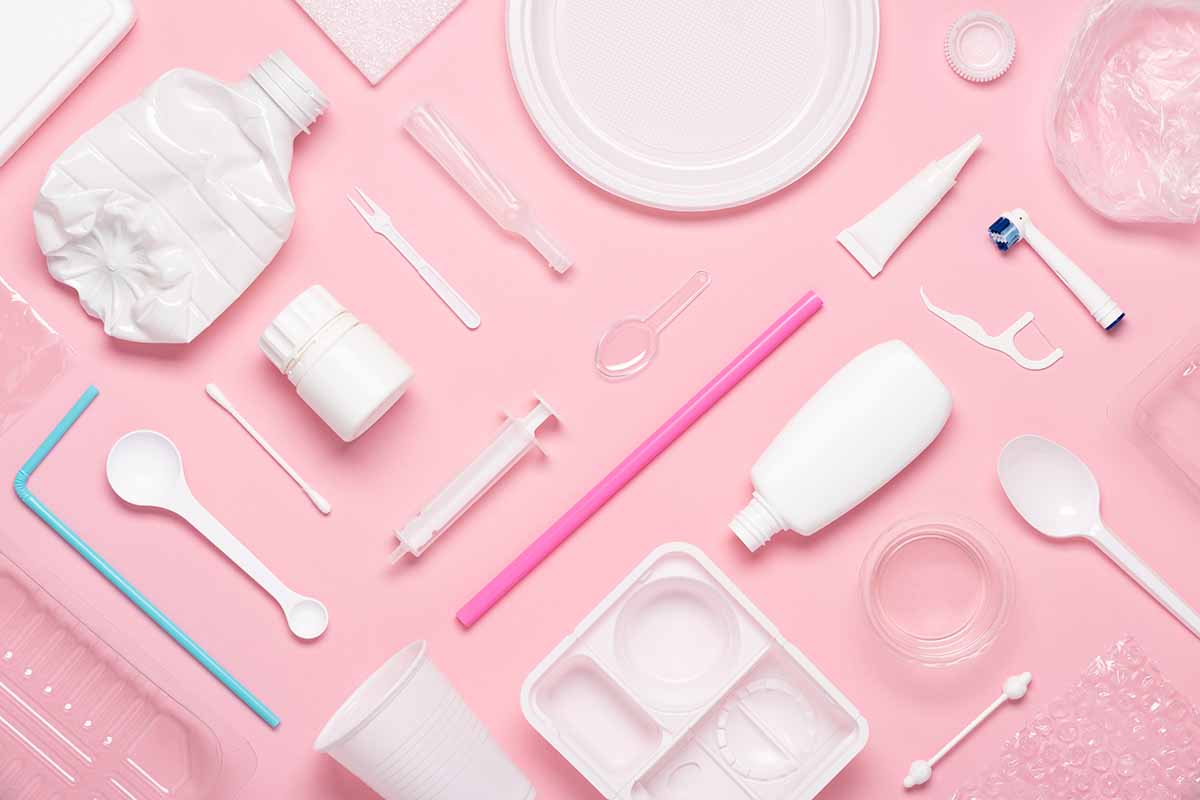
A report from Google suggests that reaching a circular economy will require rethinking design, reducing resource consumption, recycling and other interventions. | Nevodka/Shutterstock

A report from one of the world’s biggest tech companies finds that both chemical and mechanical recycling will be needed to close the plastics loop by 2040. The company also discusses taxes on virgin plastics.

The Google report was completed in partnership with consulting firm AFARA and released March 18. This publication of the full document followed the release of its executive summary last year.

“Google and AFARA believe that to tackle the plastic pollution problem, we need to create irreversible momentum for a circular economy,” the report said, adding that “while the linear economic model has generated tremendous progress for humanity in a short period of time, it has also created great disparities, injustice, and environmental harm.” 

The study aimed to create a list of prioritized interventions to have the greatest impact on creating a circular economy. It follows past work by Google on plastic recycling, including a 2018 white paper, “The Role of Safe Chemistry and Healthy Materials in Unlocking the Circular Economy” and a 2019 landscape assessment of chemical recycling technologies with investment firm Closed Loop Partners, AFARA and nonprofit group GreenBlue. 

Chemical recycling, also called advanced recycling, breaks the molecular bonds in plastics and changes the chemical structure of the material. Google’s report identifies three types of chemical recycling: purification, decomposition and conversion. Purification recovers the polymer chains intact and, as a result, some purification companies insist they don’t fall under the definition of “chemical recycling.” Decomposition, also called depolymerization, breaks the plastic down into monomers, which can be used to make new plastic. And conversion is turning plastics into fuel or chemical feedstock. 

The study evaluated six polymers in three major regions of the world: acrylonitrile-butadiene-styrene (ABS), polycarbonate (PC), polyester terephthalate (PET), polyethylene (HDPE, LDPE, LLDPE), polystyrene (PS) and polypropylene (PP) in North America, Europe and Asia.

It found that 276 million metric tons of plastics are produced annually, with 93% coming from virgin plastic. Only 21 million metric tons, or nearly 8%, are recovered and recycled.

To reach a circular economy, the report recommended rethinking design, reducing resource consumption, and optimizing the system to keep products and components in use for as long as possible.

Identifying interventions

The report said that modeling shows a set of strategic interventions can decrease the “plastics circularity gap” by about 59% versus what it would be if the world continued business as usual.  That’s a cumulative volume of 4.5 billion metric tons by 2040, the report said. 

Google’s report suggests that chemical recycling, specifically decomposition and purification, can close the gap by 20%, while increased mechanical recycling can close the gap by 19%. 

“Both of these interventions require consumer incentives for recycling, consumer education and awareness and designing for recyclability to reach the full potential volume,” the report said.

A tax on virgin plastic production could decrease plastic demand in certain packaging and products and close the plastics circularity gap by 13%, the report added, while improved inventory management through enhanced sourcing, storing and selling of products made of plastic or packaged in plastics can close the gap by 5%.

Consumer education and incentives for plastic consumption reduction provide the final 1%.

Having enough infrastructure is another critical part of closing the plastics gap, as is using multiple solutions at once, the report said. 

“It is essential to advance multiple solutions in parallel because the solutions that reduce the plastics circularity gap in 2025 will not be the same ones that reduce the gap in 2040,” the report said. 

For example, improving mechanical recycling needs to be the priority in the short term, but the report suggested chemical recycling will be vital in the long term to take care of mismanaged volumes.

Four interventions that are not high priority are reverse supply chains, plastics reduction policy, plastics substitution and chemical conversion, the report said, as they would be too difficult to put into place or not effective enough. 

In some ways, Google’s perspective on chemical recycling mirrors that of the Alliance of Mission-Based Recyclers (AMBR), which issued two reports on chemical recycling recently. Google recommended depolymerization and purification processes be pursued but not conversion technologies, which are often used to produce fuels. AMBR blasted plastics-to-fuel processes but said plastics-to-plastics chemical recycling technologies could be acceptable under certain circumstances. 

In terms of cost, Google’s report projected that the price of producing plastics through circular supply chains is 28-34% lower than through virgin supply chains, when averaged across 2020-40. 

But to reach that point, an injection of $634 billion to $995 billion in capital is necessary over the next 20 years, the report found. To put those numbers into context, the U.S. spent $441 billion on transportation and water infrastructure in 2017, the report noted.  

The document said the “type of systemic shift needed goes far beyond Google” but called on businesses to “lead the change toward a circular economy.”  

“Looking ahead, there is an important opportunity to determine how to quickly and effectively mobilize the vast amounts of capital needed to invest in the requisite infrastructure, technologies and integrated supply chains around the world,” the report said, adding that “each of us, every day, can keep the circular economy turning by choosing circular products and services for our own lives and playing our part to keep resources in use longer.”

A version of this story appeared in Resource Recycling on March 22.
 

Tags: Research
Marissa Heffernan

Marissa Heffernan

Marissa Heffernan worked at Resource Recycling from January 2022 through June 2025, first as staff reporter and then as associate editor. Marissa Heffernan started working for Resource Recycling in January 2022 after spending several years as a reporter at a daily newspaper in Southwest Washington. After developing a special focus on recycling policy, they were also the editor of the monthly newsletter Policy Now.

Related Posts

Chemical bonds

Alberta catalyst discovery targets hydrogen and plastics

byScott Snowden
December 10, 2025

A chance discovery inside a University of Alberta laboratory has developed into a Canadian cleantech project that aims to reshape...

Global recycling patent trends may reflect legislative push

Global recycling patent trends may reflect legislative push

byAntoinette Smith
November 25, 2025

Patent applications for chemical recycling technologies have reached a record high globally with government initiatives among the factors driving innovation,...

Study maps barriers to firms’ supply chain climate goals

byAntoinette Smith
October 14, 2025

Publicly articulating clear sustainability goals helps ensure company follow-through, according to an annual supply chain study from the Massachusetts Institute...

US recycles 13.3% of packaging, Plastic Pact estimates

New report explores the future of CPG packaging goals

byAntoinette Smith
July 23, 2025

A new report from RaboResearch explores the factors behind brand owners' retreat from 2025 packaging recycled content goals – and...

Project brings rare earth recovery into e-scrap facility

Project brings rare earth recovery into e-scrap facility

byColin Staub
July 10, 2025

A pilot project is demonstrating a bolt-on modular system that could make it logistically and economically feasible for e-scrap processors...

RIT researchers develop AI-based textile recycling system

RIT researchers develop AI-based textile recycling system

byAndrew Hawthorne
July 2, 2025

Researchers at the Rochester Institute of Technology are developing a high-speed automated system to disassemble and recycle clothing.

Load More
Next Post
APR elects 2022 board of directors

APR elects 2022 board of directors

More Posts

The Re:Source Podcast Episode 1: E-Scrap look-back and 2026 outlook

The Re:Source Podcast Episode 1: E-Scrap look-back and 2026 outlook

November 21, 2025
ERI and ReElement partner on rare earth magnet recovery

ERI and ReElement partner on rare earth magnet recovery

November 26, 2025
Cyber risks confront ITAD work, contracts, coverage

Cyber risks confront ITAD work, contracts, coverage

November 26, 2025
Ohio start-up turns plastics into high-end furniture

Ohio start-up turns plastics into high-end furniture

November 24, 2025
WM adds PP and paper cups to curbside recycling lists

WM adds PP and paper cups to curbside recycling lists

November 24, 2025
Atlas acquisition boosts Circular Services’ organics reach

Atlas acquisition boosts Circular Services’ organics reach

November 24, 2025
Policy Now | December 2025 – Year-end nears, policy talks continue

Policy Now | December 2025 – Year-end nears, policy talks continue

December 1, 2025
WM rolling out curbside acceptance of PP cups 

WM rolling out curbside acceptance of PP cups 

November 25, 2025
Ohio startup creates end market for small challenging plastics

Ohio startup creates end market for small challenging plastics

November 25, 2025
Global recycling patent trends may reflect legislative push

Global recycling patent trends may reflect legislative push

November 25, 2025
Load More

About & Publications

About Us

Staff

Archive

Magazine

Work With Us

Advertise
Jobs
Contact
Terms and Privacy

Newsletter

Get the latest recycling news and analysis delivered to your inbox every week. Stay ahead on industry trends, policy updates, and insights from programs, processors, and innovators.

Subscribe

Welcome Back!

Login to your account below

Forgotten Password?

Retrieve your password

Please enter your username or email address to reset your password.

Log In

Add New Playlist

No Result
View All Result
  • The Latest
  • Analysis
  • Recycling
  • E-Scrap
  • Plastics
  • Conferences
    • E-Scrap Conference
    • Plastics Recycling Conference
    • Resource Recycling Conference
    • Textiles Recovery Summit
  • Magazine
  • About Us
  • Advertise
  • Archive
  • Jobs
  • Staff
Subscribe
This website uses cookies. By continuing to use this website you are giving consent to cookies being used. Visit our Privacy and Cookie Policy.