



Resource Recycling
  • The Latest
  • Podcast
  • Analysis
    • All
    • Certification Scorecard
    • Industry Announcements
    • Opinion

    E-scrap feedstock competition mixed amid investments

    Open pit copper mine in Arizona.

    Trump touts aggressive US critical mineral goals

    From claims to custody: PCR procurement grows up

    Certification scorecard — week of Nov. 16

    Adam Gendell

    PET producers ride ‘local for local’ wave

    May pricing bullish for most bales

    HDPE resists seasonal, economic forces

    IT asset disposition and electronics recycling: Now and then

    Data center moratoriums cast development shadow

  • Conferences
    • Resource Recycling Conference
    • Plastics Recycling Conference
    • E-Scrap: The Longevity Conference
    • Textiles Recovery Summit
  • Publications
    • E-Scrap News
    • Plastics Recycling Update
    • Policy Now
    • Resource Recycling
    • Other Topics
      • All Topics
      • Brand Owners
      • Critical Minerals
      • Glass
      • Grant Watch / RFPs
      • Markets
      • Organics
      • Packaging
      • Research
      • Technology
      • Textiles
Subscribe
No Result
View All Result
Resource Recycling
No Result
View All Result
Home Recycling

Glass is costing MRFs $150 million annually

Dan LeifbyDan Leif
April 20, 2017
in Recycling

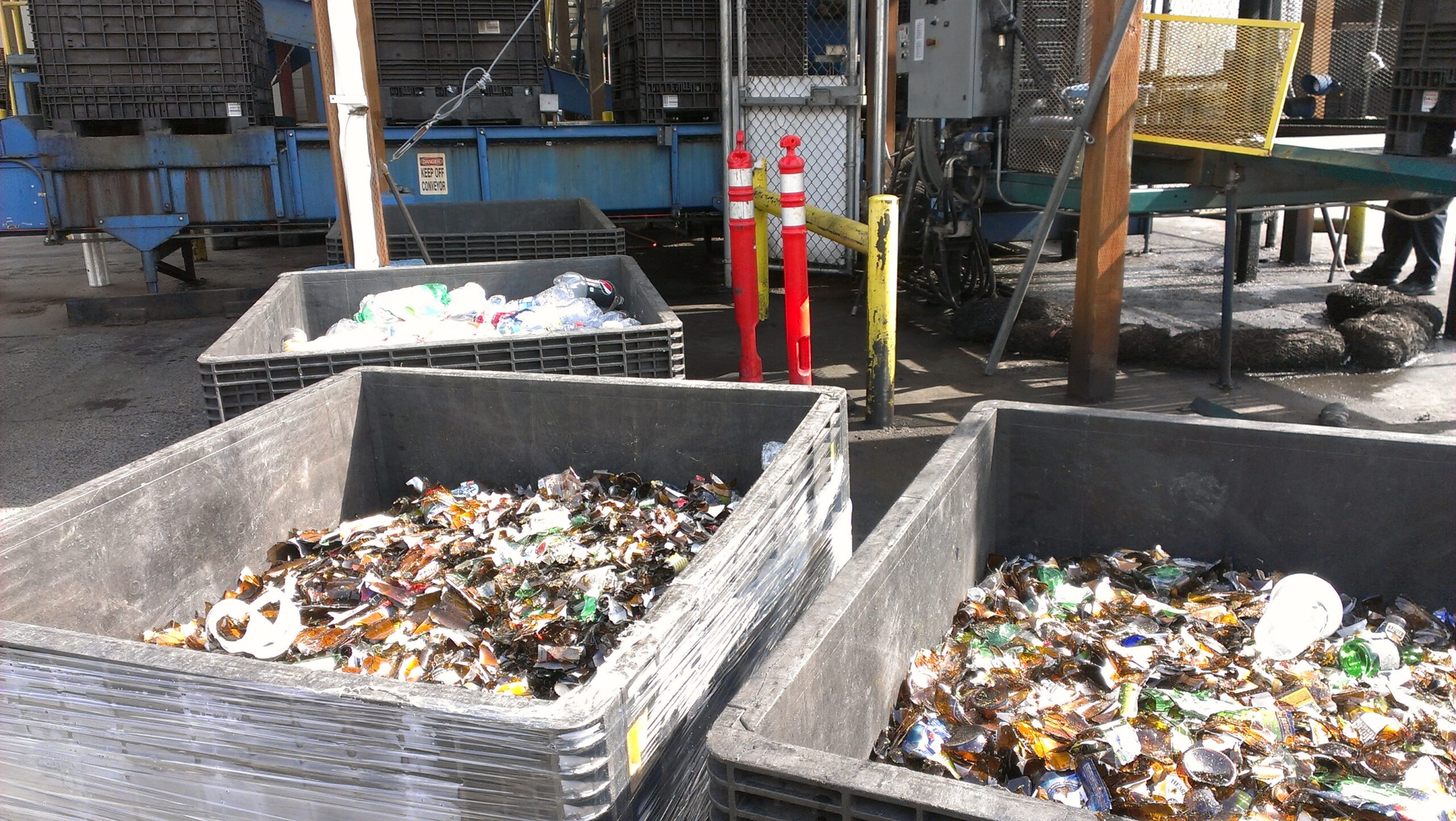
A comprehensive industry study has put a dollar amount on what U.S. materials recovery facilities and their municipal partners are spending to move recovered glass downstream.

An annual net cost of $150 million for management of glass collected in single-stream collection systems was identified in a report released today by the nonprofit Closed Loop Foundation, which is associated with the Closed Loop Fund.

The statistic helps highlight a major theme of the report itself: that significant industry-wide efforts are needed on the glass front to help ensure the viability of processing facilities and programs.

“The solution is not just a better cleanup system,” said Closed Loop Foundation’s Ellen Martin in an interview. “It’s a bigger system story.”

Sparked by Big Apple conversation

Martin said the notion of an in-depth investigation into the costs and other issues associated with glass recycling grew out of a stakeholder meeting convened by officials in New York City last summer. Martin said the city was looking at its own costs and trying to determine how to make glass recovery work economically.

In the wake of those discussions, the Closed Loop Foundation began looking at the issue deeper. The Foundation exists as a separate 501(c)(3) from the Closed Loop Fund but works closely with the corporate-backed industry group to develop relevant market research and economic impact studies.

The Foundation received a grant from beer company Heineken USA to better understand the specific financial pinch points seen in glass recycling today and to offer some recommendations on how to help the industry move forward.

The resulting report outlines concrete steps that can be taken throughout the glass recycling chain to help more glass move into markets instead of disposal.

But to frame the conversation, the research needed to quantify the scale of the problem, and that’s what led to the $150 million cost figure.

Martin said researchers looked at U.S. EPA data on glass generation and recovery as well as what typical costs were for U.S. MRFs to handle the material (the study relied on input from around 20 facilities of different sizes nationwide, according to Martin).

The analysis finds that a typical MRF taking in single-stream material is seeing glass costs of $35 per ton. This number accounts for costs to maintain relevant equipment, transportation to send material downstream and tip fees when glass is disposed of (it also factored in the reality that those tip fees may be lower when glass is used as alternative daily cover at the receiving landfill).

At $35 per ton, a MRF that handles 15,000 tons of glass a year will see annual glass costs of around $500,000. Researchers used those numbers to come to the $150 million nationwide cost.

Imploring cities to continue glass collection

Given the expenses associated with glass, it’s little surprise that a number of local programs have moved recently to pull the material out of their collection systems. The Closed Loop study, however, advises against taking that action.

“If the trend continues, the system will recover less and less of the glass generated each year, despite the fact that manufacturers can save significant costs and energy using recycled glass,” the report states. “All stakeholders – from municipalities and MRFs to processors, manufacturers, and brand owners – need a more efficient and cost-effective solution to handle single-stream glass.”

Much of the Closed Loop Foundation analysis digs into how to develop that efficiency, identifying sorting practices and equipment approaches that can help lead to higher quality material and reduced overall costs.

The report notes that for mid- to large-sized facilities (those handling over 10,000 tons of glass annually), an upgraded glass processing system that could lead to meaningful improvements would cost between $350,000 and $1 million. That investment, researchers estimate, could reduce glass handling costs by up to $25 per ton, in large part because the MRF would garner higher prices from secondary processors or manufacturers.

According to the Closed Loop Foundation, investment in such cleanup systems would make economic sense for at least 50 MRFs nationwide. Those facilities were deemed as plausible candidates because they handle a sufficient amount of material and are sited close enough to downstream buyers.

The report states that if the recommended processing improvements were implemented at those MRFs, the nation’s supply of recycled glass would grow by 33 percent, or 1 million tons a year.

Would demand exist for all that extra recycled glass? According to Martin, there is plenty of interest from industry players.

“In talking with manufacturers, there was enthusiasm,” she said. “They told us, ‘We would absolutely take more if we can get it to the right specification.’ So what we are seeing is a literal bottleneck at the MRF level.”

At the 2017 Resource Recycling Conference, Ellen Martin will be presenting additional details from the glass recovery research and other Closed Loop Foundation projects.


Resource Recycling Conference

Tags: GlassIndustry GroupsResearch
TweetShare
Dan Leif

Dan Leif

Dan Leif is the managing editor at Resource Recycling, Inc., which publishes Resource Recycling, Plastics Recycling Update and E-Scrap News. He has been with the company since 2013 and has edited different trade publications since 2006. He can be contacted at dan@resource-recycling.com.

Related Stories

The AI tsunami

The AI tsunami

byJim Puckett
November 19, 2026

AI data centers and the devices they make obsolete could generate 8.6 to 13.1 million metric tons of e-waste a...

Thrift’s seat at the textile EPR table

byStefanie Valentic
November 19, 2026

Under California’s textile EPR law, every Goodwill in the state counts as a producer, even when new goods are under...

A call to action: End markets and EPR

Recycling policy moves toward implementation

byAntoinette Smith
November 19, 2026

US EPR programs for packaging are starting up amid legal and operational uncertainty, said APR's Kate Bailey during a recent...

RecyClass hits 500 EU recyclability evals

EU PET import codes set to begin

byAntoinette Smith
November 18, 2026

The new codes for PET flake will take effect in January, but the global impact remains to be seen, according...

Goodwill eyes EPR revenue, starting with waste audit

byStefanie Valentic
November 12, 2026

Goodwill sustainability leaders say the nonprofit’s donation network could serve packaging and textile EPR programs, but they first need hard...

PET bottles for recycling

PET imports reshape US markets as demand grows

byAntoinette Smith
November 11, 2026

New NAPCOR data shows record RPET use in bottles even as US bottle recycling continues to fall.

Load More
Next Post
Study explores evolving makeup of electronics

Study explores evolving makeup of electronics

2026 Buyers’ Guide

Equipment, services and technology suppliers serving the recycling industry.

Browse the Guide

More Posts

Closeup of PP with a chasing arrows recycling symbol.

PureCycle, WM sign rare 3-year bales contract

November 16, 2026

Goodwill eyes EPR revenue, starting with waste audit

November 12, 2026

Alphabet’s Materra wants recyclers to see molecules, not bottles

November 13, 2026
Artificial intelligence is altering the marketplace for ITAD providers in numerous ways. | Shutterstock

AI alters ITAD economics

November 3, 2026
PureCycle sees easing headwinds to R-PP adoption

PureCycle shifts focus, secures feedstock

November 5, 2026
The missing link in e-plastic recycling

The missing link in e-plastic recycling

October 28, 2026
NexPoint Materials to shutter Alabama plastics plant

NexPoint Materials to shutter Alabama plastics plant

November 4, 2026
Modern Mining raises $40 million in IPO

Modern Mining raises $40 million in IPO

November 12, 2026
Adam Gendell

PET producers ride ‘local for local’ wave

November 16, 2026
Vessel gives excess inventory a second life

Vessel gives excess inventory a second life

November 13, 2026
Load More

About & Publications

About Us

Staff
Job Listings

Archive

Magazines

Work With Us

Advertise
Contact
Terms and Privacy

Newsletters

Get the latest recycling news and analysis delivered to your inbox every week. Stay ahead on industry trends, policy updates, and insights from programs, processors, and innovators.

Subscribe

Welcome Back!

Login to your account below

Forgotten Password?

Retrieve your password

Please enter your username or email address to reset your password.

Log In

Add New Playlist

No Result
View All Result
  • The Latest
  • Podcast
  • Analysis
  • Recycling
  • E-Scrap
  • Plastics
  • Policy Now
  • Conferences
    • E-Scrap Conference
    • Plastics Recycling Conference
    • Resource Recycling Conference
    • Textiles Recovery Summit
  • Magazines – Old
  • About Us
  • Advertise
  • Archive
  • Job Listings
  • Staff
Subscribe
This website uses cookies. By continuing to use this website you are giving consent to cookies being used. Visit our Privacy and Cookie Policy.