




This article appeared in the February 2025 issue of Resource Recycling. Subscribe today for access to all print content.
Finding a niche and keeping materials separated and clean are crucial to building recycling programs that go beyond the everyday commodities, leaders of programs that collect items as diverse as Solo cups, streetlights, swimming pool lane dividers and plastic drums for soft drink flavorings said.
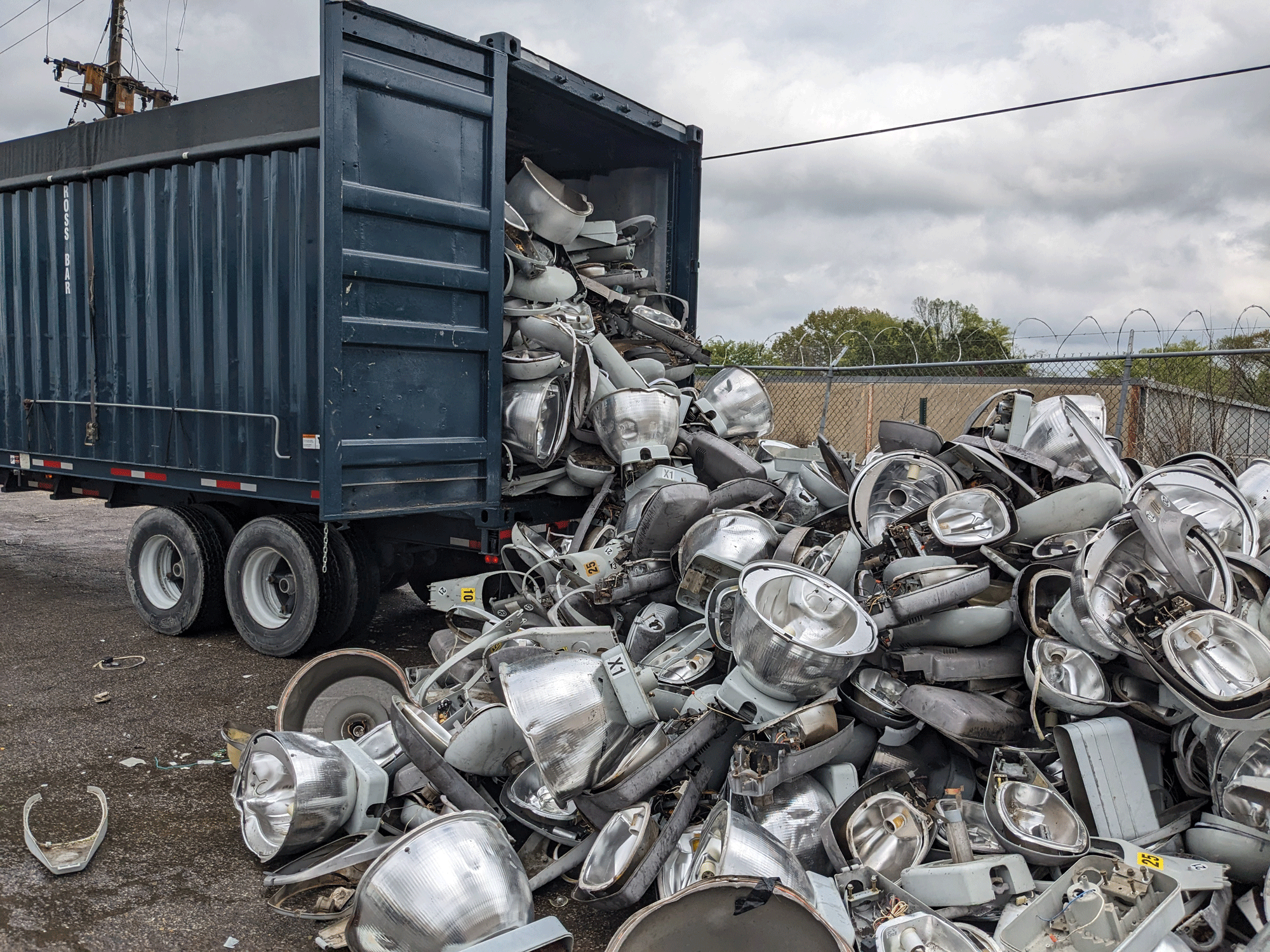
“We’re able to get top dollar because we’re sorting it all very specifically,” said Andy Kizzee, director of the nonprofit Binghampton Development Corporation in Memphis, Tennessee, which for the past three years has been one of perhaps only two groups in the U.S. that dismantle old streetlights to recover individual components made of copper, aluminum, glass and other materials.
The organization has processed more than 78,000 lights from projects replacing sodium fixtures with LEDs in Memphis, Nashville and other cities, Kizzee said. Each light contains around $7 or $8 worth of parts that in the standard scrap metal trade would typically be shredded and divvied up among a long chain of scrappers, haulers and exporters, he added: “We’re able to unlock all of that value in one spot by manually disassembling it.”
And while any recycling operation needs to collect enough volume to make shipments economical, even an organization of modest size can get in on the uncommon and unusual side of recycling.
“This MRF being as tiny as it is has advantages,” said Nick Kluge, assistant director of waste recovery services for the University of Minnesota’s Twin Cities campus, where staff and volunteers accommodate impromptu collections from every sort of research and student activity. He recalled the agricultural side of campus asking him about the possibility of recycling the plastic tags used in plant nurseries, for example.
“So we set up another gaylord” and started collecting, Kluge said. “Sure enough, once a year we send out six, eight hundred pounds of these things” to a buyer.
Finding a niche
Laurel Harrop was 23 when she became a recycling entrepreneur in 2011, launching Laurel Environmental Group to recycle lighting fixtures, working her way up from interior lighting to streetlights. An old family friend and blacksmith from Wisconsin provided the key, fabricating hydraulic presses for her that could pop out a streetlight’s insides.
“We came up with a process and a system,” she said in an interview, and before long her company was the go-to streetlight recycler for major cities throughout the U.S. A San Diego project processing 35,000 fixtures was her breakout. Hundreds of thousands more have followed; the company is now in the process of doing 130,000 lights for Philadelphia.
“This business is one of those that people just don’t know is even going on,” Harrop said, adding she’s not aware of any others in the field besides BDC, the Memphis nonprofit. “I always enjoyed that we were doing something good here.”
The BDC following her example happened almost by accident, Kizzee said. The organization focuses on building workplace skills and experience for people who need the help, such as those with histories of substance abuse or with the criminal justice system. A few years ago the nonprofit partnered with an energy services company that was involved with streetlight conversions in the region and was interested in using BDC’s warehouse space.
BDC had already begun working on recycling tires, polystyrene and mattresses, as reported in this magazine and in the November 2024 issue, “Expanding the tire recycling front.” So Kizzee spent a few weeks prying apart a few dozen fixtures and developing a concept for a new recycling stream.
That led to processing fixtures for Memphis’ conversion project in 2023 and now Nashville’s own ongoing project, which is nearly zero-waste after BDC connected with a nearby glass recycling company, Kizzee said.
“A trailer of about 1,300 fixtures gets filled up over two weeks, and then it drives here,” he said.
Harrop said the work’s been so successful that the jobs are starting to slow down in California and elsewhere. She compared it to the phasing out of CRT televisions — there are only so many out there.
“I used to think I’d find another niche in recycling like that,” Harrop said, though she’s been increasingly focused on another company she started that sells canned beverages. “But you never know. I want to keep doing this until it’s done.”
Keeping it pure
Wil Ross, executive vice president of sales and procurement at Alternative Plastics in northwest Arkansas, has made a career of finding, processing and selling an esoteric assortment of olefin plastics.
Toilet seats and other fixtures, barrels that held food and drink flavors, totes and pallets from the area’s poultry industry, bread crates from bakeries, car bumpers and dashboards, retail and yard signs, plastic shotgun shell casings — all of these things and more have come through his facility for pelletization and resale to manufacturers.
“I do a lot of cold calling,” said Ross, who makes a point of visiting the industrial parks within a few hundred miles to make connections and learn about manufacturers, the recycled resin they might need and what they do with their waste, such as excess trimmings or defective products. Alternative Plastics takes care to keep shipments and plastic types separate at all times for purity and quality control, Ross added, because buyers are picky.
“Plastics is so diverse. Paper’s paper, you can’t really change paper. But plastics is just ridiculous,” he said. “We know what everything is prior to it coming in, so when we run it, we run that thing and that thing only. It makes it a hell of a lot easier.”
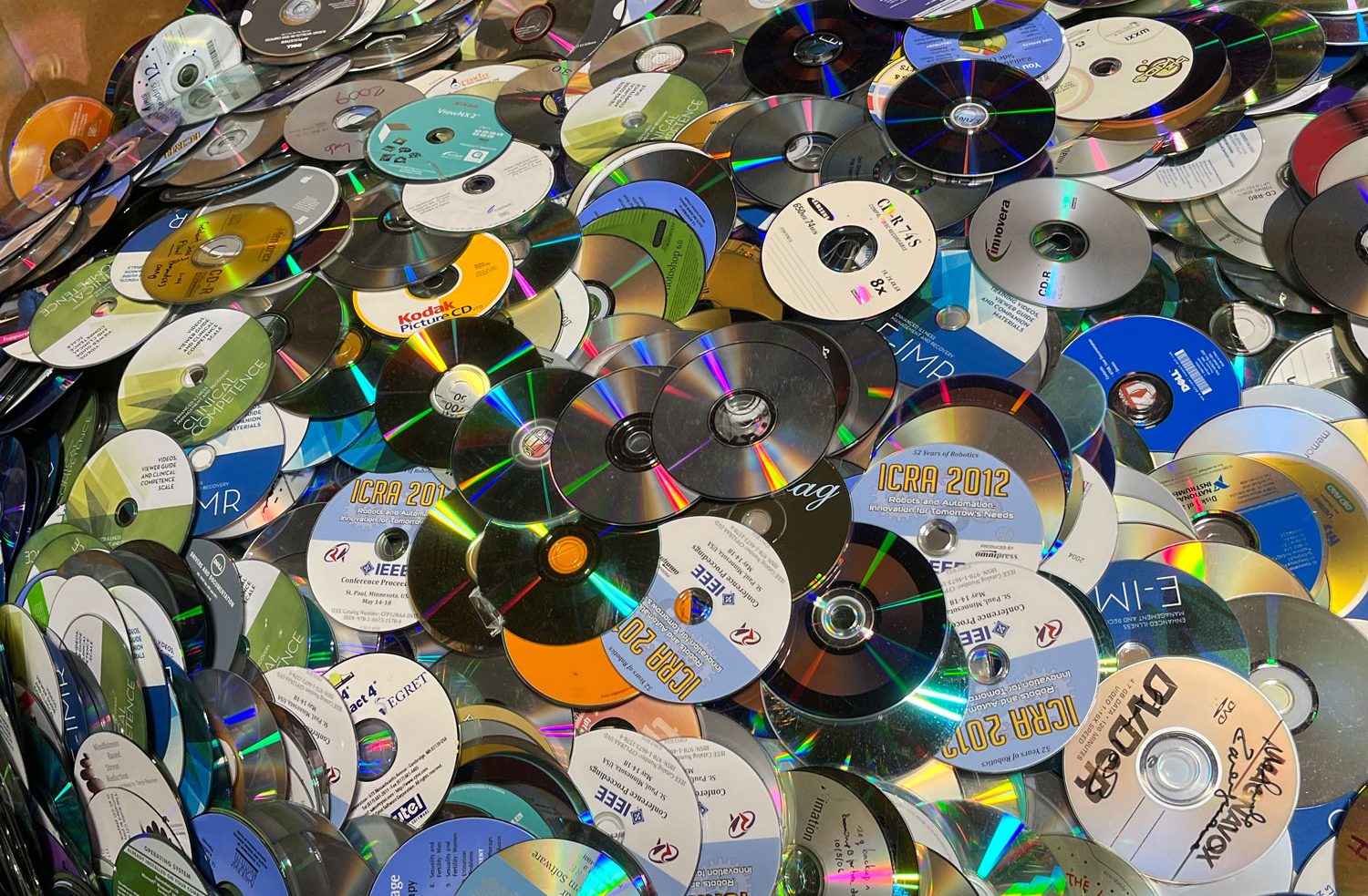
Kluge applies the same meticulous separation to the University of Minnesota’s waste recovery department, allowing it to resell soundproofing panels from music rooms for reuse, for instance, and to recycle plastic pipettes from chemistry labs, which go to nearby manufacturer Avon Plastics for landscaping items. Solo cups, swim lane dividers, interior lighting fixtures, plastic carriers for aluminum cans, and CDs and their cases are collected, too.
Souvenir cups from the athletics department might have presented a challenge because of their label wrapping, but “if you keep them segregated as their own type, just souvenir cups, then they can be recycled again,” Kluge said.
He partly credited the university’s in-house control of its material streams for the programs’ success. The university has its own fleet of trucks, small MRF and a reuse warehouse.
“Those three together make us extremely unique,” Kluge said. “You gain control of the materials from the loading dock to as far as you want to take it.”
And while the campus has achieved a diversion rate of around 55%, he said, it’s also in the process of developing a zero-waste plan with RRS this year: “We’re very proud, but we know we could do better.”