










Resource Recycling
  • The Latest
  • Analysis
    • All
    • Certification Scorecard
    • Industry Announcements
    • Opinion
    The electronics recycling industry is undergoing a transformation from labor-intensive manual operations to highly automated, AI-driven facilities that use advanced robotics, cleaner chemistry and digital tracking systems to extract critical materials.

    The cyber-physical MRF: AI and robotics reshape e-waste recovery

    Certification scorecard for the week of Feb. 9, 2026

    Meta-Corning deal signals IT hardware retirement wave

    Meta-Corning deal signals IT hardware retirement wave

    Malaysia clamps down on illegal e-waste imports amid probes

    Malaysia clamps down on illegal e-waste imports amid probes

    URT builds alliance to remake electronics plastics at scale

    ICYMI: Top 5 e-scrap stories from January 2026

    The electronics recycling industry is undergoing a transformation from labor-intensive manual operations to highly automated, AI-driven facilities that use advanced robotics, cleaner chemistry and digital tracking systems to extract critical materials.

    Certification scorecard for the week of Feb. 2, 2026

    Auditors warn EU may fall short on critical metals

    Auditors warn EU may fall short on critical metals

    Industry announcements for January 2026

    Industry announcements for February 2026

    ICYMI: Top 5 recycling stories from January 2026

  • Conferences
  • Publications

    Other Topics

    Textiles
    Organics
    Packaging
    Glass
    Brand Owners

    Metals
    Technology
    Research
    Markets
    Grant Watch

    All Topics

Subscribe
No Result
View All Result
Resource Recycling
  • The Latest
  • Analysis
    • All
    • Certification Scorecard
    • Industry Announcements
    • Opinion
    The electronics recycling industry is undergoing a transformation from labor-intensive manual operations to highly automated, AI-driven facilities that use advanced robotics, cleaner chemistry and digital tracking systems to extract critical materials.

    The cyber-physical MRF: AI and robotics reshape e-waste recovery

    Certification scorecard for the week of Feb. 9, 2026

    Meta-Corning deal signals IT hardware retirement wave

    Meta-Corning deal signals IT hardware retirement wave

    Malaysia clamps down on illegal e-waste imports amid probes

    Malaysia clamps down on illegal e-waste imports amid probes

    URT builds alliance to remake electronics plastics at scale

    ICYMI: Top 5 e-scrap stories from January 2026

    The electronics recycling industry is undergoing a transformation from labor-intensive manual operations to highly automated, AI-driven facilities that use advanced robotics, cleaner chemistry and digital tracking systems to extract critical materials.

    Certification scorecard for the week of Feb. 2, 2026

    Auditors warn EU may fall short on critical metals

    Auditors warn EU may fall short on critical metals

    Industry announcements for January 2026

    Industry announcements for February 2026

    ICYMI: Top 5 recycling stories from January 2026

  • Conferences
  • Publications

    Other Topics

    Textiles
    Organics
    Packaging
    Glass
    Brand Owners

    Metals
    Technology
    Research
    Markets
    Grant Watch

    All Topics

Subscribe
No Result
View All Result
Resource Recycling
No Result
View All Result
Home Resource Recycling Magazine

Data Corner: The expanding cost-revenue gap that is plaguing MRFs

byRRS
January 12, 2020
in Resource Recycling Magazine

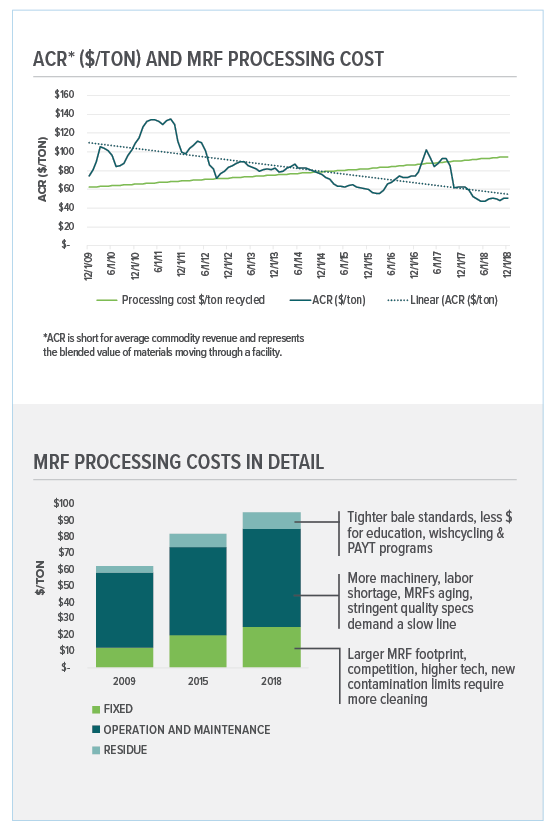
RRS analyzed the various pieces that contribute to processing costs for materials recovery facilities: fixed costs, variable operating and maintenance costs, and the cost of disposing residue. A variety of factors are leading to increases in all of those areas.

MRFs’ fixed costs have more than doubled from 2009 to 2018. This is due to MRFs investing in new technology to stay competitive, adapt to a changing materials stream and meet increasingly stringent bale-quality standards.

Some of the same underlying trends are simultaneously driving up the variable costs that are tied to operation and maintenance. Aging machinery requires more maintenance, and many MRFs have faced labor shortages. Also, MRFs more often run lines at lower speeds and decrease throughput in an attempt to meet difficult quality standards. Meanwhile, more lightweight packaging means more items per ton and more processing per ton, driving up the cost per ton. The increased prevalence of plastics can also lead to fiber bale contamination, causing further obstacles to meeting market specifications.

There are also several concurrent factors encouraging increased residue. As some communities work to increase waste diversion from landfill, implementing pay as you throw (PAYT) and other policies, they may experience an uptick in “wishcycling” and other unintended consequences that increase contamination. Perversely, reduced recycled commodity revenue has impacted recycling program budgets, often undermining the funding for the resident education that is necessary to ensure the quality of inbound materials. On the outbound side, tighter specs mean that marginal-quality material that might once have been baled and sold is now removed and disposed.

When these rising processing costs are stacked up next to the declining average commodity revenue for recyclables coming out of single-stream MRFs, we see a widening gap. Given all the interconnected factors driving costs and markets, this trend may continue before markets improve or policy changes and other interventions show significant effects.

The increase in processing costs as a result of investments and operational changes demonstrates that MRFs are doing their best to adjust to current conditions. And it could all carry a silver lining, with MRF improvements strengthening recycling systems over the long term.

This month’s edition of Data Corner provided by recycling consultancy RRS.

This article appeared in the December 2019 issue of Resource Recycling. Subscribe today for access to all print content.

Tags: Data
TweetShare
RRS

RRS

Related Posts

IT security driving plans, reshaping budgets

IT security driving plans, reshaping budgets

byScott Snowden
January 23, 2026

Sage’s 2026 benchmarking report finds data security dominating ITAD decisions as laptop cycles shorten, server resale values surge and more...

Server resale values surge in AI-driven markets

Server resale values surge in AI-driven markets

byDavid Daoud
January 22, 2026

Server resale values jumped sharply in 2025 as AI infrastructure demand tightened supply, reshaping secondary IT markets and boosting returns...

Greyparrot positions waste intel as key to effective EPR

Greyparrot positions waste intel as key to effective EPR

byAntoinette Smith
January 9, 2026

Company co-founder Rish Mitra says data collected from a growing number of MRFs globally can help fine-tune emerging EPR policy...

January fire data drives shift in recycling safety

byScott Snowden
January 6, 2026

A new industry guide addresses rising lithium-ion battery fires at recycling facilities as data shows a record 448 reported incidents...

plastic bale

NAPCOR finds RPET imports hit record in 2024

byAntoinette Smith
December 11, 2025

Despite gains for thermoforms and other materials, bottle recovery rates and RPET consumption eased from 2023 highs amid abundant imported...

EU to drive global demand for recycled plastics

EU to drive global demand for recycled plastics

byAntoinette Smith
November 4, 2025

A new study from commodity intelligence firm ICIS and a Chinese industry association explores the impacts of European regulations on...

Load More
Next Post

Community Spotlight: Colorado city continues to evolve diversion efforts

More Posts

Oregon’s Recycling Modernization Act faces injunction

Court partially blocks Oregon EPR law, dismisses bulk of lawsuit

February 10, 2026
Chinese processing group details goals for US visit

AMP lays out vision of next-generation, AI-driven MRFs

July 24, 2024
Malaysia clamps down on illegal e-waste imports amid probes

Malaysia clamps down on illegal e-waste imports amid probes

February 6, 2026

REUSE Act heads to US House for consideration

February 9, 2026
Meta-Corning deal signals IT hardware retirement wave

Meta-Corning deal signals IT hardware retirement wave

February 9, 2026

ecoATM recycled 7.5M phones in 2025 as payouts hit $1.5B

February 10, 2026
Texas sues over dumped wind turbine blades

Texas sues over dumped wind turbine blades

February 10, 2026

APR, industry create proactive guidance for PET caps

February 12, 2026

Alpek talks PET overcapacity, soft demand

February 11, 2026
The electronics recycling industry is undergoing a transformation from labor-intensive manual operations to highly automated, AI-driven facilities that use advanced robotics, cleaner chemistry and digital tracking systems to extract critical materials.

The cyber-physical MRF: AI and robotics reshape e-waste recovery

February 12, 2026
Load More

About & Publications

About Us

Staff

Archive

Magazine

Work With Us

Advertise
Jobs
Contact
Terms and Privacy

Newsletter

Get the latest recycling news and analysis delivered to your inbox every week. Stay ahead on industry trends, policy updates, and insights from programs, processors, and innovators.

Subscribe

Welcome Back!

Login to your account below

Forgotten Password?

Retrieve your password

Please enter your username or email address to reset your password.

Log In

Add New Playlist

No Result
View All Result
  • The Latest
  • Analysis
  • Recycling
  • E-Scrap
  • Plastics
  • Policy Now
  • Conferences
    • E-Scrap Conference
    • Plastics Recycling Conference
    • Resource Recycling Conference
    • Textiles Recovery Summit
  • Magazine
  • About Us
  • Advertise
  • Archive
  • Jobs
  • Staff
Subscribe
This website uses cookies. By continuing to use this website you are giving consent to cookies being used. Visit our Privacy and Cookie Policy.