






Resource Recycling
  • The Latest
  • Analysis
    • All
    • Certification Scorecard
    • Industry Announcements
    • Opinion
    The electronics recycling industry is undergoing a transformation from labor-intensive manual operations to highly automated, AI-driven facilities that use advanced robotics, cleaner chemistry and digital tracking systems to extract critical materials.

    The cyber-physical MRF: AI and robotics reshape e-waste recovery

    Certification scorecard for the week of Feb. 9, 2026

    Meta-Corning deal signals IT hardware retirement wave

    Meta-Corning deal signals IT hardware retirement wave

    Malaysia clamps down on illegal e-waste imports amid probes

    Malaysia clamps down on illegal e-waste imports amid probes

    URT builds alliance to remake electronics plastics at scale

    ICYMI: Top 5 e-scrap stories from January 2026

    The electronics recycling industry is undergoing a transformation from labor-intensive manual operations to highly automated, AI-driven facilities that use advanced robotics, cleaner chemistry and digital tracking systems to extract critical materials.

    Certification scorecard for the week of Feb. 2, 2026

    Auditors warn EU may fall short on critical metals

    Auditors warn EU may fall short on critical metals

    Industry announcements for January 2026

    Industry announcements for February 2026

    ICYMI: Top 5 recycling stories from January 2026

  • Conferences
  • Publications

    Other Topics

    Textiles
    Organics
    Packaging
    Glass
    Brand Owners

    Metals
    Technology
    Research
    Markets
    Grant Watch

    All Topics

Subscribe
No Result
View All Result
Resource Recycling
  • The Latest
  • Analysis
    • All
    • Certification Scorecard
    • Industry Announcements
    • Opinion
    The electronics recycling industry is undergoing a transformation from labor-intensive manual operations to highly automated, AI-driven facilities that use advanced robotics, cleaner chemistry and digital tracking systems to extract critical materials.

    The cyber-physical MRF: AI and robotics reshape e-waste recovery

    Certification scorecard for the week of Feb. 9, 2026

    Meta-Corning deal signals IT hardware retirement wave

    Meta-Corning deal signals IT hardware retirement wave

    Malaysia clamps down on illegal e-waste imports amid probes

    Malaysia clamps down on illegal e-waste imports amid probes

    URT builds alliance to remake electronics plastics at scale

    ICYMI: Top 5 e-scrap stories from January 2026

    The electronics recycling industry is undergoing a transformation from labor-intensive manual operations to highly automated, AI-driven facilities that use advanced robotics, cleaner chemistry and digital tracking systems to extract critical materials.

    Certification scorecard for the week of Feb. 2, 2026

    Auditors warn EU may fall short on critical metals

    Auditors warn EU may fall short on critical metals

    Industry announcements for January 2026

    Industry announcements for February 2026

    ICYMI: Top 5 recycling stories from January 2026

  • Conferences
  • Publications

    Other Topics

    Textiles
    Organics
    Packaging
    Glass
    Brand Owners

    Metals
    Technology
    Research
    Markets
    Grant Watch

    All Topics

Subscribe
No Result
View All Result
Resource Recycling
No Result
View All Result
Home E-Scrap

Server resale values surge in AI-driven markets

byDavid Daoud
January 22, 2026
in E-Scrap
Server resale values surge in AI-driven markets

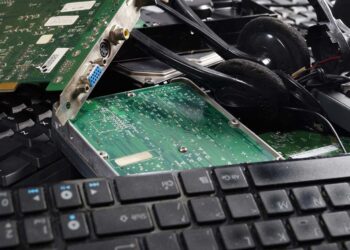
IM Imagery / Shutterstock

Sage Sustainable Electronics announced the release of its 12th Annual IT Asset Management Benchmarking Report, now published under the Sage brand following the company’s acquisition of Cascade Asset Management. 

The report provides a data-driven view of how organizations are refining their IT asset management and IT asset disposition strategies in response to evolving technology, economic pressure and compliance demands.

Based on survey responses from 56 organizations representing more than 808,000 employees and analysis of over 2.5 million IT assets processed between 2019 and 2025, the report delivers practical benchmarks for IT, procurement, compliance and sustainability leaders.

In line with reports from OEMs about strong demand for servers, the report noted server resale values in the secondary market also jumped dramatically throughout 2025, with prices reaching roughly 2.5 times their seven-year average as artificial intelligence infrastructure buildout and semiconductor manufacturing shifts reshape secondary markets for enterprise hardware.

The benchmarking data reveals average server resale values climbed 328% at legacy Cascade facilities and 417% at Sage operations. The surge stems from constrained supply chains for standard memory modules after companies like Micron Technology scaled back production of commodity consumer memory chips in favor of higher-margin High-Bandwidth Memory for AI applications.

This strategic pivot by major manufacturers has pushed buyers toward secondary markets for alternative sourcing, creating unprecedented demand for memory modules, high-capacity drives, and enterprise-grade networking equipment from refurbished systems.

Market fundamentals shift

The anticipated surge in equipment retirements tied to Windows 10’s October 2025 end-of-support deadline did not materialize at scale. Enterprise refresh rates remained broadly consistent throughout the year, with no sustained increase in overall disposition volumes.

Instead, some organizations advanced purchasing and refresh activity earlier in 2025 to mitigate potential tariff exposure and hardware availability constraints, resulting in temporary inventory adjustments rather than long-term volume changes.

For commodity items like laptops and desktops, the picture differs markedly. Laptop resale values averaged $125.31 in 2025, up from $93.50 the previous year. Desktop values climbed to $44.41 from $38.54. Both categories now trade at or above three-year averages, with laptops commanding more than double their 2023 values.

Smartphones averaged $49.45 in resale value, down from $66.53 in 2024, reflecting market saturation and slower upgrade cycles across both consumer and enterprise segments.

Device lifecycles stabilize

After several years of gradual extension, device retirement ages appear to be stabilizing. Survey respondents reported laptop retirement ages fluctuating during 2025, reflecting temporary adjustments related to Windows 10 and procurement timing, with organizations expecting laptop lifecycles to return to an average of approximately 4.3 years. Desktop retirement ages remained steady at around 4.6 years, consistent with recent historical patterns.

This stabilization comes despite ongoing economic pressure and sustainability commitments that might otherwise encourage longer deployment cycles. The data suggests organizations have reached an operational balance between maximizing asset utility and maintaining performance and security requirements

Workplace dynamics continue to complicate asset recovery. Only 20% of surveyed organizations reported that 81–100% of employees work primarily onsite. The remaining 80% manage distributed workforces across hybrid, remote, and office-based arrangements.

Box programs offered by processors have simplified remote device returns, but challenges persist. One survey participant noted that “achieving complete visibility and control across a highly distributed and diverse environment,” while managing “hybrid work models and accelerated refresh cycles,” remains a primary operational challenge.

Security practices evolve slowly

Data protection methods show incremental improvement, though notable gaps remain. NIST 800-88 has become the dominant sanitization standard, cited by 52% of respondents. However, roughly one-quarter of organizations continue to reference the obsolete DoD 5220.22-M standard, which predates solid-state storage technologies.

Only 8% of organizations reported adopting IEEE 2883, the newest sanitization standard introduced in 2022 to address modern storage interfaces and emerging technologies.

Internal data wiping before disposition declined notably for laptops. Forty-eight percent of respondents reported wiping laptops internally before sending them to processors, down from nearly 60% in 2024. Physical drive destruction also decreased, with 24% of tested assets at Cascade requiring drive pulls and shredding, compared to 30.4% the prior year.

Security lock management presents both opportunities and constraints. The survey revealed widespread adoption of mobile device management tools, firmware locks, and activation locks across enterprise fleets, while many organizations lack standardized procedures to coordinate unlocking with downstream processors.

Over the past three years, Cascade processed 41,100 security-locked assets, successfully unlocking 68% in coordination with clients. This activity generated 2.25 million dollars in shared resale revenue. However, the unlock success rate declined from over 73% previously, suggesting increasingly restrictive manufacturer controls.

ESG commitments face headwinds

Survey results indicate a shift in how organizations prioritize environmental, social, and governance considerations. The share of respondents rating ESG initiatives as “very important” declined by 11 percentage points year over year, while those assigning ESG a “low importance” rating increased by 12 points. These findings are consistent with the ongoing political pushback against ESG, specifically in the United States.

Despite this change in stated priorities, many organizations continue to pursue practical sustainability outcomes through lifecycle extension, component recovery, and structured remarketing strategies. A total of 43% of respondents expect to maintain current IT hardware investment levels in 2026, with a larger share than in prior years expecting to spend less and a smaller share expecting to spend more, reflecting a return to more normalized budget patterns.

The benchmarking data suggests that component recovery and strategic remarketing have gained prominence even as broader ESG narratives face internal competition for executive attention. Elevated component values and constrained supply conditions point to continued strength in secondary markets for enterprise IT equipment into 2026.

Feedback from the report authors

“The data from this year’s Benchmarking report reflect a more disciplined approach to IT asset management – one that balances protection, performance, and return,” said Neil Peters-Michaud, President of Sage Sustainable Electronics. “Enterprises are becoming more strategic about how they retire, reuse, and remarket technology, and this report provides the benchmarks to guide those decisions.”

Bob Houghton, CEO of Sage Sustainable Electronics, noted, “With the integration of Sage and Cascade, this report offers unmatched visibility into IT asset trends across sectors such as healthcare, financial services, manufacturing, government, and nonprofit. It offers actionable intelligence for organizations seeking smarter, more cost effective and sustainable asset strategies.”


Tags: DataRepair & Refurbishment
TweetShare
David Daoud

David Daoud

David Daoud is a contributor to Resource Recycling and E-Scrap News, covering IT asset disposition, electronics recycling, and circular IT governance. He is the founder of and current Principal Analyst at Compliance Standards LLC, where he conducts independent research and advisory work on ITAD markets, sustainability and ESG compliance, data security, and lifecycle risk management. Daoud has analyzed enterprise IT trends since the late 1990s and was among the first analysts to examine ITAD as a distinct market segment during his time at IDC. He advises operators, OEMs, and investment teams on regulatory, technology, and market developments affecting the electronics lifecycle.

Related Posts

UN trade data, tools aim to shape plastics treaty talks

UN trade data, tools aim to shape plastics treaty talks

byAntoinette Smith
February 17, 2026

UN agencies aim to use the harmonized trade data and a statistical framework to improve outcomes for the global negotiations,...

Electronics on a desk.

New Blancco workflow targets ITAD bottleneck

byDavid Daoud
February 4, 2026

As resale dynamics evolve, Blancco has released a new reimaging tool that aims to improve laptop rebuild quality for ITAD...

VW investing millions in auto recycling in Germany

byAntoinette Smith
January 28, 2026

The German vehicle manufacturer plans to invest up to €90 million in its Zwickau plant, in efforts to supply its...

IT security driving plans, reshaping budgets

IT security driving plans, reshaping budgets

byScott Snowden
January 23, 2026

Sage’s 2026 benchmarking report finds data security dominating ITAD decisions as laptop cycles shorten, server resale values surge and more...

Colorado expands repair rights as electronics rules take effect

Colorado expands repair rights as electronics rules take effect

byScott Snowden
January 19, 2026

A new Colorado law expanding consumers’ right to repair electronic devices took effect this month, requiring manufacturers to provide access...

Greyparrot positions waste intel as key to effective EPR

Greyparrot positions waste intel as key to effective EPR

byAntoinette Smith
January 9, 2026

Company co-founder Rish Mitra says data collected from a growing number of MRFs globally can help fine-tune emerging EPR policy...

Load More
Next Post

Leveraging materials testing for procurement efficiency

More Posts

Chinese processing group details goals for US visit

AMP lays out vision of next-generation, AI-driven MRFs

July 24, 2024
Oregon’s Recycling Modernization Act faces injunction

Court partially blocks Oregon EPR law, dismisses bulk of lawsuit

February 10, 2026
Malaysia clamps down on illegal e-waste imports amid probes

Malaysia clamps down on illegal e-waste imports amid probes

February 6, 2026
Bipartisan reps introduce bill on recycling claims

Bipartisan reps introduce bill on recycling claims

February 12, 2026

APR, industry create proactive guidance for PET caps

February 12, 2026
NERC: Blended average prices fell 40% in third quarter

HDPE, PP bales rise as paper fiber and cans stabilize

February 12, 2026

REUSE Act heads to US House for consideration

February 9, 2026
Texas sues over dumped wind turbine blades

Texas sues over dumped wind turbine blades

February 10, 2026

Alpek talks PET overcapacity, soft demand

February 11, 2026
The electronics recycling industry is undergoing a transformation from labor-intensive manual operations to highly automated, AI-driven facilities that use advanced robotics, cleaner chemistry and digital tracking systems to extract critical materials.

The cyber-physical MRF: AI and robotics reshape e-waste recovery

February 12, 2026
Load More

About & Publications

About Us

Staff

Archive

Magazine

Work With Us

Advertise
Jobs
Contact
Terms and Privacy

Newsletter

Get the latest recycling news and analysis delivered to your inbox every week. Stay ahead on industry trends, policy updates, and insights from programs, processors, and innovators.

Subscribe

Welcome Back!

Login to your account below

Forgotten Password?

Retrieve your password

Please enter your username or email address to reset your password.

Log In

Add New Playlist

No Result
View All Result
  • The Latest
  • Analysis
  • Recycling
  • E-Scrap
  • Plastics
  • Policy Now
  • Conferences
    • E-Scrap Conference
    • Plastics Recycling Conference
    • Resource Recycling Conference
    • Textiles Recovery Summit
  • Magazine
  • About Us
  • Advertise
  • Archive
  • Jobs
  • Staff
Subscribe
This website uses cookies. By continuing to use this website you are giving consent to cookies being used. Visit our Privacy and Cookie Policy.