






Resource Recycling
  • The Latest
  • Podcast
  • Analysis
    • All
    • Certification Scorecard
    • Industry Announcements
    • Opinion
    Partnership ups quality control on device-sales platform

    Certification scorecard — Week of November 23

    Safe disposal of household hazardous waste

    E-scrap feedstock competition mixed amid investments

    Open pit copper mine in Arizona.

    Trump touts aggressive US critical mineral goals

    From claims to custody: PCR procurement grows up

    Certification scorecard — week of Nov. 16

    Adam Gendell

    PET producers ride ‘local for local’ wave

  • Conferences
    • Resource Recycling Conference
    • Plastics Recycling Conference
    • E-Scrap: The Longevity Conference
    • Textiles Recovery Summit
  • Publications
    • E-Scrap News
    • Plastics Recycling Update
    • Policy Now
    • Resource Recycling
    • Other Topics
      • All Topics
      • Brand Owners
      • Critical Minerals
      • Glass
      • Grant Watch / RFPs
      • Markets
      • Organics
      • Packaging
      • Research
      • Technology
      • Textiles
Subscribe
No Result
View All Result
Resource Recycling
No Result
View All Result
Home Analysis

Will a MRF shortage limit EPR growth?

Katherine DoerrbyKatherine Doerr
September 10, 2026
in Analysis, Opinion, Recycling
Northeast commodity values for Q2 reach 2-year high

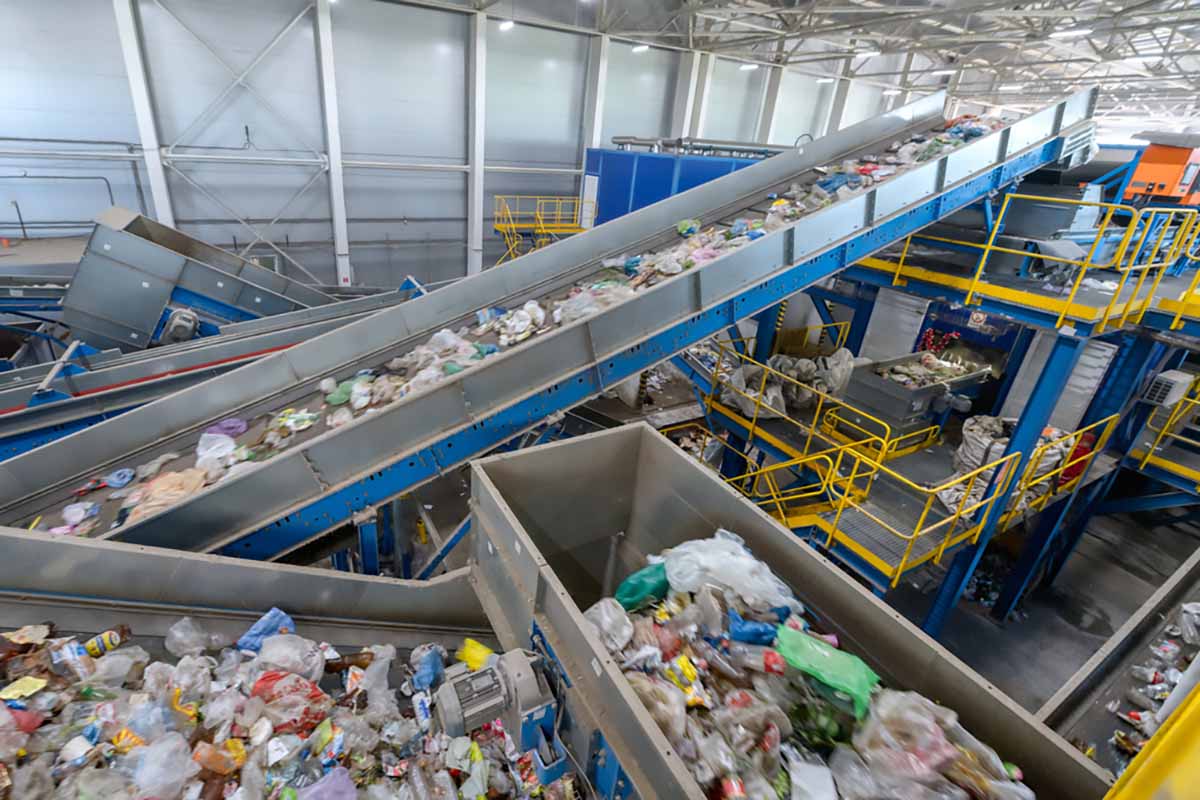
Five of the seven states that have passed EPR legislation for packaging have specifically set out, with varying goals, to increase their recycling access and collection rates. While well-intended, there is currently not enough material recovery facility (“MRF”) capacity for any increase in the collection of residential recycling, otherwise known as Single Stream Recycling (“SSR”). In fact, five of the six states covered in this article1 do not have enough MRF nameplate capacity to sort the SSR they are already collecting. 

MRF capacity is pre-determined prior to construction by the designers and developers of a new MRF (the “nameplate capacity”). When operated at the nameplate capacity a MRF performs well and successfully recovers materials for recycling. Unfortunately, most MRFs in the US today are operated above their nameplate capacity; with some MRFs sorting up to 150% of their nameplate capacity as witnessed by members of Goldfinch during recent MRF visits. This “over-operation” leads to high landfill rates from missed materials, and a decreased value of recovered products due to high levels of contamination. For a true understanding of MRF capacity in EPR states it is therefore important to focus on the nameplate capacity, and not the current operating throughput of a MRF. 

Based on extensive research conducted by Goldfinch, Oregon is the only EPR state reported on in this article that has enough MRF nameplate capacity to sort all of its collected SSR. In the table below the current MRF capacity deficit is computed, as well as the future MRF capacity deficit should each EPR state studied below succeed in collecting all of the SSR available in the state.

EPR STATECurrent MRF DeficitEPR Policy deficit
Colorado32%76%
Maine54%68%
Minnesota64%73%
Maryland62%73%
Oregon1%38%
Washington56%72%

The results are staggering. Estimates show that, outside of Oregon, Colorado is the only state with enough MRF capacity to sort over 50% of the SSR it collects today2. Important to note, however, is that should Colorado succeed in its EPR policy to collect up to 58% of paper and plastic recycling by 2035 it will only be able to sort 24% of that collected SSR given the state’s current MRF nameplate capacity. 

Based on Goldfinch’s experience developing MRFs we routinely see that a new greenfield SSR MRF requires approximately $400 of capital investment per annual ton of nameplate capacity and approximately $60 per ton in operating cost. Understanding (i) the limited demand and the lack of long-term contracts from packaging companies, (ii) relatively short-term (3-7 years) SSR feedstock contracts on offer from municipalities, (iii) the high cost of disposal for non-recyclable material placed in collection bins, and (iv) no substantive recycling outlet for post-consumer plastic films, financial support is needed from EPR programs to get MRFs built.

Financial analysis conducted by Goldfinch shows that, in order to attract investors, $84.003 per short ton of SSR will be needed to successfully develop, finance, build and operate a new MRF. However, this high rate per ton of SSR is not necessary for the lifetime of the MRF and can be reduced by up to 70% in year four of operation. 

Given the lacking MRF capacity presented above, the following annual EPR MRF subsidies, as calculated by Goldfinch, are needed to provide enough MRF nameplate capacity to sort the remaining current MRF capacity deficits and the forthcoming EPR policy deficits. 

EPR StateAnnual EPR Subsidy Years 1-3Annual EPR Subsidy Years 4-Forward
Colorado$                   166,319,974 $                         51,974,992 
Maine$                     38,732,025 $                           7,746,405 
Minnesota$                   186,777,220 $                         37,355,444 
Maryland$                   197,917,594 $                         39,583,518 
Oregon$                     70,491,655 $                         14,098,331 
Washington$                   169,275,026 $                         33,855,005 

As seen above, the financial needs of necessary waste management and recycling infrastructure are substantial. However, if approached in a deliberate, legislatively backed manner, the need for EPR subsidies can be dramatically reduced in the near term. Economic levers such as (i) EPR policy requiring fixed-price, long-term off-take contracts from packaging companies and (ii) long-term contracts from municipalities collecting SSR have the potential to eliminate the need for EPR subsidies entirely. 

Understanding the above, EPR policy must begin immediately implementing programs, and earmarking funds, to not only upgrade existing MRFs, but to build new MRFs. Currently, Maine is the only state that has addressed a plan to finance, build and operate new MRFs; with the caveat that this only occurs if there are remaining funds after expenditure on municipal reimbursements and administration. 

Remember, there is no recycling without MRFs, and there are no MRFs without stable financial markets supporting recycling efforts.


Footnotes:

  1. California is not covered in this study as CA has numerous MSW MRFs which drastically alter its recovery landscape, and the metrics are not in alignment with the other seven states that have one or zero MSW MRFs. ↩︎
  2. Please note: Colorado is only collecting 25% of packaging through SSR programs in the state today, and the numbers shown include the new Bruin Waste MRF in Grand Junction ↩︎
  3. Multiple, educated, assumptions are made when modeling this subsidy suggestion including the assumption that demand for the recovered products exists at current market pricing as reported by RecyclingMarkets.net. ↩︎

Tags: CollectionDataEPREquipmentMRFs
TweetShare
Katherine Doerr

Katherine Doerr

Katherine (Kat) Doerr is the founder of Goldfinch, and currently serves as the CEO of both Goldfinch Environmental and Goldfinch X. At Goldfinch Kat focuses on waste to value trading, business development consulting, and MRF origination. Kat brings over 13 years of commodity and asset development experience to her current leadership roles.

Related Stories

Coke Florida debuts PP cups, aims at recovery gaps

Coke Florida debuts PP cups, aims at recovery gaps

byKeith Loriaand1 others
November 24, 2026

The company is evaluating controlled recovery programs to help measure collection and other metrics.

Flexible film recycling presents promise, challenges

byPaul Lane
November 20, 2026

The US Flexible Film Initiative heard from players across the supply chain on what more needs to be done to...

The AI tsunami

The AI tsunami

byJim Puckett
November 19, 2026

AI data centers and the devices they make obsolete could generate 8.6 to 13.1 million metric tons of e-waste a...

Thrift’s seat at the textile EPR table

byStefanie Valentic
November 19, 2026

Under California’s textile EPR law, every Goodwill in the state counts as a producer, even when new goods are under...

How to draw brand owners to recycled plastic

Connecticut redemption rate slips 8 points in Q2

byStefanie Valentic
November 19, 2026

Connecticut's beverage container redemption rate fell nearly 8 percentage points in the second quarter of 2026, from 86.6% to 79%...

A call to action: End markets and EPR

Recycling policy moves toward implementation

byAntoinette Smith
November 19, 2026

US EPR programs for packaging are starting up amid legal and operational uncertainty, said APR's Kate Bailey during a recent...

Load More
Next Post
Battery fire risk isn’t going away. Insurance is responding

Vape ban awaits California governor’s signature

2026 Buyers’ Guide

Equipment, services and technology suppliers serving the recycling industry.

Browse the Guide

More Posts

Closeup of PP with a chasing arrows recycling symbol.

PureCycle, WM sign rare 3-year bales contract

November 16, 2026
Solarcycle, Korea Zinc merge in critical mineral venture

Solarcycle, Korea Zinc merge in critical mineral venture

November 18, 2026

E-scrap feedstock competition mixed amid investments

November 19, 2026

Thrift’s seat at the textile EPR table

November 19, 2026

Flexible film recycling presents promise, challenges

November 20, 2026
Open pit copper mine in Arizona.

Trump touts aggressive US critical mineral goals

November 19, 2026
Northeast recycled commodity values hit 5-year lows

Washington fines producers $246K for recycled content shortfalls

November 20, 2026
RecyClass hits 500 EU recyclability evals

EU PET import codes set to begin

November 18, 2026

Massachusetts town turns landfill into solar-plus-storage site

November 23, 2026
A call to action: End markets and EPR

Recycling policy moves toward implementation

November 19, 2026
Load More

About & Publications

About Us

Staff
Job Listings

Archive

Magazines

Work With Us

Advertise
Contact
Terms and Privacy

Newsletters

Get the latest recycling news and analysis delivered to your inbox every week. Stay ahead on industry trends, policy updates, and insights from programs, processors, and innovators.

Subscribe

Welcome Back!

Login to your account below

Forgotten Password?

Retrieve your password

Please enter your username or email address to reset your password.

Log In

Add New Playlist

No Result
View All Result
  • The Latest
  • Podcast
  • Analysis
  • Recycling
  • E-Scrap
  • Plastics
  • Policy Now
  • Conferences
    • E-Scrap Conference
    • Plastics Recycling Conference
    • Resource Recycling Conference
    • Textiles Recovery Summit
  • Magazines – Old
  • About Us
  • Advertise
  • Archive
  • Job Listings
  • Staff
Subscribe
This website uses cookies. By continuing to use this website you are giving consent to cookies being used. Visit our Privacy and Cookie Policy.