




Editor’s note: Policy for batteries and electronics is among the sessions at the 2026 E-Scrap Conference, Oct. 26-28 in New Orleans. Register today!
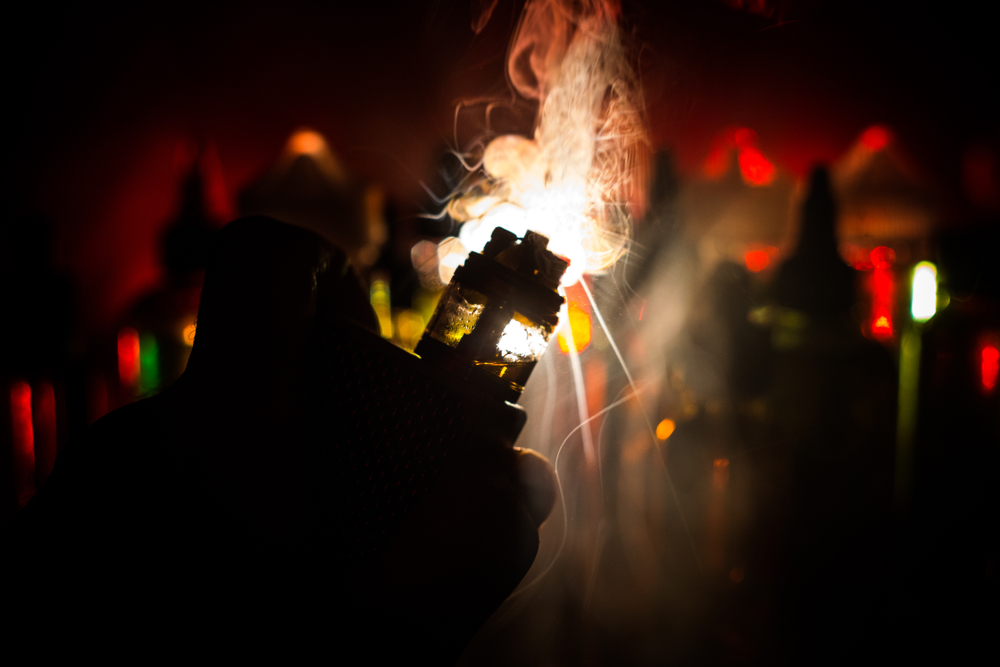
Disposable nicotine vapes are one signature away from being banned in California.
AB 762, authored by Assemblymember Jacqui Irwin (D-Thousand Oaks) and co-sponsored by Californians Against Waste (CAW), the California Product Stewardship Council, RethinkWaste and CALPIRG, passed both chambers (Senate 30-9 on Aug. 25, Assembly concurrence 47-16 on Aug. 26) and was enrolled Aug. 30.
If signed, the law would ban the manufacture and import of disposable, battery-embedded vapor devices starting Jan. 1, 2027, and ban retail sales starting Jan. 1, 2028. The bill requires vaporizer devices sold in California to be both refillable and rechargeable. This is a narrower standard than the one adopted in Europe, where some manufacturers added USB-C charging ports to disposable devices to sidestep similar rules.
The bill’s definition sets a specific bar for what counts as “refillable.” A device only qualifies if it’s designed with a replaceable single-use container, a container that can be refilled or a coil that isn’t meant to be swapped out by the user during normal use.
A device that adds a charging port but keeps a sealed, non-replaceable cartridge, the loophole manufacturers used in the UK, would still fail the refillable prong and remain banned.
A city, county or the state can enforce the ban with civil penalties of $500 for a first violation, $1,000 for a second and $2,000 for a third or subsequent violation. Violations are also a separate criminal infraction punishable by a fine of up to $500.
Americans throw away close to 500,000 disposable vapes a day, nearly six every second, according to CALPIRG, which co-sponsored the bill. Worldwide, the rate is closer to 10 to 15 devices every second.
The refillable-and-rechargeable requirement is a direct response to a loophole that has already undercut similar bans elsewhere. The United Kingdom banned single-use vapes in June 2024. Manufacturers responded by adding USB-C charging ports to otherwise-disposable devices, making them technically rechargeable while leaving the underlying product unchanged.
“So, single-use vapes ban didn’t work. The problem is still there,” Michael Duckworth, founder of vape recycling company Positive Energy Environmental Solutions said in an interview with Resource Recycling last year.
By requiring devices to be both refillable and rechargeable, AB 762 is written to close that specific gap.
Nick Lapis, director of advocacy at CAW, said in an interview with Resource Recycling: “Ours says it has to be refillable and rechargeable. If you’re not refillable or rechargeable, you’re disposable. So you can’t get around that.”
Lapis said the bill’s biggest opponent was Altria, the parent company of Philip Morris, which sells both disposable and refillable vape products.
Tony Hackett, a policy associate at CAW and a co-sponsor of the bill, said the legislation puts the burden back on manufacturers who have long left the fire risk of their products for others to manage.
“For years, vape companies have flooded California with lithium-ion batteries they never built a way to safely recycle, and taxpayers and workers at waste and recycling facilities have paid for it with fires. AB 762 finally puts that responsibility on the companies that designed these products to find reusable and refillable alternatives to this inherently wasteful product,” he said in a statement.
Beyond the fire hazard, co-sponsors also pointed to the sheer volume of waste the devices generate.
Jenn Engstrom, state director of CALPIRG, positioned the bill as a matter of basic waste-reduction.
“It is against common sense to pollute our land and water for an electronic product that is used just a few times, serves no beneficial purpose, and creates hazardous waste. We’re hopeful California will continue to be a leader in waste reduction by prohibiting this unnecessary and harmful product,” she said in a statement.
That fire risk is a daily operational problem for the facilities that handle California’s waste stream.
Joe La Mariana of the South Bayside Waste Management Authority, which includes RethinkWaste, a co-sponsor, described what happens when a disposable vape ends up in the wrong place.
“Disposable vapes contain lithium-ion batteries which can’t be removed. If struck or crushed, they cause catastrophic fires in garbage trucks and sorting facilities. These costs get passed on to ratepayers,” he said in a statement.
For Joanne Brasch, assistant director of the California Product Stewardship Council, the fix starts further upstream than cleanup or containment.
“The best way to protect our communities from problematic products, like single use vapes, is to prevent them from becoming a hard-to-manage waste stream,” she said.