



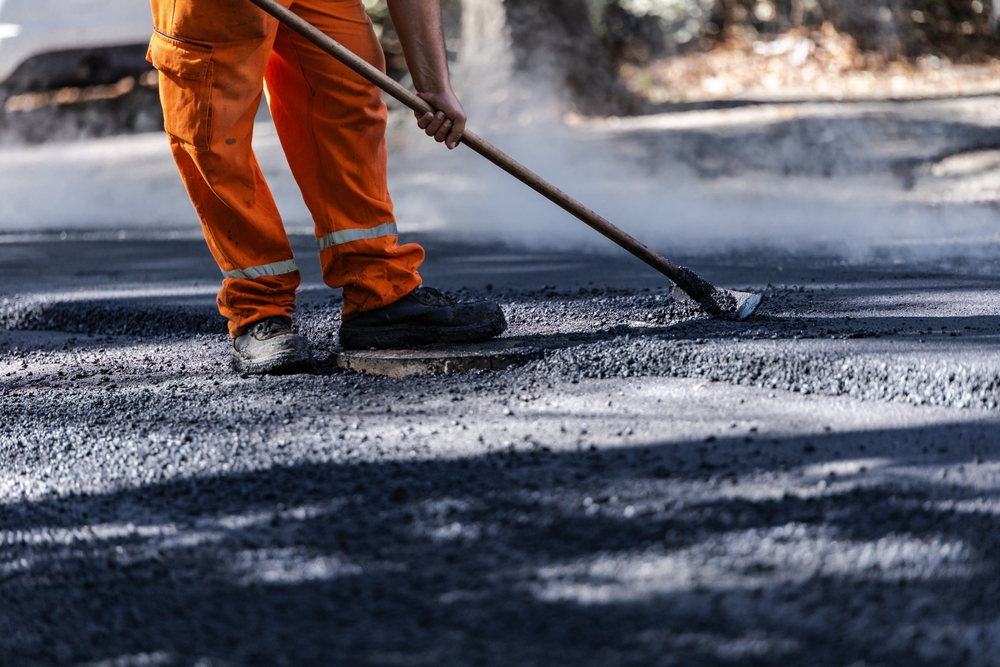
The Utah Department of Transportation has launched a significant pavement recycling project, using cold in-place recycling (CIR), in an initiative it says saves time, reduces costs and extends the road’s life.
CIR grinds up the existing roadway, mixes it with oils and asphalt binder, and places it back on the roadway as a renewed layer of pavement.
The project is taking place along 35 lane miles of US 50, between Scipio and Aurora in central Utah. UDOT estimates the project will save $5 million compared to traditional methods of repairing roads, and reduces the need to haul materials in and out of the work zone. This helps shorten construction time by about 40% and reduce GHG by almost 90%, the agency says.
The scale of cost savings also can help the agency extend the miles covered by a project.
“This CIR process helps us decrease the amount of maintenance, address our roads that need a little love, and stretch our budget to the best of our ability,” UDOT Region Four Engineer Chavis Jensen said. “It also helps to reduce the amount of cracking while improving our future sustainability efforts here in Utah.”
This method is ideal for pavement with cracks and tire depressions, and on lower-volume roads where the one-way alternating traffic required during the project won’t create significant delays, the agency said.
“We’re very specific about where we look to use this process,” Jensen said. “It’s producing equal quality of roadways as any other process that we do here in Utah. So that’s great, when we can use less money to produce just as good of quality of roads.”
UDOT said it will continue to evaluate opportunities to use CIR, including a project to begin next summer on I-70 in Salina Canyon.