


Resource Recycling
  • The Latest
  • Analysis
    • All
    • Certification Scorecard
    • Industry Announcements
    • Opinion
    Researchers work on fluorine-free battery binder

    Researchers work on fluorine-free battery binder

    CommanderAI launches searchable hauler database

    Blancco brings agentic AI to data erasure, ITAD operations

    APR adds PCR content verification to cert program

    Certification scorecard — week of Oct. 12

    Ingram Micro looks to digital platform and AI

    APR training clicks recycling ‘pieces’ into place

    APR training clicks recycling ‘pieces’ into place

    Southeast grows into US’ critical mineral hub

  • Conferences
    • Resource Recycling Conference
    • Plastics Recycling Conference
    • E-Scrap: The Longevity Conference
    • Textiles Recovery Summit
  • Publications
    • E-Scrap News
    • Plastics Recycling Update
    • Policy Now
    • Resource Recycling
    • Other Topics
      • All Topics
      • Brand Owners
      • Critical Minerals
      • Glass
      • Grant Watch / RFPs
      • Markets
      • Organics
      • Packaging
      • Research
      • Technology
      • Textiles
Subscribe
No Result
View All Result
Resource Recycling
  • The Latest
  • Analysis
    • All
    • Certification Scorecard
    • Industry Announcements
    • Opinion
    Researchers work on fluorine-free battery binder

    Researchers work on fluorine-free battery binder

    CommanderAI launches searchable hauler database

    Blancco brings agentic AI to data erasure, ITAD operations

    APR adds PCR content verification to cert program

    Certification scorecard — week of Oct. 12

    Ingram Micro looks to digital platform and AI

    APR training clicks recycling ‘pieces’ into place

    APR training clicks recycling ‘pieces’ into place

    Southeast grows into US’ critical mineral hub

  • Conferences
    • Resource Recycling Conference
    • Plastics Recycling Conference
    • E-Scrap: The Longevity Conference
    • Textiles Recovery Summit
  • Publications
    • E-Scrap News
    • Plastics Recycling Update
    • Policy Now
    • Resource Recycling
    • Other Topics
      • All Topics
      • Brand Owners
      • Critical Minerals
      • Glass
      • Grant Watch / RFPs
      • Markets
      • Organics
      • Packaging
      • Research
      • Technology
      • Textiles
Subscribe
No Result
View All Result
Resource Recycling
No Result
View All Result
Home Resource Recycling Magazine

After the MRF: How batteries can come back to life

byRaghav Mecheri
October 18, 2023
in Resource Recycling Magazine

This article appeared in the September 2023 issue of Resource Recycling. Subscribe today for access to all print content.
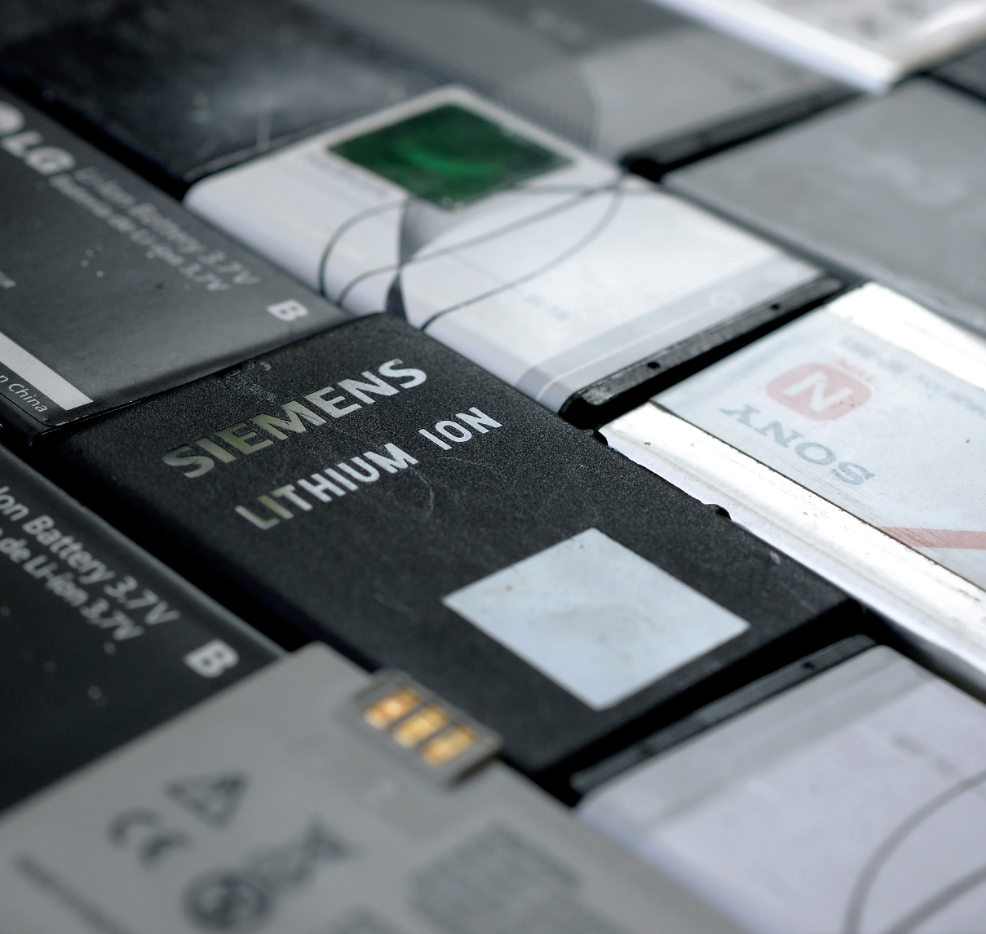
As record-high numbers of batteries enter the solid waste stream, they have increasingly become associated with facility fires, safety issues and danger to workers. Last year saw more than 2,000 fire incidents in the recycled materials industry in the U.S. and Canada alone. With global demand for lithium-ion batteries projected to increase 500% by 2030, our industry has moved rapidly to head off the growing crisis.

Battery retrieval

Because detecting and removing batteries has been impractical given their size and the burden depth of incoming material, we have until now dealt with battery fires by using flame-suppression systems. New AI-powered systems such as BinIt Hazard are changing that by using automated monitoring of feed lines to enable the preventative removal of batteries and other hazards from our waste streams. BinIt uses X-ray imaging to identify common battery types as well as other dangers such as gas tanks with almost 100% consistency.
The transition from a reactive approach to the new proactive, extraction-based model offers a new opportunity and presents the industry with a new question: “What do we do with all the batteries we’re removing from waste streams?” For at least two reasons, the answer lies in recycling. First, batteries are difficult to dispose of safely. And second, we need the raw materials.

Lithium already plays a crucial role in the battle against climate change thanks to its capacity for powering electric vehicles, but less than 5% of all batteries are ever recycled. The rapidly emerging battery recycling industry aims to move the needle on that statistic. Its first challenge is procuring feedstock in large enough volumes to generate short-term scale as we work toward establishing longer-term battery pipelines.

Where are all the batteries?

Most batteries end up in everyday household waste streams. That means consumer education is a top priority, and the good news is that Congress has allocated $10 million toward battery recycling best practices and $15 million for battery labeling guidelines, both to be enacted through the EPA.

In the meantime, a parallel course of action will focus on better detection and removal. Early field data from BinIt Hazard suggests that between 15 and 30 lithium-ion batteries are passing undetected through each recycling facility on a daily basis. Common lithium-ion batteries can weigh anywhere from 10 to 50 pounds, but conservatively, we estimate that at least 150,000 pounds of lithium-ion batteries are moving through North America’s 1,000 or so materials recycling facilities every 24 hours. Even at the modest buyback rate of 25 cents per pound, that’s a staggering $15 million revenue opportunity.

The EPA is currently in the second year of the Solid Waste Infrastructure for Recycling grant program, which allocates $55 million annually to improve recycling processes across the country. Our low-end estimate for revenue from recaptured lithium is equivalent to more than a quarter (27%) of that annual grant from the EPA – and unlike government grant funding, battery retrieval revenue will increase exponentially as EV adoption increases.

What next?

Right now, we can reliably identify and remove batteries from waste streams, and we have a rough sense of the size of the potential market for recovered materials. The next steps will bring new challenges, from understanding the demand for this newly precious commodity to devising a method to safely pack and transport batteries from our facilities to the appropriate recyclers.
One thing is certain, however. As materials like lithium, cobalt, and nickel become increasingly important to global supply chains, including them in the circular economy is becoming exponentially more valuable in both ecological and economic terms. The White House has declared that securing a made-in-America supply chain for critical minerals is a matter of national security. And while community education will remain a vital priority, it is essential that we also have reliable workflows to handle the 68% of material that is not correctly recycled.

Today, building technology that empowers recyclers to detect and remove materials such as lithium-ion batteries is predominantly a safety issue. Over the coming decade, however, it may well become a foundational responsibility for our industry – one demanding that we rise to the occasion with innovative new technologies, strong industrial processes and bold visions for the future.

Raghav Mecheri is the CEO of BinIt, a company that builds AI-powered recycling infrastructure. He can be contacted at raghav@binit.ai.

This article appeared in the September 2023 issue of Resource Recycling. Subscribe today for access to all print content.

TweetShare
Raghav Mecheri

Raghav Mecheri

Related Posts

Brokers of Shame: 10,000+ Containers of U.S. E-Waste to Asia

Brokers of Shame: 10,000+ Containers of U.S. E-Waste to Asia

byUriah Kiser, Resource Recycling Podcast
October 16, 2026

A certified recycler stamp is not proof of ethical downstream management. That’s the core point Jim Puckett, founder and chief...

Researchers work on fluorine-free battery binder

Researchers work on fluorine-free battery binder

byPaul Lane
October 16, 2026

Study authors found their alternative binder performed like traditional options with lower cost, environmental impact.

Inside the 2026 E-Scrap Awards in New Orleans

Inside the 2026 E-Scrap Awards in New Orleans

byUriah Kiser, Resource Recycling Podcast
October 15, 2026

Uriah Kiser sits down with Matthew Young of Electronics Value Recovery and Emily Chapman of Resource Recycling for a full...

Republic breaks ground on St. Louis MRF

byStefanie Valentic
October 15, 2026

Republic Services’ new 45-ton-per-hour Bridgeton MRF is slated to open in 2028, as St. Louis is still deciding how its...

Business thrives in giving industrial products new life

Business thrives in giving industrial products new life

byPaul Lane
October 15, 2026

Repurposed Materials set for more expansion as it works to help businesses find reuse for unneeded products and parts.

CommanderAI launches searchable hauler database

Blancco brings agentic AI to data erasure, ITAD operations

byDavid Daoud
October 15, 2026

Blancco Blue introduces AI-assisted workflow management and integration, extending the company's software capabilities beyond data sanitization and diagnostics.

Load More
Next Post

Data Corner: US fiber, plastic exports decrease

2026 Buyers’ Guide

Equipment, services and technology suppliers serving the recycling industry.

Browse the Guide

More Posts

Lawsuits hover days after SB 54 approval

CAA trims first-year SB 54 budget in final plan

October 13, 2026
Fireside Chat at PRC features CAA chief

Fielkow to step down as CAA CEO

October 14, 2026
Northeast recycled commodity values hit 5-year lows

HDPE, PP prices climb for October

October 14, 2026

Southeast grows into US’ critical mineral hub

October 12, 2026
Removing an eBike battery pack.

EPR’s next fight is over embedded batteries

October 13, 2026

Republic breaks ground on St. Louis MRF

October 15, 2026

Ingram Micro looks to digital platform and AI

October 14, 2026

MRF battery fires burn ‘really fast’ and ‘really hot’

March 5, 2024
Study explores  reusable containers in California DRS

Inside the Circle: The bottle bill’s unfinished business

October 13, 2026
Panelists discuss construction waste reuse at the NERC conference in New Jersey October 7, 2026.

Ramping up reuse of construction materials

October 8, 2026
Load More

About & Publications

About Us

Staff

Archive

Magazines

Work With Us

Advertise
Jobs
Contact
Terms and Privacy

Newsletters

Get the latest recycling news and analysis delivered to your inbox every week. Stay ahead on industry trends, policy updates, and insights from programs, processors, and innovators.

Subscribe

Welcome Back!

Login to your account below

Forgotten Password?

Retrieve your password

Please enter your username or email address to reset your password.

Log In

Add New Playlist

No Result
View All Result
  • The Latest
  • Analysis
  • Recycling
  • E-Scrap
  • Plastics
  • Policy Now
  • Conferences
    • E-Scrap Conference
    • Plastics Recycling Conference
    • Resource Recycling Conference
    • Textiles Recovery Summit
  • Magazines
  • About Us
  • Advertise
  • Archive
  • Jobs
  • Staff
Subscribe
This website uses cookies. By continuing to use this website you are giving consent to cookies being used. Visit our Privacy and Cookie Policy.