





The EPA estimates up to 8.5 million tons of office furniture end up in landfills annually in the United States. This represents a stream of waste that is generally out of the public’s purview, and it’s one that is growing.
As the pandemic continues, companies are closing, downsizing or going virtual, rendering a lot of the furniture previously in use in offices unnecessary. The environmental cost of tossing this material is a great one, as is the cost on the actual bottom line: Those 8.5 million tons of furniture discards equate to over $450 million spent each year on landfill tipping fees, based on average landfill costs in the U.S. last year.
In the last 10 years, Green Standards has diverted 75,000 tons of office furniture and equipment from landfills, leading to the donation of $32 million worth of surplus assets to over 5,500 nonprofit groups.
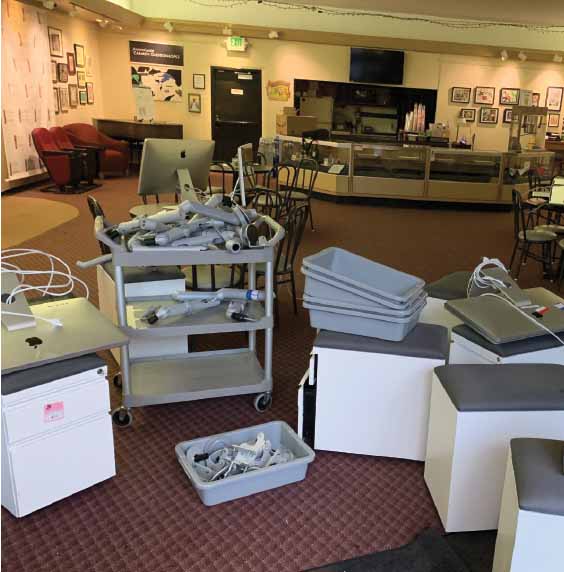
Within the Green Standards structure, nonprofit entities are provided lightly used furniture for reuse. Other carefully selected pieces that have retained value are resold, with the remaining furniture recycled. Due to the nature of office furniture, fixtures and assets, that is no simple task. But it is becoming increasingly clear that diversion of this material is possible.
Out of the cubicle, into complicated markets
A functioning office cubicle will lead to between 300 and 700 pounds of waste, the majority of which is ferrous metal, wood and plastic. The typical office chair alone contains dozens of different materials and chemicals on its own. Each material presents its own market, and its own challenges when recycling.
The demand for recycled metal is increasing, with the global recycled metals market projected to reach around $130 billion by 2025, according to a 2020 report from Adroit Market Research. While demand is there, fluctuating costs around metals production and transportation can cause challenges for the metals recycling infrastructure.
The recycled wood market is less susceptible to those outside forces, but dealing with the wood itself can be complicated. Office furniture wood is sometimes treated with varnishes, paints and adhesives that may make it impossible to recycle. For instance, material such as medium density fiberboard contains toxic substances, including formaldehyde, so it’s difficult to safely recycle.
Assuming that wood office furniture is able to be efficiently recovered, it will go through many stages of processing. First it’s weighed and inspected for quality control. Then the material will be sorted by grade. These grades can vary depending on the facility, but they will always differentiate between “clean” and “dirty.” Wood office furniture will most of the time fall into the latter category, unless the piece is made purely from untreated wood.
From there, the furniture will go through a primary shredding process, which will be followed by the separation of metals and other recyclable materials. Finally, it will undergo finer shredding and granulating to a particular fiber requirement, creating material that is hopefully ready for the market.
North America’s wood recycling industry infrastructure lags behind that of Europe. The two main factors are the abundance of low-cost virgin timber that’s available here and the fact that landfills have no qualms accepting wood. However, corporate “zero waste” mandates and regional sustainability policies do indicate some positive momentum around increased wood recycling.
Still, key questions remain: How does office furniture diversion work in the real world? And if an organization moves forward with a sustainable decommission, what are the tangible results?
A decommission case study
When Expedia Group, a world leader in the travel industry, decided to move its headquarters in 2019 from a network of offices in Bellevue, Wash. and Seattle to a centralized location in Seattle’s Interbay neighborhood, the company wanted to do so while incurring as little impact on the environment as possible.
To help accomplish that goal, Expedia Group looked to Green Standards to help manage the removal and repurposing of its surplus office assets in the U.S. Recycling accounted for over 50% of the sustainable decommission work.
Green Standards implemented specialized recycling to generate return on investment for Expedia Group, processing a variety of items, including chairs, desks, tables and file storage, bringing materials back into the manufacturing process.
To efficiently recycle furniture items that were often made up of various materials, Green Standards worked with strategic partners in the region to determine the best end destination for each product.
For example, we worked with local companies like The United Group to help transform wood from waste to energy and with Seattle Iron and Metals to process furnishings with high metal content into its raw materials. We then used the monetary returns from the recycling of metal to offset project costs such as labor and trucking.
Beyond recycling, Expedia Group set aside gently used items for donation to several nonprofit beneficiaries. Green Standards took responsibility for the entire donation process, which included onboarding and managing commercial movers, engaging eligible local nonprofit groups and coordinating and documenting asset delivery.

From the Seattle headquarters move, more than 80 local nonprofit organizations benefited from donations of sorely needed office furniture and equipment. Decommissions across Europe have also resulted in numerous organizations receiving Expedia Group’s used furniture. Through the project, 99 nonprofit organizations spanning eight countries received in-kind donations.
As a result of our partnership with Expedia Group, a total of 908 tons of furniture worldwide were diverted from landfill, eliminating 2,564 tons of carbon-equivalent emissions, according to calculations using Green Standards’ internal reporting tool. This removal of emissions is equal to reducing gasoline consumption by 287,137 gallons.
2021 and beyond
In Toronto, where Green Standards is based, the city government has begun the ModernTO program, which will see city office leases dwindle from 55 to 15 as employees continue to work remotely for the foreseeable future.
Office closures and consolidations like this throughout North America, in both the public and private sectors, should be expected to continue, and 2021 is the first year we’re seeing this accelerated trend take hold.
Now is the time for these organizations to devise a plan on what to do with furniture that will no longer be in use. There’s not one solution that fits everyone, but an approach that champions sustainability while helping the bottom line, the environment and nonprofit groups is a great place to start.
Trevor Langdon is president of Green Standards Ltd. He has worked on several of the largest corporate decommission initiatives in recent history – often involving spaces that are millions of square feet for Fortune 500 clients. He can be contacted at info@greenstandardsltd.com
This article appeared in the April 2021 issue of Resource Recycling. Subscribe today for access to all print content.