



Resource Recycling
  • The Latest
  • Analysis
    • All
    • Certification Scorecard
    • Industry Announcements
    • Opinion
    HP receives ocean plastics certification

    HP Inc. earnings point to memory inflation challenge

    Certification scorecard for the week of Feb. 23, 2026

    Umicore highlights strength in recycling, catalysis

    Apto, Tusaar partner on rare earths recovery

    Apto, Tusaar partner on rare earths recovery

    Certification scorecard for the week of Feb. 16, 2026

    Sims Lifecycle leverages hyperscale decommissioning

    Sims Lifecycle leverages hyperscale decommissioning

    The electronics recycling industry is undergoing a transformation from labor-intensive manual operations to highly automated, AI-driven facilities that use advanced robotics, cleaner chemistry and digital tracking systems to extract critical materials.

    The cyber-physical MRF: AI and robotics reshape e-waste recovery

    Certification scorecard for the week of Feb. 9, 2026

    Meta-Corning deal signals IT hardware retirement wave

    Meta-Corning deal signals IT hardware retirement wave

  • Conferences
  • Publications

    Other Topics

    Textiles
    Organics
    Packaging
    Glass
    Brand Owners

    Metals
    Technology
    Research
    Markets
    Grant Watch

    All Topics

Subscribe
No Result
View All Result
Resource Recycling
  • The Latest
  • Analysis
    • All
    • Certification Scorecard
    • Industry Announcements
    • Opinion
    HP receives ocean plastics certification

    HP Inc. earnings point to memory inflation challenge

    Certification scorecard for the week of Feb. 23, 2026

    Umicore highlights strength in recycling, catalysis

    Apto, Tusaar partner on rare earths recovery

    Apto, Tusaar partner on rare earths recovery

    Certification scorecard for the week of Feb. 16, 2026

    Sims Lifecycle leverages hyperscale decommissioning

    Sims Lifecycle leverages hyperscale decommissioning

    The electronics recycling industry is undergoing a transformation from labor-intensive manual operations to highly automated, AI-driven facilities that use advanced robotics, cleaner chemistry and digital tracking systems to extract critical materials.

    The cyber-physical MRF: AI and robotics reshape e-waste recovery

    Certification scorecard for the week of Feb. 9, 2026

    Meta-Corning deal signals IT hardware retirement wave

    Meta-Corning deal signals IT hardware retirement wave

  • Conferences
  • Publications

    Other Topics

    Textiles
    Organics
    Packaging
    Glass
    Brand Owners

    Metals
    Technology
    Research
    Markets
    Grant Watch

    All Topics

Subscribe
No Result
View All Result
Resource Recycling
No Result
View All Result
Home Recycling

Q&A: One firm’s vision for growth in recycled glass market

byJared Paben
May 3, 2016
in Recycling

At a time when some communities are retreating on glass recycling, Momentum Recycling is doubling down on it.

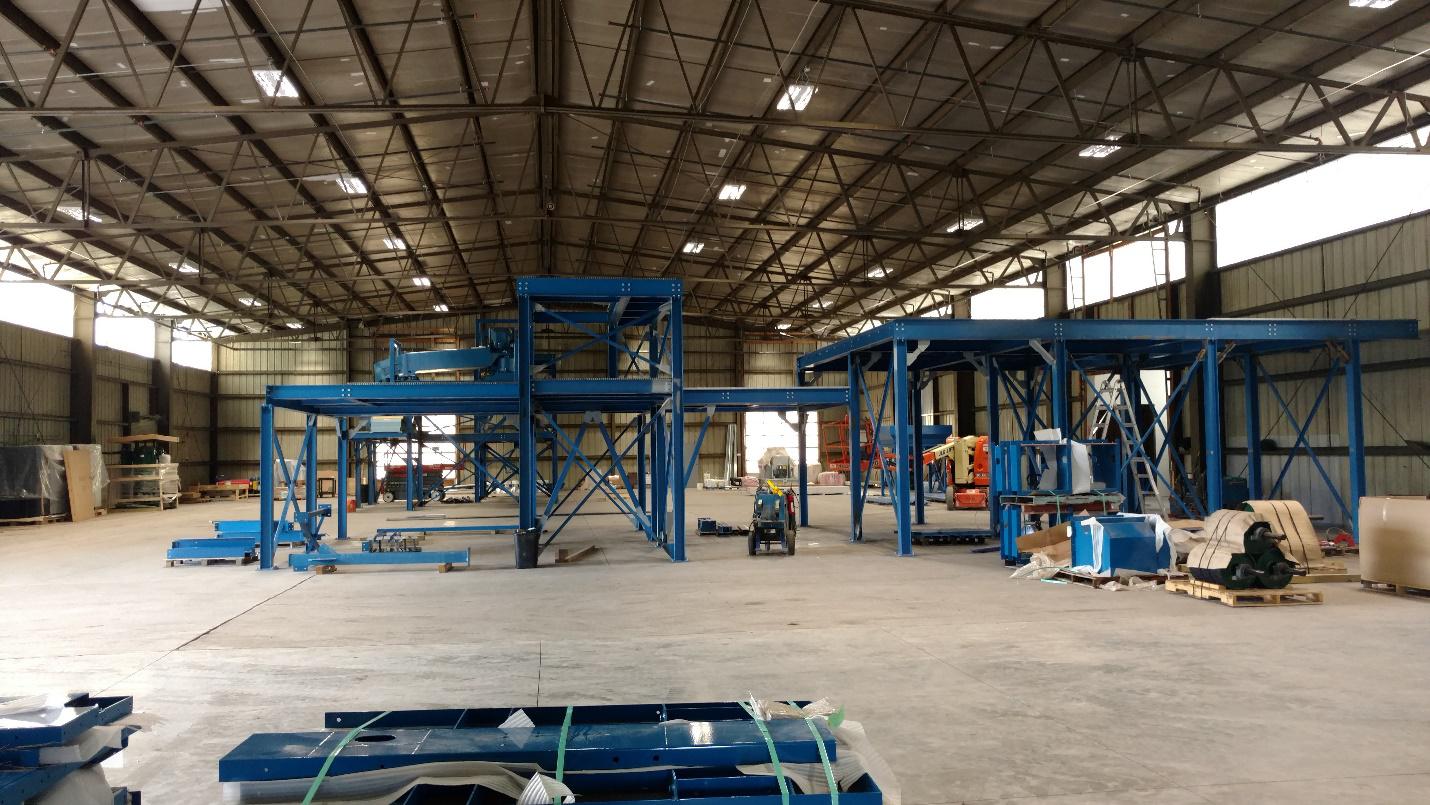
The Salt Lake City-based secondary glass processor is currently building an $11 million glass cleaning and sorting plant near Denver (see photos to the right and below), enabling bottle-to-bottle recycling there. In Utah, the company already collects and processes glass for use in insulation and other products, sending no glass to landfill.

“The main thing we want people to understand in Colorado is this opportunity to have a true bottle-to-bottle recycling closed-loop system in the state is a real advance forward,” John Lair, president and CEO of Momentum Recycling, told Resource Recycling. “We want people to consider that as they’re purchasing their products.”

Momentum Recycling’s Denver-area facility is scheduled to start accepting glass in August, undergo commissioning and testing in September and begin full operations in October. Resource Recycling spoke with Lair about the facility, high-tech equipment and end markets.

Resource Recycling: What will the Colorado facility be capable of handling in terms of tonnages and material? And what are the concerns with contamination?

Lair: It’s designed specifically to handle the MRF glass coming out of the Front Range MRFs [Colorado’s Front Range includes Denver, Boulder and a number of other municipalities]. Our testing has shown that that MRF glass contamination should be 20 percent non-glass material or less. So the facility is designed to handle that level of contamination. It’s designed with the capacity of around 80,000 tons per year of incoming feedstock.

Question: Which MRFs will it be coming from?

Answer: Starting off, we’ll be serving the Waste Management MRF on Franklin Street in Denver and also the Alpine Waste MRF in the same neighborhood in Denver.

Question: What end users will receive the cullet produced?

Answer: The primary end user for our material will be the Rocky Mountain Bottle Co., which is a joint venture between MillerCoors and Owens-Illinois. The secondary end user will be the Owens-Illinois bottling and manufacturing plant up in Windsor, Colo., near Fort Collins.

Question: So this will all be going to bottles, rather than insulation?

Answer: That’s right. Denver is unique in that there are two bottle manufacturing plants in the same metro area. I don’t think that exists anywhere else in the U.S. It’s a really great opportunity. Obviously the best thing that can happen to a glass bottle is to turn it back into a glass bottle.

Grinder lowered into place, Momentum RecyclingQuestion: How can spending such a large sum – $11 million – pencil out when you’re working with such a low-value commodity?

Answer: I think that’s one of the misperceptions of glass. It’s been perceived as this problem material in the stream, mostly because of what it does to the other items in the MRF. … However, once you have the processing plant like ours and you’re able to create true furnace-ready cullet, it has quite a bit of value. And that value is actually quite stable over the long run, unlike the other commodities in the MRF. Pricing for glass is generally quite flat year over year, with slight annual increases … in large part because it’s so heavy and it’s expensive to transport so the markets have to be local. And because of that, there’s not a lot of variation.

Question: Is there any worry that communities you work with could follow the lead of Houston and stop accepting the material?

Answer: Absolutely, it’s in the back of our minds. And we’ve communicated closely with Waste Management about that. We’ve been assured by Waste Management that they don’t have such plans for Denver. It’s not solely up to Waste Management. They have contracts in place with big players like the City and County of Denver, who would have to agree to such changes. They don’t appear to be eager to try to put the genie back in the bottle, so to speak.

Question: Will you charge to accept material or will you take it for free?

Answer: There will never be a charge for the glass. In some cases, like very clean source-separated glass, we could even pay. In fact, I can say the MRF operators will be paid for the glass that they bring to us. Back to this question about whether Waste Management will eliminate glass in Denver as they’ve done in other places, we’re really changing the economics for them in Denver. We’re taking what is now currently a loss. They have to process it out of the MRF; they have to transport it. Now, in Denver, they happen to own the landfill, so they don’t pay a tipping fee or, at least if they do, it’s the left pocket feeding the right pocket. It costs money to transport it. It costs money to process it. Well, we’re going to take that negative and flip it into a positive by purchasing that glass, and we pay to transport it from their facility to ours.

Question: On the technical front, what are some of the key pieces of equipment that the facility will use?

Answer: At the heart of the plant is an array of optical sorters provided by Binder+Co, AG. They’re Binder’s Clarity line of sorters, and we will have about a dozen of them in this plant. They’ll be sorting out contamination, like ceramics, rocks, stones, paper and other things. Plus, they’ll be sorting the glass by color. So that’s kind of the technological heart of the plant. In addition to that, we’ll have some unique pieces of technology provided by Binder, some de-labeling machines as well as more commonly seen items in glass recycling plants: fluidizing bed dryers, very sophisticated dust collection systems and cyclones.

Question: Are there any lessons learned from Salt Lake City that you plan to apply to Denver?

Answer: The main thing out of Salt Lake City that we’ll be applying to Denver is how to beneficially use the material produced out of the plant that cannot go back into bottle manufacturing. Bottle manufacturers’ specification is such that they don’t want fine particles, and about 15 percent of the material of the output of our plant will be particles that are too fine to be turned back into bottles. That’s quite a lot of tonnage. In Salt Lake, we’ve had to solve these problems and address these issues for many years, and so we’ve already worked with a range of partners to develop other markets. So markets like industrial abrasives, water filter media, different coatings, it can be used in concrete and cement and various other applications.

Tags: CollectionGlassMarketsQ&ASortationTechnology
TweetShare
Jared Paben

Jared Paben

Related Posts

RCI, CurbWaste partner on waste management software 

RCI, CurbWaste partner on waste management software 

byPaul Lane
February 24, 2026

CurbWaste now provides the operational management and data platform for the Recycling Certification Institute, which works to improve transparency in...

Polyolefins producer provides PCR updates

Economic downturn forces LyondellBasell to trim sustainability goals

byPaul Lane
February 23, 2026

The company has cut its 2030 sustainability goals, looking to balance ambitious environmental targets with near-term achievability.

The electronics recycling industry is undergoing a transformation from labor-intensive manual operations to highly automated, AI-driven facilities that use advanced robotics, cleaner chemistry and digital tracking systems to extract critical materials.

The cyber-physical MRF: AI and robotics reshape e-waste recovery

byDavid Daoud
February 12, 2026

The electronics recycling industry is entering a new phase of technological acceleration. Advances in artificial intelligence, robotics, advanced chemistry, and...

NERC: Blended average prices fell 40% in third quarter

HDPE, PP bales rise as paper fiber and cans stabilize

byRecyclingMarkets.net Staff
February 12, 2026

National average prices of post-consumer material bales were flat to higher on the month.

Terex beats ESG integration targets as REV group merger closes

byStefanie Valentic
February 11, 2026

Terex exceeded $25 million in ESG integration synergy targets and completed its REV Group merger, expanding its specialty equipment platform...

Packaging Corp. to buy Greif containerboard segment

Export trends offset containerboard production decline

byStefanie Valentic
February 6, 2026

AF&PA reported a 4% decline in containerboard production for 2025, while packaging paper shipments rose 2% in December and boxboard...

Load More
Next Post

Q&A: One firm's vision for growth in recycled glass market

More Posts

PET bales stacked for recycling.

Evergreen closing RPET plants in Ohio, New York

February 24, 2026

Rising containerboard demand comes as OCC prices taper

November 5, 2024
WM opens new $90m MRF in south Florida 

WM opens new $90m MRF in south Florida 

February 23, 2026

Paper giants foresee continuing rise in OCC prices

August 28, 2023

North American paper mills discuss demand, OCC pricing

May 15, 2023
Battery fire risk isn’t going away. Insurance is responding

Battery fire risk isn’t going away. Insurance is responding

February 24, 2026
How will 2026 unfold for plastics recycling?

How will 2026 unfold for plastics recycling?

February 19, 2026
Chinese processing group details goals for US visit

AMP lays out vision of next-generation, AI-driven MRFs

July 24, 2024
Recycled plastic lumber firms report diverging results

Trex CEO to retire after 23-year run

February 25, 2026
Minnesota publishes prelim EPR assessment

Minnesota publishes prelim EPR assessment

February 20, 2026
Load More

About & Publications

About Us

Staff

Archive

Magazine

Work With Us

Advertise
Jobs
Contact
Terms and Privacy

Newsletter

Get the latest recycling news and analysis delivered to your inbox every week. Stay ahead on industry trends, policy updates, and insights from programs, processors, and innovators.

Subscribe

Welcome Back!

Login to your account below

Forgotten Password?

Retrieve your password

Please enter your username or email address to reset your password.

Log In

Add New Playlist

No Result
View All Result
  • The Latest
  • Analysis
  • Recycling
  • E-Scrap
  • Plastics
  • Policy Now
  • Conferences
    • E-Scrap Conference
    • Plastics Recycling Conference
    • Resource Recycling Conference
    • Textiles Recovery Summit
  • Magazine
  • About Us
  • Advertise
  • Archive
  • Jobs
  • Staff
Subscribe
This website uses cookies. By continuing to use this website you are giving consent to cookies being used. Visit our Privacy and Cookie Policy.