

War-related price surges in the spring brought impressive Q2 profits for virgin resin producers, and took post-consumer polyolefins bales along for the ride. With seasonal demand subsiding and some stakeholders viewing April buying as an overreaction, prices have eased but mostly remain higher on the year. Read on to learn more about pricing drivers for some of the most common types of plastics bales.
PET
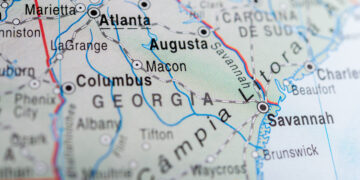
In July, curbside PET bale pricing in the crucial US South and Southeast regions peaked at 7-8 cents/lb, but eased to an average of 6-7 cents/lb in August, according to RecyclingMarkets.Net data. Still, this was well above Midwest bales, which averaged below 3 cents/lb in August.
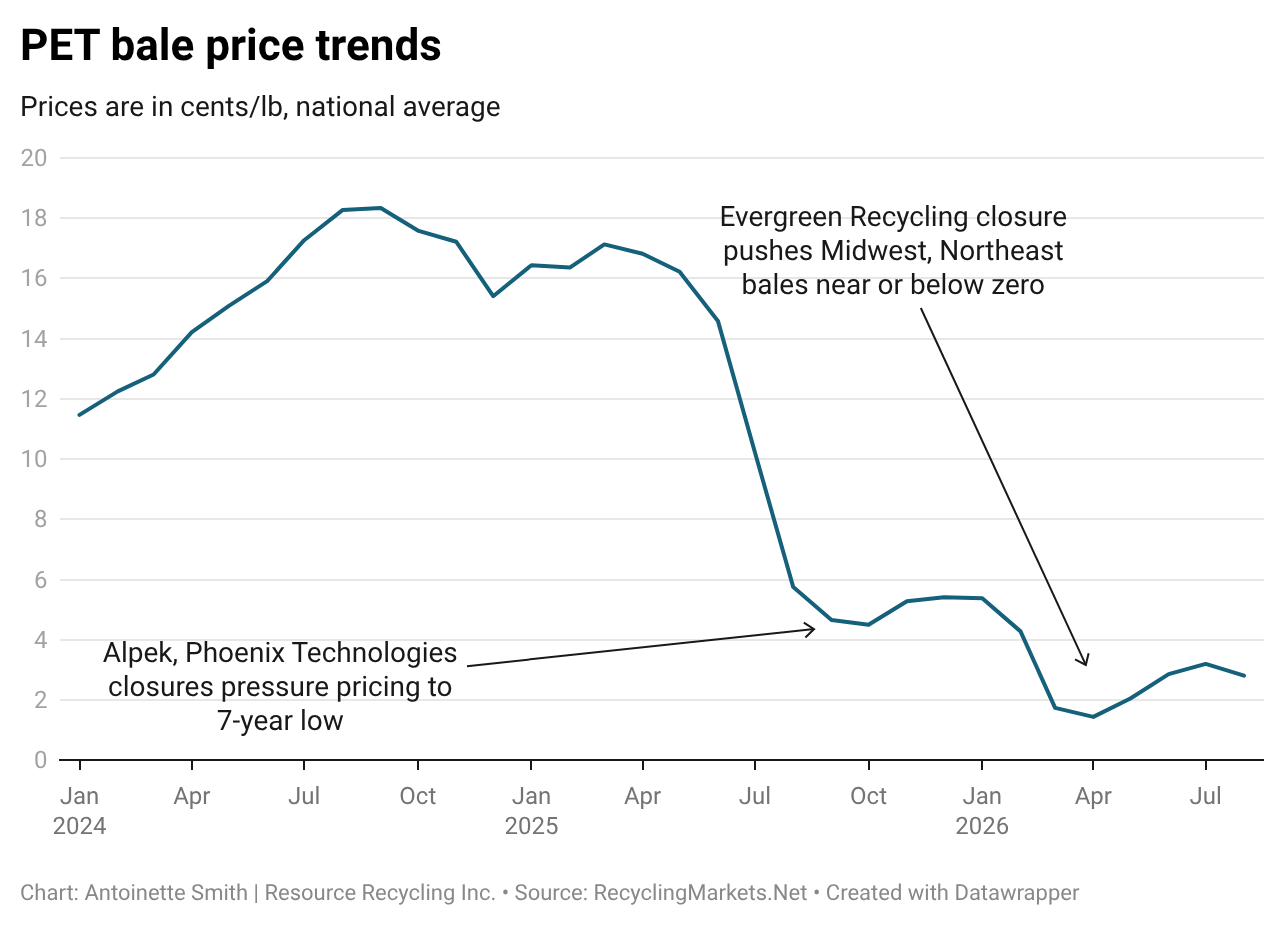
The Upper Midwest is far from the biggest converters, and persistently high diesel prices can limit purchasing to local suppliers, whose higher bale prices may be offset by lower freight costs.
In addition to distance from buyers, Northeast recycling systems were particularly hard hit by recent plant closures, plus the region has a concentration of deposit return systems that provide steady supply.
In California, curbside PET bales have hovered at 2-3 cents/lb all summer.
HDPE
After a steep rise in the spring, natural bales reached a two-year low in August, following a roller coaster in contract pricing for virgin resin over the summer. Color bales saw a less pronounced uptick to track virgin pricing, but have since eased amid seasonality and softening virgin resin values. Even so, they remain more than double year-ago levels, which had hit record lows.
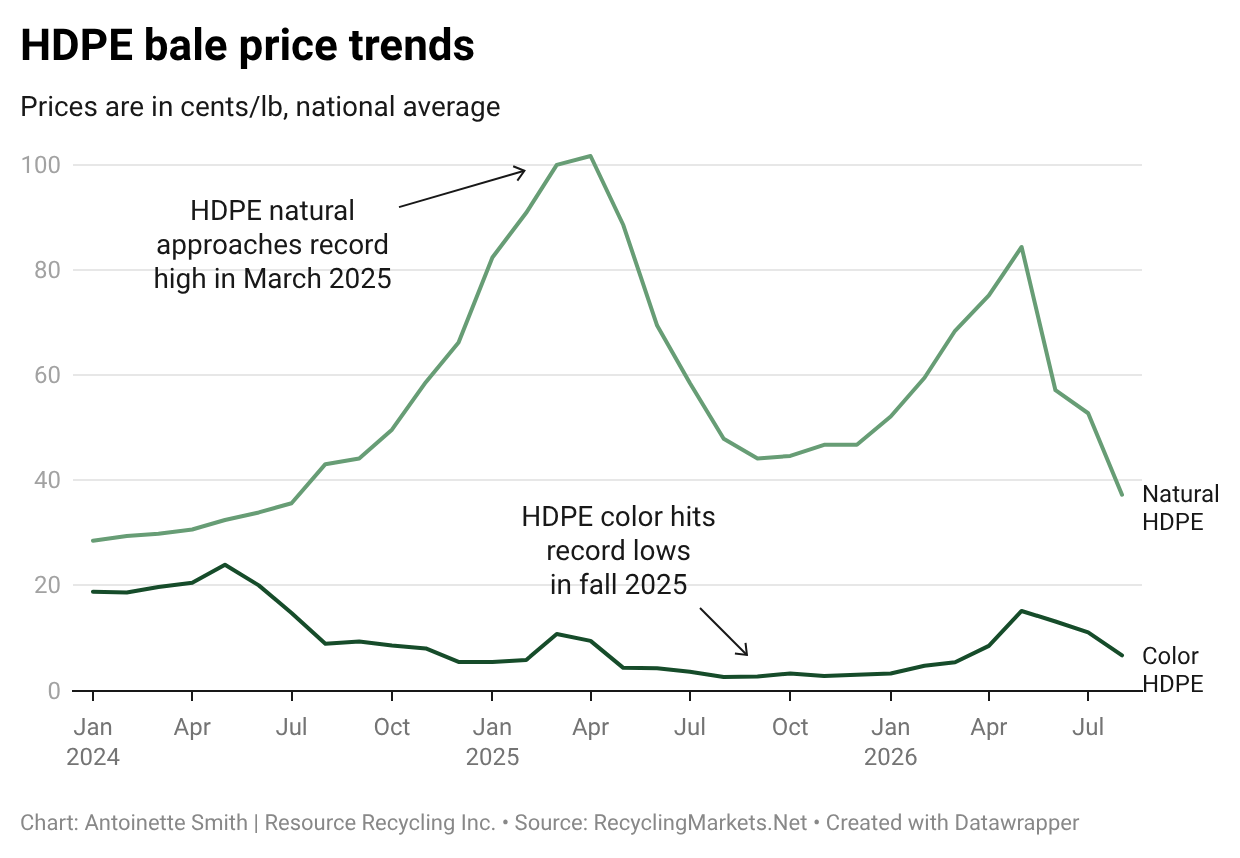
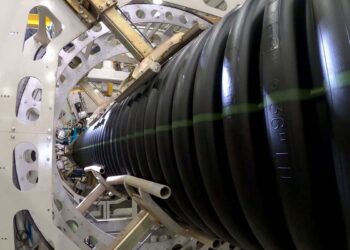
Color bales are largely used in construction applications, such as pipes, and that sector has been subdued for most of the past three years. June housing starts were at 1.43 million, higher by 3.5% on the year, and building permits were at 1.37 million, lower by 2.3% on the year. Home builder confidence for July was at 34, 2 points lower on the month. A showing above 50 indicates industry optimism, while below 50 indicates pessimism.
In addition, first-half exports of PE scrap were up by 25% on the year, at 84,854 mt, according to US International Trade Commission data. In the absence of domestic demand for color HDPE, bales may be exported especially to Southeast Asia.
PP
Polypropylene bales saw a tremendous surge in May but then plummeted back down to their typical level of late, at around 6 cents/lb. In April-May 2025, PP bales surged as well, without the push of war-tightened supply.
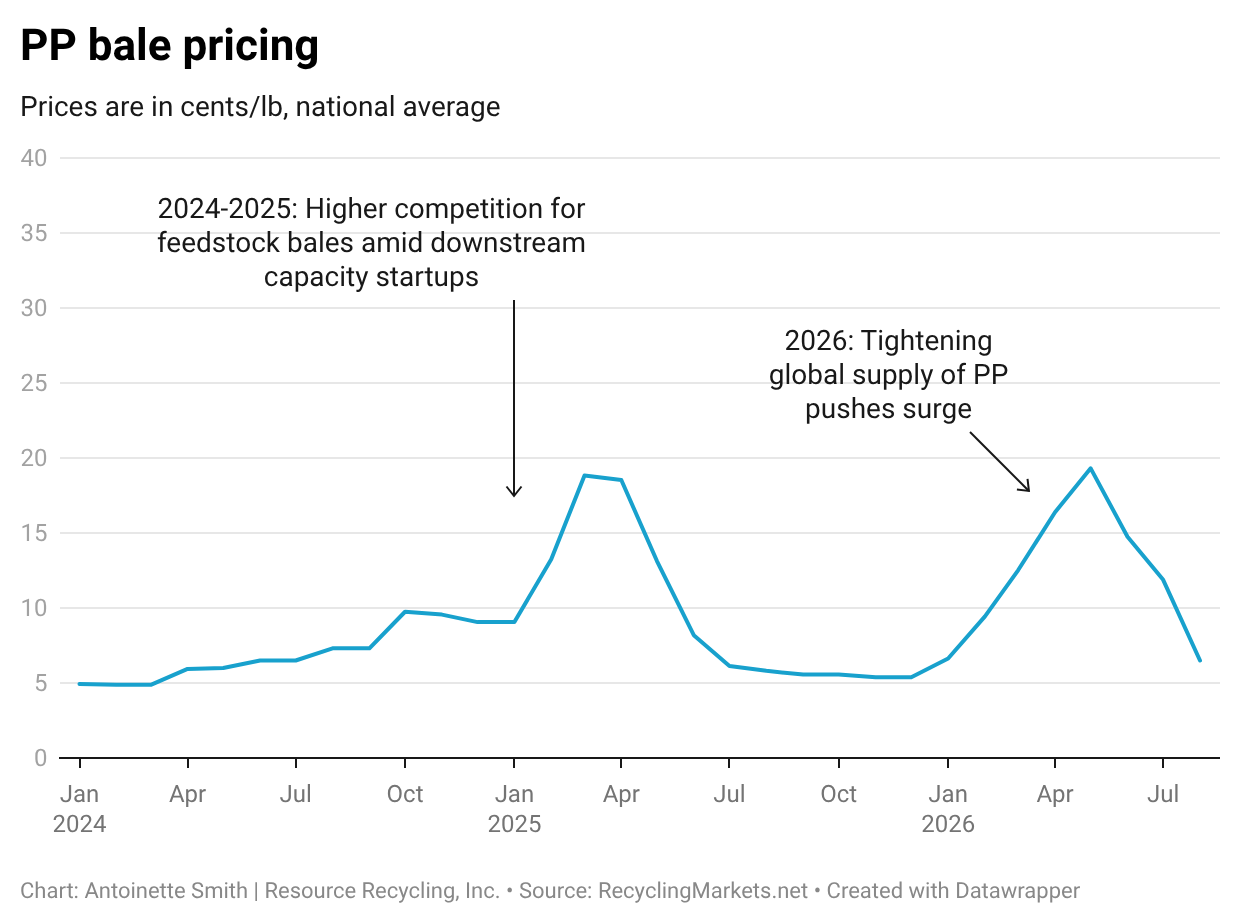
In a Q2 earnings call on Aug. 6, Republic Services CEO Jon Vander Ark said the company could sell out three to four times each of the Polymer Centers’ capacity, and “we’re largely exceeding our pricing assumptions.” Construction on the Allentown plant in Pennsylvania continues, with equipment commission expected in early 2027.
Leading into the startup for Republic Services’ most recent Polymer Center, in Indianapolis, HDPE and PP bale prices spiked to around 19 cents/lb – nearly four times their typical level – amid a feedstock build for the facility as well as new capacity from KW Plastics.