






Resource Recycling
  • The Latest
  • Analysis
    • All
    • Certification Scorecard
    • Industry Announcements
    • Opinion
    Closeup of a printed circuitboard

    Hardware demand puts new focus on parts harvesting

    Rare look inside the world’s largest plastics recycler

    Mass balance matters: Why different rules can lead to different outcomes 

    Certification Scorecard — Week of June 1, 2026

    IT asset disposition and electronics recycling: Now and then

    $60 billion in AI servers will create an ITAD challenge

    The independent ITAD at a crossroads

    DMD acquires ITAD firm Lifespan, outlines acquisition strategy

    Packaging policy is not one-size-fits-all

    Packaging policy is not one-size-fits-all

  • Conferences
    • Resource Recycling Conference
    • Plastics Recycling Conference
    • E-Scrap: The Longevity Conference
    • Textiles Recovery Summit
  • Publications
    • E-Scrap News
    • Plastics Recycling Update
    • Policy Now
    • Resource Recycling
    • Other Topics
      • All Topics
      • Brand Owners
      • Critical Minerals
      • Glass
      • Grant Watch / RFPs
      • Markets
      • Organics
      • Packaging
      • Research
      • Technology
      • Textiles
Subscribe
No Result
View All Result
Resource Recycling
  • The Latest
  • Analysis
    • All
    • Certification Scorecard
    • Industry Announcements
    • Opinion
    Closeup of a printed circuitboard

    Hardware demand puts new focus on parts harvesting

    Rare look inside the world’s largest plastics recycler

    Mass balance matters: Why different rules can lead to different outcomes 

    Certification Scorecard — Week of June 1, 2026

    IT asset disposition and electronics recycling: Now and then

    $60 billion in AI servers will create an ITAD challenge

    The independent ITAD at a crossroads

    DMD acquires ITAD firm Lifespan, outlines acquisition strategy

    Packaging policy is not one-size-fits-all

    Packaging policy is not one-size-fits-all

  • Conferences
    • Resource Recycling Conference
    • Plastics Recycling Conference
    • E-Scrap: The Longevity Conference
    • Textiles Recovery Summit
  • Publications
    • E-Scrap News
    • Plastics Recycling Update
    • Policy Now
    • Resource Recycling
    • Other Topics
      • All Topics
      • Brand Owners
      • Critical Minerals
      • Glass
      • Grant Watch / RFPs
      • Markets
      • Organics
      • Packaging
      • Research
      • Technology
      • Textiles
Subscribe
No Result
View All Result
Resource Recycling
No Result
View All Result
Home Plastics

Recycling firms unite against reusable plastic bag ban

Colin StaubbyColin Staub
July 2, 2024
in Plastics
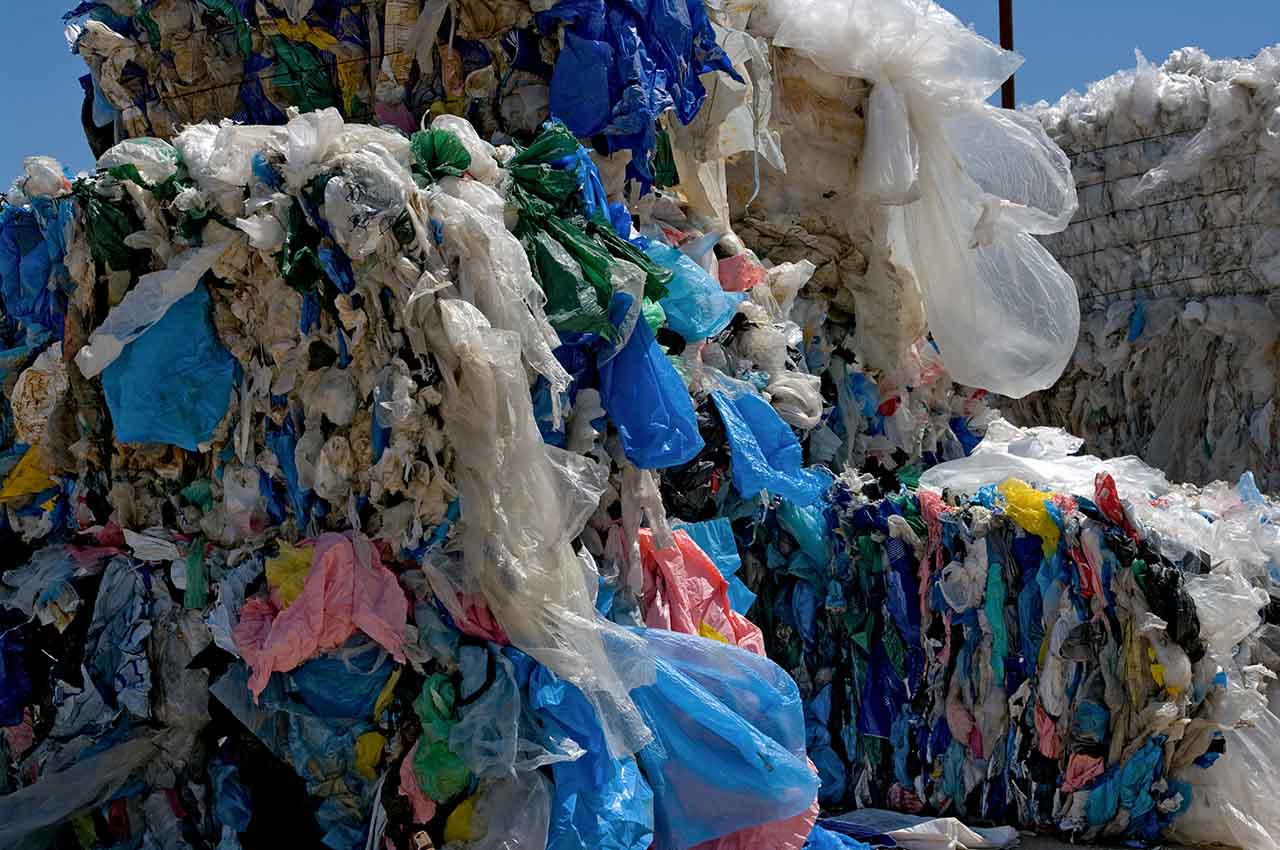
The Responsible Recycling Alliance is calling for California lawmakers to abandon Senate Bill 1053, which would expand the state’s bag ban to prohibit reusable bags made from 40% post-consumer resin. | Huguette Roe/Shutterstock

Seeking to quash a regulatory change that would remove over 100 million pounds of North American post-consumer resin demand per year, EFS-Plastics, Merlin Plastics and PreZero US have joined together to advocate for retaining recycled-content reusable plastic bags in California’s bag regulations.

The Responsible Recycling Alliance is calling for California lawmakers to abandon Senate Bill 1053 and its companion legislation, Assembly Bill 2236, which would expand the state’s bag ban to prohibit reusable bags made from 40% post-consumer resin. 

In a statement, Roxanne Spiekerman, vice president of public affairs for PreZero US, said that by banning the reusable plastic film bags that contain PCR, the legislation would “force Californians to choose between two options, both of which carry with them negative environmental challenges.”

“The canvas and sewn poly-woven or non-woven polypropylene bags are not recyclable by any known method in the U.S., contain zero post-consumer content, and are typically imported from overseas,” Spiekerman said. “Similarly, paper bags consume more water and energy during production and recycling than reusable plastic film grocery bags, resulting in a bigger carbon footprint, they are not intended to be reused and consumers will have to pay more for them.”

The newly formed group doesn’t dispute that plastic bag recycling needs substantial improvement. But rather than banning the reusable plastic bags, it advocates for bringing them into the emerging extended producer responsibility for packaging program, SB 54. This would improve bag recycling in the state, maintain a significant market for post-consumer resin and do so with the financial responsibility falling to producers.

Spiekerman pointed out that “plastic film bag producers, as defined by SB 54, are the ones who will pay to fund the plastics collection infrastructure and the system wide improvements necessary to ensure that plastic film is recycled.”

EFS-Plastics previously estimated California’s PCR requirement for reusable plastic bags contributes to at least 100 million pounds per year of recycled resin demand, while the American Recyclable Plastic Bag Alliance industry group has estimated the demand is as high as 183 million pounds per year.

SB 1053 was approved by the state Senate in May and was referred to the state Assembly. On July 1, the Assembly Committee on Natural Resources voted to approve the bill with minor amendments. Next it goes to the committee on Appropriations before facing a floor vote.

Wider scrutiny on plastics in California

The proposed ban expansion comes as the California Attorney General’s office is scrutinizing plastic bag manufacturers, including producers of recycled-content bags, and two key plastics industry groups.

The bag producer scrutiny began in 2022, when Attorney General Rob Bonta asked Novolex, Revolution, Inteplast, Advance Polybag, Metro Polybag and Papier-Mettler to prove their bags are recyclable. Separately, Bonta in 2022 and 2023 issued subpoenas to the Plastics Industry Association and American Chemistry Council, respectively, seeking documents related to the organizations’ claims about recycling.

Bonta sought documents from the Plastics Industry Association “regarding the feasibility of recycling and the evolution of the organization’s campaign surrounding the recyclability of plastic,” his office stated in a recent release. And Bonta sought documents describing an ACC-funded study submitted to the Federal Trade Commission “in an attempt to modify the existing definition of recycled content and other definitions relevant to their campaign to expand chemical recycling,” his office announced.

On May 24, legal counsel for ACC filed a federal complaint against Bonta, alleging to the U.S. District Court for the District of Columbia that Bonta’s actions amounted to “an attempt by a state attorney general to use the powers of his office to punish a private party for presenting views to a federal agency that conflict with the policy positions that the state official supports.” 

The complaint noted Bonta and ACC both testified to the FTC about updates to its Green Guides, on opposing sides of the chemical recycling debate, and it alleged his subpoenas were an effort to learn about ACC’s advocacy and “hinder its political engagement on the same policy issue that his office and ACC and its members disagree.”

On May 28, Bonta’s office announced neither organization had adequately responded to the subpoenas, and he petitioned Sacramento County Superior Court to order the organizations to respond.

“The continuous delay tactics are failing to comply with our subpoena,” Bonta said in the release. “Enough is enough: What are they trying to hide?”

Last week, legal counsel for ACC asked the court to quash Bonta’s request to the California court until the federal case is ruled on.

“Rather than rest on the persuasiveness of his advocacy, Bonta has chosen to wield the power he holds as California’s top prosecutor to harass and retaliate against those on the other side of a policy divide,” ACC’s legal counsel wrote.

A hearing on ACC’s motion to stop the California proceedings is set for Sept. 18. Meanwhile, the Plastics Industry Association has not yet responded to Bonta’s latest court action.

Tags: CaliforniaFilm & FlexiblesLegalLegislation & Enforcement
TweetShare
Colin Staub

Colin Staub

Colin Staub was a reporter and associate editor at Resource Recycling until August 2025.

Related Posts

CalRecycle withdraws proposed regs for SB 54

Oceana, NRDC, CAW sue CalRecycle over SB 54 regs

byStefanie Valentic
June 5, 2026

The groups allege that the new regulations have too many loopholes for packaging producers.

In My Opinion: Comparing the nation’s first packaging EPR laws

What Maine’s vape EPR law means for recyclers

byStefanie Valentic
June 4, 2026

Maine is the first state to require vape manufacturers to fund end-of-life management for their products. Vape recycler Michael Duckworth...

Our top stories from June 2021

Colorado advances EV battery EPR law

byStefanie Valentic
June 3, 2026

Colorado, which passed its Battery Stewardship Act in 2025, is now looking to close the gap on large-format, EV batteries.

Packaging policy is not one-size-fits-all

Packaging policy is not one-size-fits-all

byDan Felton, president and CEO, Flexible Packaging Association
June 1, 2026

Flexible Packaging Association head Dan Felton makes the case for smart policy to suit the large, diverse sector.

PureCycle maintains price expectations for its R-PP resin

EPR clarity is driving brand demand, says PureCycle CEO

byStefanie Valentic
June 1, 2026

With SB 54 registered and lawsuits already filed, PureCycle CEO Dustin Olsen says the fight over what counts as recycling...

Film and flexibles recycling needs collaboration

byBrian Clark Howard
May 29, 2026

Experts from the Film & Flex Recycling Alliance, US Flexible Film Initiative (USFFI), Delterra, The Recycling Partnership and Circular Action...

Load More
Next Post
Major investment in Closed Loop Fund announced

CIEL report lays out roadmap for paying for pollution

More Posts

Recycling industry addresses Beyond Plastics report

Recycling industry addresses Beyond Plastics report

May 26, 2026
Machinex

Longview mill tragedy raises broader questions for fiber, recycling sectors

May 29, 2026
Fire at an EMR recycling facility in Camden, New Jersey May 29, 2026.

EMR faces shutdown calls after numerous fires

June 2, 2026
The independent ITAD at a crossroads

DMD acquires ITAD firm Lifespan, outlines acquisition strategy

June 2, 2026
IT asset disposition and electronics recycling: Now and then

$60 billion in AI servers will create an ITAD challenge

June 3, 2026
War, not demand driving polymer pricing

War, not demand driving polymer pricing

June 2, 2026
Q1 containerboard exports drop by 19%

What SB 54 looks like from the packaging floor

June 1, 2026
BASF, Encina expand circular feedstock partnership

BASF, Encina expand circular feedstock partnership

June 3, 2026
California extends compostable labeling law

California bills crack down on false recycling, compostable claims

May 29, 2026
Our top stories from June 2021

Colorado advances EV battery EPR law

June 3, 2026
Load More

About & Publications

About Us

Staff

Archive

Magazine

Work With Us

Advertise
Jobs
Contact
Terms and Privacy

Newsletter

Get the latest recycling news and analysis delivered to your inbox every week. Stay ahead on industry trends, policy updates, and insights from programs, processors, and innovators.

Subscribe

Welcome Back!

Login to your account below

Forgotten Password?

Retrieve your password

Please enter your username or email address to reset your password.

Log In

Add New Playlist

No Result
View All Result
  • The Latest
  • Analysis
  • Recycling
  • E-Scrap
  • Plastics
  • Policy Now
  • Conferences
    • E-Scrap Conference
    • Plastics Recycling Conference
    • Resource Recycling Conference
    • Textiles Recovery Summit
  • Magazine
  • About Us
  • Advertise
  • Archive
  • Jobs
  • Staff
Subscribe
This website uses cookies. By continuing to use this website you are giving consent to cookies being used. Visit our Privacy and Cookie Policy.