Resource Recycling
  • The Latest
  • Analysis
    • All
    • Certification Scorecard
    • Industry Announcements
    • Opinion
    Meta-Corning deal signals IT hardware retirement wave

    Meta-Corning deal signals IT hardware retirement wave

    Malaysia clamps down on illegal e-waste imports amid probes

    Malaysia clamps down on illegal e-waste imports amid probes

    URT builds alliance to remake electronics plastics at scale

    ICYMI: Top 5 e-scrap stories from January 2026

    Server resale values surge in AI-driven markets

    Certification scorecard for the week of Feb. 2, 2026

    Auditors warn EU may fall short on critical metals

    Auditors warn EU may fall short on critical metals

    Industry announcements for January 2026

    Industry announcements for February 2026

    ICYMI: Top 5 recycling stories from January 2026

    Certification scorecard for week of Jan. 26, 2026

    New entrepreneurs bring renewed energy to e-cycling

    Europe pulls ahead on ITAD now while US growth remains slower

  • Conferences
  • Publications

    Other Topics

    Textiles
    Organics
    Packaging
    Glass
    Brand Owners

    Metals
    Technology
    Research
    Markets
    Grant Watch

    All Topics

Subscribe
No Result
View All Result
Resource Recycling
  • The Latest
  • Analysis
    • All
    • Certification Scorecard
    • Industry Announcements
    • Opinion
    Meta-Corning deal signals IT hardware retirement wave

    Meta-Corning deal signals IT hardware retirement wave

    Malaysia clamps down on illegal e-waste imports amid probes

    Malaysia clamps down on illegal e-waste imports amid probes

    URT builds alliance to remake electronics plastics at scale

    ICYMI: Top 5 e-scrap stories from January 2026

    Server resale values surge in AI-driven markets

    Certification scorecard for the week of Feb. 2, 2026

    Auditors warn EU may fall short on critical metals

    Auditors warn EU may fall short on critical metals

    Industry announcements for January 2026

    Industry announcements for February 2026

    ICYMI: Top 5 recycling stories from January 2026

    Certification scorecard for week of Jan. 26, 2026

    New entrepreneurs bring renewed energy to e-cycling

    Europe pulls ahead on ITAD now while US growth remains slower

  • Conferences
  • Publications

    Other Topics

    Textiles
    Organics
    Packaging
    Glass
    Brand Owners

    Metals
    Technology
    Research
    Markets
    Grant Watch

    All Topics

Subscribe
No Result
View All Result
Resource Recycling
No Result
View All Result
Home Plastics

Complete plastic bag ban clears California Senate

Colin StaubbyColin Staub
May 30, 2024
in Plastics
Scientists chart path from PE bags to battery anodes
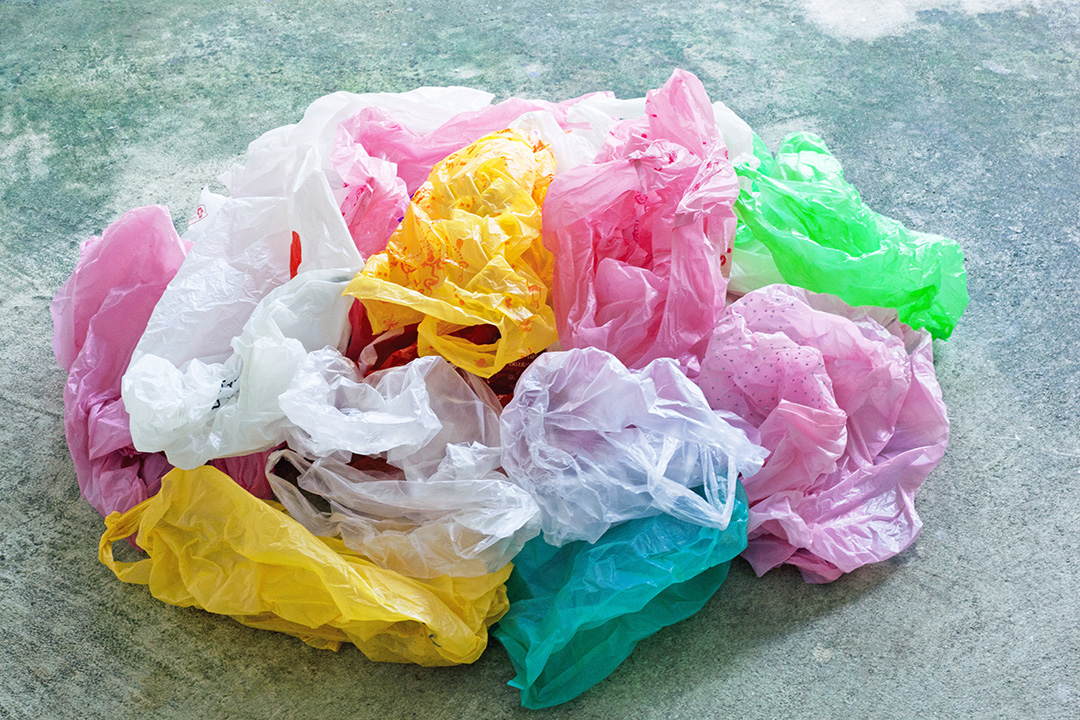
Senate Bill 1053 revises California’s bag ban to state that reusable bags provided at point of sale cannot be made from plastic film. | Bowonpat Sakaew/Shutterstock

A bill that expands California’s bag ban to prohibit all plastic bags – even the reusable recycled-content bags that are a major driver of post-consumer film resin sales – is working its way through the California legislative system. Reclaimers and bag producers have come out against the bill.

Senate Bill 1053 builds on the state’s longstanding bag ban, which came about as a result of the lawmaker-approved SB 270 in 2014 and voter-upheld Proposition 67 in 2016. California became the first state with a statewide ban on the thin, lightweight, single-use plastic bags distributed at point of sale in grocery, retail, foodservice and other business establishments.

The existing bag ban directed businesses to charge a minimum 10-cent fee for reusable, recycled paper or compostable bags. The “reusable” category is defined to allow bags designed for at least 125 uses, and it allows bags of a variety of durable material types, including thicker plastic film that’s at least 2.25 mils, or thousandths of an inch, thick.

Reusable plastic bags must also be made from a minimum of 40% post-consumer resin under the current law. Importantly, they must also be recyclable per Federal Trade Commission guidelines, which state that products can be labeled as recyclable without qualification if at least 60% of the population they’re sold into has recycling access for those products.

California’s bag ban law – and its reusable plastic bag carveout – have been an important driver of PCR demand for film reclaimers. Indeed, when the state temporarily paused the bag ban in 2020 due to the COVID-19 pandemic, one North American film reclaimer saw an immediate decline in PCR sales.

But the recyclable requirement is currently threatening to end the plastic bag carveout entirely, which could mean a significant decline in PCR sales for the reclaimers that supply reusable bag makers.

The recyclability of the reusable plastic bags has been hotly debated for the last few years, including in a 2022 lawsuit filed by environmental advocates, who pointed out that a law requiring stores to have plastic bag drop-off recycling options had expired in 2020. A legislative analysis of the current Senate bill confirmed that “few stores continue to accept them back for recycling and curbside collection programs generally cannot accommodate film plastics for recycling.”

Late last year, California regulators published a study of collection access for all types of recyclables, part of their work to implement new recycling labeling standards. The report dealt a serious blow to the case for reusable bag recyclability: Regulators said just 30% of the state’s population had access to recycling options for the reusable plastic film bags, far below the 60% requirement.

Senate Bill 1053 revises the bag ban to state that reusable bags provided at point of sale cannot be made from plastic film. They can be made from cloth, woven textiles or other washable textiles.

The bill was introduced in February, sponsored by Sens. Catherine Blakespear of San Diego and Ben Allen of Santa Monica. It was referred to the Senate Environment Committee, where it was amended and passed on a vote of 5-2. It moved through the Appropriations Committee and returned to the floor last week, where it passed on a 31-7 vote on May 21. The bill moved to the state Assembly for a first reading on May 22.

Removing more than 100 million pounds of annual PCR demand

EFS-Plastics, the same reclaimer that reported an immediate impact from the 2020 pause, has expressed concern with the bill.

“Revoking this bill would require grocers to replace polyethylene reusable bags, made with 40% PCR, with paper bags, non-recyclable non-woven polypropylene bags, and cloth bags, all of which have a worse life cycle assessment,” the company said in a statement on the bill. “This would ultimately lead to more unrecyclable materials in landfills and would take away the home for more than 100 million [pounds] of PCR per year.”

The American Recyclable Plastic Bag Alliance, an industry group representing bag producers, submitted comments to the legislature estimating the ban would remove as much as 183 million pounds of PCR demand in California each year.

EFS added it favors an approach floated by the Association of Plastic Recyclers to include reusable bags in California’s in-development extended producer responsibility for packaging program and establish an effective collection system through that channel, rather than to ban them. APR owns Resource Recycling, Inc., publisher of Plastics Recycling Update.

According to legislative records, EFS and APR were joined in opposition by reclaimer PreZero, bag producer Durabag, and industry groups The Recycling Partnership, the Western Plastics Association, the American Forest & Paper Association and the American Recyclable Plastic Bag Alliance, which has opposed the bag ban from the start – when the group was known as the American Progressive Bag Alliance, it launched a major referendum effort to overturn the ban.

Voters ultimately upheld the ban.

Meanwhile, substantially more organizations are supporting the current effort to ban reusable plastic bags. Legislative records show numerous environmental groups and recycling stakeholders are voicing support, including the Northern California Recycling Association, the Resource Recovery Coalition of California, Californians Against Waste and the California Product Stewardship Council. Haulers and MRF operators in support include Republic Services and the Ecology Center, located in Berkeley. A number of local governments have come out in support as well.

The bill’s companion legislation in the state Assembly is Assembly Bill 2236.

Tags: LegislationPP
TweetShare
Colin Staub

Colin Staub

Colin Staub was a reporter and associate editor at Resource Recycling until August 2025.

Related Posts

Oregon’s Recycling Modernization Act faces injunction

Court partially blocks Oregon EPR law, dismisses bulk of lawsuit

byStefanie Valentic
February 10, 2026

An Oregon federal court issued a limited injunction halting the state's EPR law for members of NAW, but rejected the...

Member states select new chair for global plastics treaty

Member states select new chair for global plastics treaty

byAntoinette Smith
February 10, 2026

During a short session, the Intergovernmental Negotiating Committee elected Chilean diplomat Julio Cordano to continue efforts toward an internationally binding...

REUSE Act heads to US House for consideration

byAntoinette Smith
February 9, 2026

The bill would require the US EPA to collect data on reuse and refill systems across industries including consumer packaging,...

Kentucky’s Global Polymers expanding, moving to Indiana

byAntoinette Smith
February 6, 2026

The polypropylene recycler will invest $8.5 million to fit an existing facility in Charlestown, across the Ohio River from its...

German researchers say plastics treaty still within reach

byAntoinette Smith
February 4, 2026

In a new white paper, the group proposes three key changes to revive the treaty talks after a new chair...

PP cups now ‘widely recyclable’ with increased acceptance

byAntoinette Smith
February 3, 2026

With more than 60% of US households having access to curbside recycling collection for PP to-go drink cups, the How2Recycle...

Load More
Next Post

Plastics made up 2% of recovery in Oregon in 2022

More Posts

Agilyx leaves US chem recycling, Houston sorting center

Agilyx leaves US chem recycling, Houston sorting center

February 4, 2026
Oregon’s Recycling Modernization Act faces injunction

Court partially blocks Oregon EPR law, dismisses bulk of lawsuit

February 10, 2026

Greenchip launches fund for community impact and trust

February 5, 2026
Third ExxonMobil recycling plant operational

Third ExxonMobil recycling plant operational

February 4, 2026
Chinese processing group details goals for US visit

AMP lays out vision of next-generation, AI-driven MRFs

July 24, 2024

Allied Industrial portfolio companies complete two early-year deals

February 5, 2026

Cirba Solutions: Battery fires stoking EPR bill movement

February 2, 2026

Eastman looks to recycling plant to drive growth

February 2, 2026
Stakeholders respond to California recyclability report

CalRecycle opens SB 54 draft for comments

February 2, 2026

Ball Corp. looks to World Cup after record 2025

February 5, 2026
Load More

About & Publications

About Us

Staff

Archive

Magazine

Work With Us

Advertise
Jobs
Contact
Terms and Privacy

Newsletter

Get the latest recycling news and analysis delivered to your inbox every week. Stay ahead on industry trends, policy updates, and insights from programs, processors, and innovators.

Subscribe

Welcome Back!

Login to your account below

Forgotten Password?

Retrieve your password

Please enter your username or email address to reset your password.

Log In

Add New Playlist

No Result
View All Result
  • The Latest
  • Analysis
  • Recycling
  • E-Scrap
  • Plastics
  • Policy Now
  • Conferences
    • E-Scrap Conference
    • Plastics Recycling Conference
    • Resource Recycling Conference
    • Textiles Recovery Summit
  • Magazine
  • About Us
  • Advertise
  • Archive
  • Jobs
  • Staff
Subscribe
This website uses cookies. By continuing to use this website you are giving consent to cookies being used. Visit our Privacy and Cookie Policy.