Resource Recycling
  • The Latest
  • Analysis
    • All
    • Certification Scorecard
    • Industry Announcements
    • Opinion
    E-scrap magnet recycling company scales up

    Why only some rare-earth sources are economically viable

    e-Stewards to develop an ITAD-specific standard

    Certification scorecard — week of Sept. 21

    Who should pay for lithium-ion battery fire damage?

    America’s critical-materials buildout has a feedstock problem

    Certification scorecard – week of Sept. 14

    Canada Plastics Pact reports 2024 progress

    Trade tensions shift global mineral partnerships 

  • Conferences
    • Resource Recycling Conference
    • Plastics Recycling Conference
    • E-Scrap: The Longevity Conference
    • Textiles Recovery Summit
  • Publications
    • E-Scrap News
    • Plastics Recycling Update
    • Policy Now
    • Resource Recycling
    • Other Topics
      • All Topics
      • Brand Owners
      • Critical Minerals
      • Glass
      • Grant Watch / RFPs
      • Markets
      • Organics
      • Packaging
      • Research
      • Technology
      • Textiles
Subscribe
No Result
View All Result
Resource Recycling
  • The Latest
  • Analysis
    • All
    • Certification Scorecard
    • Industry Announcements
    • Opinion
    E-scrap magnet recycling company scales up

    Why only some rare-earth sources are economically viable

    e-Stewards to develop an ITAD-specific standard

    Certification scorecard — week of Sept. 21

    Who should pay for lithium-ion battery fire damage?

    America’s critical-materials buildout has a feedstock problem

    Certification scorecard – week of Sept. 14

    Canada Plastics Pact reports 2024 progress

    Trade tensions shift global mineral partnerships 

  • Conferences
    • Resource Recycling Conference
    • Plastics Recycling Conference
    • E-Scrap: The Longevity Conference
    • Textiles Recovery Summit
  • Publications
    • E-Scrap News
    • Plastics Recycling Update
    • Policy Now
    • Resource Recycling
    • Other Topics
      • All Topics
      • Brand Owners
      • Critical Minerals
      • Glass
      • Grant Watch / RFPs
      • Markets
      • Organics
      • Packaging
      • Research
      • Technology
      • Textiles
Subscribe
No Result
View All Result
Resource Recycling
No Result
View All Result
Home Plastics

Scientists combine chemistry, biology to recycle mixed plastics

Marissa HeffernanbyMarissa Heffernan
October 18, 2022
in Plastics
Scientists combine chemistry, biology to recycle mixed plastics
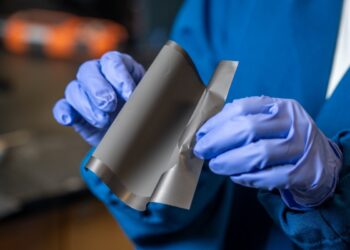
A tandem chemical and biological process that draws from decades-old studies on chemical oxidation can be used to break down a variety of plastic types. | PowerUp/Shutterstock

Researchers have developed a way to turn mixed polymer plastics into a single chemical product, which could potentially eliminate the need to sort plastic by type prior to recycling.

“Combining chemical and biological processes is a promising new strategy for the valorization of mixed plastic waste,” an NREL press release stated.

The project comes from the Bio-Optimized Technologies to keep Thermoplastics out of Landfills and the Environment (BOTTLE) Consortium and the U.S. Department of Energy’s National Renewable Energy Laboratory (NREL).

Gregg Beckham, a senior research fellow at NREL and head of BOTTLE, said in the press release that the research is “a potential entry point into processing plastics that cannot be recycled at all today.”

The procedure is a tandem chemical and biological process that draws from decades-old studies on chemical oxidation, which can be used to break down a variety of plastic types. The study tested it on PET, PS and HDPE, but the researchers said it could also work for PP and PVC. The team plans to do further study on those materials.

The research was published in the journal Science, with Beckham as the senior author. Co-authors were NREL researchers and BOTTLE team members from the Massachusetts Institute of Technology, Oak Ridge National Laboratory and the University of Wisconsin–Madison.

Kevin Sullivan, a postdoctoral researcher at NREL and co-author of the paper, said the process uses oxygen and catalysts to break down the large polymer molecules.

“The chemical catalysis process we have used is just a way of accelerating that process that occurs naturally, so instead of degrading over several hundred years, you can break down these plastics in hours or minutes,” Sullivan said.

Oxidation turns the PS, PET and HDPE into a “complex mixture of chemical compounds – including benzoic acid, terephthalic acid and dicarboxylic acids – that would require advanced and costly separations to yield pure products,” the press release stated, but the BOTTLE team used biology to take a shortcut.

The researchers engineered a soil microbe, called Pseudomonas putida, to “funnel” the mixture of intermediates into either polyhydroxyalkanoates (PHAs), a form of biodegradable bioplastics, or beta-ketoadipate, which can be used to make nylon materials.

Allison Werner, another co-author of the study, said biological funneling consists of engineering the metabolic network of microbes “to direct the carbon from a large number of substrates to a single product.”

“To do this, we take DNA from nature – usually other microbes – and paste it into Pseudomonas putida’s genome,” Werner said. “The DNA is transcribed into RNA, which in turn is translated into proteins that perform diverse biochemical transformations, forming a new metabolic network and ultimately enabling us to capture more carbon and to tune where it goes.”

Previously, scientists have used the same microbe to valorize chemical mixtures from plant cell walls. Beckham emphasized that the engineered bacteria do not degrade plastics directly.

“If you took the bacteria that we use right now, and you combine it with polyethylene, the bacteria will die, and the plastic will stay there,” Beckham said, which is why the oxidation process is necessary.

The BOTTLE team plans to conduct further research to understand and quantify all the additives and dyes in plastics, and an upcoming NREL mission to the International Space Station will test whether microgravity improves the process.

The study was funded by the U.S. Department of Energy’s Advanced Manufacturing Office and Bioenergy Technologies Office.
 

Tags: Chemical RecyclingHDPEPETPSResearch
TweetShare
Marissa Heffernan

Marissa Heffernan

Marissa Heffernan worked at Resource Recycling from January 2022 through June 2025, first as staff reporter and then as associate editor. Marissa Heffernan started working for Resource Recycling in January 2022 after spending several years as a reporter at a daily newspaper in Southwest Washington. After developing a special focus on recycling policy, they were also the editor of the monthly newsletter Policy Now.

Related Posts

Recyclers reeling from NJ PCR extension

Recyclers reeling from NJ PCR extension

byAntoinette Smith
September 23, 2026

The recent three-year extension for exemptions to the state's PCR mandates elicited frustration and confusion among recyclers.

Textile EPR and the definition of recycling

Textile Exchange reports progress in production

byPaul Lane
September 22, 2026

The organization said the industry has made some sustainability progress, but there’s much room for improvement.

ALPLA’s holistic approach to packaging design

ALPLA’s holistic approach to packaging design

byAntoinette Smith
September 18, 2026

The packaging and recycling company's North American design lead explains why recyclability goals can't exist in isolation.

Additive cuts acetaldehyde migration in RPET bottles

PET roadmap pairs demand, CO2 footprint

byAntoinette Smith
September 15, 2026

A new industry roadmap from NAPCOR combines ISO-compliant methodology and a conservative approach toward PET decarbonization, to reduce the carbon...

Canada tariffs latest in new normal for RPET

Canada tariffs latest in new normal for RPET

byAntoinette Smith
September 11, 2026

Tensions with the valuable trading partner have frayed nerves for over a year, but North American markets already have tariff...

New Jersey pushes back PCR mandate to 2030

New Jersey pushes back PCR mandate to 2030

byAntoinette Smith
September 10, 2026

One of the highest-profile US laws affecting recyclers has been amended only four months before implementation, with the state citing...

Load More
Next Post

Study confirms Digimarc Recycle improves sortation

2026 Buyers’ Guide

Equipment, services and technology suppliers serving the recycling industry.

Browse the Guide

More Posts

Recyclers reeling from NJ PCR extension

Recyclers reeling from NJ PCR extension

September 23, 2026
Colorado’s EPR programs move from planning to practice

Colorado’s EPR programs move from planning to practice

September 17, 2026

Who should pay for lithium-ion battery fire damage?

September 21, 2026

SB 54 plan for cartons, film draws warning

September 15, 2026
US packaging is evolving. The recycling system isn’t ready

US packaging is evolving. The recycling system isn’t ready

September 16, 2026
Alpek closing Pennsylvania RPET plant

Alpek seizing on war-related opportunity 

July 27, 2026
Industry announcements for January 2026

Industry announcements for September 2026

August 31, 2026
ALPLA’s holistic approach to packaging design

ALPLA’s holistic approach to packaging design

September 18, 2026
Bridge Green, Hartree partner on mineral processing deal

Bridge Green, Hartree partner on mineral processing deal

September 21, 2026
New Jersey pushes back PCR mandate to 2030

New Jersey pushes back PCR mandate to 2030

September 10, 2026
Load More

About & Publications

About Us

Staff

Archive

Magazines

Work With Us

Advertise
Jobs
Contact
Terms and Privacy

Newsletters

Get the latest recycling news and analysis delivered to your inbox every week. Stay ahead on industry trends, policy updates, and insights from programs, processors, and innovators.

Subscribe

Welcome Back!

Login to your account below

Forgotten Password?

Retrieve your password

Please enter your username or email address to reset your password.

Log In

Add New Playlist

No Result
View All Result
  • The Latest
  • Analysis
  • Recycling
  • E-Scrap
  • Plastics
  • Policy Now
  • Conferences
    • E-Scrap Conference
    • Plastics Recycling Conference
    • Resource Recycling Conference
    • Textiles Recovery Summit
  • Magazines
  • About Us
  • Advertise
  • Archive
  • Jobs
  • Staff
Subscribe
This website uses cookies. By continuing to use this website you are giving consent to cookies being used. Visit our Privacy and Cookie Policy.