





Resource Recycling
  • The Latest
  • Analysis
    • All
    • Certification Scorecard
    • Industry Announcements
    • Opinion
    Apple Watch on product box.

    Wearables are coming and ITAD isn’t ready

    Certification Scorecard — Week of April 13, 2026

    EV Battery Pack - Sergii Chernov-Shutterstock

    Redwood, Rivian deal fuels US infrastructure plans

    Bloom ESG and e-Stewards roll out critical metals metric

    Colorado regulators suggest mid-range EPR scenario

    Why collaboration on plastic waste still matters

    Battery recycler Ascend Elements files for bankruptcy

    Battery recycler Ascend Elements files for bankruptcy

    EPR fees are a market signal. Here’s what they’re telling you.

    EPR fees are a market signal. Here’s what they’re telling you.

    Wolframite ore, the primary ore of tungsten from Altai, Russia

    Tungsten scrap export controls draw industry attention

    Certification Scorecard — Week of April 6, 2026

  • Conferences
  • Publications

    Other Topics

    Textiles
    Organics
    Packaging
    Glass
    Brand Owners

    Metals
    Technology
    Research
    Markets
    Grant Watch

    All Topics

Subscribe
No Result
View All Result
Resource Recycling
  • The Latest
  • Analysis
    • All
    • Certification Scorecard
    • Industry Announcements
    • Opinion
    Apple Watch on product box.

    Wearables are coming and ITAD isn’t ready

    Certification Scorecard — Week of April 13, 2026

    EV Battery Pack - Sergii Chernov-Shutterstock

    Redwood, Rivian deal fuels US infrastructure plans

    Bloom ESG and e-Stewards roll out critical metals metric

    Colorado regulators suggest mid-range EPR scenario

    Why collaboration on plastic waste still matters

    Battery recycler Ascend Elements files for bankruptcy

    Battery recycler Ascend Elements files for bankruptcy

    EPR fees are a market signal. Here’s what they’re telling you.

    EPR fees are a market signal. Here’s what they’re telling you.

    Wolframite ore, the primary ore of tungsten from Altai, Russia

    Tungsten scrap export controls draw industry attention

    Certification Scorecard — Week of April 6, 2026

  • Conferences
  • Publications

    Other Topics

    Textiles
    Organics
    Packaging
    Glass
    Brand Owners

    Metals
    Technology
    Research
    Markets
    Grant Watch

    All Topics

Subscribe
No Result
View All Result
Resource Recycling
No Result
View All Result
Home Plastics

Exporter: Malaysian case provides some Basel clarity

Colin StaubbyColin Staub
April 7, 2021
in Plastics
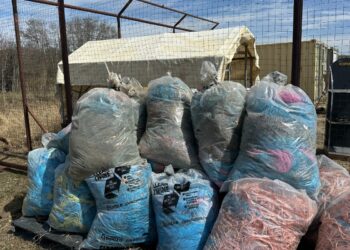
Malaysian authorities recently approved a container of clean PE scrap for import from U.S.-based Sigma Recycling. | UNIKYLUCKK/Shutterstock

A high-profile scrap plastic shipment from the U.S. to Malaysia was accepted after the importing country’s government said it contained clean, sorted material. The situation demonstrates the complexities in interpreting new plastic shipping regulations.

The recent shipment to Malaysia gained attention through a New York Times article and warnings from environmental advocacy groups including the Basel Action Network. The load was sent by Sigma Recycling and left the port of Los Angeles in mid-February, according to The New York Times story.

Malaysian government officials in mid-March said the load would be rejected and returned to the U.S. A spokesman for Malaysia’s environment department told Reuters the shipment was not in line with the Basel Convention amendment regulating the global trade in scrap plastics.

The Basel Convention, an international treaty regulating waste shipments, began regulating scrap plastic this year. Under the regulations, exports of mixed loads of plastics Nos. 1-7 require notification and consent by the receiving country. Loads of some clean, separated plastics are generally not subject to the new criteria. However, because the U.S. is not a party to the Basel Convention, under some interpretations the country is barred from trading any scrap plastic with Basel parties, such as Malaysia.

Despite that potential prohibition, export data indicated scrap plastic exports from the U.S. to non-party countries continued during the first month of this year. Malaysia was the second-largest importer of U.S. material that month.

Georgia-based Sigma Recycling told Plastics Recycling Update the load contained clean, sorted scrap plastic of a single polymer. Loads meeting that description fall under Basel listing B3011, which does not require prior notification and consent, according to the Basel Convention.

Although the country pledged to reject the load, once it reached Malaysia and was inspected, the country’s government recently changed its stance and agreed with Sigma.

Malaysia’s environment department issued a Malaysian-language news release on the inspection on March 30. Reuters reported on the release. The country’s environment minister said “that the U.S. shipment, which arrived on Saturday and had been thought to be hazardous, was found to be clean, homogenous polyethylene waste, as required under its import license,” Reuters reported.

The import approval suggests that, for some countries, material from the U.S. will only be prohibited if it falls under the categories requiring notification and consent, such as mixed plastics.

Industry seeks further guidance, environmental groups push for more inspections

A leader of Sigma Recycling told Plastics Recycling Update the situation shows nuance within the Basel guidelines.

“We hope that this will clear the miscommunication that exports of all plastic scrap are illegal because of the U.S. non-party status at the Basel Convention,” said Rakesh Surana of Gemini Corporation N.V., the Belgium-based parent company of Sigma Recycling.

Surana added that there are still plenty of complexities in the Basel plastic amendment, particularly when it comes to figuring out whether a load meets the criteria for exemption from notification requirements. The amendment uses language that allows for an importing country’s discretion.

“The terms attached to the plastic listing B3011 under the Basel convention like ‘almost exclusively’ or ‘almost free from contamination’ adds to a lot of confusion as they can be interpreted differently by different countries,” Surana said. “Here the role of the plastic recycling associations can be very important to bring some clarity on these issues. This will enable the industry and all its stakeholders to continue working on such a sustainable activity diverting the scrap away from landfill and benefiting the environment for which we are all proud of.”

Environmental advocacy groups say they hope the same level of diligence is shown for all plastic shipments, to ensure they are truly loads of clean material. In response to the approval, nonprofit environmental group Friends of the Earth Malaysia commended the government for its diligence.

“We are glad to know that the Malaysian authorities were thorough in their inspection of these two containers,” the organization wrote. “We hope that the same inspection procedure is carried out for all importation of plastic waste to Malaysia in order to prevent the dumping of dirty, mixed and contaminated plastic waste in our country.”

The Basel Action Network echoed that call. Executive Director Jim Puckett told Plastics Recycling Update the group was “very pleased that the Malaysian government did indeed open up the containers and took photographs of them and made a determination that they were not mixed plastics and were not significantly contaminated and thus passed legal muster as being outside of the scope of the Basel Convention.”

Puckett added that the load in question used the general harmonized commodity code of 3915, simply designating scrap plastic, rather than a more specific code specifying scrap PE materials. He said his organization “will continue to highlight and track the export of plastic waste from the U.S. to other countries.”

Meanwhile, with some of the Basel guidelines open to country-by-country interpretation, the scrap industry faces hurdles in moving material. Steve Wong, executive president of the China Scrap Plastics Association, summarized the situation for scrap plastic traders in an April 4 market report.

“It is undoubtedly a very risky business as traders do not know what they can ship and what they cannot,” he wrote.

In comments to Plastics Recycling Update, Wong added that similar scrutiny of exports is taking place on containers leaving Mexico, Romania, South Africa and elsewhere. Customs authorities in importing countries are detaining containers for greater inspection, “without knowing what is legal or illegal,” Wong noted.

“Some suppliers cannot afford all the cost involved and suspension of their export business,” he added. “They have to shut down their business.”


Tags: Trade & Tariffs
TweetShare
Colin Staub

Colin Staub

Colin Staub was a reporter and associate editor at Resource Recycling until August 2025.

Related Posts

Volatility reshapes outlook for US metals businesses

byScott Snowden
April 15, 2026

Panelists at the ReMA conference in Las Vegas said tariffs, reshoring and geopolitical tension are remaking trade flows, lifting US...

Matium raises $8m, adds buyer financing

byAntoinette Smith
April 14, 2026

A trade finance facility from the new Erebor Bank will help bridge the gap between buyer and seller payment terms...

Why global ITAD is stranded in the Gulf

Why global ITAD is stranded in the Gulf

byDavid Daoud
March 16, 2026

As the war in Iran scrambles Middle East trade routes, Dubai’s carefully built role as a command center for global...

War-driven fuel costs compound recycling woes

War-driven fuel costs compound recycling woes

byAntoinette Smith
March 16, 2026

US and Israeli strikes in Iran and the subsequent blockade of the Strait of Hormuz have pushed diesel fuel prices...

How rising fuel and memory prices are impacting ITAD’s margins

How rising fuel and memory prices are impacting ITAD’s margins

byDavid Daoud
March 10, 2026

Current war in Iran is resulting in a noticeable change in cost pressures and risk considerations in electronics and IT...

Diversion Dynamics: Secondhand exports slow down fast fashion

byStefanie Valentic
March 5, 2026

Conference season has a cadence that industry professionals know well. The packed schedules, the badge swaps, the hallway conversations that...

Load More
Next Post
Where exports displaced from China are finding a home

Collector and broker adds e-plastics processing line

More Posts

Recycling Partnership CEO stepping down

April 15, 2026
Battery recycler Ascend Elements files for bankruptcy

Battery recycler Ascend Elements files for bankruptcy

April 13, 2026
EPR fees are a market signal. Here’s what they’re telling you.

EPR fees are a market signal. Here’s what they’re telling you.

April 10, 2026
Industry group: Help us find the plastic bale volumes we need

PET bales sink further as other grades firmĀ 

April 15, 2026

Bloom ESG and e-Stewards roll out critical metals metric

April 15, 2026

WM opens new $60m MRF in Indy

April 10, 2026

GFL acquires SECURE Waste for $6.4bn

April 13, 2026
Solarcycle starts up Georgia recycling plant

S3399 signals a shift in how states are tackling solar panel waste

April 6, 2026
Colorado regulators suggest mid-range EPR scenario

Why collaboration on plastic waste still matters

April 13, 2026

Matium raises $8m, adds buyer financing

April 14, 2026
Load More

About & Publications

About Us

Staff

Archive

Magazine

Work With Us

Advertise
Jobs
Contact
Terms and Privacy

Newsletter

Get the latest recycling news and analysis delivered to your inbox every week. Stay ahead on industry trends, policy updates, and insights from programs, processors, and innovators.

Subscribe

Welcome Back!

Login to your account below

Forgotten Password?

Retrieve your password

Please enter your username or email address to reset your password.

Log In

Add New Playlist

No Result
View All Result
  • The Latest
  • Analysis
  • Recycling
  • E-Scrap
  • Plastics
  • Policy Now
  • Conferences
    • E-Scrap Conference
    • Plastics Recycling Conference
    • Resource Recycling Conference
    • Textiles Recovery Summit
  • Magazine
  • About Us
  • Advertise
  • Archive
  • Jobs
  • Staff
Subscribe
This website uses cookies. By continuing to use this website you are giving consent to cookies being used. Visit our Privacy and Cookie Policy.