


Resource Recycling
  • The Latest
  • Analysis
    • All
    • Certification Scorecard
    • Industry Announcements
    • Opinion

    Certification Scorecard — Week of May 18, 2026

    Aurubis: Thefts involved scrap sample manipulation

    Metals and electronics recyclers report growth

    Plastic packaging

    Why SB 54 source reduction planning is becoming the industry’s most challenging EPR test

    Recycler cites market pressure in short-term closure

    AI, data anxiety push enterprises to destroy working devices: report

    Before the Bin: America’s textile waste problem starts in your closet

    Colorado communities prepare for recycling access project

    How to get the reverse side of supply chains talking with the front-end 

  • Conferences
    • Resource Recycling Conference
    • Plastics Recycling Conference
    • E-Scrap: The Longevity Conference
    • Textiles Recovery Summit
  • Publications
    • E-Scrap News
    • Plastics Recycling Update
    • Policy Now
    • Resource Recycling
    • Other Topics
      • Brand Owners
      • Critical Minerals
      • Glass
      • Grant Watch
      • Markets
      • Organics
      • Packaging
      • Research
      • Technology
      • Textiles
      • All Topics
Subscribe
No Result
View All Result
Resource Recycling
  • The Latest
  • Analysis
    • All
    • Certification Scorecard
    • Industry Announcements
    • Opinion

    Certification Scorecard — Week of May 18, 2026

    Aurubis: Thefts involved scrap sample manipulation

    Metals and electronics recyclers report growth

    Plastic packaging

    Why SB 54 source reduction planning is becoming the industry’s most challenging EPR test

    Recycler cites market pressure in short-term closure

    AI, data anxiety push enterprises to destroy working devices: report

    Before the Bin: America’s textile waste problem starts in your closet

    Colorado communities prepare for recycling access project

    How to get the reverse side of supply chains talking with the front-end 

  • Conferences
    • Resource Recycling Conference
    • Plastics Recycling Conference
    • E-Scrap: The Longevity Conference
    • Textiles Recovery Summit
  • Publications
    • E-Scrap News
    • Plastics Recycling Update
    • Policy Now
    • Resource Recycling
    • Other Topics
      • Brand Owners
      • Critical Minerals
      • Glass
      • Grant Watch
      • Markets
      • Organics
      • Packaging
      • Research
      • Technology
      • Textiles
      • All Topics
Subscribe
No Result
View All Result
Resource Recycling
No Result
View All Result
Home Plastics

Plastic recycled-content bills move ahead in Washington

byJared Paben
March 11, 2020
in Plastics
Plastic recycled-content bills move ahead in Washington
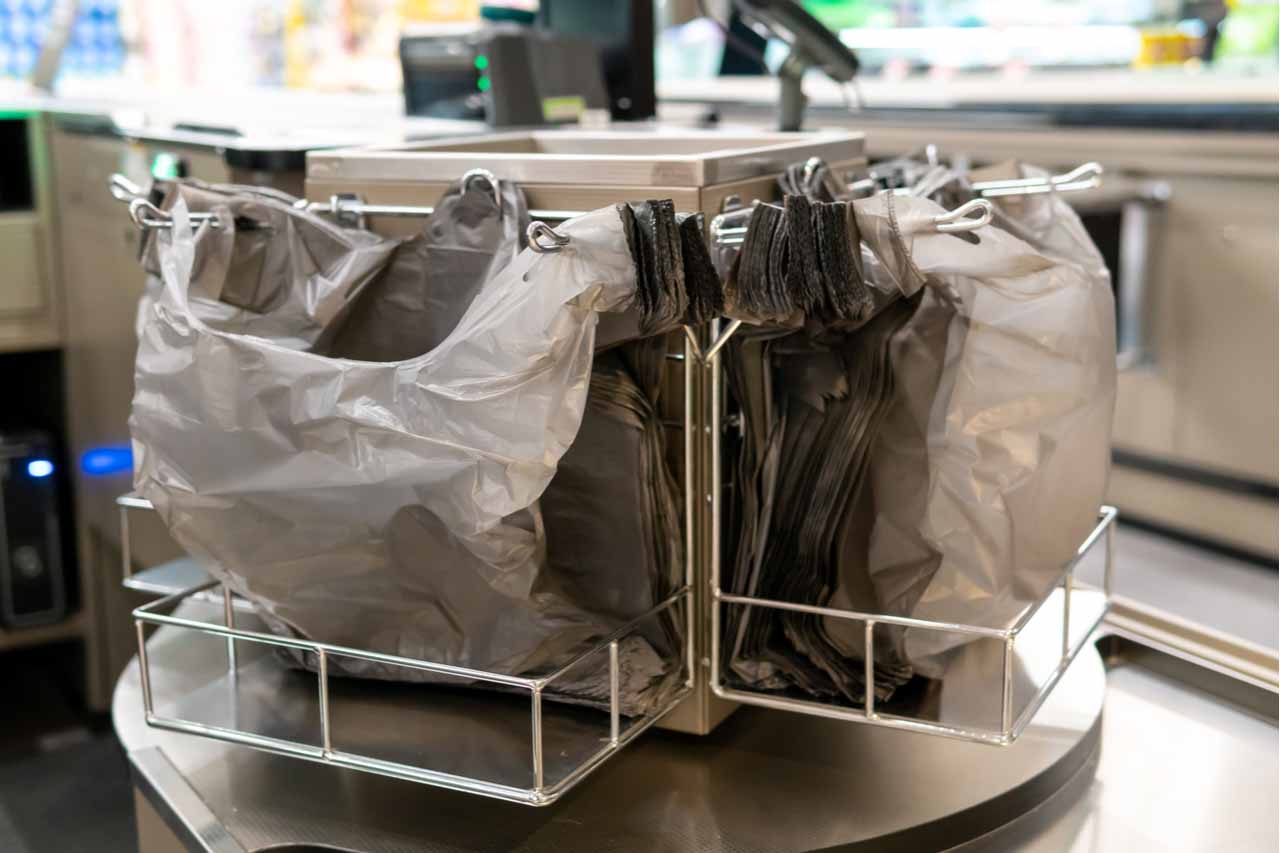
The Washington legislature passed a bill prohibiting retailers from providing single-use plastic bags and requiring reusable bags have  post-consumer content. | anystock/Shutterstock

Washington state lawmakers will send the governor a bill mandating use of recycled plastic in beverage bottles. They also passed a bill banning thin plastic bags and mandating recycled content in thicker reusable bags.

Recycled-content in bottles

House Bill 2722 requires beverage manufacturers to use an average at least 10% post-consumer content in bottles starting in 2022, 25% starting in 2025 and 50% starting in 2030.

The requirements apply to bottles that are 1 gallon or less and hold water, soda, beer or wine, among other types of drinks.

The Washington Department of Ecology would be charged with deciding whether to give beverage companies waivers of the requirements. In making the determination, the department director would have to evaluate a number of factors: the supply and demand for post-consumer plastics, collection rates, bale availability, availability of recycled plastics suitable for meeting the requirements, and more.

Under the bill, manufacturers missing the targets would be subject to fees, with the amounts varying depending on how far off target the company is. The penalty would be a per-pound fee on the company’s total pounds shortfall.

For example, a level one violation would occur if the beverage brand only got three-quarters of the way to a particular percentage target. In that case, the Department of Ecology could charge the company a fee of between 5 cents and 15 cents for each pound the company came up short. At the other end of the spectrum, a level five violation could see the state penalize the company between 25 cents and 30 cents per pound.

The Department of Ecology would be given substantial leeway in waiving or reducing fee amounts, however.

Beverage companies could appeal the Department of Ecology director’s decision on whether to grant waivers, as well as appeal any fees imposed. Appeals would be heard by the state Pollution Control Hearings Board.

The state House of Representatives passed the bill on Feb. 13 in a vote of 64-32. The Senate voted 28-21 on March 10 to approve it. The bill now heads to the desk of Gov. Jay Inslee, a Democrat known for backing environmental protection.

Bag bill includes several specifications

Lawmakers also passed a bill banning thin plastic bags and requiring recycled-plastic be used in reusable bags. Senate Bill 5323 prohibits retailers from providing customers single-use plastic bags and places an 8-cent fee on each paper or reusable plastic bag retailers provide.

It also imposes a number of requirements on the paper and thicker reusable bags that are still allowed.

To start, reusable plastic bags would need to be at least 2.25 mils thick (1 mil is equal to one-thousandth of an inch) and contain at least 20% post-consumer content. The post-consumer content requirement jumps up to 40% starting on July 1, 2022. Then, starting on Jan. 1, 2026, the minimum allowed thickness increases to 4 mils and the reusable plastic bag fee increases to 12 cents.

The state House of Representatives approved the bill on March 7 with a vote of 67-29. The Senate approved it on March 9 with a 33-15 vote. It now heads to Inslee’s desk.

If signed, the entire U.S. West Coast would have bag bans in place. California voters in fall 2016 upheld the state’s bag law, and Oregon’s law went into effect Jan. 1, 2020.
 

Tags: Film & FlexiblesLegislation & EnforcementRigid Plastics
TweetShare
Jared Paben

Jared Paben

Related Posts

EPR rules take shape in Oregon, as first test

Oregon OKs end-market verification from CAA

byStefanie Valentic
May 20, 2026

The state's Department of Environmental Quality has given the stamp of approval on CAA's Responsible End Markets program plan amendment.

Revised CA budget includes $200m for recycling

Revised CA budget includes $200m for recycling

byAntoinette Smith
May 20, 2026

Stakeholders applauded the additional allocations proposed, but would like to see distribution re-formulated to more effectively address market realities.

NJ e-scrap legislation

NJ qualifies PureCycle PP for minimum PCR law

byAntoinette Smith
May 14, 2026

The one-year conditional approval allows resin processed via the company's dissolution method to count toward the state's minimum recycled content...

Industry descends on DC to fight for PET

Industry descends on DC to fight for PET

byAntoinette Smith
May 13, 2026

Amid numerous recent hits to the common packaging plastic, a stakeholder coalition is engaging with policy makers to encourage policy...

Film end user boasts greater sales

Trex points to strength from recycled film feedstock

byAntoinette Smith
May 8, 2026

Despite persistent softness in the construction sector, the deck and railing company is leaning into marketing and innovation to convert...

PureCycle sees long-term upside from Iran war

PureCycle sees long-term upside from Iran war

byAntoinette Smith
May 7, 2026

War-related supply constraints have pushed virgin resin prices much higher while feedstock bales for recycled PP have seen less dramatic...

Load More
Next Post

Dispatches from Europe: Trying to define 'single-use plastic'

More Posts

Bottle bill backers see opportunity for action

PET collapse exposes gaps in US recycling infrastructure

May 15, 2026
Niagara acquires rPlanet Earth assets in California

Niagara acquires rPlanet Earth assets in California

May 15, 2026
Revised CA budget includes $200m for recycling

Revised CA budget includes $200m for recycling

May 20, 2026
Plastic packaging

Why SB 54 source reduction planning is becoming the industry’s most challenging EPR test

May 19, 2026
Extruder pushes out natural HDPE pellets at KW Plastics in Troy, Alabama.

Rare look inside the world’s largest plastics recycler

May 13, 2026
NJ e-scrap legislation

NJ qualifies PureCycle PP for minimum PCR law

May 14, 2026

Before the Bin: America’s textile waste problem starts in your closet

May 19, 2026
Retail aisle with paper and plastic packaging.

Loblaw’s recyclability push could reshape packaging design across North America

May 14, 2026
Industry descends on DC to fight for PET

Industry descends on DC to fight for PET

May 13, 2026
APR, industry groups testify on overcapacity

APR, industry groups testify on overcapacity

May 8, 2026
Load More

About & Publications

About Us

Staff

Archive

Magazine

Work With Us

Advertise
Jobs
Contact
Terms and Privacy

Newsletter

Get the latest recycling news and analysis delivered to your inbox every week. Stay ahead on industry trends, policy updates, and insights from programs, processors, and innovators.

Subscribe

Welcome Back!

Login to your account below

Forgotten Password?

Retrieve your password

Please enter your username or email address to reset your password.

Log In

Add New Playlist

No Result
View All Result
  • The Latest
  • Analysis
  • Recycling
  • E-Scrap
  • Plastics
  • Policy Now
  • Conferences
    • E-Scrap Conference
    • Plastics Recycling Conference
    • Resource Recycling Conference
    • Textiles Recovery Summit
  • Magazine
  • About Us
  • Advertise
  • Archive
  • Jobs
  • Staff
Subscribe
This website uses cookies. By continuing to use this website you are giving consent to cookies being used. Visit our Privacy and Cookie Policy.