



Resource Recycling
  • The Latest
  • Analysis
    • All
    • Certification Scorecard
    • Industry Announcements
    • Opinion

    Certification Scorecard — Week of June 8, 2026

    ITAD is moving past its adolescent phase: beyond end-of-life

    Rainforest

    Inside the Circle: What the rainforest can teach us about EPR

    Closeup of a printed circuitboard

    Hardware demand puts new focus on parts harvesting

    Rare look inside the world’s largest plastics recycler

    Mass balance matters: Why different rules can lead to different outcomes 

    Certification Scorecard — Week of June 1, 2026

  • Conferences
    • Resource Recycling Conference
    • Plastics Recycling Conference
    • E-Scrap: The Longevity Conference
    • Textiles Recovery Summit
  • Publications
    • E-Scrap News
    • Plastics Recycling Update
    • Policy Now
    • Resource Recycling
    • Other Topics
      • All Topics
      • Brand Owners
      • Critical Minerals
      • Glass
      • Grant Watch / RFPs
      • Markets
      • Organics
      • Packaging
      • Research
      • Technology
      • Textiles
Subscribe
No Result
View All Result
Resource Recycling
  • The Latest
  • Analysis
    • All
    • Certification Scorecard
    • Industry Announcements
    • Opinion

    Certification Scorecard — Week of June 8, 2026

    ITAD is moving past its adolescent phase: beyond end-of-life

    Rainforest

    Inside the Circle: What the rainforest can teach us about EPR

    Closeup of a printed circuitboard

    Hardware demand puts new focus on parts harvesting

    Rare look inside the world’s largest plastics recycler

    Mass balance matters: Why different rules can lead to different outcomes 

    Certification Scorecard — Week of June 1, 2026

  • Conferences
    • Resource Recycling Conference
    • Plastics Recycling Conference
    • E-Scrap: The Longevity Conference
    • Textiles Recovery Summit
  • Publications
    • E-Scrap News
    • Plastics Recycling Update
    • Policy Now
    • Resource Recycling
    • Other Topics
      • All Topics
      • Brand Owners
      • Critical Minerals
      • Glass
      • Grant Watch / RFPs
      • Markets
      • Organics
      • Packaging
      • Research
      • Technology
      • Textiles
Subscribe
No Result
View All Result
Resource Recycling
No Result
View All Result
Home Analysis Opinion

In Our Opinion: Consider nuance in recent labeling changes

byHow2Recycle Staff
March 4, 2020
in Opinion
In Our Opinion: Consider nuance in recent labeling changes
How2Recycle Staff emphasize that knowing what not to recycle is just as important as knowing what to recycle. | Dan Leif/Resource Recycling, Inc.

Editor’s note: The How2Recycle labeling initiative, a project of the Sustainable Packaging Coalition, recently downgraded the recyclability of several plastic types. Shortly after, environmental advocacy group Greenpeace released a report charting discrepancies in how products are labeled for recyclability, and how frequently they are actually recycled. 

In light of the developments, Plastics Recycling Update queried How2Recycle for the organization’s response. The following was authored by the team at How2Recycle.


It’s tempting sometimes to focus on the negative.

It’s perfectly acceptable to be disappointed that we have a fragmented, difficult to understand recycling system. It would be so much easier if recyclability didn’t change over time, and if recycling was the same in all cities and states. But it’s not. Recycling in the U.S. is complex. In addition, our recycling industry is in transition, adjusting from the loss of China’s markets and building to meet the needs of recent brand commitments for recycled content.

We choose transparency and education. The How2Recycle label helps consumers identify what to do with each part of a package. We’re putting that information right in front of consumers to empower them to know when an item may not get recycled or when the sleeve label needs to be removed. The How2Recycle label also educates brands on what good design looks like when they apply for each label.

It is true that some materials are easier to recycle than other materials. What is more important than the resin type for commonly acceptable materials is the comprehensive package design that includes labels, color and attachments. Continued attention to designing packaging for recyclability will be critical to build strong recycling streams for these materials into the future.

How is recyclability determined? How2Recycle assesses recyclability based on compatibility with the entire recycling process, including acceptance in collection programs but also encompassing considerations surrounding sortation, reprocessing and end-market demand. This is aligned with Federal Trade Commission guidelines (aka Green Guides) for what environmental marketing claims are permissible, to prevent consumer deception.

In order to avoid consumer deception and increase the transparency, reliability and completeness of recyclability claims, all How2Recycle members should be well-versed in the Green Guides. Each How2Recycle label is backed by scientifically credible data so that the general public can rely on a consistent, standardized labeling system run by a 501(c)(3) environmental nonprofit to know how to recycle more accurately.

Recently the recyclability designations for certain categories of plastic packaging were adjusted based on new research. The How2Recycle program continuously leverages the best available data to support accurate recyclability designations and encourages brand owners to be transparent and thorough when communicating recyclability. Many products carry multiple labels, including the “Not Yet Recycled” label, to cover all the components of the packaging. This label applies to items that are contaminants to the recycling stream, or where fewer than 20% of Americans have the ability to recycle that item in their community. Knowing what not to recycle is just as important as knowing what to recycle, so the “Not Yet Recycled” label helps prevent contamination in the stream and confusion for consumers.

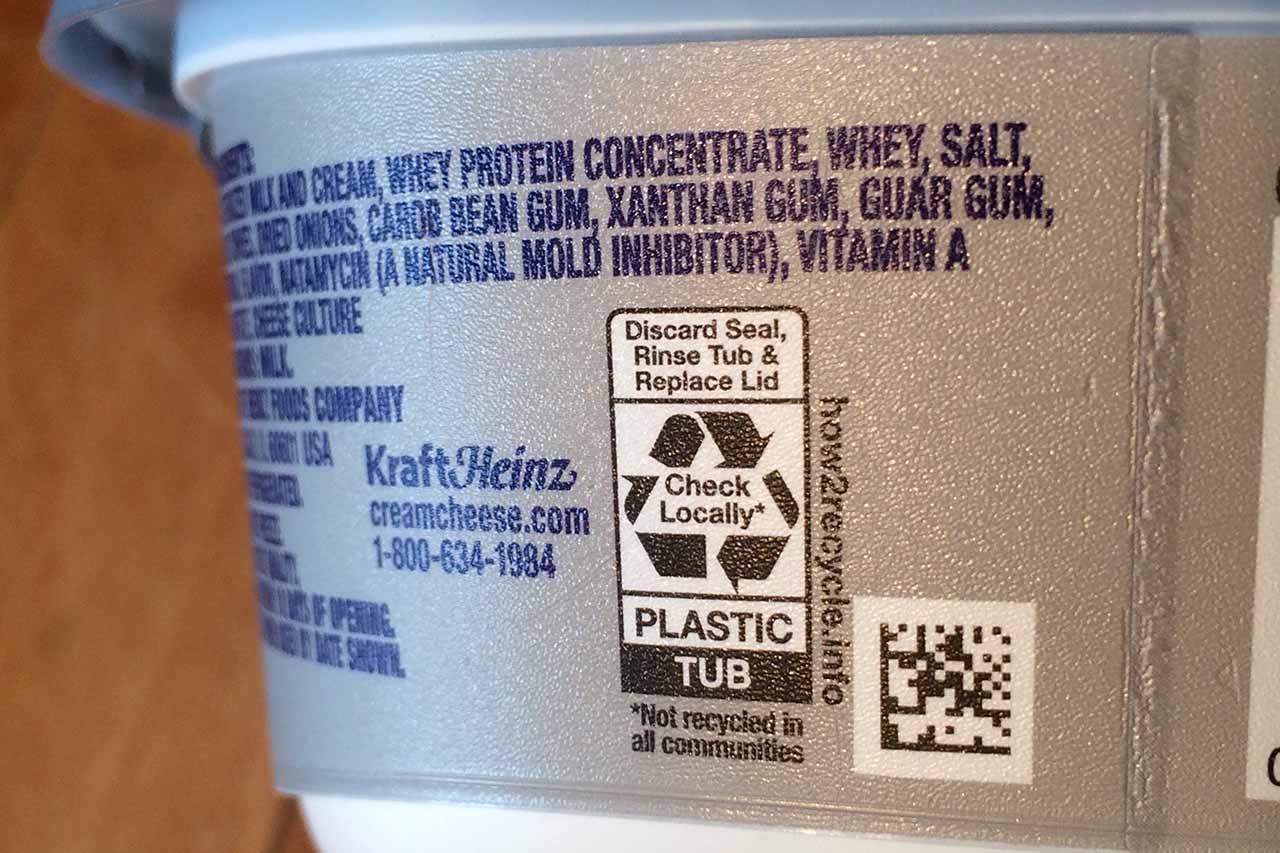
The “Check Locally” label is a qualified claim that directly states, “Not recycled in all communities.” The qualifier suggests that some aspect of the standard for recyclability may not meet the requirements for an unqualified claim, including when there is uncertainty or volatility in the substantiation data behind the claim. This informs the consumer that there is a chance that the item may not be recycled in their community, but is also an opportunity for regional education for items that vary in acceptance in collection programs. Consumers can check through the URL on the label to see if the items with the “Check Locally” label are accepted in their community or call their community program directly to ask questions.

In January 2020, How2Recycle moved rigid polypropylene packaging from “Widely Recycled” to “Check Locally,” using data collected in December 2019 with the methodology of our SPC Centralized Availability of Recycling Study 2016. This decision was made because while access to recycle polypropylene was found to be just above 60%, some communities are landfilling and incinerating the material post-collection. This presents sufficient uncertainty to require a disclaimer per FTC guidance. Polypropylene still has reprocessability and strong end markets.

PET thermoforms were also moved to the “Check Locally” category because access to recycle these items fell below the 60% threshold set out by FTC.

The recycling industry is currently still adjusting to the evolving international landscape of markets for recyclables, and recyclability claims may continue to change as capacity is built in North America. New corporate recyclability goals include aggressive use of recycled content that will drive improvements in infrastructure and create new market opportunities.

Given the problems with our recycling system and the complexity of packaging, challenging the companies that aren’t labeling their packaging at all might be the most effective strategy for other organizations and consumers interested in these issues.

We expect that the current qualified claims will move back to “Widely Recycled” in the future.

The views and opinions expressed are those of the author and do not imply endorsement by Resource Recycling, Inc. If you have a subject you wish to cover in an op-ed, please send a short proposal to [email protected] for consideration.
 

Tags: Brand OwnersCollectionPETPP
TweetShare
How2Recycle Staff

How2Recycle Staff

Related Posts

Northeast recycled commodity values hit 5-year lows

‘Recycling Demand Champions’ honored by APR

byPaul Lane
June 10, 2026

APR is honoring companies committed to using recycled plastic, and it’s looking for more businesses to join the cause.

Various PET thermoform containers.

Thermoform recovery soars, PCR content falls

byAntoinette Smith
June 10, 2026

In its first standalone PET thermoform market analysis, NAPCOR examined production, recycling, PCR use and policy in North America.

Three-bill package aims to revamp Michigan’s bottle return system

byStefanie Valentic
June 9, 2026

Michigan lawmakers introduced a bipartisan three-bill package aimed at strengthening consumer access to bottle deposit refunds and clarifying retailer obligations...

NYC, Mack Trucks unveil winning artwork

NYC, Mack Trucks unveil winning artwork

byAntoinette Smith
June 4, 2026

The five new hand-painted waste collection trucks feature themes of honor, resilience and care, and will operate in the city's...

War, not demand driving polymer pricing

War, not demand driving polymer pricing

byAntoinette Smith
June 2, 2026

While prices for recycled commodities are tracking rises in virgin markets, few transactions are occurring, said an ICIS analyst.

Q1 containerboard exports drop by 19%

What SB 54 looks like from the packaging floor

byStefanie Valentic
June 1, 2026

With compliance deadlines coming on quickly, smaller companies are struggling to absorb changes and stay on the right side of...

Load More
Next Post
Materials giant buys e-plastics recycling companies

Materials giant buys e-plastics recycling companies

More Posts

Recycling industry addresses Beyond Plastics report

Recycling industry addresses Beyond Plastics report

May 26, 2026
House resolution aims to make recyclability central to product design

NY EPR bill fails to advance after third try

June 8, 2026
CalRecycle withdraws proposed regs for SB 54

Oceana, NRDC, CAW sue CalRecycle over SB 54 regs

June 5, 2026
Rare look inside the world’s largest plastics recycler

Mass balance matters: Why different rules can lead to different outcomes 

June 5, 2026
Various PET thermoform containers.

Thermoform recovery soars, PCR content falls

June 10, 2026
Circular Materials to supply PlasCred chem recycling plant

Circular Materials to supply PlasCred chem recycling plant

June 4, 2026

Three-bill package aims to revamp Michigan’s bottle return system

June 9, 2026
Rainforest

Inside the Circle: What the rainforest can teach us about EPR

June 8, 2026
IT asset disposition and electronics recycling: Now and then

$60 billion in AI servers will create an ITAD challenge

June 3, 2026

Battery fires still a major risk to recyclers: report

June 9, 2026
Load More

About & Publications

About Us

Staff

Archive

Magazine

Work With Us

Advertise
Jobs
Contact
Terms and Privacy

Newsletter

Get the latest recycling news and analysis delivered to your inbox every week. Stay ahead on industry trends, policy updates, and insights from programs, processors, and innovators.

Subscribe

Welcome Back!

Login to your account below

Forgotten Password?

Retrieve your password

Please enter your username or email address to reset your password.

Log In

Add New Playlist

No Result
View All Result
  • The Latest
  • Analysis
  • Recycling
  • E-Scrap
  • Plastics
  • Policy Now
  • Conferences
    • E-Scrap Conference
    • Plastics Recycling Conference
    • Resource Recycling Conference
    • Textiles Recovery Summit
  • Magazine
  • About Us
  • Advertise
  • Archive
  • Jobs
  • Staff
Subscribe
This website uses cookies. By continuing to use this website you are giving consent to cookies being used. Visit our Privacy and Cookie Policy.