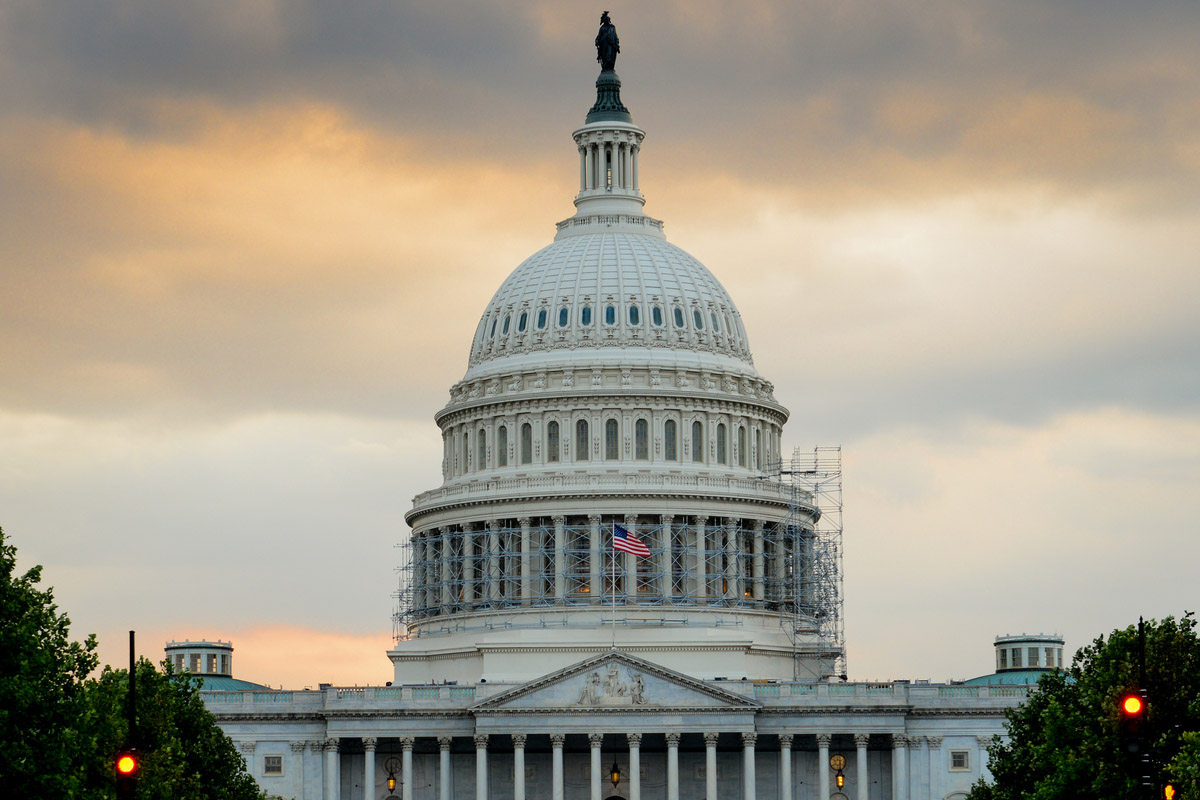
Two federal legislators have introduced a comprehensive waste management and recycling support bill. This week, they shared details about the legislation and expressed optimism that it will garner bipartisan support.
Sen. Tom Udall, D-N.M., and Rep. Alan Lowenthal, D-Calif., have introduced the “Break Free From Plastic Pollution Act of 2020.” The bill enacts nationwide extended producer responsibility (EPR) for all packaging materials, minimum-recycled-content mandates for certain products, a national container deposit, single-use plastic product bans, a three-year pause on new virgin plastics production facilities, and more.
“Today, producers have zero responsibility for their product waste,” Udall said during a Feb. 10 press event. “They have no incentive to reduce wasteful production and no incentive to create recyclable and sustainable products.”
During the event, Lowenthal described the bill as “the most comprehensive” legislation ever introduced in Congress to tackle the plastic waste crisis, and he noted the EPR component is a key part of the bill. The legislation, he said, “removes the burden of waste collection and recycling from the cities, from states and most importantly from taxpayers, and puts it where it belongs: On the producers and the companies putting out these unsustainable products into the marketplace.”
The lawmakers and multiple recycling policy advocates told reporters about the legislation’s development, its inner workings and their take on its chances for approval in Congress.
Congressional and industry support?
The bill’s components were outlined last fall, and the final proposal has been in development since then.
“We have had a real consensus-building process where we’ve asked industry to come in, we’ve asked them to comment, we’ve asked for their ideas, and we’ve incorporated many of their ideas into the bill we have today,” Udall said.
He added there is “tremendous bipartisan support” in the current Congress for tackling plastic waste problems. Lowenthal added that early on, he anticipates plastics industry stakeholders will largely want to continue the status quo. But there is a nationwide groundswell of realization that the status quo is not doing enough to tackle the problems, he said, and in the long run the legislation will benefit the industry by allowing it to continue in a more sustainable manner.”If you want to have a plastics industry and you want to grow that industry,” Lowenthal said, “we have to change our model in terms of who’s responsible, who’s paying for it. … Without us having a bill like this, the plastic industry will not be able to grow.”
Scott Cassel, CEO of the Product Stewardship Institute, said his organization has worked with product producers on EPR laws for 20 years and has noticed a pattern in legislative development.
“Producers have a pattern of how they oppose things in the beginning and then will come to the table,” he said.
Cassel explained that the national comprehensive system could help producers in another way, as well. Currently, EPR and product bans are enacted at the state and local levels, and laws vary widely.
“What this creates is a patchwork for the producers, and it creates a headache for many of them,” he said. “So we’ve been seeing interest on the state level and then even at the federal level here at some kind of a comprehensive solution.”
Learn more in person
Jonathan Black, lead environmental policy adviser to Sen. Tom Udall, D-N.M., will speak about the Break Free From Plastic Pollution Act of 2020 at next week’s Plastics Recycling Conference and Trade Show.
Black will be participating in the conference’s opening session, “Legislation in the Spotlight,” at 8:30 a.m. on Tuesday, Feb. 18. Keep an eye on the conference schedule for updates on that session and others.
Regardless of whether the proposal gains traction in Congress, the lawmakers noted the bill serves as a model for states and local governments to use in crafting their own legislation. Udall said he anticipates local governments across the country will start replicating the bill or components of it for introduction in their own lawmaking processes.
Municipal support and more
The lawmakers framed the bill with a particular emphasis on helping local recycling programs. They referenced the market turmoil of the last few years and noted municipal recycling costs have skyrocketed to the point where some programs have ended service.
“Taxpayers are footing the bill for failing recycling programs,” Udall said. “The time has come to break free from this failed system.”
He and Lowenthal offered a “conservative estimate” of $10 billion a year that taxpayers are paying for recycling programs.
“When people realize how important it is to shift responsibility to producers, this proposal will gain more traction,” Udall said.
The proposal also includes a national bottle bill, which experts say would significantly boost the container recycling rate. This provision would add a 10-cent deposit on all beverage containers, regardless of material type.
“Currently, only 10 states have a container deposit law, but these programs are so powerful that nearly half of the beverage containers recycled in the U.S. come from these 10 states,” said Susan Collins, executive director of the Container Recycling Institute, which advocates for bottle bills.
“This landmark legislation for a national container deposit law and minimum recycled content would introduce the most effective beverage container recycling system available throughout the nation,” Collins said.
The minimum-recycled-content standards laid out in the bill would require an increasing percentage of recycled material to be used in beverage containers, other packaging, food-service products and more. For plastic beverage containers, the bill lays out a requirement of 25% recycled content by 2025, 30% by 2030, 50% by 2035 and 80% by 2040. Requirements for other covered products would be set by the EPA administrator in coordination with other stakeholders.
Lowenthal said this provision will “ensure that producers now have to think about the end use of their products when designing their products.”
The bill would also implement a moratorium on construction of new plastics production facilities. The idea, Udall explained, would be to put in place a three-year halt while the EPA updates various regulations and gathers information on the environmental impact of these plants.
A step further than previous proposals
The lawmakers drew a distinction between their legislation and the Save Our Seas 2.0 Act, which creates a number of incentive programs and allocates government resources to reduce plastic waste in marine environments. The Save Our Seas 2.0 Act was recently approved by the Senate.
Udall said the Break Free From Plastic Pollution Act approaches the problem from a different angle than previous bills. Past proposals, he noted, have “been mostly supplied by industry, who would rather see taxpayers and the government resolve the issue.”
Lowenthal said the Save Our Seas 2.0 Act is “a good step, but it doesn’t deal with the source of the problem, and it doesn’t put the responsibility on the producers for the financial resources needed for the design and the management of cleaning it up.”
Alex Truelove, Zero Waste campaign director for the U.S. Public Interest Research Group, compared plastic waste pollution to an overflowing bathtub.
“I compare the Save Our Seas Act 2.0 to an attempt to clean up the water that’s overflowed onto the floor, if you will,” he said. “And what this bill does, I think, is turn off the faucet, and so we need it regardless of what Save Our Seas 2.0 or other bills attempt to do after the fact.”
Industry groups and environmental advocates quickly released statements in response to the legislative proposal.
Ocean cleanup advocacy group Oceana praised the bill for tackling plastic pollution at the source.
“The plastics industry has polluted our environment, refused to give consumers plastic-free choices and is instead ramping up plastic production, so it’s now time for federal action,” Oceana board member and actor Ted Danson said in a statement.
The Plastics Industry Association, meanwhile, said the bill as currently written would not effectively address pollution in the U.S. or globally.
“The title of this bill suggests it is more interested in garnering headlines than it is in finding solutions,” said Tony Radoszewski, president and CEO of the industry group, in a statement.
A version of this story appeared in Resource Recycling on February 11.