












Resource Recycling
  • The Latest
  • Analysis
    • All
    • Certification Scorecard
    • Industry Announcements
    • Opinion
    The electronics recycling industry is undergoing a transformation from labor-intensive manual operations to highly automated, AI-driven facilities that use advanced robotics, cleaner chemistry and digital tracking systems to extract critical materials.

    The cyber-physical MRF: AI and robotics reshape e-waste recovery

    Certification scorecard for the week of Feb. 9, 2026

    Meta-Corning deal signals IT hardware retirement wave

    Meta-Corning deal signals IT hardware retirement wave

    Malaysia clamps down on illegal e-waste imports amid probes

    Malaysia clamps down on illegal e-waste imports amid probes

    URT builds alliance to remake electronics plastics at scale

    ICYMI: Top 5 e-scrap stories from January 2026

    The electronics recycling industry is undergoing a transformation from labor-intensive manual operations to highly automated, AI-driven facilities that use advanced robotics, cleaner chemistry and digital tracking systems to extract critical materials.

    Certification scorecard for the week of Feb. 2, 2026

    Auditors warn EU may fall short on critical metals

    Auditors warn EU may fall short on critical metals

    Industry announcements for January 2026

    Industry announcements for February 2026

    ICYMI: Top 5 recycling stories from January 2026

  • Conferences
  • Publications

    Other Topics

    Textiles
    Organics
    Packaging
    Glass
    Brand Owners

    Metals
    Technology
    Research
    Markets
    Grant Watch

    All Topics

Subscribe
No Result
View All Result
Resource Recycling
  • The Latest
  • Analysis
    • All
    • Certification Scorecard
    • Industry Announcements
    • Opinion
    The electronics recycling industry is undergoing a transformation from labor-intensive manual operations to highly automated, AI-driven facilities that use advanced robotics, cleaner chemistry and digital tracking systems to extract critical materials.

    The cyber-physical MRF: AI and robotics reshape e-waste recovery

    Certification scorecard for the week of Feb. 9, 2026

    Meta-Corning deal signals IT hardware retirement wave

    Meta-Corning deal signals IT hardware retirement wave

    Malaysia clamps down on illegal e-waste imports amid probes

    Malaysia clamps down on illegal e-waste imports amid probes

    URT builds alliance to remake electronics plastics at scale

    ICYMI: Top 5 e-scrap stories from January 2026

    The electronics recycling industry is undergoing a transformation from labor-intensive manual operations to highly automated, AI-driven facilities that use advanced robotics, cleaner chemistry and digital tracking systems to extract critical materials.

    Certification scorecard for the week of Feb. 2, 2026

    Auditors warn EU may fall short on critical metals

    Auditors warn EU may fall short on critical metals

    Industry announcements for January 2026

    Industry announcements for February 2026

    ICYMI: Top 5 recycling stories from January 2026

  • Conferences
  • Publications

    Other Topics

    Textiles
    Organics
    Packaging
    Glass
    Brand Owners

    Metals
    Technology
    Research
    Markets
    Grant Watch

    All Topics

Subscribe
No Result
View All Result
Resource Recycling
No Result
View All Result
Home E-Scrap

US EPA begins largest lithium-ion battery cleanup effort

Stefanie ValenticbyStefanie Valentic
October 8, 2025
in E-Scrap
US EPA begins largest lithium-ion battery cleanup effort

As lithium-ion battery fires increasingly threaten recycling facilities and landfills nationwide, the US EPA is preparing to undertake its largest lithium-battery remediation efforts to date.

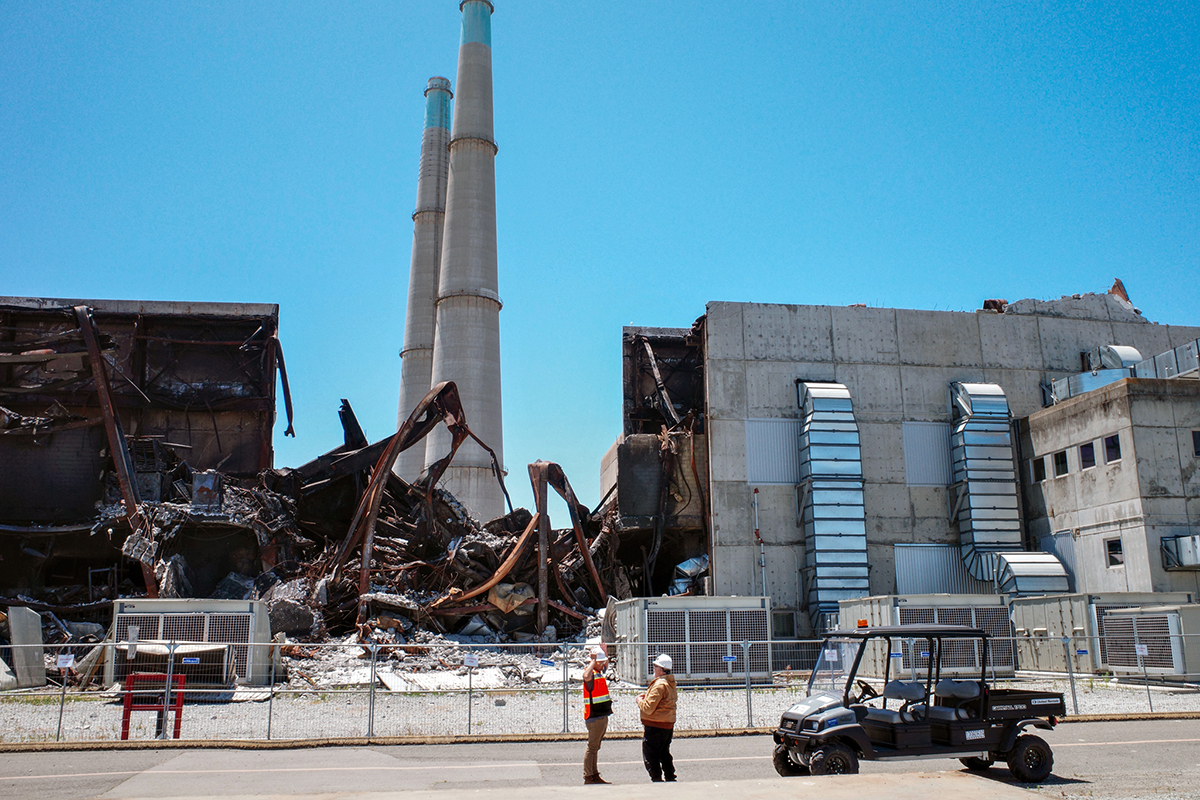
On Sept. 29, workers removed the first set of batteries from the Moss Landing 300 building. The cleanup is related to a massive thermal runaway incident that occurred at energy company Vistra Corp’s 300-megawatt battery energy storage facility on Jan. 16, 2025.

The California facility housed nearly 100,000 lithium-ion battery modules, of which 55% were damaged. The EPA, fire response units and local agencies continued battling the blaze for two days until it was contained. A flare-up caused further damage on Feb. 18.

“After months of careful planning and prep work by our experts to safely execute this unprecedented lithium-ion battery cleanup, the removal of potentially dangerous batteries begins,” said EPA Pacific Southwest Region Superfund and Emergency Management Director Mike Montgomery, in a statement.

Vistra agreed to remediation and removal obligations with the EPA in July. The efforts required Vistra, under EPA’s watch, to follow detailed, agency-approved plans, add safety measures to protect residents and workers during cleanups and participate in community involvement activities to “enable meaningful public engagement throughout the removal process.”

“We have been working for the last few months to design battery removal procedures that prioritize worker safety, community needs, environmental protection and battery stability,” Vistra stated in an update on its website. “After receiving EPA input and approval of the procedure, workers were trained on it and conducted physical run-throughs of the work process to remove a portion of the batteries that were not impacted by the fire. Once removed from the building, the batteries will be placed in a staging area on site, where they will be safely discharged.”

The EPA also mandated Vistra performs air monitoring and air sampling during the process. A private firefighting company must be contracted to remain on-site 24/7 and Vistra must execute an agency-approved emergency response plan.

Prior to the July agreement, the agency completed disconnection of batteries from Vistra’s building infrastructure, removed asbestos-ridden debris from damaged parts and sent 586,300 gallons of water stored in tanks on the property.

Structural engineers reviewed and approved key areas of the facility to begin removal at the end of September, following months of investigation. Workers are removing battery modules individually to ensure proper discharge.

The modules then go through an assessment process. Based on the level of damage, batteries are de-energized then securely packaged and transported via truck to EPA-approved recycling facilities if materials are recoverable. The EPA noted American Battery Technology Company in McCarran, Nevada, as one of the participating facilities.

Removal efforts for recoverable batteries will continue through the remainder of 2025. The EPA defined intact as “batteries with no damage or minor damage from the fire.”

While the exact length of time it will take to clean up is unknown, the US EPA told Montgomery County, California, officials that it could take up to two years or more.

“Safety will remain our top priority throughout the process, for workers, first responders and the surrounding community. EPA will continue to be on-the-ground overseeing the removal of these batteries as quickly and safely as possible,” Montgomery said.


Tags: BatteriesPolicy Now
TweetShare
Stefanie Valentic

Stefanie Valentic

Stefanie Valentic is an award-winning journalist who has covered the waste and recycling industry for more than five years. Throughout her career, she has led editorial teams and served as a keynote speaker, moderator and panelist at numerous trade shows and conferences.

Related Posts

Wisconsin proposes E-Cycle target revisions

Wisconsin proposes E-Cycle target revisions

byScott Snowden
February 17, 2026

Wisconsin regulators have released a draft rule that would revise how manufacturer recycling targets are calculated, establish clearer standards for...

States push recycling reform forward in new year

byStefanie Valentic
February 2, 2026

New Jersey just passed a bill restricting single-use plastic items, California has opened another round of public comment on SB...

Stakeholders respond to California recyclability report

CalRecycle opens SB 54 draft for comments

byStefanie Valentic
February 2, 2026

Editor’s Note: California EPR will be featured in sessions at the co-located 2026 Resource Recycling Conference and Plastics Recycling Conference,...

Blue Whale scales up battery recycling in OK

byScott Snowden
January 26, 2026

Blue Whale Materials is expanding its Bartlesville, Oklahoma battery recycling site, scaling Blacksand output for refiners seeking US cobalt, nickel...

Battery recycling company settles environmental case

Call2Recycle rebrand signals broader role in US recycling

byScott Snowden
January 13, 2026

The organization, now called The Battery Network, is assuming an expanded role in battery logistics, EPR compliance and critical material...

January fire data drives shift in recycling safety

byScott Snowden
January 6, 2026

A new industry guide addresses rising lithium-ion battery fires at recycling facilities as data shows a record 448 reported incidents...

Load More
Next Post
E-Scrap EPR round-up part 3: Illinois and Oregon

E-Scrap EPR round-up part 3: Illinois and Oregon

More Posts

Chinese processing group details goals for US visit

AMP lays out vision of next-generation, AI-driven MRFs

July 24, 2024
Malaysia clamps down on illegal e-waste imports amid probes

Malaysia clamps down on illegal e-waste imports amid probes

February 6, 2026
Bipartisan reps introduce bill on recycling claims

Bipartisan reps introduce bill on recycling claims

February 12, 2026

APR, industry create proactive guidance for PET caps

February 12, 2026
NERC: Blended average prices fell 40% in third quarter

HDPE, PP bales rise as paper fiber and cans stabilize

February 12, 2026
Oregon’s Recycling Modernization Act faces injunction

Court partially blocks Oregon EPR law, dismisses bulk of lawsuit

February 10, 2026
The electronics recycling industry is undergoing a transformation from labor-intensive manual operations to highly automated, AI-driven facilities that use advanced robotics, cleaner chemistry and digital tracking systems to extract critical materials.

The cyber-physical MRF: AI and robotics reshape e-waste recovery

February 12, 2026
Meta-Corning deal signals IT hardware retirement wave

Meta-Corning deal signals IT hardware retirement wave

February 9, 2026
Texas sues over dumped wind turbine blades

Texas sues over dumped wind turbine blades

February 10, 2026

Alpek talks PET overcapacity, soft demand

February 11, 2026
Load More

About & Publications

About Us

Staff

Archive

Magazine

Work With Us

Advertise
Jobs
Contact
Terms and Privacy

Newsletter

Get the latest recycling news and analysis delivered to your inbox every week. Stay ahead on industry trends, policy updates, and insights from programs, processors, and innovators.

Subscribe

Welcome Back!

Login to your account below

Forgotten Password?

Retrieve your password

Please enter your username or email address to reset your password.

Log In

Add New Playlist

No Result
View All Result
  • The Latest
  • Analysis
  • Recycling
  • E-Scrap
  • Plastics
  • Policy Now
  • Conferences
    • E-Scrap Conference
    • Plastics Recycling Conference
    • Resource Recycling Conference
    • Textiles Recovery Summit
  • Magazine
  • About Us
  • Advertise
  • Archive
  • Jobs
  • Staff
Subscribe
This website uses cookies. By continuing to use this website you are giving consent to cookies being used. Visit our Privacy and Cookie Policy.