




Resource Recycling
  • The Latest
  • Analysis
    • All
    • Certification Scorecard
    • Industry Announcements
    • Opinion
    The electronics recycling industry is undergoing a transformation from labor-intensive manual operations to highly automated, AI-driven facilities that use advanced robotics, cleaner chemistry and digital tracking systems to extract critical materials.

    The cyber-physical MRF: AI and robotics reshape e-waste recovery

    Certification scorecard for the week of Feb. 9, 2026

    Meta-Corning deal signals IT hardware retirement wave

    Meta-Corning deal signals IT hardware retirement wave

    Malaysia clamps down on illegal e-waste imports amid probes

    Malaysia clamps down on illegal e-waste imports amid probes

    URT builds alliance to remake electronics plastics at scale

    ICYMI: Top 5 e-scrap stories from January 2026

    The electronics recycling industry is undergoing a transformation from labor-intensive manual operations to highly automated, AI-driven facilities that use advanced robotics, cleaner chemistry and digital tracking systems to extract critical materials.

    Certification scorecard for the week of Feb. 2, 2026

    Auditors warn EU may fall short on critical metals

    Auditors warn EU may fall short on critical metals

    Industry announcements for January 2026

    Industry announcements for February 2026

    ICYMI: Top 5 recycling stories from January 2026

  • Conferences
  • Publications

    Other Topics

    Textiles
    Organics
    Packaging
    Glass
    Brand Owners

    Metals
    Technology
    Research
    Markets
    Grant Watch

    All Topics

Subscribe
No Result
View All Result
Resource Recycling
  • The Latest
  • Analysis
    • All
    • Certification Scorecard
    • Industry Announcements
    • Opinion
    The electronics recycling industry is undergoing a transformation from labor-intensive manual operations to highly automated, AI-driven facilities that use advanced robotics, cleaner chemistry and digital tracking systems to extract critical materials.

    The cyber-physical MRF: AI and robotics reshape e-waste recovery

    Certification scorecard for the week of Feb. 9, 2026

    Meta-Corning deal signals IT hardware retirement wave

    Meta-Corning deal signals IT hardware retirement wave

    Malaysia clamps down on illegal e-waste imports amid probes

    Malaysia clamps down on illegal e-waste imports amid probes

    URT builds alliance to remake electronics plastics at scale

    ICYMI: Top 5 e-scrap stories from January 2026

    The electronics recycling industry is undergoing a transformation from labor-intensive manual operations to highly automated, AI-driven facilities that use advanced robotics, cleaner chemistry and digital tracking systems to extract critical materials.

    Certification scorecard for the week of Feb. 2, 2026

    Auditors warn EU may fall short on critical metals

    Auditors warn EU may fall short on critical metals

    Industry announcements for January 2026

    Industry announcements for February 2026

    ICYMI: Top 5 recycling stories from January 2026

  • Conferences
  • Publications

    Other Topics

    Textiles
    Organics
    Packaging
    Glass
    Brand Owners

    Metals
    Technology
    Research
    Markets
    Grant Watch

    All Topics

Subscribe
No Result
View All Result
Resource Recycling
No Result
View All Result
Home E-Scrap

Processor fined for CRT-driven lead, cadmium exposure

Colin StaubbyColin Staub
October 17, 2024
in E-Scrap
Processor fined for CRT-driven lead, cadmium exposure

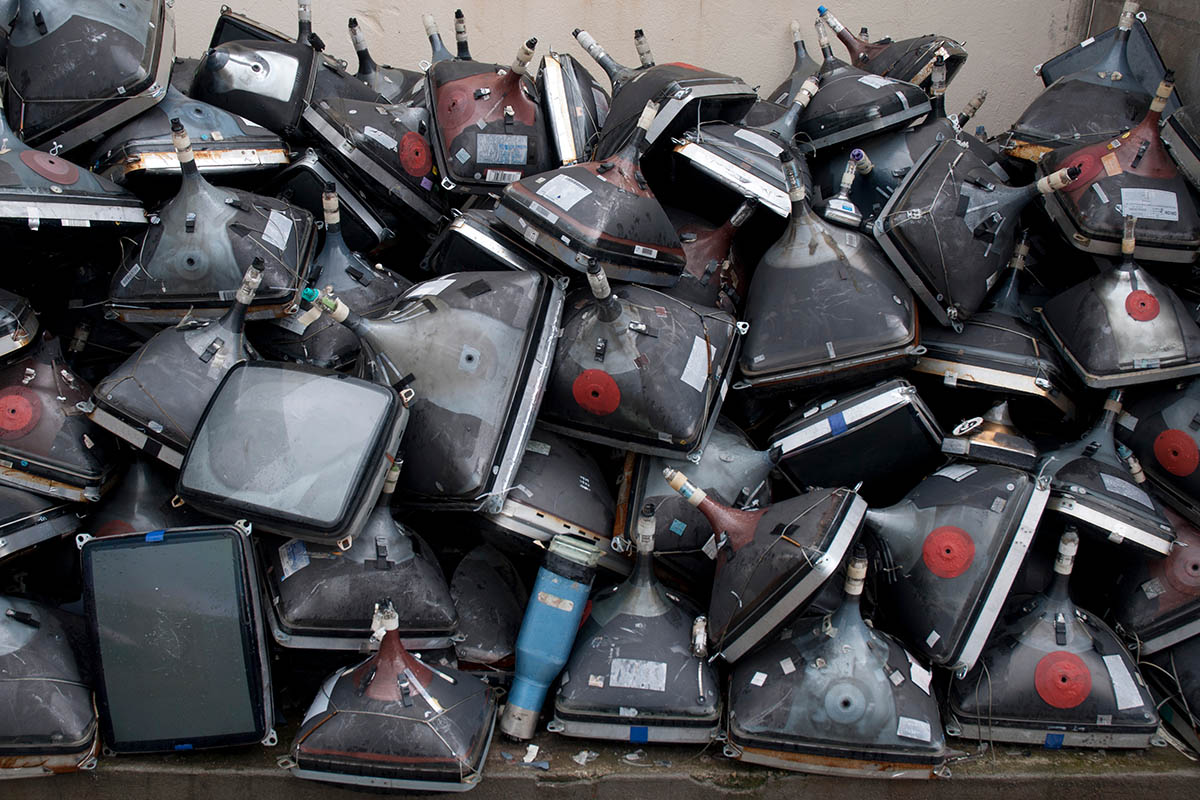
Federal regulators have fined URT more than $200,000 for multiple instances of workers exposed to elevated lead and cadmium levels during cathode ray tube device dismantling at the company’s Wisconsin location.

The Occupational Safety & Health Administration, part of the U.S. Department of Labor, on Oct. 9 announced that an inspection at the Janesville, Wisconsin, plant revealed two “repeat” violations, six “serious” violations and one non-serious violation of workplace safety regulations.

Overall, OSHA found URT “failed to implement adequate engineering controls and did not keep surfaces as free as practicable from lead and cadmium accumulations.” OSHA proposed $202,820 in fines for the violations.

OSHA noted that the violations came after URT was cited for many of the same issues in April 2023, leading to the “repeat” label on multiple violations.

In an Oct. 14 statement shared with E-Scrap News, URT stated that company President Ken Thomas “expressed surprise at the citation and fine, emphasizing that the company has been working proactively with OSHA on this issue for the past year.”

“We have been in active collaboration with OSHA to address any concerns,” Thomas said in the statement. “Over the past year, URT has invested more than $150,000 to enhance the facility’s engineering controls and improve overall air quality.”

The OSHA regulatory process allows penalized companies to either comply with the requirements, request an informal conference with an OSHA area director to discuss the citation or formally contest the findings.

URT indicated in its statement that the company scheduled meetings with OSHA representatives for this week, to discuss the findings.

URT processes CRTs by disassembling the devices to remove various components for commodity recovery and sending the glass through a proprietary system that separates it into funnel and panel glass streams.

Exposure comes during CRT dismantling process

Regulators identified the violations during inspections of the Wisconsin facility in April and June, according to the final citation and notice of penalty issued on Sept. 26. Numerous separate incidents were grouped together to form the nine violations in the citation.

The two citations that describe “repeat” violations make up the bulk of the fines, at $63,000 each.

The first came after workers in URT’s “Seiler D-Man station,” where devices are disassembled, were found to be exposed to unsafe levels of lead and cadmium, during testing on April 19, 2024. The citation describes two employees who were monitored for exposure during an eight-hour shift dismantling CRT devices. Air sampling determined one worker’s lead and cadmium exposure was 1.3 times and 2.0 the permissible limit, respectively. Another worker’s lead and cadmium exposure was 2.1 and 0.7 times the permissible limit, respectively.

OSHA noted the company was previously cited for the same violation in May 2023 at the same facility.

The second “repeat” citation came from an inspection on April 18, 2024, when URT “did not ensure that the surfaces inside of employee lockers used to store personal items were maintained as free as practicable of the accumulation of lead.”

The other six “serious” violations described problems with URT’s lead and cadmium monitoring and blood testing practices, protective measures required of employees and training protocols. These were observed between April and July 2024, according to OSHA.

In a statement, OSHA Area Director Chad Greenwood said URT “cannot solely rely on personal protective equipment as the primary source of protection. The company must focus on continuous improvement of engineering controls to reduce employee exposures to hazardous air contaminants.”

But URT maintains its safety measures do indeed go beyond PPE. In its statement, URT said recent investments include “engineering controls, such as barriers between employees and exposure areas as well as enclosing all transition points to significantly reduce airborne contaminants.” Additionally, John Kendall, URT’s environmental health and safety director, said the company routinely monitors air quality levels and adjusts environmental controls “to ensure we are operating within safe limits.”

Besides its Janesville plant, URT operates processing facilities in New Hampshire, Oregon and Texas.

URT was previously fined in 2016 for hazardous waste violations at its New Hampshire facility.
Tags: Policy NowProcessors
TweetShare
Colin Staub

Colin Staub

Colin Staub was a reporter and associate editor at Resource Recycling until August 2025.

Related Posts

Focus on recycling film, flexibles takes shape in two reports

byAntoinette Smith
February 13, 2026

The US Plastics Pact and the Alliance to End Plastic Waste released reports outlining necessary steps to improving recycling outcomes...

Certification scorecard for the week of Feb. 9, 2026

byEditorial Staff
February 11, 2026

The following facilities achieved, renewed or otherwise regained certifications recently.

Kentucky’s Global Polymers expanding, moving to Indiana

byAntoinette Smith
February 6, 2026

The polypropylene recycler will invest $8.5 million to fit an existing facility in Charlestown, across the Ohio River from its...

Greenchip launches fund for community impact and trust

byScott Snowden
February 5, 2026

The Greenchip Legacy Foundation formalizing the company's community work while reinforcing its 2026 focus on domestic processing, compliance and transparency...

States push recycling reform forward in new year

byStefanie Valentic
February 2, 2026

New Jersey just passed a bill restricting single-use plastic items, California has opened another round of public comment on SB...

Cirba Solutions: Battery fires stoking EPR bill movement

byStefanie Valentic
February 2, 2026

As batteries appear in everything from light-up shoes to electric vehicles, new EPR laws are reshaping recycling requirements.

Load More
Next Post

News from American Beverage and The Recycling Partnership, Aquafil and more

More Posts

Oregon’s Recycling Modernization Act faces injunction

Court partially blocks Oregon EPR law, dismisses bulk of lawsuit

February 10, 2026
Chinese processing group details goals for US visit

AMP lays out vision of next-generation, AI-driven MRFs

July 24, 2024
Malaysia clamps down on illegal e-waste imports amid probes

Malaysia clamps down on illegal e-waste imports amid probes

February 6, 2026

REUSE Act heads to US House for consideration

February 9, 2026

ecoATM recycled 7.5M phones in 2025 as payouts hit $1.5B

February 10, 2026
Meta-Corning deal signals IT hardware retirement wave

Meta-Corning deal signals IT hardware retirement wave

February 9, 2026

APR, industry create proactive guidance for PET caps

February 12, 2026
Texas sues over dumped wind turbine blades

Texas sues over dumped wind turbine blades

February 10, 2026

Alpek talks PET overcapacity, soft demand

February 11, 2026
The electronics recycling industry is undergoing a transformation from labor-intensive manual operations to highly automated, AI-driven facilities that use advanced robotics, cleaner chemistry and digital tracking systems to extract critical materials.

The cyber-physical MRF: AI and robotics reshape e-waste recovery

February 12, 2026
Load More

About & Publications

About Us

Staff

Archive

Magazine

Work With Us

Advertise
Jobs
Contact
Terms and Privacy

Newsletter

Get the latest recycling news and analysis delivered to your inbox every week. Stay ahead on industry trends, policy updates, and insights from programs, processors, and innovators.

Subscribe

Welcome Back!

Login to your account below

Forgotten Password?

Retrieve your password

Please enter your username or email address to reset your password.

Log In

Add New Playlist

No Result
View All Result
  • The Latest
  • Analysis
  • Recycling
  • E-Scrap
  • Plastics
  • Policy Now
  • Conferences
    • E-Scrap Conference
    • Plastics Recycling Conference
    • Resource Recycling Conference
    • Textiles Recovery Summit
  • Magazine
  • About Us
  • Advertise
  • Archive
  • Jobs
  • Staff
Subscribe
This website uses cookies. By continuing to use this website you are giving consent to cookies being used. Visit our Privacy and Cookie Policy.