




Resource Recycling
  • The Latest
  • Analysis
    • All
    • Certification Scorecard
    • Industry Announcements
    • Opinion
    Unlocking the power of source reduction in US EPR

    Unlocking the power of source reduction in US EPR

    Following petition, Microsoft extends Windows 10 support

    Windows AI Recall is pushing data destruction upstream

    Certification Scorecard — Week of April 27, 2026

    Five trends shaping PCR packaging to 2031

    Intel sign on company building with blue sky and trees.

    Intel boosts margins by selling what it used to scrap

    Our top stories from April 2022

    Peters-Michaud named CEO, Houghton chair of Sage Sustainable Electronics

  • Conferences
    • Resource Recycling Conference
    • Plastics Recycling Conference
    • E-Scrap: The Longevity Conference
    • Textiles Recovery Summit
  • Publications
    • E-Scrap News
    • Plastics Recycling Update
    • Policy Now
    • Resource Recycling
    • Other Topics
      • Brand Owners
      • Critical Minerals
      • Glass
      • Grant Watch
      • Markets
      • Organics
      • Packaging
      • Research
      • Technology
      • Textiles
      • All Topics
Subscribe
No Result
View All Result
Resource Recycling
  • The Latest
  • Analysis
    • All
    • Certification Scorecard
    • Industry Announcements
    • Opinion
    Unlocking the power of source reduction in US EPR

    Unlocking the power of source reduction in US EPR

    Following petition, Microsoft extends Windows 10 support

    Windows AI Recall is pushing data destruction upstream

    Certification Scorecard — Week of April 27, 2026

    Five trends shaping PCR packaging to 2031

    Intel sign on company building with blue sky and trees.

    Intel boosts margins by selling what it used to scrap

    Our top stories from April 2022

    Peters-Michaud named CEO, Houghton chair of Sage Sustainable Electronics

  • Conferences
    • Resource Recycling Conference
    • Plastics Recycling Conference
    • E-Scrap: The Longevity Conference
    • Textiles Recovery Summit
  • Publications
    • E-Scrap News
    • Plastics Recycling Update
    • Policy Now
    • Resource Recycling
    • Other Topics
      • Brand Owners
      • Critical Minerals
      • Glass
      • Grant Watch
      • Markets
      • Organics
      • Packaging
      • Research
      • Technology
      • Textiles
      • All Topics
Subscribe
No Result
View All Result
Resource Recycling
No Result
View All Result
Home E-Scrap

E-scrap generation on the decline, study finds

Colin StaubbyColin Staub
December 10, 2020
in E-Scrap
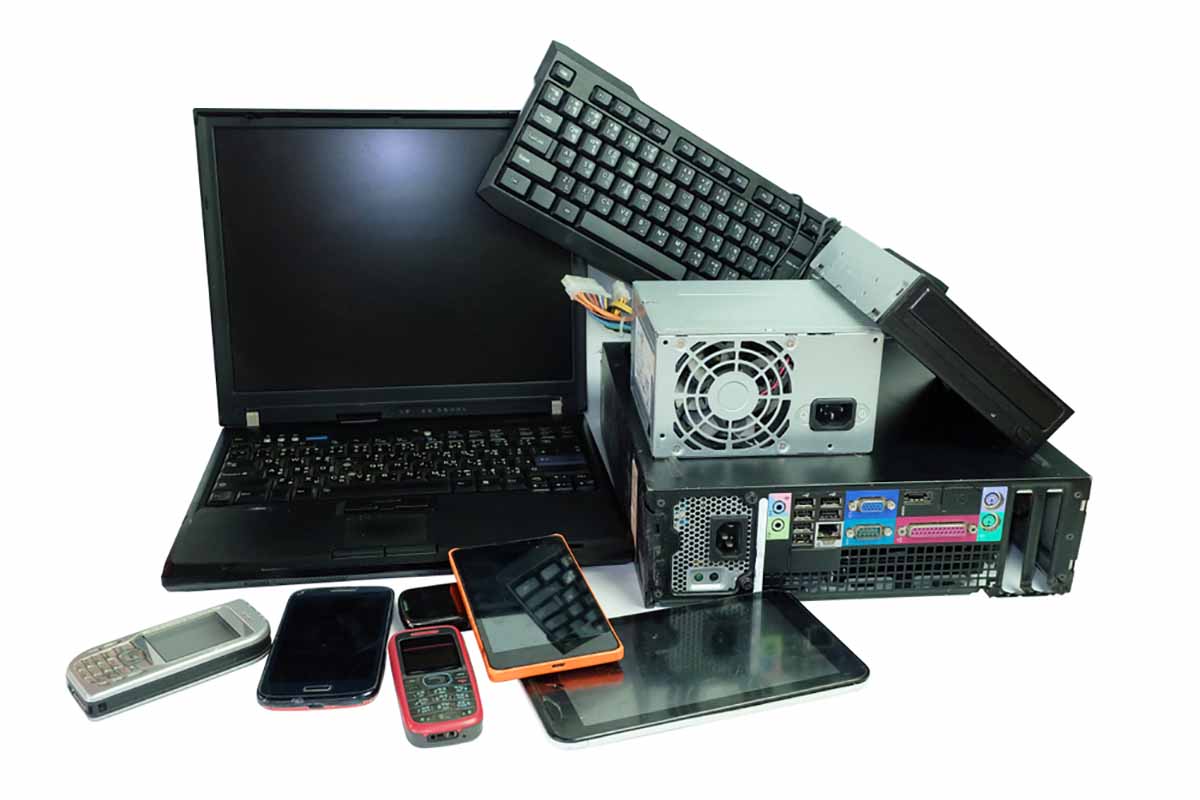
Various electronics gathered for recycling.
E-scrap generation, by weight, is down by almost 10% compared with its peak in 2015. | DAMRONG RATTANAPONG/Shutterstock

The weight of electronics entering the recycling stream has dropped consistently since hitting its peak in 2015, according to new research. The shift has implications for device processing and policy development.

Researchers at the Rochester Institute of Technology, the University of Hawaii at Manoa and Yale University recently published “The evolution of consumer electronic waste in the United States.” The study examined the end-of-life electronics stream, looking at overall weight and trends in device makeup. Callie Babbitt, a co-author of the study, previously studied the changing end-of-life device stream.

The results show fewer pounds being discarded and recycled in recent years, as well as fewer hazardous materials in the e-scrap stream. Both trends are largely connected to evolving TV technology, particularly the move away from CRTs and mercury-bearing LCDs.

“Over 95% of the lead in e‐waste was associated with CRT glass, and the declining presence in the waste stream is due to technological progress and natural substitution by newer products,” the researchers wrote.

E-scrap generation, by weight, is down by almost 10% compared with its peak in 2015, when U.S. consumers discarded roughly 1.8 million metric tons of electronics.

“The observed decline is attributed mainly to technological substitution of heavy CRT displays by lighter LCD and LED technologies, which results in approximately 75% mass reduction per product,” the report noted.

The declining weight has impacts for state e-scrap programs in the U.S., most of which set targets for OEM obligations based on the weight of products manufacturers sell per year. One of those is Wisconsin, which recently reported a continuing decline in the amount of material recycled under its program.

The study references the recently overhauled Illinois state program, which requires OEMs to fund collection sites based on population density. Such a system is less impacted by the shifting device stream than the current standard of weight-based programs, and other states have examined similar changes.

“While a mass‐based end‐of‐life product recovery mechanism can be effective in waste diversion, it is not responsive to the decreasing dominance of larger devices and increasing prevalence of lighter, multifunctional products containing critical metal content in the waste stream,” the researchers wrote.

Beyond the decline in weight and hazardous materials, the researchers found greater complexity in devices. As key examples, the study pointed to the increasing use of components such as lithium-ion batteries and flat panel glass.

“These complex components present barriers to sustainable materials management, particularly because recovering the valuable materials they contain is hindered by a lack of recycling infrastructure and commercial‐scale recovery technology,” according to the study.

The research was funded by the Consumer Technology Association, the National Science Foundation and the Staples Sustainable Innovation Lab at RIT.

 

Tags: Research
TweetShare
Colin Staub

Colin Staub

Colin Staub was a reporter and associate editor at Resource Recycling until August 2025.

Related Posts

What Netflix’s ‘Plastic Detox’ gets wrong – and right

byKeith Loria
April 23, 2026

Advocates are excited about the attention brought on plastics by the documentary, but scientists say more nuance is needed.

Hawaii trials asphalt made with plastic debris and nets

Hawaii trials asphalt made with plastic debris and nets

byScott Snowden
April 20, 2026

Researchers at Hawaii Pacific University test asphalt made with fishing nets and plastic debris, with early results showing no increase...

Amazon, DOE partner on critical materials recovery

byScott Snowden
April 13, 2026

DOE and Amazon will study recovery of graphite from textiles and gallium from IT hardware, aiming to strengthen US supply...

Rice researchers use lemon juice to boost battery recycling

byScott Snowden
April 9, 2026

Rice researchers reported a battery recycling process that uses plasma and mild solvents to recover most metals from black mass...

Packaging sector sees shift from AI pilots to wider use

byScott Snowden
April 1, 2026

AI adoption is expanding across packaging operations as costs fall and use cases widen, though concerns around accountability, ROI and...

Report pegs fire losses at $2.5b in US and Canada recycling industry

byScott Snowden
March 27, 2026

A new fire report estimates $2.5b in damage across US and Canadian recycling facilities in 2025, with lithium-ion batteries still...

Load More
Next Post
View of Wisconsin and surrounding area on a map.

How COVID-19 affected one Midwest state's EPR program

More Posts

What Netflix’s ‘Plastic Detox’ gets wrong – and right

April 23, 2026
EPR fees are a market signal. Here’s what they’re telling you.

Oregon DEQ flags 250 producers for RMA noncompliance

April 21, 2026
Birch Plastics gets FDA green-light for post-industrial PP

LyondellBasell upgrade to PreZero assets on hold

April 23, 2026
Intel sign on company building with blue sky and trees.

Intel boosts margins by selling what it used to scrap

April 29, 2026

PCA keeping focus on virgin fiber products

April 27, 2026
Intel sign outside of company building.

What Intel’s blockbuster quarter means for ITAD

April 27, 2026
Float-sink technology at the Quantum Lifecycle Partners facility in Toronto, Canada enables the processing of e-plastics.

E-plastics recovery line opens in Canada

April 28, 2026
Our top stories from April 2022

Peters-Michaud named CEO, Houghton chair of Sage Sustainable Electronics

April 28, 2026
Dow touts US PE advantage amid Iran war

Dow touts US PE advantage amid Iran war

April 24, 2026
Plastic Ingenuity to use PureCycle PP for coffee lids

Plastic Ingenuity to use PureCycle PP for coffee lids

April 30, 2026
Load More

About & Publications

About Us

Staff

Archive

Magazine

Work With Us

Advertise
Jobs
Contact
Terms and Privacy

Newsletter

Get the latest recycling news and analysis delivered to your inbox every week. Stay ahead on industry trends, policy updates, and insights from programs, processors, and innovators.

Subscribe

Welcome Back!

Login to your account below

Forgotten Password?

Retrieve your password

Please enter your username or email address to reset your password.

Log In

Add New Playlist

No Result
View All Result
  • The Latest
  • Analysis
  • Recycling
  • E-Scrap
  • Plastics
  • Policy Now
  • Conferences
    • E-Scrap Conference
    • Plastics Recycling Conference
    • Resource Recycling Conference
    • Textiles Recovery Summit
  • Magazine
  • About Us
  • Advertise
  • Archive
  • Jobs
  • Staff
Subscribe
This website uses cookies. By continuing to use this website you are giving consent to cookies being used. Visit our Privacy and Cookie Policy.