
Resource Recycling
  • The Latest
  • Analysis
    • All
    • Certification Scorecard
    • Industry Announcements
    • Opinion
    Spin-off lets Linca focus on battery mineral recovery

    Critical mineral policy shift creates opportunity

    CommanderAI launches searchable hauler database

    Inside the Circle: Put AI to work for the people who do the work

    Northeast commodity values for Q2 reach 2-year high

    Will a MRF shortage limit EPR growth?

    From claims to custody: PCR procurement grows up

    Certification scorecard — week of September 7

    iFixit launches 2-week circuit board training course

    Printed circuit board (PCB) recycling explained

    Sims: Parts reuse helped offset 2020 cloud challenges

    ITAD providers should choose their data-center niche

  • Conferences
    • Resource Recycling Conference
    • Plastics Recycling Conference
    • E-Scrap: The Longevity Conference
    • Textiles Recovery Summit
  • Publications
    • E-Scrap News
    • Plastics Recycling Update
    • Policy Now
    • Resource Recycling
    • Other Topics
      • All Topics
      • Brand Owners
      • Critical Minerals
      • Glass
      • Grant Watch / RFPs
      • Markets
      • Organics
      • Packaging
      • Research
      • Technology
      • Textiles
Subscribe
No Result
View All Result
Resource Recycling
  • The Latest
  • Analysis
    • All
    • Certification Scorecard
    • Industry Announcements
    • Opinion
    Spin-off lets Linca focus on battery mineral recovery

    Critical mineral policy shift creates opportunity

    CommanderAI launches searchable hauler database

    Inside the Circle: Put AI to work for the people who do the work

    Northeast commodity values for Q2 reach 2-year high

    Will a MRF shortage limit EPR growth?

    From claims to custody: PCR procurement grows up

    Certification scorecard — week of September 7

    iFixit launches 2-week circuit board training course

    Printed circuit board (PCB) recycling explained

    Sims: Parts reuse helped offset 2020 cloud challenges

    ITAD providers should choose their data-center niche

  • Conferences
    • Resource Recycling Conference
    • Plastics Recycling Conference
    • E-Scrap: The Longevity Conference
    • Textiles Recovery Summit
  • Publications
    • E-Scrap News
    • Plastics Recycling Update
    • Policy Now
    • Resource Recycling
    • Other Topics
      • All Topics
      • Brand Owners
      • Critical Minerals
      • Glass
      • Grant Watch / RFPs
      • Markets
      • Organics
      • Packaging
      • Research
      • Technology
      • Textiles
Subscribe
No Result
View All Result
Resource Recycling
No Result
View All Result
Home E-Scrap

Right-to-repair advocates make their case in one statehouse

byJared Paben
January 23, 2020
in E-Scrap
Right-to-repair advocates make their case in one statehouse

Photo Caption

In Olympia, Wash., right-to-repair proponents and opponents testified during a Jan. 21 hearing in front of the Senate Environment, Energy & Technology Committee. | jfergusonphotos/Shutterstock

Electronics repair stakeholders clashed over right-to-repair legislation in Washington state this week, as a number of state legislatures begin taking up similar bills.

In Washington state, Senate Bill 5799 would require electronics manufacturers to provide to independent repair shops the parts, tools, equipment and information needed to fix devices. Nationwide, 15 states have active right-to-repair bills, according to The Repair Association, which expects another five or more bills to be introduced this year.

At least 20 state legislatures had right-to-repair legislation introduced last year. No state has yet passed and signed an electronics right-to-repair bill into law.

In Olympia, Wash., right-to-repair proponents and opponents testified during a Jan. 21 hearing in front of the Senate Environment, Energy & Technology Committee, which did not immediately take action on the bill.

Bill sponsor Sen. Bob Hasegawa, D-Seattle, called the legislation a “good small business bill.”

“Big corporations that control the vertical process from manufacturer to end-of-life use don’t need advocacy because they’ve got plenty of advocates down here,” he told the committee. “But I’m here to advocate for small business owners.”

He was joined by bill advocate Sen. Christine Rolfes, D-Kitsap County, who said we need to challenge big technology corporations and the concept of a business model that depends on functional obsolescence.

“I’m not suggesting that we make this technology easy to steal and easy to duplicate, but I am suggesting that Big Tech gives us products that we can repair,” she said.

Bill advocates plead for passage

Representatives from two repair shops in Portland, Ore., which is just across the Columbia River from Washington, spoke in favor of the bill.

Adelle Pomeroy, digital inclusion manager at nonprofit repair and recycling organization Free Geek, noted that difficulty refurbishing and repairing used devices hurts the group’s effort to help bridge the digital divide.

In refurbishing devices, Free Geek staffers often have to break devices in order to understand them, she said.

“It’s not logical. It’s unnecessary and very challenging and a waste of resources as a nonprofit,” she said. “If we did have this right-to-repair bill passed, we’d have a lot more access to refurbishing technology and be able to serve our community more and give more devices to the vulnerable communities that need them.”

Adrian Avery-Johnson, owner of Bridgetown Electronics Repair, said his company suffers from a lack of schematics, diagnostic tools, parts and service documentation. “A large amount of my time is spent identifying and sourcing replacement parts,” he said.

He said the day before, a customer brought in Kindle, Garmin and Macbook devices, all with damaged USB ports because the customer’s young daughter put oatmeal in them, he said. The customer was told by authorized repair centers that replacement was the only option at a cost of about $2,000. He was able to fix them for less than the cost of a replacement tablet, he said.
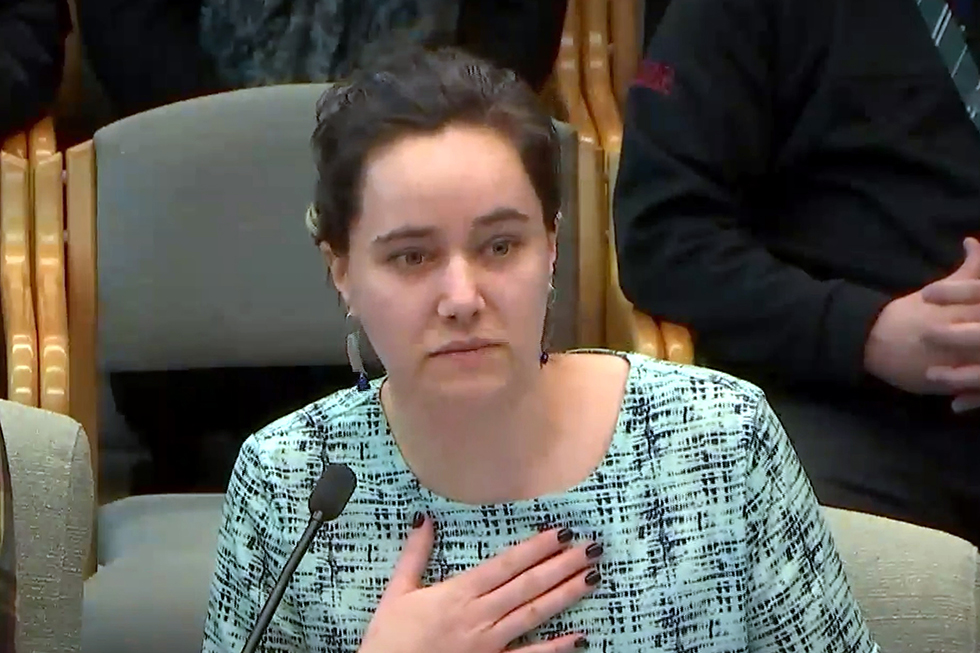
Adelle Pomeroy of nonprofit repair and recycling organization Free Geek spoke in favor of the bill.

Bob Akers, enterprise director at e-Stewards, said the bill is good for the environment, because extending the life of devices takes pressure off of recycling, as well as for the economy, because it supports a growing repair market.

He also tied the bill to the digital divide and the homelessness problem in Seattle, saying that high schoolers lacking access to technology are at risk of becoming homeless later because they are at a disadvantage in terms of education.

“If we can make affordable equipment available to those individuals, we can maybe take a bite out of the homeless problem of tomorrow,” Akers said.

OEM groups blast bill

Representatives of a number of electronics industry associations spoke at the hearing in opposition to the legislation. Those groups included the Consumer Technology Association (CTA), TechNet, the Entertainment Software Association (ESA) and The Computing Technology Industry Association (CompTIA).

Samantha Kersul, executive director in Washington and the Northwest for TechNet, called the bill a solution in search of a problem. She said her main concern is the bill risks manufacturers’ intellectual property. TechNet is a network of tech CEOs and senior executives.

“Technology companies must be able to manage their repair networks in order to provide adequate training and accountability, which leads to safe and effective repairs,” she added. “The groups pushing for [right-to-repair] in states across the country stand to profit greatly by passing this legislation under the guise of consumer protection.”

Charlie Brown, who represents CTA, said the bill intervenes in the private contractual relationship between manufacturers and their repair networks.

“We work with our authorized repair networks to ensure the high safety standards for this electronic equipment,” he told senators. “I’m sure that all of you have heard about lithium-ion batteries and the potential problems that can cause when they’re not connected properly to a device. So that’s why we have authorized networks.”

Anna Powell, director of state government affairs for CompTIA, said giving anybody access to parts, tools, technical manuals and software presents cybersecurity, privacy, safety and copyright risks, and it introduces hurdles to innovation.

She also suggested the law could prevent recycling of devices that OEMs currently provide free recycling programs for.

“Washington should resist unwarranted intervention in the marketplace with one-size-fits-all mandates that compromise consumer safety and protection and make the proper recycling and disposal of electronic devices less certain,” she said.

Many of the manufacturers’ arguments mirrored Apple’s answers to a Congressional subcommittee’s questions last fall.

Lawmakers show some skepticism

At the hearing, OEM representatives faced some doubting questions from senators.

Sen. Derek Stanford, D-Bothell, said he heard testimony asserting there are many repair options, but when his Xbox fan broke, he had to send it to Microsoft for an expensive repair. After waiting several weeks, he received a different unit back.

“This is about competition. There’s no competition,” he said. “If there was competition, then people would have to try to get that console repaired more quickly.”

And skepticism didn’t just come from Democrats, who control both chambers of Washington’s legislature. Republican Sen. Doug Ericksen of Ferndale asked if there are examples of independent repair shops pirating proprietary info and then trying to sell it. He used the example of his car, which he could have repaired by the dealership, by a certified repair shop, or by his neighbor.

“Unless you guys can show, like, a real risk to copyright infringement and digital theft, piracy, those kinds of things, I don’t understand why we wouldn’t let everybody have a crack a fixing my phone when it breaks,” Ericksen said.

 

Tags: ManufacturersPolicy NowRepair & Reuse
TweetShare
Jared Paben

Jared Paben

Related Posts

California Governor Gavin Newsom speaking at podium.

What’s on Newsom’s desk after the CA session end

byStefanie Valentic
September 14, 2026

With the California legislature adjourned, packaging, food-waste and EPR advocates are watching a single date, Sept. 30, to see which...

New Jersey pushes back PCR mandate to 2030

New Jersey pushes back PCR mandate to 2030

byAntoinette Smith
September 10, 2026

One of the highest-profile US laws affecting recyclers has been amended only four months before implementation, with the state citing...

Report shows $5B in materials saved from landfills

Reinvigorating reuse

byPaul Lane
September 10, 2026

Legislation may help spark renewed interest in reusing consumer items.

Rethinking Europe’s cup-return model for US venues

Rethinking Europe’s cup-return model for US venues

byStefanie Valentic
September 10, 2026

Reusable cup and foodware programs are expanding across US venues, arenas and festivals, but the systems driving them look little...

Battery fire risk isn’t going away. Insurance is responding

Vape ban awaits California governor’s signature

byStefanie Valentic
September 10, 2026

California's vape ban was written to close the exact loophole that let disposable devices survive a ban in the UK.

SB 54 Unpacked: Can film catch up to cartons?

byStefanie Valentic
September 4, 2026

Flexible film, generating 550,000 tons/year of waste, has end markets for only about 10% of it, panelists said at a...

Load More
Next Post
Researchers explore PCB flame retardant removal

Researchers explore PCB flame retardant removal

2026 Buyers’ Guide

Equipment, services and technology suppliers serving the recycling industry.

Browse the Guide

More Posts

New Jersey pushes back PCR mandate to 2030

New Jersey pushes back PCR mandate to 2030

September 10, 2026
Lawsuits hover days after SB 54 approval

Preparing for SB 54 design compliance

September 8, 2026
Northeast commodity values for Q2 reach 2-year high

Will a MRF shortage limit EPR growth?

September 10, 2026
Analysis: CA climate rules set off ripple effect for thousands

SB 54 Unpacked: California jurisdictions face scramble to comply

September 2, 2026

SB 54 Unpacked: Can film catch up to cartons?

September 4, 2026
Sims: Parts reuse helped offset 2020 cloud challenges

ITAD providers should choose their data-center niche

September 8, 2026
Alpek closing Pennsylvania RPET plant

Alpek seizing on war-related opportunity 

July 27, 2026
Hawaii's state capitol building.

Funding lapse leaves Hawaii e-scrap collectors seeking answers

September 10, 2026
Study explores cleanliness of food packaging in bins

SB 54 Unpacked: REMs, reimbursements remain moving targets

September 3, 2026
Bale pricing mostly flat for September

Bale pricing mostly flat for September

September 9, 2026
Load More

About & Publications

About Us

Staff

Archive

Magazines

Work With Us

Advertise
Jobs
Contact
Terms and Privacy

Newsletters

Get the latest recycling news and analysis delivered to your inbox every week. Stay ahead on industry trends, policy updates, and insights from programs, processors, and innovators.

Subscribe

Welcome Back!

Login to your account below

Forgotten Password?

Retrieve your password

Please enter your username or email address to reset your password.

Log In

Add New Playlist

No Result
View All Result
  • The Latest
  • Analysis
  • Recycling
  • E-Scrap
  • Plastics
  • Policy Now
  • Conferences
    • E-Scrap Conference
    • Plastics Recycling Conference
    • Resource Recycling Conference
    • Textiles Recovery Summit
  • Magazines
  • About Us
  • Advertise
  • Archive
  • Jobs
  • Staff
Subscribe
This website uses cookies. By continuing to use this website you are giving consent to cookies being used. Visit our Privacy and Cookie Policy.