
Advertisement Header Ad
Resource Recycling
  • The Latest
  • Analysis
    • All
    • Certification Scorecard
    • Industry Announcements
    • Opinion

    Industry announcements for the week of Dec. 15

    Certification scorecard for December 10, 2025

    Industry Announcements for Week of December 8

    Certification Scorecard for December 3, 2025

    Industry Announcements for Week of December 1

    News from Dynamic Lifecycle Innovations, Precision E-Cycle

    News from Northeast Recycling Council, Plastipak and more

    News from Northeast Recycling Council, Sortera Technologies and more

    News from MKV Polymers, Metallium Ltd. and more

  • Conferences
  • Publications

    Other Topics

    Textiles
    Organics
    Packaging
    Glass
    Brand Owners

    Metals
    Technology
    Research
    Markets
    Grant Watch

    All Topics

Subscribe
No Result
View All Result
Resource Recycling
  • The Latest
  • Analysis
    • All
    • Certification Scorecard
    • Industry Announcements
    • Opinion

    Industry announcements for the week of Dec. 15

    Certification scorecard for December 10, 2025

    Industry Announcements for Week of December 8

    Certification Scorecard for December 3, 2025

    Industry Announcements for Week of December 1

    News from Dynamic Lifecycle Innovations, Precision E-Cycle

    News from Northeast Recycling Council, Plastipak and more

    News from Northeast Recycling Council, Sortera Technologies and more

    News from MKV Polymers, Metallium Ltd. and more

  • Conferences
  • Publications

    Other Topics

    Textiles
    Organics
    Packaging
    Glass
    Brand Owners

    Metals
    Technology
    Research
    Markets
    Grant Watch

    All Topics

Subscribe
No Result
View All Result
Resource Recycling
No Result
View All Result
Home Analysis Opinion

In My Opinion: A new way forward for packaging EPR

byKristine Kubat, Recycle Hawaii
August 31, 2021
in Opinion
Share on XLinkedin
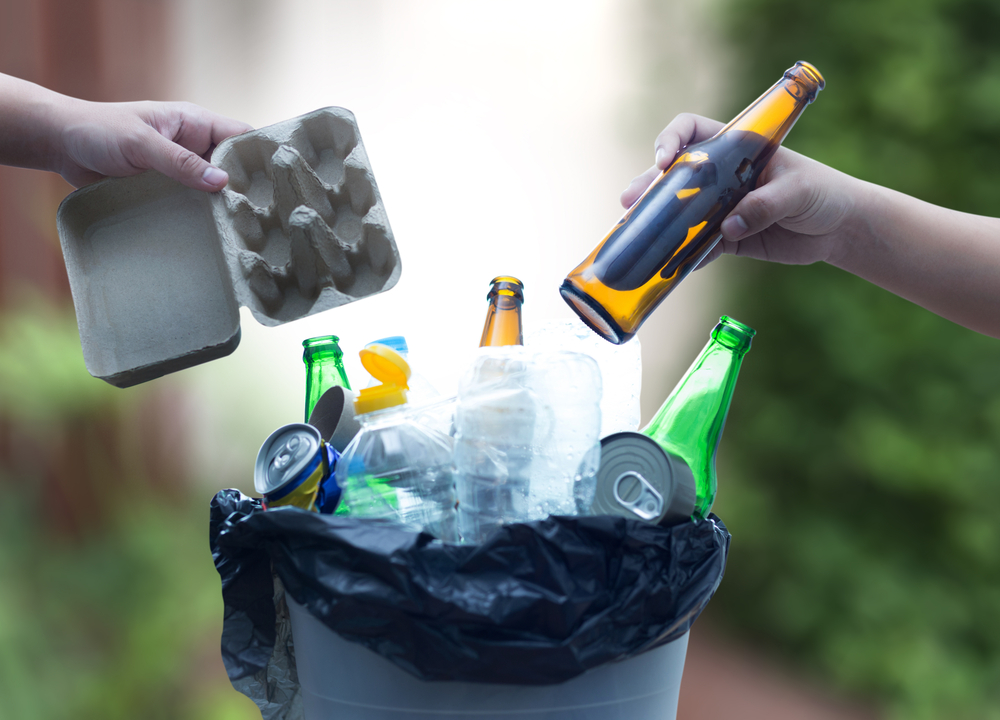
Recycle Hawaii’s executive director suggests “transitional EPR” as a way to find consensus among stakeholders. | One Photo / Shutterstock

As someone actively engaged in a collaboration to craft the ideal extended producer responsibility (EPR) legislation for Hawaii, I spend a great deal of time analyzing and comparing EPR system models. I do this not because I’m unsure which model best addresses the environmental and social justice concerns that drive my interest in the issue, but because I know my effectiveness as an advocate for community-driven, waste-to-wealth initiatives depends on my ability to also understand the needs of those motivated primarily by profit.

Current support for EPR policy falls into two general categories. Those in favor of producer-run programs assert it makes more sense to let the producers charged with funding these programs control how they operate; those calling for municipal reimbursement agree that producers should pay but say it’s better to keep decision-making at either the city or county level.

When I learned the online Resource Recycling Conference (held earlier this month) included a session called “Why We’re Ready to Support Producer Responsibility for Packaging,” I signed up hoping to understand what was bringing representatives for the American Beverage Association and Unilever together with municipal officials from New York City and Seattle.

Kristine Kubat
Kristine Kubat

This hour-long discussion offered two critical insights. First, although differences regarding who should control discarded materials have not been resolved, there is broad consensus regarding the need to redesign products and packaging in ways that facilitate their repair, reuse and recycling. And, second, if everyone is clear this type of upstream innovation is needed but at odds over what happens next, creating space for the downstream “waste-scape” to evolve before locking ourselves into strategies for managing it is the prudent thing to do.

Decoupling upstream and downstream responsibilities

The issue of system and material control was illustrated during the conference session when the New York City representative, Kate Kitchener, explained that EPR legislation moving forward in her state excludes items covered by its existing bottle bill. That fact inherently complicates EPR support from producers because the high-quality plastic and aluminum recovered through the redemption system might not necessarily be theirs to move back into packaging (and help them reach content goals).

While access to post-consumer materials in a regulatory environment that requires their use is a legitimate concern, there is no need to insist on a model that hamstrings other producers.

The best way to address this concern for beverage manufacturers is to establish a national bottle bill that includes standards for deposit fees, redemption targets and a mandate to return beverage containers to the producers who put them on the market. The standard this policy sets can be extended to materials beyond beverage containers.

The most expedient way to get producers innovating upstream is to establish a single comprehensive set of federal standards that require increased use of recycled content alongside better labeling and eco-modulation. A nationwide approach provides the certainty producers need and allows the movement to progress without creating a power struggle over who will manage downstream resources.

Notion of transitional EPR

Moving on to differences over who will pay for these reforms and how, once again the idea of decoupling upstream and downstream responsibilities offers a resolution.

Producers alone control how their products are made and packaged, and their business models have always included budgets that fund those choices. Similarly, municipalities have always had access to taxpayer funding to support the collection and disposal of discarded materials.

The challenge faced by those seeking to reduce wastefulness is to take the trillions of dollars already spent making waste and reallocate the money to reduction, reuse and recovery initiatives that build wealth in economically deprived sectors instead.

To this end, I introduce the concept of transitional EPR, the idea that producers should not be expected to pay for downstream operations in perpetuity. What we should expect instead is a willingness for them to reimburse municipalities for the costs associated with transitioning to a world in which products and packaging are readily repaired, reused or recycled.

We have every reason to expect that, once mandated upstream innovations kick in, the volume of non-recyclable materials will decrease and the value of recovered materials will increase in ways that ultimately bring the cost of handling them well within the reach of municipalities across the U.S.

This approach essentially eliminates the need for producers to manage downstream resources through producer-run EPR schemes.

Final thoughts

My takeaway from the Resource Recycling Conference discussion is that no argument in favor of a strategy that divides us is as compelling as the call to move forward on what unites us. Broad consensus in favor of upstream innovations is enough to allow the EPR movement to proceed with the support of high-profile producers.

A national, unified standard for less wasteful packaging is the place to begin. Let’s work together to provide producers the certainty they need to effectively innovate upstream and create space for the downstream waste-scape to take shape.

I personally believe that municipalities are better positioned to create the customized downstream solutions required to turn our wasteful economy into a circular one. But I am also willing to take a “wait and see” approach in anticipation of the changes a concerted national packaging redesign effort will bring.


Kristine Kubat is executive director of Hawaii’s state recycling organization, Recycle Hawaii. She can be contacted at [email protected].

The views and opinions expressed are those of the author and do not imply endorsement by Resource Recycling, Inc. If you have a subject you wish to cover in an op-ed, please send a short proposal to [email protected] for consideration.
 

Tags: EPR
Kristine Kubat, Recycle Hawaii

Kristine Kubat, Recycle Hawaii

Related Posts

electronic vapes

Vape fires cost waste, recycling sector $2.5B yearly

byScott Snowden
December 9, 2025

Waste and recycling operators are heading into another year of elevated fire risk as lithium-ion batteries from electronics and disposable...

Canada PROs unite to align packaging design

Canada PROs unite to align packaging design

byAntoinette Smith
November 18, 2025

Five Canadian producer responsibility organizations are joining forces to provide clear, consistent guidelines to make packaging design recyclable, with plastics...

Emerging US EPR programs spark harmonization talks

Emerging US EPR programs spark harmonization talks

byStefanie Valentic
November 18, 2025

Extended producer responsibility legislation has rapidly expanded across the United States over the past two years, with seven states enacting...

Canadian PROs join forces to align design guidance

Canadian PROs join forces to align design guidance

byAntoinette Smith
November 17, 2025

Five Canadian producer responsibility organizations are joining forces to provide clear, consistent guidelines to make packaging design recyclable, with plastics...

ERCC outlines shift toward convenience benchmarks

ERCC outlines shift toward convenience benchmarks

byScott Snowden
November 12, 2025

State and industry leaders at the 2025 E-Scrap Conference signaled growing support for moving electronics recycling programs away from weight-based...

EU flag

EU recyclers warn Commission of industry collapse 

byAntoinette Smith
November 12, 2025

More than 100 recyclers issued a call, coordinated by a Dutch consultancy, for the European Commission to take immediate action...

Load More
Next Post

MRFs face 'brunt of the negative impact' from battery fires

More Posts

Analysis: EU softens ESG rules as compliance pressure builds for US

Analysis: EU softens ESG rules as compliance pressure builds for US

November 19, 2025
Sector holds wide gaps in environmental standards

Sector holds wide gaps in environmental standards

November 19, 2025
From crawl to run: a clear roadmap for ITAD ESG

From crawl to run: a clear roadmap for ITAD ESG

November 19, 2025
New entrepreneurs bring renewed energy to e-cycling

New entrepreneurs bring renewed energy to e-cycling

November 19, 2025
The Re:Source Podcast Episode 1: E-Scrap look-back and 2026 outlook

The Re:Source Podcast Episode 1: E-Scrap look-back and 2026 outlook

November 21, 2025
ERI and ReElement partner on rare earth magnet recovery

ERI and ReElement partner on rare earth magnet recovery

November 26, 2025
Cyber risks confront ITAD work, contracts, coverage

Cyber risks confront ITAD work, contracts, coverage

November 26, 2025
Canadian PROs join forces to align design guidance

Canadian PROs join forces to align design guidance

November 17, 2025
Weak bale pricing compounds hauler headwinds

Weak bale pricing compounds hauler headwinds

November 18, 2025
Paper grades, plastic film bales soften 

Paper grades, plastic film bales soften 

November 18, 2025
Load More

About & Publications

About Us

Staff

Archive

Magazine

Work With Us

Advertise
Jobs
Contact
Terms and Privacy

Newsletter

Get the latest recycling news and analysis delivered to your inbox every week. Stay ahead on industry trends, policy updates, and insights from programs, processors, and innovators.

Subscribe

Welcome Back!

Login to your account below

Forgotten Password?

Retrieve your password

Please enter your username or email address to reset your password.

Log In

Add New Playlist

No Result
View All Result
  • The Latest
  • Analysis
  • Recycling
  • E-Scrap
  • Plastics
  • Conferences
    • E-Scrap Conference
    • Plastics Recycling Conference
    • Resource Recycling Conference
    • Textiles Recovery Summit
  • Magazine
  • About Us
  • Advertise
  • Archive
  • Jobs
  • Staff
Subscribe
This website uses cookies. By continuing to use this website you are giving consent to cookies being used. Visit our Privacy and Cookie Policy.