
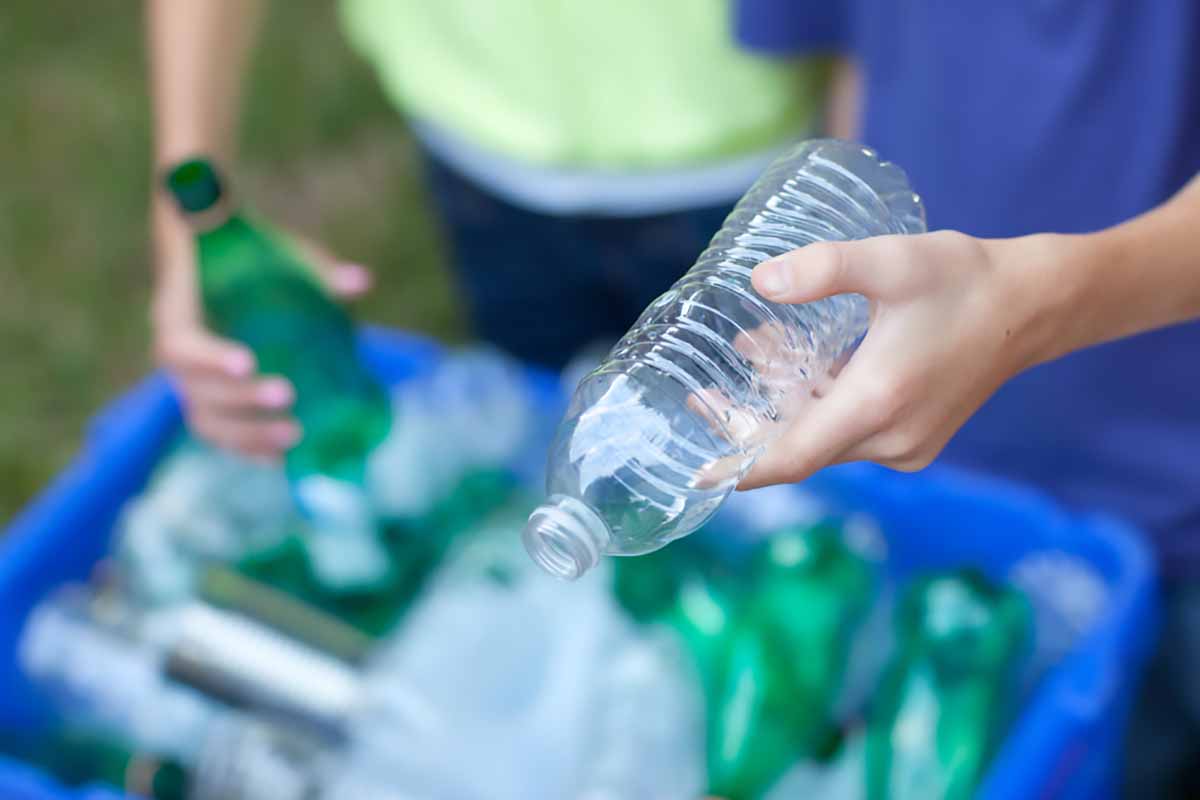
Plastics make our everyday lives healthier, easier and safer. At the same time, plastics have no place in our oceans, waterways and natural spaces – nor do they belong in our landfills. Plastics are simply too valuable to end up as waste.
Thanks in part to support from organizations such as the Ellen MacArthur Foundation and the World Wildlife Fund, the value chain – including plastic manufacturers, converters, brand owners and retailers – is now working toward a common vision of plastic circularity.
At NOVA Chemicals, we are proud to play our part in the systemic transformation underway from a linear to a circular plastics economy. Through our innovation, collaboration and investment, we support the plastics industry goals that 100% of plastic packaging will be recyclable or recoverable by 2030 and re-used, recycled or recovered by 2040.
In this article, I’ll lay out how we in the plastics industry can hit those goals and achieve real circularity.

Key factors coming together
To start, it’s important to understand that there is a strong appetite to utilize more recovered resin.
In many models, growth rates for demand for recycled PET and recycled PE resins are expected to outstrip demand growth for virgin material significantly both in North America and globally, and anticipated recycled PE demand significantly exceeds current supply.
At the same time, China’s National Sword eliminated the customary offshore destination for between 40% and 70% of plastics collected for recycling in the U.S., requiring new outlets for up to 700,000 tons of additional material annually. On the legislative and policy front, there are a wide range of federal, state and municipal initiatives being advanced that seek to address our fundamental concerns around end-of-life plastics and low plastic recycling rates, along with establishing end markets.
How do we effectively take advantage of this moment? Step one is capturing more material.
In 2019, U.S. curbside capture rates for different plastics ranged from 22% to 53%, with bulky items and plastics Nos. 3-7 at the low end and natural HDPE containers at the high end. Increasing these rates is required for success. Consumer education must include both messaging that emphasizes the value of post-use plastics and consistent, easily understandable information about what and how to recycle.
Ease of access and simplicity are equally essential. Single-stream curbside recycling of all plastics, including flexibles and rigid plastics that are currently harder to recycle, offers the best opportunity to maximize collection. This may be ambitious, but only when enough of the plastics produced actually enter the recycling system can we shift from a linear to a circular model.
That being said, we may still need to consider alternative approaches to collection and sortation for films, tubes, small formats and other challenging packaging types.
Advancing the processing landscape
Maximizing our mechanical recycling stream is imperative from both an economic and climate change perspective. For this reason, plastic materials that can be mechanically recycled should be. For those that cannot, we will need to rely on advanced recycling (sometimes called chemical recycling), which takes harder-to-recycle plastics back to feedstocks. This is essential to capture the value of these materials and enable recycled content at scale in demanding applications such as food contact.
Many companies are working to develop advanced recycling, and experts predict that technologies will begin to reach scale near 2030. For advanced recycling to achieve market acceptance and traction, however, we will need changes to recycled-content definitions to include output from advanced recycling – an important element here is utilization of the principles of mass balance when calculating recycled content.
“Single-stream curbside recycling of all plastics, including flexibles and rigid plastics that are currently harder to recycle, offers the best opportunity to maximize collection.”
Another key to “closing the loop” is the establishment of national standards and a harmonized approach to recycling that encourages collection of more plastic material and improves quality and consistency across communities and the country. We are starting to see proposals from a variety of stakeholders, and we are encouraged and excited by all the energy and momentum that will propel us to find an optimal system.
Finally, end markets for post-consumer resin (PCR) must be optimized and economically viable for all materials.
Demand for recycled PET, recycled LLDPE and recycled HDPE is likely to exceed supply due to brand owner and retailer goals, and recyclers are focusing on expanding processing capabilities for these streams. However, some other types of plastic recyclate have few outlets and will continue to languish until end markets emerge or advanced recycling matures.
That leads us to a final key consideration: affordability. When it is more costly to produce the PCR than it can be sold for, there will be no investment to deliver the quality and quantity needed. Improved end markets are essential to deliver on value.
Linear outlets such as construction aggregate and plastic lumber that have traditionally valued the PCR primarily as a means to reduce input costs will always be needed as a home for “retired” plastics, but they are not the circular markets of the future.
How NOVA fits in
The plastics industry is in the midst of a once-in-a-lifetime shift, and we at NOVA Chemicals are shifting along with it.
For example, we have entered the PCR business. To date, we have announced agreements with two recyclers: Merlin Plastics, Canada’s largest plastics recycler and a major player in the western United States, and Revolution, the United States’ largest closed-loop recycler of agricultural films.
We have supplied Merlin with financing to expand their recycling capabilities to produce FDA-compliant recycled HDPE for food-contact applications. In addition, we recently commercialized our first three grades of recycled LLDPE, including Revolution’s agricultural film collection programs surplus. Ultimately, we will offer a robust portfolio of PCRs and blends in a range of melt indices and densities.
“To date, we have announced agreements with two recyclers: Merlin Plastics, Canada’s largest plastics recycler and a major player in the western United States, and Revolution, the United States’ largest closed-loop recycler of agricultural films.”
Meanwhile, in 2019, we released seven new “ready-to-recycle” resins that offer two key benefits for PCR incorporation. As virgin resins, they are designed to be used with PCR, allowing higher percentages of PCR content in applications that otherwise may require 100% virgin content to deliver required performance properties. At the same time, the robust additive formulation of the resins protects them during mechanical recycling, allowing them to retain their key physical performance through multiple uses.
Another significant advancement for recyclable packaging came last year with our development of high-density resin technology for the biaxially oriented polyethylene (BOPE) market. BOPE-HD is a transformative technology that enables the manufacture of all-polyethylene, multi-layer packaging that can replace non-recyclable, mixed-material packaging made today with layers such as BOPP, BOPET and/or metallization.
Finally, in May 2020, NOVA Chemicals entered into a joint development agreement with Montreal-based Enerkem, a producer of renewable fuels and chemicals from waste. The agreement allows us to explore a gasification advanced recycling technology that would turn non-recyclable and non-compostable municipal waste into ethylene, the primary feedstock for polyethylene.
A solvable problem
Society is faced with what is called the “plastics paradox,” a term popularized by plastics materials scientist Dr. Chris DeArmitt in his book by the same name. Plastic products enable life-saving medical devices and vaccine delivery; lighter, more fuel-efficient cars and planes; and the electronics that define the digital era. Usually, plastics provide these benefits using significantly fewer resources and with lower environmental impacts than alternative materials.
Yet plastics’ durability also means they don’t degrade quickly in the environment or landfill, and not enough of them are being recycled today. This is a solvable problem, one that requires us to reframe our perceptions of post-use plastics from a waste product to that of a resource. It will also take collaboration from the full value chain, including government, academia and NGOs.
Let’s work together to recover and reuse more plastics and achieve the ambitious goal of full plastics circularity in our time. Not only does the long-term success of the plastics industry depend upon it, but a world without plastic waste is the world we all want to live in.
Anna Rajkovic is circular economy market manager at NOVA Chemicals. She can be contacted at anna.rajkovic@novachem.com.
The views and opinions expressed are those of the author and do not imply endorsement by Resource Recycling, Inc. If you have a subject you wish to cover in an op-ed, please send a short proposal to news@resource-recycling.com for consideration.