
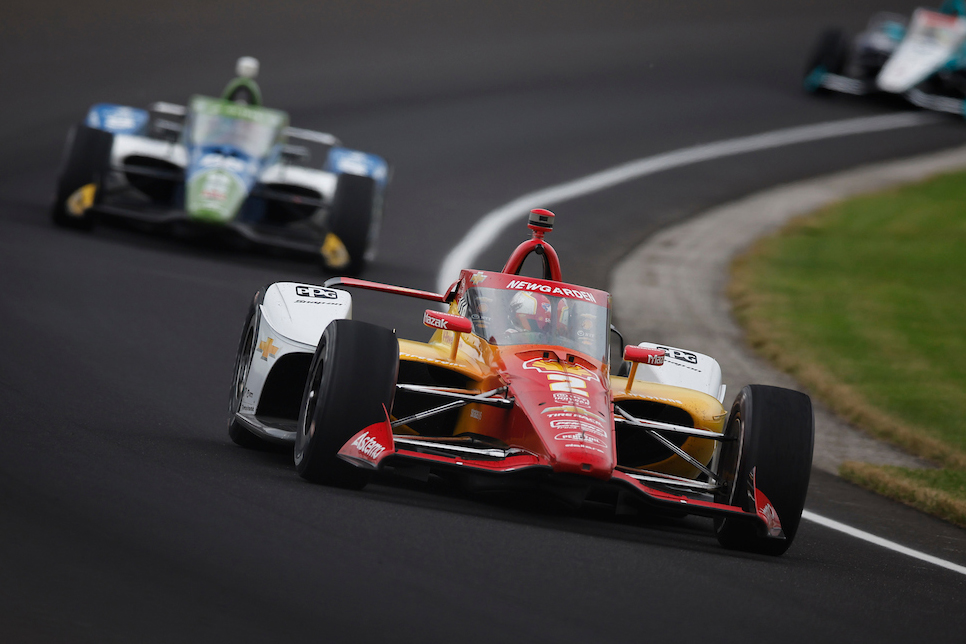
As race cars zoom around the track for the annual race that serves as the official start to summer, Georgia-based Circular Solutions will be tracking discarded bottles and cans at the Indianapolis Motor Speedway all the way from collection through downstream recovery.
The Indianapolis 500 is the largest single-day sporting event in the world, with attendance estimated at 350,000 to 400,000 people.
Circular Solutions will deploy its Circular OS platform at the race to independently verify and track landfill diversion for beverage containers, including PET bottles and aluminum cans. Partners in the effort include Coca-Cola Consolidated and hauler Republic Services.
“Hosting an event of this size comes with a responsibility to manage operations as efficiently, sustainably, and responsibly as possible,” said Logan Waddle, sustainability program leader at Penske Entertainment, which owns the speedway. “Improving how we manage waste during the event is an important and difference-making step.”
JT Marburger, CEO of Circular Solutions, told Resource Recycling, “The volume doesn’t scare us at all. It’s more of what can truly be measured,” he said. For example, an event like the Indianapolis 500 where attendees can bring in outside beverages complicates calculations of the capture rate for plastic bottles sold at the event, he said.
The speedway has a goal of 90% waste diversion at all events by 2030. In 2025 the property recycled 381 tons of materials from events and operations, according to its website.
In a 2025 video, Waddle said: “When I started in 2016, our waste diversion rate was 0%. We didn’t have any type of recycling, composting, food recovery initiative on our property. And I’m really proud of how much it’s grown.”
The Circular OS platform uses AI and blockchain to create an independent, third-party audit trail of material movements through hauling, sorting and downstream recovery, rather than an estimate of diversion figures.
Republic Services will collect and sort the collected containers, and process the PET bottles into washed flake at its Indianapolis polymer center, then sell the RPET back into the Coke bottling system.
“As the official soft beverage and water sponsor of Indianapolis Motor Speedway, we are focused on supporting beverage container recovery and engaging fans in the process,” said Todd Marty, senior director of sustainability at Coca-Cola Consolidated.
During the 2024 NCAA Final Four for both men’s and women’s basketball, Coca-Cola partnered with Circular Solutions on certified closed-loop recycling for beverage packaging, using all collected beverage bottles and cans to make new food-grade packaging.
Ben Pearson, Republic Services general manager, added: “When Indy 500 fans recycle their bottles and cans, they can be confident those materials are collected, processed and recycled into new beverage containers.”
Storytelling to ‘make sustainability a hot topic’
Amid challenging economic conditions in recent years, sustainability has in many cases taken a back seat to profitability.
At the same time, recyclability claims have been under intense scrutiny, with media outlets and NGOs using tracking devices to try to reveal a lack of verifiable recycling outcomes, contributing to the erosion of public trust in recycling systems.
Event venues are not immune to the ebbs and flows of sustainability trends, Marburger said. “We’re kind of in a down period now, where a lot of people are just talking about profit and sustainability is kind of in the background, which bothers me, but that’s just the way it goes,” he said.
However, musicians and other performers are showing an increased emphasis on making their shows more environmentally sustainable, Marburger said.
“Right now sustainability is not a hot topic, so you’ve got to make it a hot topic,” he added, and one way to do so is to create an effective narrative. “The data itself is the foundation for some really great storytelling.”
Marburger got his start in the industry by making textiles from recycled PET bottles, “and I was never comfortable with the imported yarn or the classification, because I know how it gets processed. So I built my own plants. I’ve been very stringent on making sure that for any claims we make, we’re fully protected.”
“We just don’t accept greenwashing,” he said of his company.
Other benefits
In addition to supporting recyclability claims, the platform is attracting attention from procurement departments. “If you recycle more, you save on landfill costs, because you have fewer tipping fees, so there’s a savings component,” he said. Circular OS integrates the US EPA’s Recycled Content (ReCon) Tool, leading procurement teams to “become more engaged than ever with what we’re doing,” Marburger said.
“Sustainability always sits on an island, and if you’re not integrating it across the company, you’re going to have challenges,” he said, adding that Circular Solutions helps to simplify complex data to help enable accurate, effective messaging about sustainability.
How it works
The platform allows an event property or other user to upload documents, then creates an abstract from the most relevant data.
In addition to verifying recycling outcomes, the platform’s data can inform training processes and procedures, to help improve the quality of the recycling stream, Marburger said. For example, if the material is bagged when it leaves the facility, it complicates sorting and recovery at the MRF level.
This is particularly challenging for infrequent events, which often employ temporary workers who may not be trained as thoroughly as permanent staffers. “We enhance the communication, because a lot of times that communication never gets to the right people,” he said.
The MRF provides direct insight into how the material arrived, whether the load was rejected because of contamination, and Circular Services will advise the property directly to help rectify the issue.
For the Indy 500, Circular Solutions conducted pre-verification, by asking local MRFs whether the property was already utilizing best practices, and finding out the contamination level of existing bales.
Although pre-verification is rare, he said, “it makes our job so much easier, because the broken part of the system is the communication, and we know communication is challenging everywhere, from the property manager to housekeeping to the hauler to the processing plant, and our job is to make it easier.”
The company has worked enough events – Final Four events for the NCAA basketball tournament, FIFA World Cup events this summer, several Olympic Games – to recognize deviations from weight trends for similar events. “If the numbers seem off, we’ll make them aware and say this looks a little light,” he said, adding that seeing higher-than-expected landfill volumes can also indicate that a property needs to resolve some operational issues.
In addition to sporting events, Circular Solutions works on music festivals and major venues, such as Live Nation’s new Coca-Cola Amphitheater in Birmingham, Alabama.
“I love it when we can be part of the architectural design,” he said. The company came in during the facility’s design phase, to set up the venue with a standard of measurement before it even opened.