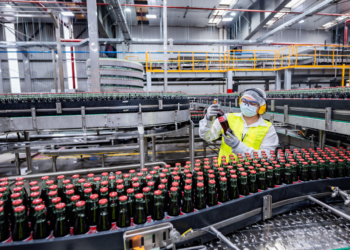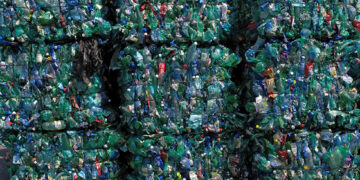














In an effort to reduce litter and increase recycling, more and more jurisdictions are turning to deposit return systems for the recovery of beverage containers. These systems require consumers to pay a small deposit at the point of purchase, and they get the deposit back when they return the empty container for recycling.
Despite the success of these programs, historically deposit return systems have long been vehemently opposed by the beverage, packaging and retail industries. Each year, these groups spend millions of dollars in efforts to repeal or prevent the expansion of existing programs, or to block proposals for new legislation.
But the tides are changing, and consumers and policymakers are starting to ask the hard questions. With the recently adopted revised European Union (EU) legislation on waste, producers will be responsible for at least half the costs of managing their packaging, and they will have to reach higher recycling targets (versus collection targets) by 2030. Specifically, they’ll have to reach 60 percent for aluminum, 80 percent for steel, 75 percent for glass and 55 percent for plastic packaging. In addition, the methodology for calculating recycling rates is going to be significantly more rigorous, making it difficult to artificially inflate the performance rates.
Hot on the heels of this revised legislation and scheduled for release later this month is the Single-Use Plastic Directive on the reduction of the impact of certain plastic products on the environment. This is a new piece of European legislation aiming to tackle the most challenging single-use plastic items, many of which contribute to the marine litter crisis.
While the European Commission has not tabled it yet, it has indicated the direction it wants to go in. It clearly demonstrates that the EU is serious about dealing with the problem. Among other things, it is foreseen that the proposal would call for extended producer responsibility (EPR) on items such as balloons, sanitary towels, wet wipes and cigarette filters, to name a few. The Commission also wants to prohibit certain plastic products where alternatives exist, such as plastic cutlery, cotton swabs, and balloon sticks, and the Commission wants to require that all beverage containers be designed so that their caps and lids remain attached to the container during the product’s use stage.
Further, the proposal would set a new target for 2025 of 90 percent separate collection of plastic bottles. To achieve this, the proposal would suggest that member States may establish separate collection targets for relevant EPR schemes or establish deposit refund systems. In other words, the EU would offer member states some flexibility on how to attain the targets; however, producers would ultimately be required to take on the lion’s share of the burden.
All of these developments have the potential to increase costs and decrease profits, which makes defending the status quo like staying aboard a sinking ship: Beverage companies that continue to operate business-as-usual may be okay for a little while, but eventually they are going to sink.
This article makes the business case for deposit return and examines how it can actually be good for companies, helping them to gain greater control over performance and costs and reduce their risks.
Improve brand image
A quick Google search is all it takes to see the negative effects that beverage containers have had on marine life. There are thousands of images of non-biodegradable plastic containers choking our oceans and waterways and inside the stomachs of marine birds.
Littered beverage containers are not only a blemish on the natural environment, but also on a company’s brand name, which can take many years and millions (or in some cases billions) of dollars to build up. Companies such as Coca-Cola are coming under growing attack from non-governmental organizations such as Greenpeace for their failure to move away from single-use plastics, and the pressure is on to find a sustainable alternative.
Because of the economic incentive to recycle, deposit return systems are a proven tool to reduce litter, which can have a positive impact on a company’s brand image and on the image of single-use plastic bottles, which are increasingly the target of product bans and taxes.
Achieve recycled-content goals
Some producers are setting ambitious recycled-content goals for beverage packaging. PepsiCo, for one, has made an explicit goal to “achieve best-in-class recycled content for beverage primary packaging” in its Global Sustainable Packaging Policy. Another leader in the beverage industry, Coca-Cola, announced in July 2017 that it wants to double the amount of recycled content in its bottles to 50 percent by 2030. And most recently, on May 15, members of the European Federation of Bottled Waters (EFBW) pledged to collect 90 percent of all PET bottles and include at least 25 percent recycled PET into the production of new bottles.
While traditional green dot-style recycling systems, which rely on municipal separate collection and public recycling bins, tend to have high participation rates, they have had limited success in achieving very high quality recycling and collection rates. Based on the most recent dataset, the median and average collection/recycling rate for nine deposit return systems in Europe is 90 percent. In addition, deposit return systems can provide a consistent source of clean, secondary raw materials for use in new bottles, and that can significantly decrease a container’s carbon footprint and help manufacturers increase the amount of recycled content in their packaging.
Minimize risk
Deposit return systems can also help minimize beverage companies’ risk for legal implications down the road. Let’s consider the fossil fuel industry to help illustrate this point. As the costs of climate change have become more apparent, a global debate has begun about who should pay for the damages, which, according some estimates, are already amounting to about $600 billion each year. In the U.S., there are already several ongoing lawsuits seeking compensation for climate change-related damages (i.e. by victims of hurricanes and sea level rise, heatwaves, and droughts).
This is also what happened with tobacco litigation and it’s not hard to imagine countries impacted by marine litter enacting new laws to facilitate such litigation. In fact, in the aforementioned draft Single-Use Plastics Directive, producers of plastic bottles would have to cover the costs of collection of waste, including the costs to clean up marine litter.
With billions of beverage containers being landfilled, incinerated or littered in Europe every year, and as the costs of managing those containers continues to soar, it is only a matter of time before the beverage industry will be compelled to take the risks of litigation and expanded financial exposure more seriously. Companies whose beverage containers are recovered via deposit return systems can use it as a line of defense against potential lawsuits or expanded cleanup responsibilities.
Greater control
Instead of paying all of the costs of managing their empty beverage containers, the beverage industry would only have to cover a portion of the costs under a deposit return system, because some of the costs would be paid for by wasting consumers (consumers that chose not to participate). In addition, a deposit return system is usually structured so that beverage companies have greater control over recovery operations, resulting in even greater cost savings. In a best-practice system, the beverage industry controls all the elements of the operations through their own non-profit organization.
Conclusion
We are at a tipping point.
From North America to Australia and across Europe, global momentum for deposit return continues to grow. There are now over 40 jurisdictions worldwide that have implemented deposit return systems for drink containers, and England, Scotland and Malta have announced that they will soon follow suit. In the UK alone, a number of retailers that have traditionally opposed deposit legislation have come out in support of best practice deposit return systems, including Co-op, Iceland Foods, Morrisons and Tesco.
In addition to the Paris agreement and various clean oceans conventions, China’s recent ban on scrap paper and plastic imports may also incentivize some countries to implement more targeted collection systems such as deposit return systems, which are proven to produce streams of high-quality materials for recycling.
Deposit return systems achieve high performance, produce higher-quality recyclates, promote the transition to a circular economy, and offer increased opportunities for reuse systems. Given the clear benefits of deposit return systems and the often poor performance of their alternative (multi-material household-targeted programs), more and more companies that produce, distribute or sell beverages are considering it to be the best solution to tackle the growing problems of land- and marine-based litter and manage their empty containers in a circular way.
Clarissa Morawski is based in Barcelona and serves as the managing director of the Reloop Platform, which brings together industry, government, and nongovernmental organizations in Europe to form a network for advances in policy that create enabling system conditions for circularity across the European economy. She is also principal of Canada-based CM Consulting Inc.
The views and opinions expressed are those of the author and do not imply endorsement by Resource Recycling, Inc. If you have a subject you wish to cover in an op-ed, please send a short proposal to [email protected] for consideration.