Once upon a time, you collected waste door to door and hauled it to the city dump near the town limits.
This is no longer the case. The complexity of logistics for recycling and disposal has grown exponentially. The myriad of management options a typical public works director faces today is not only difficult to navigate, but can be especially multifaceted when justifying a program expenditure to an elected board of decision-makers.
To help local officials manage that complexity more efficiently, U.S. EPA Region 4 (Southeast U.S.) recently brought together material management leaders from eight states to explore how solid waste planning could improve material capture. The effort was focused around transforming waste management planning by developing a holistic approach called Integrated Solid Waste Management, or ISWM.
An effective ISWM system considers how to prevent, recycle and manage solid waste in ways that most effectively protect human health and the environment. ISWM involves evaluating local needs and conditions, and then selecting and combining the most appropriate material management activities for those conditions.
The leaders were from state agencies that provide technical and, in some states, financial support for recycling. While the state agency role is support and leadership, the actual management of material usually falls upon the shoulders of local government that may not have the resources they need to create efficient systems.
In the ISWM strategy discussions, two questions were asked: What tools could be developed to assist local government professionals in making improvements to their programs? And how can ISWM be incorporated in those programs?
The end result of the project was the release of two tools, the ISWM model and a fiscal analysis method, both of which can help determine the full cost of a program’s material management.
Easily compare program options
The ISWM model is a process through which local governments can easily assess the potential for providing new or expanding existing services. The downloadable application allows the user to input several parameters about a community. Some input is objective and some rather subjective, together building a realistic profile of the situation.
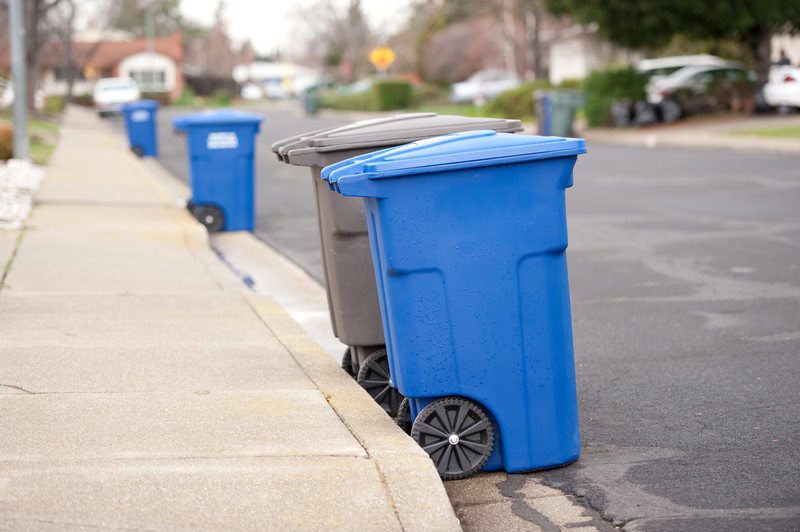
By entering data about your community, including location, community description, number of households and other information, the model will provide outputs with directional insights for comparing costs and impacts of various recycling programs; such as a recycling drop-off program, a dual-stream program using bins, a dual-stream program using carts, a single stream curbside program, or development of a hub-and-spoke system (importantly, the model indicates whether the program should aim to be a hub or a spoke for material processing).
The model uses many assumptions based on national or regionalized data, but it does also require some limited community-specific information.
The results following the data entry provide an easy-to-digest comparison of multiple approaches or program choices. The results can be utilized to choose program direction as well as provide third-party justification for program recommendations when proposals are presented to elected decision-makers.
Finally, the model will project cost per ton and per household and provide annual operating and capital projections for program budget development.
Getting a handle on financial realities
Meanwhile, the fiscal analysis method tool is geared toward helping program managers develop a solid starting point from which to measure progress.
Planning for program and service expansion is crucial, but you cannot plan where you’re going if you do not know where you are. Local government budgets and accounting can make it difficult to fully understand the true cost of solid waste and recycling operations. Typically, capital expenditures are totally expensed at the time of purchase. Thus, true costs of operation may be hidden or undetermined.
The financial analysis tool provides information essential for system accounting and funding methods. It also details steps to perform a complete accounting of program costs.
The Microsoft Excel-based method allows for input of capital equipment and improvements through a complete asset inventory. For instance, direct personnel costs (wages) and the cost of benefits is detailed for each employee. In addition, the form asks for a list of operational and maintenance costs and a factor is calculated for expected future capital outlays. In the end, the tool offers up a complete and thorough assessment of a program’s finances.
Additional assistance on this front can be found in a full-cost accounting manual, available on the ISWM section of the Southeast Recycling Development Council website.
The manual gives easy steps to source the information from the organization’s records that is needed for the input of the tool. The results are clear, showing the cost of programs based upon cost per ton and cost per household (or cost per commercial customer) as well as the total annual true cost of the operation.
Putting resources together
The fiscal analysis tool provides a detailed and accurate guide to the current cost to provide services for disposal and recycling. The ISWM offering then affords the user the opportunity to consider the cost, benefits and impact of several different options to improve or expand service to the service area.
With the documentation of both tools supporting the request for program change, the proposal to a City Council will prove to be much more convincing.
According to the U.S. EPA, in 2014, materials with a recovery value of nearly $9 billion were landfilled. The economic loss of those materials that could have been redirected to manufacturing dampens our country’s growth. The need for improving the nation’s recycling infrastructure and service delivery is great.
These new tools were developed to provide factual data to make the case for sustainable recycling ventures.
Will Sagar is the executive director of the Southeast Recycling Development Council and can be contacted at will.sagar@serdc.org.
The development of the tools was led by U.S. EPA, Region 4 (based in Atlanta and covering eight southeastern states). SRA International, Inc. (Atlanta) provided support for the input process and Resource Recycling Systems (Ann Arbor, Mich.) provided the technical support for the tools’ design. The Southeast Recycling Development Council was also a contributor to the development process.
The tools can be accessed at serdc.org/iswm.
The views and opinions expressed are those of the author and do not imply endorsement by Resource Recycling, Inc. If you have a subject you wish to cover in an op-ed, please send a short proposal to news@resource-recycling.com for consideration.