




Republic Services’ Polymer Centers helped lift third-quarter recycling revenue as the company advanced construction of its third plastics processing hub and identified organics diversion as a potential longer-term growth opportunity.
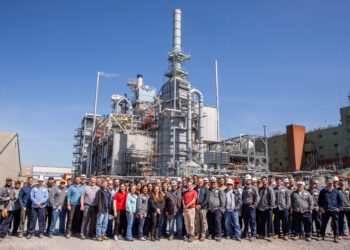
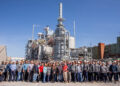
“Construction of our third Polymer Center in Allentown, Pennsylvania, remains on track with commissioning planned for early next year,” President and CEO Jon Vander Ark said during the company’s Oct. 29 earnings call.
Recycling processing and commodity sales revenue increased $15 million compared with the third quarter of 2025, driven by higher Polymer Center volumes and commodity prices, CFO Brian DelGhiaccio said. Average commodity prices reached $142 per ton, up $16 from a year earlier. That average covers recycled commodities sold at Republic’s recycling centers.
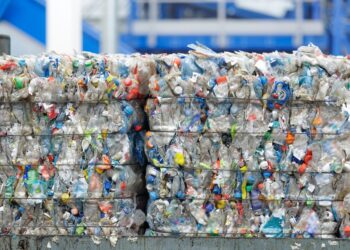
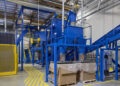
The Allentown facility will join Republic’s operating Polymer Centers in Las Vegas and Indianapolis. The centers add processing beyond a MRF, producing hot-washed PET flake and color-sorted HDPE and PP bales for use in new packaging. The PET stream is shredded and washed, while optical scanners separate the polyolefins by resin and color.
The Blue Polymers joint venture with Ravago processes the polyolefins into pellets. Executives did not provide individual production figures for the operating centers during the call.
Republic previously said Allentown would sell PET flake into the regional market, including to converters such as nearby Circularix. Its PET pellet business developed through a separate acquisition: Blue Polymers bought Evergreen Recycling’s California PET processing assets in 2025.
That transaction extended the business beyond washed PET flake into RPET pellet production. At the time, Republic said the acquisition was an opportunity that made financial sense, rather than a commitment to build PET pellet plants nationwide.
Acquisitions remain a priority across Republic’s broader portfolio. The company invested approximately $1.1 billion in deals through September and expects to finish 2026 with at least $1.2 billion in acquisition spending.
The pipeline spans the combined recycling and waste business and Environmental Solutions, with most opportunities in recycling and waste.
“The balance of our pipeline is always going to be smaller tuck-ins,” Vander Ark said. “We’ll probably end up doing somewhere around 25 acquisitions this year, most of which will be small tuck-ins.”
He anticipated additional medium-sized transactions next year but played down the likelihood of a larger strategic acquisition in the short to medium term. The call did not identify new plastics processing acquisition targets.
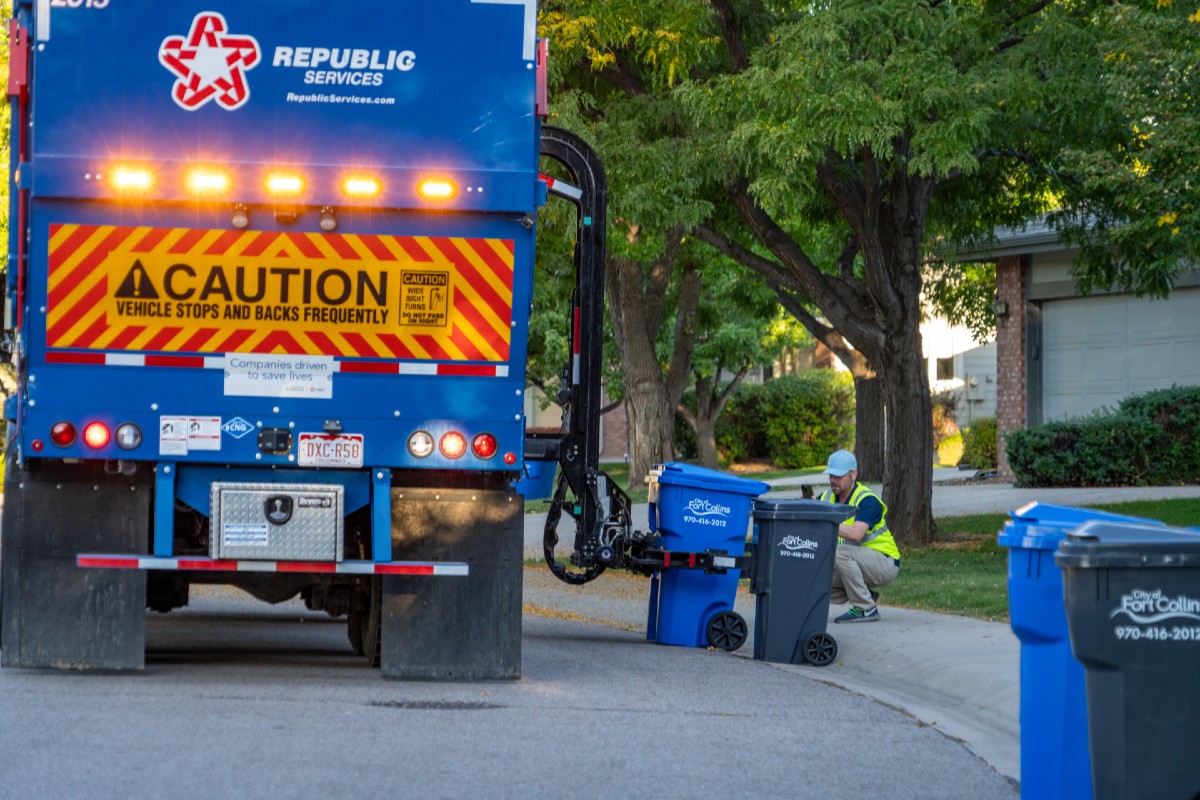
Collection trends provided another signal of improving business conditions. Small-container and large-container volumes each increased 0.5%, the first simultaneous growth in those businesses in more than three years. Residential volume declined 4.3%, primarily because of municipal contract losses.
Vander Ark said Republic would continue seeking better returns from municipal contracts acquired with other businesses, either improving their economics or exiting them. The company does not intend to keep shrinking residential service over time, he said, but continues to favor pricing over volume.
Republic plans to issue its formal 2027 guidance in February. Vander Ark cautioned that improving volumes depend on supportive broader economic conditions.
“I think recycling and waste will tip to positive growth in 2027 across the industry, and we’ll certainly try to match that or do a little better than that performance,” he said.
Organics represent a separate opportunity to recover value from material currently headed to disposal. Vander Ark estimated organic material accounts for 20% to 25% of what arrives at a landfill and said Republic already has numerous projects addressing those materials.
He characterized further organics development as a three- to five-year opportunity to create a meaningful revenue stream, rather than a major contributor over the next year or two. He did not announce specific new composting facilities or processing capacity during the call.
Republic also expects to complete two more renewable natural gas projects with partners by year-end, bringing its 2026 project additions to four.
The discussion framed diversion as a way to make better use of collected material while reducing the burden on disposal assets.
“We’re certainly looking at everything that goes into the landfill and challenging all of those tons,” Vander Ark said. “Landfills, while they’re profitable, they’re also a cost, right? You’ve already collected the money from somebody, and they’re a cost to us. So is there something else we could do with that material?”