



Resource Recycling
  • The Latest
  • Analysis
    • All
    • Certification Scorecard
    • Industry Announcements
    • Opinion

    Southeast grows into US’ critical mineral hub

    Sundry Photography / Shutterstock

    Iron Mountain adds ViaTeK Solutions to ITAD business

    ABTC gets black mass export exemption

    ABTC gets black mass export exemption

    smart glasses

    ITAD’s big wearables challenge

    Partnership ups quality control on device-sales platform

    Certification scorecard — week of Oct. 5

    Industry announcements for January 2026

    Industry announcements for October 2026

  • Conferences
    • Resource Recycling Conference
    • Plastics Recycling Conference
    • E-Scrap: The Longevity Conference
    • Textiles Recovery Summit
  • Publications
    • E-Scrap News
    • Plastics Recycling Update
    • Policy Now
    • Resource Recycling
    • Other Topics
      • All Topics
      • Brand Owners
      • Critical Minerals
      • Glass
      • Grant Watch / RFPs
      • Markets
      • Organics
      • Packaging
      • Research
      • Technology
      • Textiles
Subscribe
No Result
View All Result
Resource Recycling
  • The Latest
  • Analysis
    • All
    • Certification Scorecard
    • Industry Announcements
    • Opinion

    Southeast grows into US’ critical mineral hub

    Sundry Photography / Shutterstock

    Iron Mountain adds ViaTeK Solutions to ITAD business

    ABTC gets black mass export exemption

    ABTC gets black mass export exemption

    smart glasses

    ITAD’s big wearables challenge

    Partnership ups quality control on device-sales platform

    Certification scorecard — week of Oct. 5

    Industry announcements for January 2026

    Industry announcements for October 2026

  • Conferences
    • Resource Recycling Conference
    • Plastics Recycling Conference
    • E-Scrap: The Longevity Conference
    • Textiles Recovery Summit
  • Publications
    • E-Scrap News
    • Plastics Recycling Update
    • Policy Now
    • Resource Recycling
    • Other Topics
      • All Topics
      • Brand Owners
      • Critical Minerals
      • Glass
      • Grant Watch / RFPs
      • Markets
      • Organics
      • Packaging
      • Research
      • Technology
      • Textiles
Subscribe
No Result
View All Result
Resource Recycling
No Result
View All Result
Home Analysis

Inside the Circle: Put every package where it performs best

Bill ShiremanbyBill Shireman
August 10, 2026
in Analysis, Opinion, Recycling
Michigan State Launches Center to Tackle Packaging Waste

Alina Kholopova / Shutterstock

Inside the Circle is a monthly column on circular economy trends transforming source reduction and recycling.

Oregon has become the first of the new generation of packaging EPR states to establish producer fee schedules. California is following with its own fee structures and implementation process. For the first time, companies are beginning to understand what EPR will actually cost.

For many, the numbers come as a surprise.

Producer responsibility organizations, regulators, municipalities, recyclers, packaging companies, consumer brands and retailers are all discovering the extraordinary complexity of assigning fair costs across thousands of packaging formats, hundreds of material combinations, and virtually every consumer product sold in the marketplace.

Publicly, implementation appears orderly. Privately, there is understandable uncertainty.

That should surprise no one. We are attempting something no jurisdiction has ever implemented at this scale.

Some realities are unlikely to change. Society is no longer willing to externalize large portions of packaging’s end-of-life costs onto taxpayers, local governments, future generations and the environment. Those costs have always existed. We simply chose not to include them in product prices. Internalizing them inevitably increases costs.

Accepting that reality, however, is not the same as accepting unnecessary costs. Quite the opposite.

California’s affordability crisis is real. So is its waste crisis. Policies that dramatically increase consumer costs without delivering proportional environmental benefits will eventually lose public support. Policies that preserve today’s costs by postponing environmental improvement simply shift larger costs onto future generations. Neither path is sustainable.

So the practical question facing everyone now holding a fee schedule is not whether EPR should exist. It is how to make it cost less and accomplish more.

Put every package where it performs best

Not every package belongs in the same recovery program.

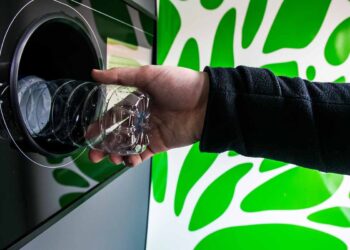
California already operates one of North America’s most successful deposit-return systems for beverage containers. CalRecycle reports the program recovered 74% of PET beverage bottles and 61% of glass beverage containers in 2025 — roughly double the rates achieved by non-deposit curbside systems across the country.

That raises an obvious question. Why should these containers remain subject primarily to packaging EPR?

Moving PET and glass beverage containers fully into the CRV system could simultaneously increase recycling rates, lower collection costs per container, produce cleaner material streams, expand supplies of high-quality recycled PET and glass, and reduce overall EPR costs.

Just as importantly, it would allow EPR resources to focus where they are needed most: films, flexible packaging, multi-material structures and other products that genuinely require new collection methods, better package design and continued technological innovation.

Success will come not from forcing every package into one system, but from placing every package into the recovery system where it performs best.

Treat the fee schedule as a design signal

EPR may become the strongest incentive packaging designers have ever received to rethink decades of accumulated design decisions.

Every package now invites new questions. Can unnecessary material be eliminated? Can labels, sleeves, adhesives, pigments, closures and barrier layers be redesigned to improve recovery? Can complex multi-material structures be simplified? Can concentrates, refill systems, reusable packaging, resale models and bulk distribution reduce packaging altogether? Can products themselves be redesigned to require less packaging?

The companies that answer these questions first will reduce both environmental impacts and long-term producer costs.

For decades, packaging engineers optimized manufacturing efficiency, transportation, merchandising and product protection. Now another design criterion has entered the equation: total system cost, including recovery.

That is precisely what EPR was intended to encourage. And the least expensive package to recover is often the one that was never produced.

Let the recovery technologies compete

Perhaps the greatest danger facing EPR implementation is the temptation to declare winners before innovation has finished.

Mechanical recycling is indispensable today and will continue improving. Biological recycling is advancing rapidly and may ultimately transform how many materials are recovered. Chemical recycling is also advancing rapidly and, for some materials, may prove the most environmentally and economically effective solution available.

No one yet knows exactly where each technology will perform best.

Public policy should encourage innovation across the full portfolio of recovery technologies while insisting upon measurable environmental performance. Each should be free to demonstrate where it creates the greatest environmental value at the lowest overall societal cost — judged by recovery rates, emissions and economics rather than by ideological preference.

The decisions that matter now

The next chapter of packaging EPR will not be written primarily by legislatures. It will be written by thousands of implementation decisions made over the next several years.

Those decisions will determine packaging design, investment, recycling infrastructure, affordability and environmental performance for decades to come.

Collection systems, recycling technologies, producer fees, package design and end markets should be optimized together. The greatest environmental and economic gains will come from improving the performance of the entire circular system rather than any single component.

The battles that produced packaging EPR are largely behind us, pending litigation notwithstanding. The work that matters now is making it succeed — accepting what cannot realistically be changed, improving what can, and having the wisdom to know the difference.

Tags: EPRLegislation & EnforcementPackaging
TweetShare
Bill Shireman

Bill Shireman

Bill Shireman is a longtime environmental entrepreneur and policy innovator. He helped write California’s original bottle recycling law, which has helped recover hundreds of billions of containers. As CEO of Solution Citizen, he works at the intersection of circular economy policy, democratic renewal, and cultural transformation—and occasionally wanders rainforests looking for better ideas than the ones we currently have. He recently launched Circle America, a new affinity group and campaign for advancing a circular economy and culture. Learn more and join the community at CircleAmerica.us

Related Posts

Study explores  reusable containers in California DRS

Inside the Circle: The bottle bill’s unfinished business

byBill Shireman
October 13, 2026

California’s pioneering bottle bill just turned 40. It has lessons to teach us for the future.

Southeast grows into US’ critical mineral hub

byPaul Lane
October 12, 2026

A wave of development has shored up the mineral infrastructure, but some are calling for more to be done to...

ABTC gets black mass export exemption

ABTC gets black mass export exemption

byPaul Lane
October 9, 2026

Company leadership said the move allows the minerals to be used while the nation’s processing infrastructure gets up to speed.

University at Buffalo Professor John Atkinson (right) speaks at the NERC conference in New Jersey.

Improving recycling access for underserved communities

byBrian Clark Howard
October 7, 2026

Panelists at the NERC conference in New Jersey talked about solutions to recycling access, from grants to research to technology...

How AI imaging is helping MRFs and a reclaimer

EPR demands push AI vision systems toward MRFs

byStefanie Valentic
October 6, 2026

AI audit systems could become a compliance tool under EPR, but who pays for them is still being worked out.

SC Johnson CEO: Recycling needs policy fix

byStefanie Valentic
October 5, 2026

Decades of voluntary packaging work have hit an economic wall. EPR and stronger regulation are what will move the needle.

Load More
Next Post
Bags of collected agricultural twine for Cleanfarms twine recycling contest

News in Brief: August 10, 2026

2026 Buyers’ Guide

Equipment, services and technology suppliers serving the recycling industry.

Browse the Guide

More Posts

APR, PROs appeal to Ottawa for help

APR, PROs appeal to Ottawa for help

October 6, 2026
Sundry Photography / Shutterstock

Iron Mountain adds ViaTeK Solutions to ITAD business

October 9, 2026

Southeast grows into US’ critical mineral hub

October 12, 2026
smart glasses

ITAD’s big wearables challenge

October 8, 2026
How to perform chip harvesting

How to perform chip harvesting

October 1, 2026
GM launches recycled EV battery line

GM launches recycled EV battery line

October 5, 2026
Our top stories from February 2023

ADS flexes new recycling capacity against resin spikes

October 1, 2026

SC Johnson CEO: Recycling needs policy fix

October 5, 2026
plastic bale

Underreported sales may cost bottle bill states up to 40%

October 5, 2026
How AI imaging is helping MRFs and a reclaimer

EPR demands push AI vision systems toward MRFs

October 6, 2026
Load More

About & Publications

About Us

Staff

Archive

Magazines

Work With Us

Advertise
Jobs
Contact
Terms and Privacy

Newsletters

Get the latest recycling news and analysis delivered to your inbox every week. Stay ahead on industry trends, policy updates, and insights from programs, processors, and innovators.

Subscribe

Welcome Back!

Login to your account below

Forgotten Password?

Retrieve your password

Please enter your username or email address to reset your password.

Log In

Add New Playlist

No Result
View All Result
  • The Latest
  • Analysis
  • Recycling
  • E-Scrap
  • Plastics
  • Policy Now
  • Conferences
    • E-Scrap Conference
    • Plastics Recycling Conference
    • Resource Recycling Conference
    • Textiles Recovery Summit
  • Magazines
  • About Us
  • Advertise
  • Archive
  • Jobs
  • Staff
Subscribe
This website uses cookies. By continuing to use this website you are giving consent to cookies being used. Visit our Privacy and Cookie Policy.