






Resource Recycling
  • The Latest
  • Analysis
    • All
    • Certification Scorecard
    • Industry Announcements
    • Opinion
    shipping and transportation

    E-scrap transport confronts cost, capacity concerns

    Partnership ups quality control on device-sales platform

    Certification scorecard — week of Oct. 19

    Industry veterans buy Entropex with plans to rebrand

    Lifecycle growth tested as metals diverge

    Sorted: Making Halloween costumes more sustainable

    Sorted: Making Halloween costumes more sustainable

    Researchers work on fluorine-free battery binder

    Researchers work on fluorine-free battery binder

    CommanderAI launches searchable hauler database

    Blancco brings agentic AI to data erasure, ITAD operations

  • Conferences
    • Resource Recycling Conference
    • Plastics Recycling Conference
    • E-Scrap: The Longevity Conference
    • Textiles Recovery Summit
  • Publications
    • E-Scrap News
    • Plastics Recycling Update
    • Policy Now
    • Resource Recycling
    • Other Topics
      • All Topics
      • Brand Owners
      • Critical Minerals
      • Glass
      • Grant Watch / RFPs
      • Markets
      • Organics
      • Packaging
      • Research
      • Technology
      • Textiles
Subscribe
No Result
View All Result
Resource Recycling
No Result
View All Result
Home Recycling

NERC forum explores textile reuse

Isabella BurkebyIsabella Burke
June 30, 2026
in Recycling

Neenawat Khenyothaa / Shutterstock

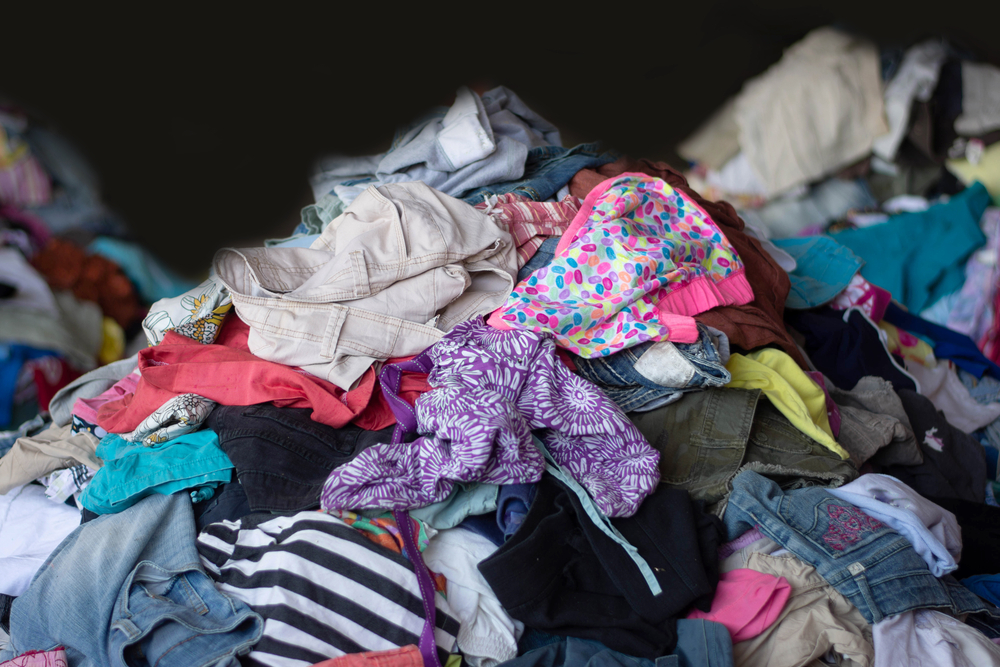
As clothing production continues to rise worldwide, a July 7 forum hosted by the Northeast Recycling Council will examine what actually happens after consumers donate unwanted textiles and why reuse remains one of the most effective ways to keep clothing out of landfills.

NERC is a nonprofit organization dedicated to advancing environmental and economic sustainability through source reduction, recycling, and circular economy initiatives. The organization’s Textiles Management Committee focuses on reducing textile waste and strengthening circular economy practices for apparel and textiles across its 11 member states.

As a preferred strategy for extending the lifespan of clothing, reuse gives garments and fabrics a continued, purposeful life without breaking them down. Reducing textile waste requires conscientious shopping, designing more durable garments, and limiting overproduction, said Amanda Forster, a materials research engineer at the National Institute of Standards and Technology (NIST).

“Reduce consumption, redesign products, or reuse things is usually a good first step,” she said. “Recycling is the less preferred mechanism because every one of those choices requires additional energy.” In addition, NIST’s sustainability research can help consumers shop in a more mindful fashion. 

The Northeast Recycling Council (NERC) will explore how donated textiles move through collection, sorting, resale, reuse and recycling systems, providing a better understanding of the processes that support textile recovery and circularity. 

Forster said one reason so many textiles become waste is that consumers often don’t know what to do with unwanted clothing. “Everybody has this bag of things they’re no longer using, and they don’t necessarily know what to do with,” she said. “Having better education, better accessibility, and better transparency about what happens to garments could go a long way toward keeping textiles out of landfills.”

Industry experts say one of the biggest misconceptions surrounding textile donations is that every item given to a thrift store is resold locally. In reality, donated textiles often follow multiple pathways depending on their condition, market demand, and available processing infrastructure. 

Where to start

“The first question that needs to be asked is identifying what a garment is made of,” Forster said. “Being able to identify a garment’s fiber composition is really important to understanding what the next step should be.” Identifying a garment’s fiber composition is one of the biggest challenges in textile recycling because clothing labels can be missing, inaccurate or incomplete. 

Without knowing whether an item is made from natural fibers, synthetics or blends, recyclers may struggle to determine whether it is suitable for reuse, mechanical recycling, chemical recycling or disposal. Forster said improving fiber identification can help direct textiles into the most appropriate recovery pathway and reduce contamination in recycling streams.

While some items are purchased by secondhand shoppers, others may be redistributed through charitable programs, sold to textile graders, exported to international markets, recycled into new products, or ultimately discarded if no viable end market exists.

Forster said emerging technologies such as artificial intelligence are helping improve the sorting process. “The challenge with near-infrared spectroscopy is that the spectra you get back are very complicated to interpret,” she said. “AI and machine learning make that process much faster than if a human tried to analyze complicated data.”

Textile recycling keeps millions of tons of waste out of landfills, significantly reduces carbon emissions, and conserves vital resources like water and fossil fuels. Fast fashion’s rapid production and consumption model generates massive amounts of textile waste, with less than 1% of clothing currently recycled into new garments. 

Although textile-to-textile recycling remains limited today, Forster said she is optimistic about the industry’s future. “I’m starting to see movement in large-scale sorting facilities that can supply the volumes of material needed for textile recycling,” she said. “It’s a great opportunity to grow this field and create more opportunities to recycle textiles back into fiber.”

Tags: Textiles
TweetShare
Isabella Burke

Isabella Burke

Isabella Burke is a recent graduate of Rutgers University, where she earned a degree in Journalism and Media Studies. In addition to reporting at Resource Recycling this summer, Burke also reports for Slice of Culture, where she covers community issues and underrepresented stories across Hudson County. Previously, she reported on state government and public policy as a New Jersey State House News Intern. Her background includes experience in digital media, communications, and social media strategy for organizations including the Robert Wood Johnson Medical School and The Daily Targum. She is passionate about storytelling, travel, art, and reporting on issues that impact communities.

Related Posts

Sorted: Making Halloween costumes more sustainable

Sorted: Making Halloween costumes more sustainable

byBrian Clark Howard
October 19, 2026

Americans throw away an estimated 35 million Halloween costumes each year, and four out of 10 costumes are only worn...

Reju CEO Patrik Frisk stands among textile waste

Reju’s Patrik Frisk on the promise of textile-to-textile recycling

byBrian Clark Howard
October 1, 2026

The CEO talks about his company’s plans on chemical recycling, in New York, Pennsylvania and Europe.

Basel Convention could ‘destabilize textile circularity,’ panelists warn

byBrian Clark Howard
September 30, 2026

The international convention may change the way second-hand clothing is regulated, with potentially big impacts.

Textile EPR and the definition of recycling

Textile Exchange reports progress in production

byPaul Lane
September 22, 2026

The organization said the industry has made some sustainability progress, but there’s much room for improvement.

Panelists: Textile recycling requires more automation

Committee picked to shape 2027 Textile Recovery Summit

byPaul Lane
September 11, 2026

Committee members will help pick topics of interest for the March event.

Leadership at a pivotal moment

Leadership at a pivotal moment

byBrian Clark Howard
September 10, 2026

CalRecycle Director Zoe Heller is heading up an agency tasked with ambitious recycling and sustainability goals. Can she pull it...

Load More
Next Post
RIT researchers develop AI-based textile recycling system

CA expects first textile EPR deadline

2026 Buyers’ Guide

Equipment, services and technology suppliers serving the recycling industry.

Browse the Guide

More Posts

Court gavel and justice scales on a table.

NAW asks to pause Oregon EPR fees

October 20, 2026
Dow, Orbis talk EPR, demand at Pack Expo

Dow, Orbis talk EPR, demand at Pack Expo

October 21, 2026

Republic breaks ground on St. Louis MRF

October 15, 2026
Lawsuits hover days after SB 54 approval

CAA trims first-year SB 54 budget in final plan

October 13, 2026
Sorted: Making Halloween costumes more sustainable

Sorted: Making Halloween costumes more sustainable

October 19, 2026
Triton to make rail ties from artificial turf

Triton to make rail ties from artificial turf

October 20, 2026
Northeast recycled commodity values hit 5-year lows

HDPE, PP prices climb for October

October 14, 2026
Brokers of shame: 10,000+ containers of U.S. e-waste to Asia

Brokers of shame: 10,000+ containers of U.S. e-waste to Asia

October 16, 2026
Industry veterans buy Entropex with plans to rebrand

Lifecycle growth tested as metals diverge

October 19, 2026
Removing an eBike battery pack.

EPR’s next fight is over embedded batteries

October 13, 2026
Load More

About & Publications

About Us

Staff

Archive

Magazines

Work With Us

Advertise
Jobs
Contact
Terms and Privacy

Newsletters

Get the latest recycling news and analysis delivered to your inbox every week. Stay ahead on industry trends, policy updates, and insights from programs, processors, and innovators.

Subscribe

Welcome Back!

Login to your account below

Forgotten Password?

Retrieve your password

Please enter your username or email address to reset your password.

Log In

Add New Playlist

No Result
View All Result
  • The Latest
  • Analysis
  • Recycling
  • E-Scrap
  • Plastics
  • Policy Now
  • Conferences
    • E-Scrap Conference
    • Plastics Recycling Conference
    • Resource Recycling Conference
    • Textiles Recovery Summit
  • Magazines
  • About Us
  • Advertise
  • Archive
  • Jobs
  • Staff
Subscribe
This website uses cookies. By continuing to use this website you are giving consent to cookies being used. Visit our Privacy and Cookie Policy.