





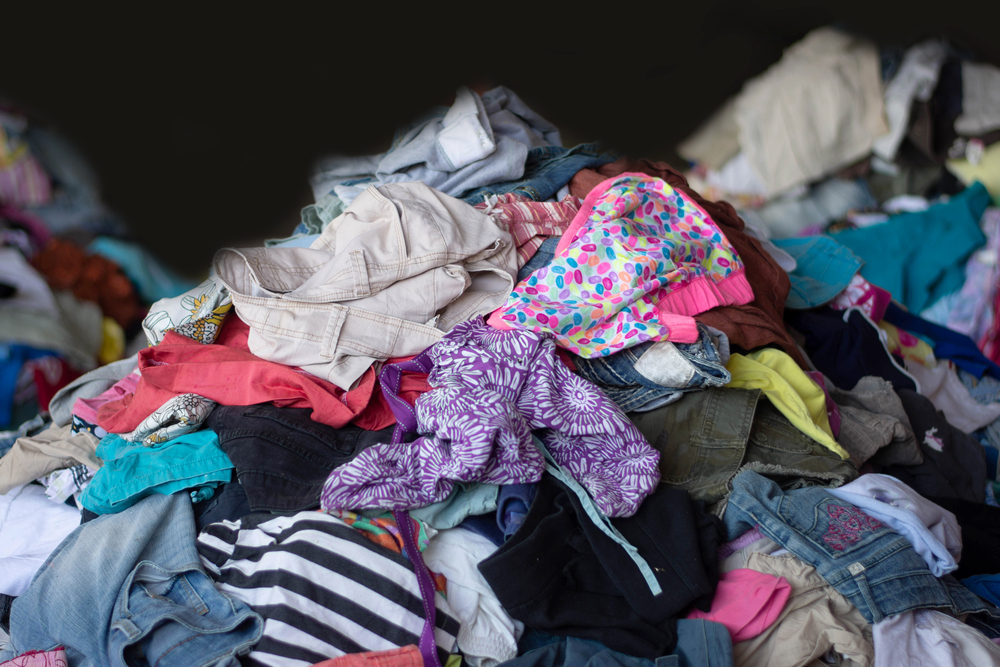
As clothing production continues to rise worldwide, a July 7 forum hosted by the Northeast Recycling Council will examine what actually happens after consumers donate unwanted textiles and why reuse remains one of the most effective ways to keep clothing out of landfills.
NERC is a nonprofit organization dedicated to advancing environmental and economic sustainability through source reduction, recycling, and circular economy initiatives. The organization’s Textiles Management Committee focuses on reducing textile waste and strengthening circular economy practices for apparel and textiles across its 11 member states.
As a preferred strategy for extending the lifespan of clothing, reuse gives garments and fabrics a continued, purposeful life without breaking them down. Reducing textile waste requires conscientious shopping, designing more durable garments, and limiting overproduction, said Amanda Forster, a materials research engineer at the National Institute of Standards and Technology (NIST).
“Reduce consumption, redesign products, or reuse things is usually a good first step,” she said. “Recycling is the less preferred mechanism because every one of those choices requires additional energy.” In addition, NIST’s sustainability research can help consumers shop in a more mindful fashion.
The Northeast Recycling Council (NERC) will explore how donated textiles move through collection, sorting, resale, reuse and recycling systems, providing a better understanding of the processes that support textile recovery and circularity.
Forster said one reason so many textiles become waste is that consumers often don’t know what to do with unwanted clothing. “Everybody has this bag of things they’re no longer using, and they don’t necessarily know what to do with,” she said. “Having better education, better accessibility, and better transparency about what happens to garments could go a long way toward keeping textiles out of landfills.”
Industry experts say one of the biggest misconceptions surrounding textile donations is that every item given to a thrift store is resold locally. In reality, donated textiles often follow multiple pathways depending on their condition, market demand, and available processing infrastructure.
Where to start
“The first question that needs to be asked is identifying what a garment is made of,” Forster said. “Being able to identify a garment’s fiber composition is really important to understanding what the next step should be.” Identifying a garment’s fiber composition is one of the biggest challenges in textile recycling because clothing labels can be missing, inaccurate or incomplete.
Without knowing whether an item is made from natural fibers, synthetics or blends, recyclers may struggle to determine whether it is suitable for reuse, mechanical recycling, chemical recycling or disposal. Forster said improving fiber identification can help direct textiles into the most appropriate recovery pathway and reduce contamination in recycling streams.
While some items are purchased by secondhand shoppers, others may be redistributed through charitable programs, sold to textile graders, exported to international markets, recycled into new products, or ultimately discarded if no viable end market exists.
Forster said emerging technologies such as artificial intelligence are helping improve the sorting process. “The challenge with near-infrared spectroscopy is that the spectra you get back are very complicated to interpret,” she said. “AI and machine learning make that process much faster than if a human tried to analyze complicated data.”
Textile recycling keeps millions of tons of waste out of landfills, significantly reduces carbon emissions, and conserves vital resources like water and fossil fuels. Fast fashion’s rapid production and consumption model generates massive amounts of textile waste, with less than 1% of clothing currently recycled into new garments.
Although textile-to-textile recycling remains limited today, Forster said she is optimistic about the industry’s future. “I’m starting to see movement in large-scale sorting facilities that can supply the volumes of material needed for textile recycling,” she said. “It’s a great opportunity to grow this field and create more opportunities to recycle textiles back into fiber.”