




Resource Recycling
  • The Latest
  • Analysis
    • All
    • Certification Scorecard
    • Industry Announcements
    • Opinion
    Flexibles play vital role in medical supply chain

    Flexibles play vital role in medical supply chain

    Endpoint devices endure disastrous quarter

    shipping and transportation

    E-scrap transport confronts cost, capacity concerns

    Partnership ups quality control on device-sales platform

    Certification scorecard — week of Oct. 19

    Industry veterans buy Entropex with plans to rebrand

    Lifecycle growth tested as metals diverge

    Sorted: Making Halloween costumes more sustainable

    Sorted: Making Halloween costumes more sustainable

  • Conferences
    • Resource Recycling Conference
    • Plastics Recycling Conference
    • E-Scrap: The Longevity Conference
    • Textiles Recovery Summit
  • Publications
    • E-Scrap News
    • Plastics Recycling Update
    • Policy Now
    • Resource Recycling
    • Other Topics
      • All Topics
      • Brand Owners
      • Critical Minerals
      • Glass
      • Grant Watch / RFPs
      • Markets
      • Organics
      • Packaging
      • Research
      • Technology
      • Textiles
Subscribe
No Result
View All Result
Resource Recycling
No Result
View All Result
Home E-Scrap

Feds fund R&D for rare earths and other e-scrap metals

byJared Paben
March 17, 2022
in E-Scrap
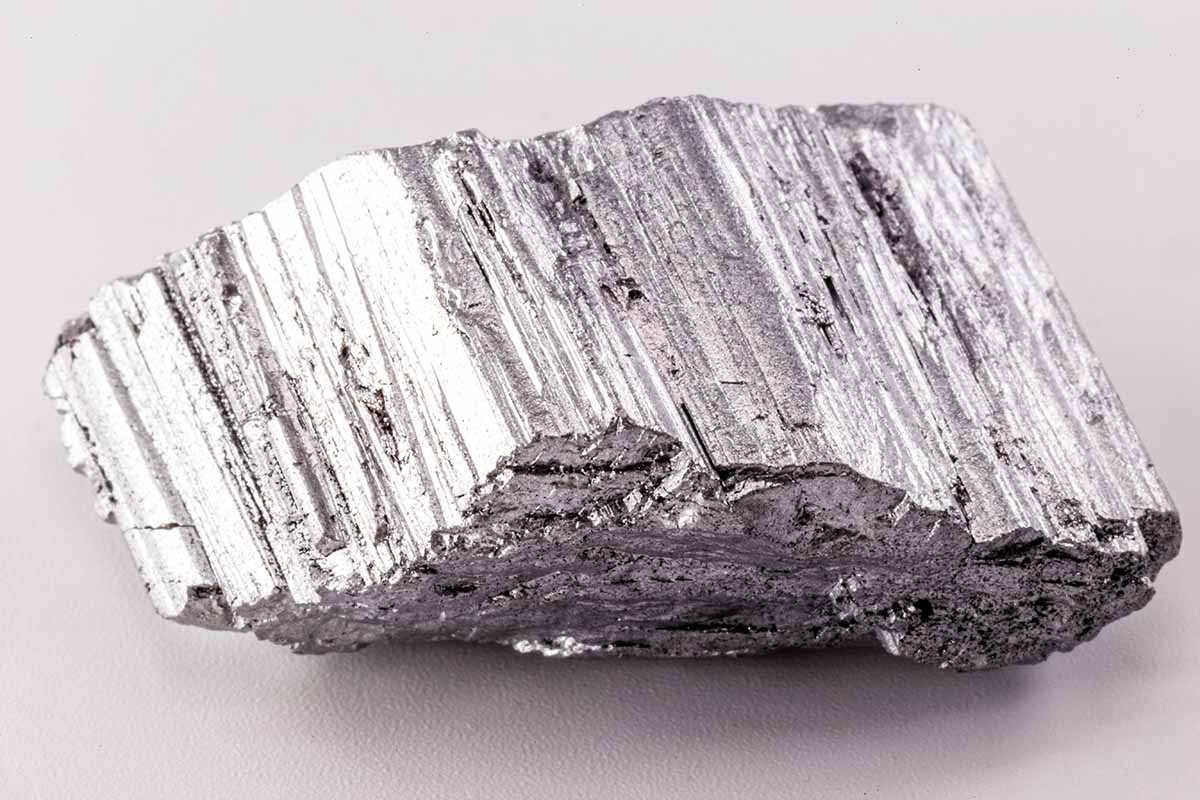
Neodymium-RHJPhtotoandilustration-Shutterstock

The U.S. military has kickstarted a $5 million project to research and develop technologies for recovering critical metals from e-scrap.

The Defense Advanced Research Projects Agency (DARPA) is accepting R&D proposals from several teams focused on recovering rare earth elements and other critical metals found in electronics.

The move is aimed at bolstering supply chains for metals that are crucial for components used in defense and civilian hardware, particularly metals for which the U.S. is largely dependent on China. DARPA’s project, called the Recycling at the Point of Disposal (RPOD) Disruption Opportunity (DO), comes as the Biden administration has announced a number of new efforts to shore up domestic supply chains.

Last year, the White House published a report, “Building resilient supply chains, revitalizing American manufacturing, and fostering broad-based growth,” that called for investments in recovery of rare earth elements from e-scrap.

In February, the U.S. Department of Energy (DOE) announced it would spend $2.91 billion to fund battery materials refining and production plants, battery cell and pack manufacturing facilities and recycling facilities, according to a press release, which noted that national security is among the concerns driving the effort. The money was appropriated by the infrastructure law that passed Congress last year with support from members of both parties. On Feb. 14, the DOE announced $140 million to support technologies to recover rare earth elements from industrial waste streams, including waste from mining.

Targeting low-volume elements

DARPA’s project is focused on recovering gallium, indium, tantalum, neodymium, praseodymium, europium and dysprosium, according to the call for proposals. DARPA envisions some of those low-volume elements would be entirely separated, and some could be “co-extracted” in groups of two or three.

“We’re focused on the selective list of materials that are there in the DO announcement, because of their criticality to our supply chain,” Vishnu Sundaresan, a program manager at DARPA’s Defense Sciences Office, said in an interview with E-Scrap News.

The RPOD project is for high-risk, very early stage research proposals that still show promise for being technically feasible, he said.

The DO request for proposals document notes that industry standard pyrometallurgical and hydrometallurgical recycling techniques were originally developed for the extraction of a single element from mined ores at industrial scale, but they’re ill-suited for recovering multiple low-volume elements from e-scrap.

The document notes other technologies are being explored to better target at least two or more precious metals and rare earth elements (REEs), including thermal microreactors, electroacoustic techniques, flow electrochemical cells and fractional separation microcolumns.

DARPA held an information session on the project on Feb 8. Proposals from research teams were due on Friday, March 4, Sundaresan said. And DARPA expects to select projects for funding in mid-May.

DARPA has $5 million total for four or five research efforts, each receiving up to $1 million. Participants could include other public agencies, academia or private companies.

R&D efforts will continue over 18 months, provided they continue to make progress toward the project’s goals, he said.

According to the DO document, the projects will be broken into two phases. At the end of the first, the project participants will need to demonstrate that their automated process can extract the critical elements with a yield of over 20 grams per hour, at over 50% recovery and 80% purity. They’ll also need to estimate the amount of energy required for the separation and co-extraction, as well as identify possible supply chain avenues for the recovered materials.

At the end of the second phase, they’ll need to demonstrate their RPOD technology can produce at least twice the yield it was required to meet in phase one, with over 70% recovery and 95% purity. Again, they’ll need to estimate the energy required for the process.

“At the end of Phase 2, performers may be required to demonstrate RPOD technology continuously for 2 hours using government provided e-waste,” according to the document.

The technologies could include the use of machine vision and robotics, as well as equipment for size-reducing and chemically processing e-scrap, Sundaresan said.  

If successful, DARPA could launch its own project to further the effort, Sundaresan said, or it could hand it off to another branch of government or the private sector. He noted that the Department of Defense could use the technology at sites run by the Defense Logistics Agency, which handles scrap disposition for the military.

“There are a lot of avenues for this,” he said.
 

Tags: Critical MineralsResearch
TweetShare
Jared Paben

Jared Paben

Related Posts

Aclara makes mineral push as production nears

Aclara makes mineral push as production nears

byPaul Lane
October 22, 2026

The company seeks additional funds to finance its Western Hemisphere supply chain, which it envisions as an alternative to Chinese-sourced...

RecyClass hits 500 EU recyclability evals

Study finds path toward mineral independence exists

byPaul Lane
October 20, 2026

The European report shows how legislation can help bolster domestic critical mineral supply chains.

Industry veterans buy Entropex with plans to rebrand

Lifecycle growth tested as metals diverge

byDavid Daoud
October 19, 2026

ITAD-related public companies saw growth earlier in the year, and many anticipated their positions to further strengthen heading toward 2027.

Researchers work on fluorine-free battery binder

Researchers work on fluorine-free battery binder

byPaul Lane
October 16, 2026

Study authors found their alternative binder performed like traditional options with lower cost, environmental impact.

Federal contract aids Supra’s mineral recovery efforts

Federal contract aids Supra’s mineral recovery efforts

byPaul Lane
October 13, 2026

The Texas-based startup plans to focus on scandium recovery for now, with potential room to expand later.

Southeast grows into US’ critical mineral hub

byPaul Lane
October 12, 2026

A wave of development has shored up the mineral infrastructure, but some are calling for more to be done to...

Load More
Next Post
Reviewing business documents.

Sims repurposes more material and grows revenue by 9%

2026 Buyers’ Guide

Equipment, services and technology suppliers serving the recycling industry.

Browse the Guide

More Posts

Dow, Orbis talk EPR, demand at Pack Expo

Dow, Orbis talk EPR, demand at Pack Expo

October 21, 2026
Dow bullish on PE pricing into 2027

Dow bullish on PE pricing into 2027

October 23, 2026
Triton to make rail ties from artificial turf

Triton to make rail ties from artificial turf

October 20, 2026
Usefull reusable dining container at SEEC cafe at the University of Colorado Boulder.

CU Boulder launches dining reuse program

October 5, 2026
Court gavel and justice scales on a table.

NAW asks to pause Oregon EPR fees

October 20, 2026
Auto parts group joins Colorado EPR suit

Auto parts group joins Colorado EPR suit

October 26, 2026
Washington studies ag plastics recovery potential

Washington studies ag plastics recovery potential

October 26, 2026

Women in Circularity: Yara Barkopoulos

October 21, 2026
Industry announcements for January 2026

Industry announcements for October 2026

October 5, 2026
Industry veterans buy Entropex with plans to rebrand

Lifecycle growth tested as metals diverge

October 19, 2026
Load More

About & Publications

About Us

Staff

Archive

Magazines

Work With Us

Advertise
Jobs
Contact
Terms and Privacy

Newsletters

Get the latest recycling news and analysis delivered to your inbox every week. Stay ahead on industry trends, policy updates, and insights from programs, processors, and innovators.

Subscribe

Welcome Back!

Login to your account below

Forgotten Password?

Retrieve your password

Please enter your username or email address to reset your password.

Log In

Add New Playlist

No Result
View All Result
  • The Latest
  • Analysis
  • Recycling
  • E-Scrap
  • Plastics
  • Policy Now
  • Conferences
    • E-Scrap Conference
    • Plastics Recycling Conference
    • Resource Recycling Conference
    • Textiles Recovery Summit
  • Magazines
  • About Us
  • Advertise
  • Archive
  • Jobs
  • Staff
Subscribe
This website uses cookies. By continuing to use this website you are giving consent to cookies being used. Visit our Privacy and Cookie Policy.