
Resource Recycling
  • The Latest
  • Analysis
    • All
    • Certification Scorecard
    • Industry Announcements
    • Opinion
    From claims to custody: PCR procurement grows up

    From claims to custody: PCR procurement grows up

    What the NAND flash crunch means for remarketing, refurbishment and residual values

    Telamon acquires ITAD consultancy Retire-IT

    Certification Scorecard — Week of July 6, 2026

    Tech giant pens detailed ‘plastic-free packaging’ guide

    What Google’s latest report means for ITAD

    Unpacking the Starbucks cup data

    Unpacking the Starbucks cup data

    Amazon cutting out more flexible packaging

    Amazon’s AWS hardware reuse is measured

  • Conferences
    • Resource Recycling Conference
    • Plastics Recycling Conference
    • E-Scrap: The Longevity Conference
    • Textiles Recovery Summit
  • Publications
    • E-Scrap News
    • Plastics Recycling Update
    • Policy Now
    • Resource Recycling
    • Other Topics
      • All Topics
      • Brand Owners
      • Critical Minerals
      • Glass
      • Grant Watch / RFPs
      • Markets
      • Organics
      • Packaging
      • Research
      • Technology
      • Textiles
Subscribe
No Result
View All Result
Resource Recycling
  • The Latest
  • Analysis
    • All
    • Certification Scorecard
    • Industry Announcements
    • Opinion
    From claims to custody: PCR procurement grows up

    From claims to custody: PCR procurement grows up

    What the NAND flash crunch means for remarketing, refurbishment and residual values

    Telamon acquires ITAD consultancy Retire-IT

    Certification Scorecard — Week of July 6, 2026

    Tech giant pens detailed ‘plastic-free packaging’ guide

    What Google’s latest report means for ITAD

    Unpacking the Starbucks cup data

    Unpacking the Starbucks cup data

    Amazon cutting out more flexible packaging

    Amazon’s AWS hardware reuse is measured

  • Conferences
    • Resource Recycling Conference
    • Plastics Recycling Conference
    • E-Scrap: The Longevity Conference
    • Textiles Recovery Summit
  • Publications
    • E-Scrap News
    • Plastics Recycling Update
    • Policy Now
    • Resource Recycling
    • Other Topics
      • All Topics
      • Brand Owners
      • Critical Minerals
      • Glass
      • Grant Watch / RFPs
      • Markets
      • Organics
      • Packaging
      • Research
      • Technology
      • Textiles
Subscribe
No Result
View All Result
Resource Recycling
No Result
View All Result
Home Plastics

Groups ramp up messaging before global meeting

Marissa HeffernanbyMarissa Heffernan
May 23, 2023
in Plastics
Groups ramp up messaging before global meeting
In the days before the next round of U.N. negotiations, the resin sector is calling for plastics’ importance to be recognized while environmental groups are pushing for bans and more. | Bumble Dee/Shutterstock

Ahead of the second session of the Intergovernmental Negotiating Committee on Plastic Pollution in Paris, organizations are laying out their wish lists and forming partnerships. 

The second round of negotiations – dubbed INC-2 – will run May 29 through June 2 in Paris. The first round was held in 2022 in Uruguay, following a February 2022 United Nations resolution to develop an international legally binding instrument on plastic pollution by the end of 2024.

There will be five total sessions. 

Changes to participation 

Recently, the U.N. has been criticized for its decision to limit observer participation at the second session of negotiations. 

Under the new rules, only one representative per organization would be allowed in the room, though each organization is permitted to register five people per delegation. Nearly 2,700 member state delegates and observers are registered for the in-person-only negotiations.

Jane Patton, plastics and petrochemicals campaign manager at the Center for International Environmental Law, said in a press release that “observer participation is not optional, to be deprioritized if the room isn’t big enough.”  

“The intention to restrict participation to one representative per organization flies in the face of the mandate and established best practice by severely curtailing observers’ ability to engage in the process,” Patton said. “The physical capacity limits of the UNESCO building – the location chosen for the upcoming plastics treaty negotiations – were a known issue, and going over those limits for registered participants was foreseeable and preventable.” 

Patton asked the U.N. to create overflow rooms with streaming access and create alternate arrangements for “the hundreds of observers who are effectively shut out of the negotiation process.” 

“Advancing a strong and effective treaty demands that civil society organizations, scientific experts, rightsholders, workers and people living along the frontlines of the plastics crisis can meaningfully participate throughout the process,” Patton added.

Group calls for product bans

A number of other stakeholders have also been taking action in the runup to INC-2.

The World Wildlife Fund is calling for a ban on the “most high-risk and unnecessary” single-use plastic items, such as vaping devices, cutlery and cosmetic microplastics. 

Marco Lambertini, WWF Special Envoy, said in a press release that while many countries are already implementing measures, “we know this isn’t enough.” 

“We need coordinated approaches led by globally agreed rules that can make a difference at scale and put every country and company on the same level playing field,” he said. 

Ocean Conservancy, neanwhile, wants to see strong provisions on ghost gear in the agreement. (Ghost gear is abandoned, lost or discarded fishing gear.)

Nicholas Mallos, vice president of conservation for ocean plastics at Ocean Conservancy, said in a press release that ghost gear is the “elephant seal in the room” and “we cannot effectively address ocean plastic pollution without acknowledging the prevalence and impact of ghost gear.” 

The Plastic Industry Association said in a statement that it “supports international efforts to promote the elimination of plastic waste from the environment” and added that plastic is “essential to the health, safety, protection and well-being of humanity.”

The association is hoping to see an “official recognition of the essential nature of plastic,” as well as “ambitious yet reasonable” goal-setting that is not one-size-fits-all. It also hopes the agreement lacks caps, bans or material restrictions. 

The American Chemical Council (ACC) noted on its recently launched Global Partners for Plastics Circularity website that it’s “championing a global agreement to achieve the goal of eliminating additional plastic pollution while retaining the societal benefits of plastics.” The Global Partners are companies that make, use and recycle plastics, led by the International Council of Chemical Associations.

The group is seeking global policy harmonization, regular progress reports, public-private partnerships, an increase in recycling and collection capacity and mandated participation in a pellet containment program. 

Recent reports

The U.N. also recently released a report to aid negotiators. The report laid out scenarios for an 80% reduction of plastics that leak into the environment. 

However, the Global Alliance for Incinerator Alternatives (GAIA) said it was concerned because the report promoted “burning plastic waste in cement kilns as a key strategy in the design and implementation of the Global Plastics Treaty.”

Neil Tangri, science and policy director at GAIA, said in a press release that “burning plastic waste in cement kilns is a ‘get out of jail free card’ for the plastic industry to keep ramping up plastic production by claiming that the plastic problem can be simply burned away.” 

“Not only does this pose a grave climate and public health threat, it also undermines the primary goal of the global plastic treaty – putting a cap on plastic production,” he said. 

New alliance 

In another development, more than 60 environmental and pollution solution organizations have formed the Innovation Alliance for a Global Plastics Treaty.

Led by rePurpose Global and The Ocean Cleanup, the alliance intends to recognize “that the ongoing United Nations-led negotiations process represents humanity’s single most important opportunity to alter the trajectory of the global plastic pollution crisis,” according to a press release from the group.

“The Innovation Alliance aims to elevate crucial perspectives from those closest to tackling plastic waste worldwide, and in doing so, help ensure that the Global Plastics Treaty lives up to its promised potential,” the press release stated. 

Svanika Balasubramanian, co-founder and CEO of rePurpose, said in the press release that the first round of treaty negotiations “saw plenty of demands being lobbed in every direction, but not a whole lot of solutions.” 

The alliance is looking to bring voices that have “actual solutions against plastic waste” to the forefront, Balasubramanian added. 

Boyan Slat, founder and CEO of The Ocean Cleanup, added that “a plastics treaty negotiation that does not actively involve innovators will risk producing a piece of text that sounds promising on paper but doesn’t empower those who are actually doing the work on the ground.” 

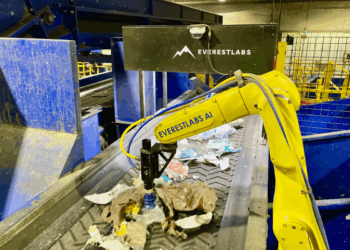
Other founding members include AMP Robotics, Ocean Bottle and Sustainable Ocean Alliance. 

The alliance is calling for a “pragmatic and inclusive” agreement that is based on data, that includes existing innovations and that simplifies government financing to improve access to flexible financing for solution-oriented organizations.

Struktol

Tags: Industry GroupsPolicy Now
TweetShare
Marissa Heffernan

Marissa Heffernan

Marissa Heffernan worked at Resource Recycling from January 2022 through June 2025, first as staff reporter and then as associate editor. Marissa Heffernan started working for Resource Recycling in January 2022 after spending several years as a reporter at a daily newspaper in Southwest Washington. After developing a special focus on recycling policy, they were also the editor of the monthly newsletter Policy Now.

Related Posts

APR adds PCR content verification to cert program

APR adds PCR content verification to cert program

byAntoinette Smith
July 9, 2026

The Association of Plastic Recyclers (APR) is expanding its PCR Certification Program to verify the percentage of PCR content in...

Unpacking the Starbucks cup data

Unpacking the Starbucks cup data

byAntoinette Smith
July 8, 2026

Upon close examination, data casting doubt on the coffee giant's recycling claims raises more questions than it answers.

SB 54 draft rules generate debate on rates, review

California increases PET market payments

byAntoinette Smith
July 7, 2026

While the state extended the incentive program, the status of a separate bill with similar goals is uncertain.

Two recycled-content bills gain approval in California

California agriculture seeks SB 54 repeal

byStefanie Valentic
July 7, 2026

A coalition of state agriculture stakeholders says the packaging law could add nearly $1,400 a year to household grocery costs...

In Our Opinion: Coalitions: The EPR Differentiator

Inside NAW’s constitutional case against packaging EPR

byStefanie Valentic
July 6, 2026

The National Association of Wholesaler-Distributors is fighting EPR in Oregon, and now in California too.

EPR fees are a market signal. Here’s what they’re telling you.

Building the infrastructure behind EPR

byStefanie Valentic
July 6, 2026

CAA's Jeff Fielkow breaks down the organization's role in US packaging EPR and why being the only multi-state PRO in...

Load More
Next Post

US scrap plastic exports fall

More Posts

Oregon’s Recycling Modernization Act faces injunction

Oregon’s EPR program posts first-year results

July 6, 2026
Two recycled-content bills gain approval in California

California agriculture seeks SB 54 repeal

July 7, 2026
Unpacking the Starbucks cup data

Unpacking the Starbucks cup data

July 8, 2026
In Our Opinion: Coalitions: The EPR Differentiator

Inside NAW’s constitutional case against packaging EPR

July 6, 2026
Tech giant pens detailed ‘plastic-free packaging’ guide

What Google’s latest report means for ITAD

July 8, 2026
EPR fees are a market signal. Here’s what they’re telling you.

Building the infrastructure behind EPR

July 6, 2026
SB 54 draft rules generate debate on rates, review

California increases PET market payments

July 7, 2026
MP Materials breaks ground on rare earth magnet campus in North Texas

ERI confirms ITAD shift toward minerals

July 3, 2026
ITAD firm wins spot for NASA purchasing

ITAD firm wins spot for NASA purchasing

July 6, 2026
Auto Draft

Digital product passports offer gateway into secondary market

July 7, 2026
Load More

About & Publications

About Us

Staff

Archive

Magazine

Work With Us

Advertise
Jobs
Contact
Terms and Privacy

Newsletter

Get the latest recycling news and analysis delivered to your inbox every week. Stay ahead on industry trends, policy updates, and insights from programs, processors, and innovators.

Subscribe

Welcome Back!

Login to your account below

Forgotten Password?

Retrieve your password

Please enter your username or email address to reset your password.

Log In

Add New Playlist

No Result
View All Result
  • The Latest
  • Analysis
  • Recycling
  • E-Scrap
  • Plastics
  • Policy Now
  • Conferences
    • E-Scrap Conference
    • Plastics Recycling Conference
    • Resource Recycling Conference
    • Textiles Recovery Summit
  • Magazine
  • About Us
  • Advertise
  • Archive
  • Jobs
  • Staff
Subscribe
This website uses cookies. By continuing to use this website you are giving consent to cookies being used. Visit our Privacy and Cookie Policy.