Resource Recycling
  • The Latest
  • Analysis
    • All
    • Certification Scorecard
    • Industry Announcements
    • Opinion
    Industry announcements for January 2026

    Industry Announcements for March 2026

    HP receives ocean plastics certification

    HP Inc. earnings point to memory inflation challenge

    Certification scorecard for the week of Feb. 23, 2026

    Umicore highlights strength in recycling, catalysis

    Apto, Tusaar partner on rare earths recovery

    Apto, Tusaar partner on rare earths recovery

    Certification scorecard for the week of Feb. 16, 2026

    Sims Lifecycle leverages hyperscale decommissioning

    Sims Lifecycle leverages hyperscale decommissioning

    The electronics recycling industry is undergoing a transformation from labor-intensive manual operations to highly automated, AI-driven facilities that use advanced robotics, cleaner chemistry and digital tracking systems to extract critical materials.

    The cyber-physical MRF: AI and robotics reshape e-waste recovery

    Certification scorecard for the week of Feb. 9, 2026

  • Conferences
  • Publications

    Other Topics

    Textiles
    Organics
    Packaging
    Glass
    Brand Owners

    Metals
    Technology
    Research
    Markets
    Grant Watch

    All Topics

Subscribe
No Result
View All Result
Resource Recycling
  • The Latest
  • Analysis
    • All
    • Certification Scorecard
    • Industry Announcements
    • Opinion
    Industry announcements for January 2026

    Industry Announcements for March 2026

    HP receives ocean plastics certification

    HP Inc. earnings point to memory inflation challenge

    Certification scorecard for the week of Feb. 23, 2026

    Umicore highlights strength in recycling, catalysis

    Apto, Tusaar partner on rare earths recovery

    Apto, Tusaar partner on rare earths recovery

    Certification scorecard for the week of Feb. 16, 2026

    Sims Lifecycle leverages hyperscale decommissioning

    Sims Lifecycle leverages hyperscale decommissioning

    The electronics recycling industry is undergoing a transformation from labor-intensive manual operations to highly automated, AI-driven facilities that use advanced robotics, cleaner chemistry and digital tracking systems to extract critical materials.

    The cyber-physical MRF: AI and robotics reshape e-waste recovery

    Certification scorecard for the week of Feb. 9, 2026

  • Conferences
  • Publications

    Other Topics

    Textiles
    Organics
    Packaging
    Glass
    Brand Owners

    Metals
    Technology
    Research
    Markets
    Grant Watch

    All Topics

Subscribe
No Result
View All Result
Resource Recycling
No Result
View All Result
Home Plastics

Report estimates drop in plastic recycled in 2019

byJared Paben
June 23, 2021
in Plastics
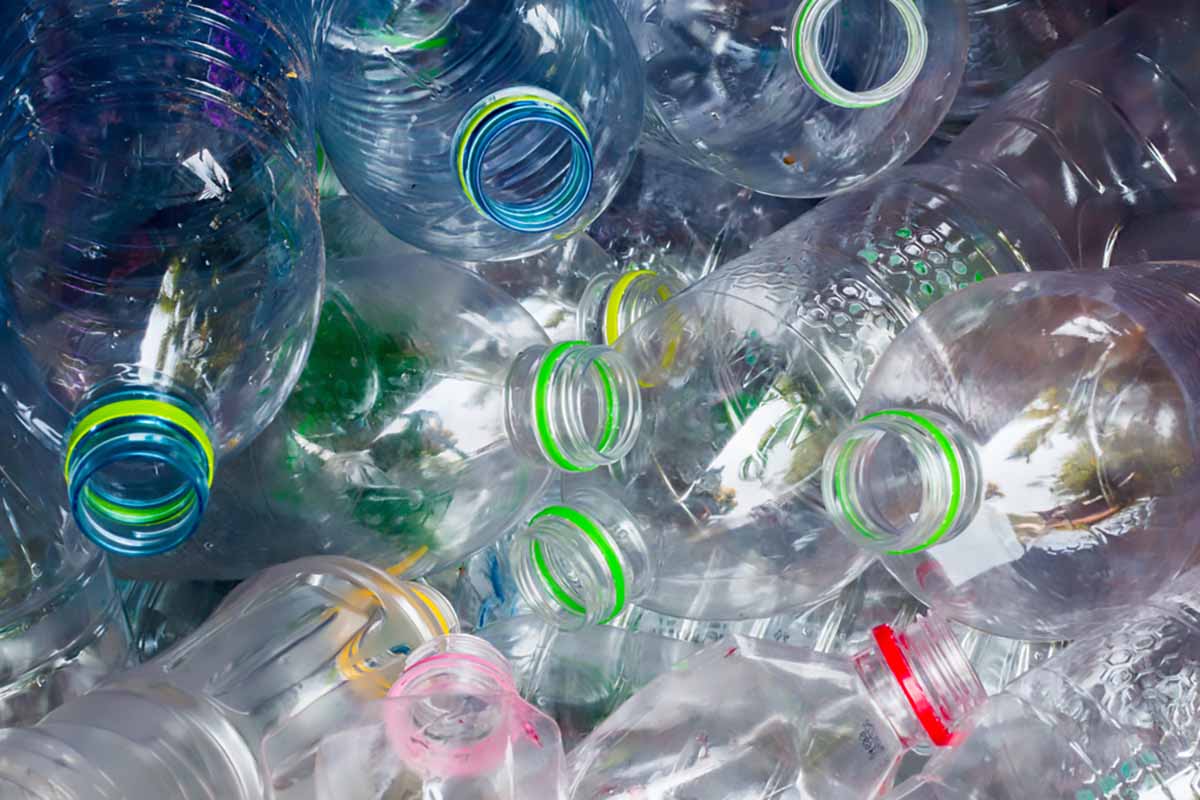
Data shows that the U.S. PET bottle recycling rate in 2019 was 27.9%, down from 29.0% in 2018. | TeuNg-StyLe / Shutterstock

Slightly less scrap plastic from the U.S. was recycled in 2019 than the year prior. The data comes as brand owners signal greater demand for recycled resins.

Nearly 5.1 billion pounds of post-consumer bottles, non-bottle rigid plastics, film and other plastics were recovered for recycling in 2019, according to a report released by the American Chemistry Council (ACC) and the Foundation for Plastic Recycling, which is part of the Association of Plastic Recyclers (APR). That number was down by 27 million pounds, or about 0.5%, from 2018.

In terms of specific categories of bottles, the weight of PET bottles recovered fell 2.2% from the prior year, and the weight of recovered HDPE bottles declined by 0.8%, the report showed.

“Flat or declining recycling rates are a sign that the system needs support,” Steve Alexander, APR’s president and CEO, stated in a press release. “Declines in mature recycling streams, such as PET and HDPE bottles, make brand company commitments to increased recycled content even more challenging. There are many opportunities to support continued growth in film and non-bottle rigid recycling as well as turn the course for bottles by focusing on what recyclers need to succeed as they are the engines of the circular economy.”

The data was based on surveys from Stina Inc. (formerly More Recycling) and the National Association for PET Container Resources (NAPCOR). This was the first year the different recycled plastic categories were reported in one document. In the past, the non-bottle rigids report was separate from the bottles report.

(APR owns Resource Recycling, Inc., publisher of Plastics Recycling Update.)

Details on bottle recycling

Overall, the U.S. plastic bottle recycling rate came in at 28.4% in 2019, down 0.5 percentage points from 2018, according to the report. Essentially, more resin was sold to make bottles but less weight was collected for recycling.

As has been the case for a number of years, the vast majority of bottles collected for recycling were processed domestically. In 2019, 94.7% of bottle scrap was purchased by U.S. and Canadian reclaimers, the research showed.

Almost all of the bottles are made of PET or HDPE. The following are recycling rate details broken out by types of bottles:

The PET bottle recycling rate in 2019 was 27.9%, down from 29.0% in 2018. This drop was because more resin was sold in 2019 and less was recovered for recycling.

The recycling rate for natural HDPE bottles was 27.2%, down from 28.7% the year prior. Resin sales decreased, but the weight recovered decreased even more.

The rate for color HDPE bottles was 34.2%, up from 31.7% in 2018. Resin sales decreased while the weight recovered increased.

Lastly, the recycling rate for polypropylene bottles was 15.9%, down from 17.0% the year before. The weight of bottles produced increased while the weight recovered dropped in 2019. The report noted that relatively few PP bottles are sorted into separate PP bottle bales, and most are sold in mixed-rigid bales or color HDPE bottle bales for recycling.

Non-bottle rigids takeaways

The report didn’t provide an estimate of the overall recycling rate for non-bottle rigid plastics; however, the analysis showed that the total weight of scrap purchased for recycling increased by 3.7% in 2019.

As has been the trend for several years, a larger percentage of weight was purchased by U.S. and Canadian reclaimers and less was exported. Specifically, U.S. and Canadian reclaimers acquired 86.6% of the scrap sold for recycling in 2019, up from 86% the year before.

About three-quarters of non-bottle rigid weight purchased for recycling is HDPE and PP, with smaller percentages of PET, polystyrene, PVC and other resins.

Film insights

As with non-bottle rigids, the estimated total recycling rate for films wasn’t provided; however, the report provided details on weights sold for recycling.

In 2019, 977.7 million pounds were recovered for recycling in the U.S., down 2.4% from the year before.

The report noted that the shift toward domestic recycling, which has been seen for several years, continued in 2019. The percentage exported has been dropping since 2016.

U.S. and Canadian reclaimers bought 71.5% of the film that was recovered in 2019, and exported material only accounted for the remaining 28.5%. Just three years earlier, before China’s National Sword campaign upended export markets, the split was 46.7% domestic and 53.3% exported.

Other plastics reported for first time

The latest report also estimated the total amount of other plastics collected for recycling. Because it was the first time Stina Inc. has examined the category for this report, a year-over-year comparison isn’t available.

The document showed that 17.4 million pounds of “other plastics” were recovered for recycling in 2019. Most of this – 95% – was exported for recycling, and only 5% went to U.S. and Canadian reclaimers.

The category includes flexible intermediate bulk containers (such as super sacks, totes, etc.), agricultural drip tape, twine and netting, and other non-film flexible plastics. Stina Inc.’s reporting in the category excludes foams and carpet.

Stina Inc. also cautioned that the numbers are likely undercounts because of limited survey responses for the category.

A version of this story appeared in Resource Recycling on June 22.

 

Tags: Industry GroupsResearch
TweetShare
Jared Paben

Jared Paben

Related Posts

Panelists: Textile recycling requires more automation

Panelists: Textile recycling requires more automation

byBrian Clark Howard
March 3, 2026

A workshop at the Textile Recycling Summit in San Diego explored how much automation could be deployed in sorting and...

California selects Landbell USA as PRO for textile EPR

byStefanie Valentic
March 2, 2026

CalRecycle has tapped European recycling veteran Landbell USA to lead the nation's first textile EPR program.

Recycling education needs consistency, simplicity 

byBrian Clark Howard
February 25, 2026

Several members of Circular Action Alliance team shared insights during a workshop at the 2026 Resource Recycling Conference in San...

SWANA, Fire Rover partner on reporting tool

byAntoinette Smith
February 19, 2026

Industry stakeholders can use the new site to report fires occurring at their facilities or in vehicles, to help support...

Carton recycling reaches 63% of US households

byScott Snowden
February 17, 2026

Carton recycling access rose to 63% of US households in 2025 after 2.5M homes gained service, with 86% of recycling...

UN trade data, tools aim to shape plastics treaty talks

UN trade data, tools aim to shape plastics treaty talks

byAntoinette Smith
February 17, 2026

UN agencies aim to use the harmonized trade data and a statistical framework to improve outcomes for the global negotiations,...

Load More
Next Post
Court gavel on a book.

RPET thermoformer saved from closure in bankruptcy deal

More Posts

PET bales stacked for recycling.

Evergreen closing RPET plants in Ohio, New York

February 24, 2026

Rising containerboard demand comes as OCC prices taper

November 5, 2024
WM opens new $90m MRF in south Florida 

WM opens new $90m MRF in south Florida 

February 23, 2026

Paper giants foresee continuing rise in OCC prices

August 28, 2023

North American paper mills discuss demand, OCC pricing

May 15, 2023
Battery fire risk isn’t going away. Insurance is responding

Battery fire risk isn’t going away. Insurance is responding

February 24, 2026
Recycled plastic lumber firms report diverging results

Trex CEO to retire after 23-year run

February 25, 2026
How will 2026 unfold for plastics recycling?

How will 2026 unfold for plastics recycling?

February 19, 2026
Chinese processing group details goals for US visit

AMP lays out vision of next-generation, AI-driven MRFs

July 24, 2024
Minnesota publishes prelim EPR assessment

Minnesota publishes prelim EPR assessment

February 20, 2026
Load More

About & Publications

About Us

Staff

Archive

Magazine

Work With Us

Advertise
Jobs
Contact
Terms and Privacy

Newsletter

Get the latest recycling news and analysis delivered to your inbox every week. Stay ahead on industry trends, policy updates, and insights from programs, processors, and innovators.

Subscribe

Welcome Back!

Login to your account below

Forgotten Password?

Retrieve your password

Please enter your username or email address to reset your password.

Log In

Add New Playlist

No Result
View All Result
  • The Latest
  • Analysis
  • Recycling
  • E-Scrap
  • Plastics
  • Policy Now
  • Conferences
    • E-Scrap Conference
    • Plastics Recycling Conference
    • Resource Recycling Conference
    • Textiles Recovery Summit
  • Magazine
  • About Us
  • Advertise
  • Archive
  • Jobs
  • Staff
Subscribe
This website uses cookies. By continuing to use this website you are giving consent to cookies being used. Visit our Privacy and Cookie Policy.